Steel Coil Wrapping Solution Design: Required Information Checklist
Planning a steel coil wrapping project? Discover the essential information engineers need, including coil specifications, package requirements, material flow, production targets, and site details. A complete data checklist helps avoid design risks and ensures a suitable automated coil packaging solution.
What Information Is Required to Design a Steel Coil Wrapping Solution?
A useful steel coil wrapping solution starts with a shared description of the coil, the package you need, and the way coils move through the plant. A photograph or one nominal dimension can open the conversation, but it cannot safely define the machine, the interfaces, or the acceptance boundary.
If a detail is not known, record it as an assumption with an owner and a date for confirmation. That is more useful than silently filling the gap with a "typical" value.

Start with the Decision the Data Must Support
The first question is not "Which wrapper?" It is "What must this packaging step accomplish in this production flow?" The answer may involve surface protection, package consistency, transfer to storage, integration with a downstream station, or a combination of these outcomes.
State the intended scope in one sentence. For example: package incoming steel coils after inspection and before storage, while preserving the current handling method. This prevents an early concept from being mistaken for a complete line design.
Provide the Coil as a Range, Not a Single Example
Use the actual product mix that the solution must handle. A nominal coil is helpful, but the design boundary is set by the smallest, largest, heaviest, and most difficult coils that are genuinely in scope.
Collect:
- inner diameter, outer diameter, width, mass, and orientation at arrival;
- steel grade, surface condition, temperature condition, and any protection already present;
- the normal range, exceptional range, and expected product mix; and
- a clear distinction between measured values, catalogue values, and estimates.
If the operating mix changes by shift, customer order, or season, describe that pattern. It may matter more than an average value.
Define the Finished Package Before Selecting the Wrapping Method
Describe what the wrapped coil must look like and what it must withstand. Include the packaging material family, any corrosion-protection requirement, edge or eye protection, labelling, final securing, inspection criteria, and the point at which the package becomes accepted output.
Do not convert a desired appearance into an unsupported machine setting. If overlap, coverage, film tension, paper grade, or a protection method has not been qualified for the coil and journey in question, describe it as a requirement to test rather than as a fixed specification.
Map How the Coil Arrives, Waits, and Leaves
A wrapper sits inside a material-handling sequence. Record the coil's arrival orientation, transfer owner, waiting location, packaging station, inspection point, and outgoing destination. Then record what happens when the next station cannot accept the coil.
The interface matters because a coil may arrive by crane, trolley, conveyor, or another handoff method. A solution that wraps correctly but cannot receive, release, or hold a coil safely is not a complete solution.
For each handoff, identify:
- who or what initiates the transfer;
- the permitted coil condition at the interface;
- the confirmation signal or physical check that allows the next step; and
- the normal and abnormal destination if the flow stops.
Separate Demand from a Machine-Speed Promise
Provide the production requirement in terms the project team can verify: planned operating window, product mix, batch or changeover pattern, target accepted output, and the definition of delay or downtime that matters to the plant.
This is not the same as asking for a generic "coils per hour" number. A credible capacity boundary needs the complete cycle definition, loading and unloading time, buffer behaviour, quality checks, availability assumptions, and the specific product mix. Until those conditions are agreed, treat any capacity figure as an estimate to validate.
Send the Site and Interface Information Early
The concept must fit the actual place where it will operate. Share a current, dimensioned layout where available; otherwise state the drawing revision and the areas that still require measurement. Include the proposed equipment boundary, building columns, overhead constraints, floor and foundation information where relevant, operator routes, maintenance access, and nearby equipment.
Also identify the utility and control boundary: available power and other services, existing control architecture, data or network expectations, emergency-stop and safety-responsibility boundary, and responsibility for upstream and downstream signals. These are project inputs, not details to be assumed from a brochure.
Turn Unknowns into an Assumptions Register
Unknown information is normal at the enquiry stage. The risk comes from leaving it unlabelled.
Use a short register with four fields:
| Item | Current Status | Temporary Treatment | Closure Test |
|---|---|---|---|
| Coil range | Measured, specified, or unknown | Design boundary or excluded condition | Approved product-data record |
| Transfer interface | Confirmed or open | Manual/automatic concept only | Joint interface review |
| Package result | Defined or to be tested | Sample or trial requirement | Agreed acceptance sample |
| Site constraint | Drawing-backed or estimated | Reserved layout allowance | Measured layout and review |
The register makes the quotation and concept reviewable. It also shows which decision belongs to production, engineering, maintenance, controls, procurement, or the supplier.
Ask for a Reviewable Engineering Response
Once the input pack is supplied, ask the engineering team to return more than a machine name and a price. A useful response identifies the proposed scope, the product range it covers, material and handling interfaces, concept layout, utility and control boundaries, assumptions, exclusions, test approach, and open questions.
Read every statement against the input pack. If a requirement is absent, either add it, accept the exclusion, or defer it with a named closure condition. That review is where an enquiry becomes a controlled design conversation.
A Practical Next Step
Create one controlled enquiry sheet and attach the latest product data, packaging sample or standard, site drawing, handling photos or video, and flow description. Mark unknown fields openly. Then ask each supplier to state the design assumptions and acceptance method against the same input pack, so proposals can be compared on scope rather than on appearance alone.
Visual Details
Click to enlarge
Click to enlarge
Click to enlarge
Click to enlarge
Watch How It Works
Discover how our automated packaging solutions optimize your production line efficiency. This video demonstrates the seamless operation designed for maximum protection.
Trusted by Steel Mills & Industry Leaders
Global manufacturers rely on FHOPE heavy duty packaging equipment


Ready to optimize your packaging line?
Get a custom quote with ROI analysis. Our engineers respond within 24 hours.
- Free layout design
- Global installation support
- 2-year warranty included
Your information is secure and will never be shared.
Related Machines
Steel Coil Packaging line
View Details →
Vertical coil packaging line
View Details →
Hose Coil Packaging line
View Details →
Copper Coil Packaging line
View Details →
Wire Coil Packaging line
View Details →
Panel Packaging line
View Details →
Pipe Bagging Machine
View Details →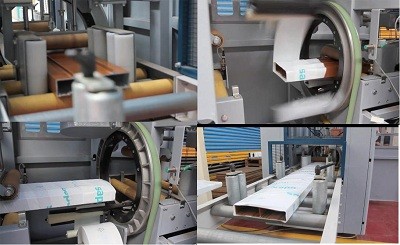
Aluminum profile packing line
View Details →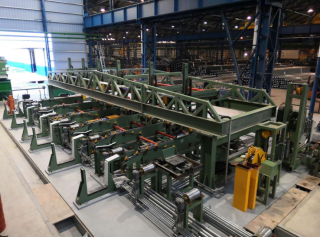
FHOPE Automatic pipe tube bundling&strapping line
View Details →
Automatic pipe tube bundling & strapping line
View Details →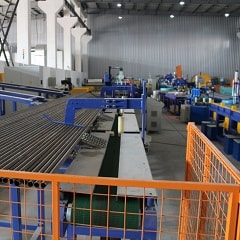
Automatic steel tube strapping machine
View Details →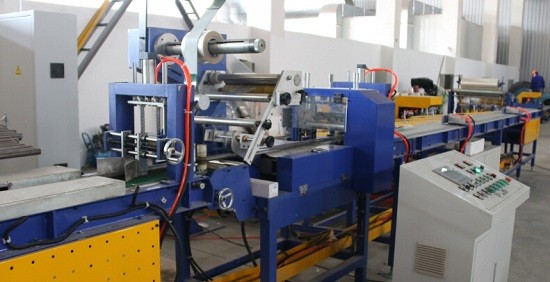
FHOPE Automatic steel tube packing machine
View Details →
Automatic plastic Pipe strapping packing line
View Details →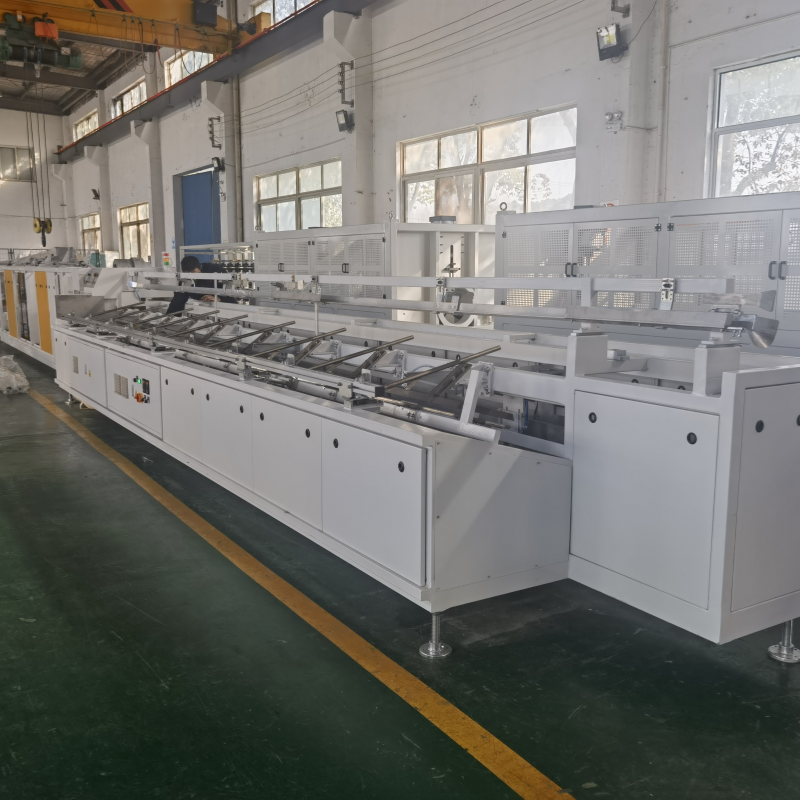
Automatic PPR/PVC Pipe bagging line
View Details →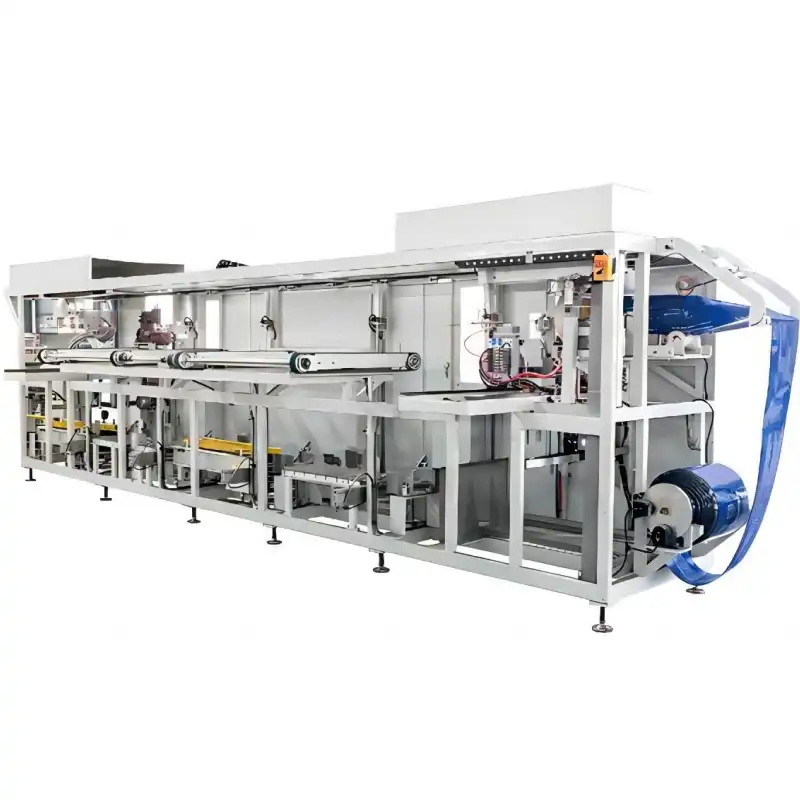
Platsic pipe bag packing machine
View Details →
Tyre Packing Machine FPT-200
View Details →
Tyre Packing Machine FPT-300
View Details →
Tyre Packing Machine FPT-400
View Details →
Cable Coil Packing Machine-FPCA100
View Details →