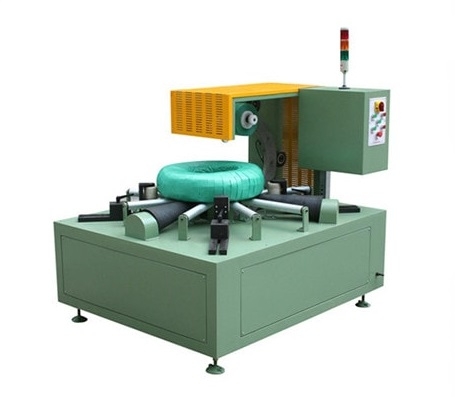
Automatic Coil Loading & Unloading Systems for Wrapping: Design the Automation Boundary First
An automatic coil loading system is not simply a wrapper with conveyors. It is a chain of controlled transfers requiring defined boundaries, station ownership, handshakes and recovery plans before any mechanism is selected.
Automatic Coil Loading and Unloading Systems for Wrapping Machines
Automatic Coil Loading and Unloading Systems for Wrapping Machines
An automatic loading system is not simply "a wrapper with conveyors." It is a chain of controlled transfers that must know which coil is moving, which station owns it, and what happens when the next station is unavailable. The right starting point is the automation boundary, not the catalogue of mechanisms.
Define the Boundary Before Selecting Equipment
Write down where the line receives a coil, where it hands over the finished package, and which actions remain manual. Include exceptional routes: unknown coils, damaged coils, blocked discharge and manual takeover. A cell can be automated at one handover and still require a controlled human decision at another.
That boundary gives the project team a basis for comparing conveyors, transfer trolleys, lift tables, walking beams and other handling arrangements. No mechanism is automatically the correct choice without the product range, layout, throughput boundary and recovery requirements.

Design the Support and Transfer Interfaces
Every station needs a defined support condition: where the coil rests, how it is guided, how height and centreline are controlled, and how the next station confirms readiness. The wrapper, loading device and discharge device must agree on one handover condition rather than relying on assumptions about timing.
For this reason, the design package should distinguish mechanical support, position detection, transfer permission and release. A sensor signal alone is not a substitute for a verified load-support design.
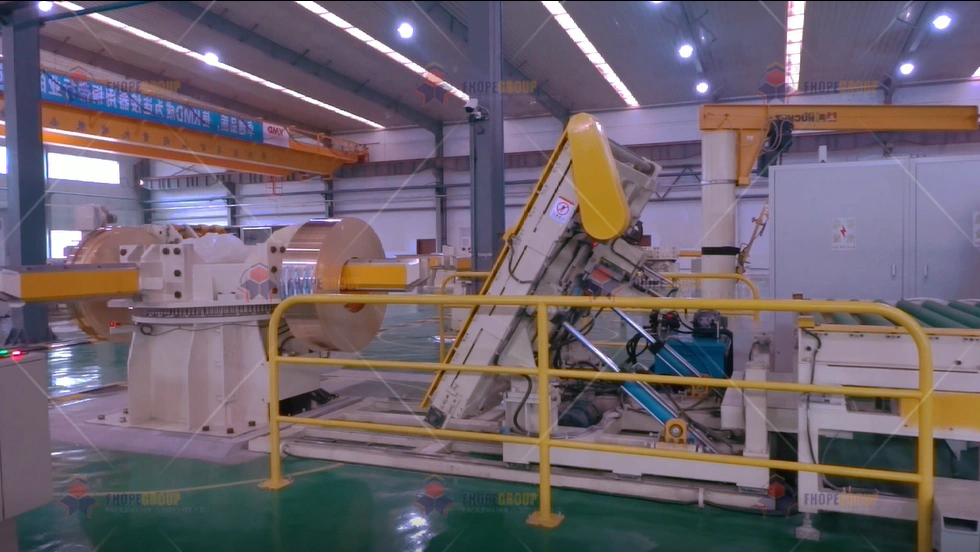
Make Queueing Explicit
Buffers can protect an upstream process from a short interruption, but they also introduce identification, spacing and recovery questions. Define the maximum number and permitted types of coils in each buffer; how a coil is tracked; and what happens to a coil that cannot enter the next station.
Do not describe a buffer as added capacity until its product mix, dwell conditions, routing logic and measured effect on the complete line have been validated.
Use a Handshake That Reflects Real Ownership
A useful sequence makes each state observable: request, ready, transfer permitted, in position, complete and exception. The names are not universal. What matters is that every team can identify the sender, receiver, confirmation, timeout response and manual recovery authority for each state.
This is also where a project avoids two common failures: moving a second coil into an occupied station, and treating an empty or uncertain station as ready.
Put Safety and Recovery in the Acceptance Plan
Automatic movement can reduce routine manual handling but adds moving equipment, access zones and interfaces with other traffic. The applicable risk assessment—not this article—defines safeguards, reset conditions, permitted modes and recovery actions. HSE lifting guidance is relevant only where the project actually uses lifting equipment and only within its UK regulatory scope.
Acceptance should include representative coil sizes plus normal, blocked, missing-coil, sensor-fault, power-loss and manual-takeover scenarios. Record the intended result, actual result, deviation owner and closure route.

A Practical Next Step
Ask for a one-page automation boundary and a station-interface table before comparing configurations. If the team cannot state who owns the coil in each state, it is too early to promise unattended operation or line throughput.
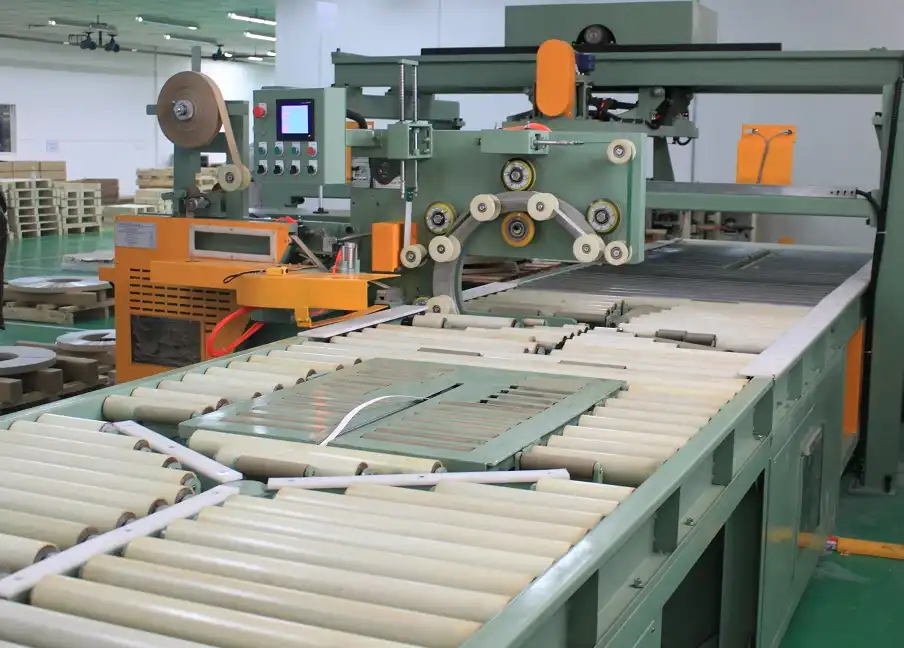
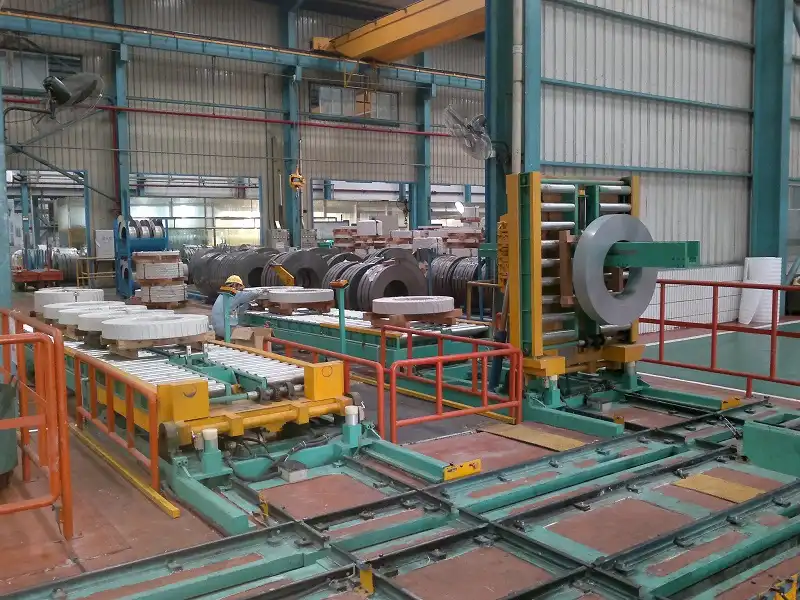
Visual Details
Click to enlarge
Click to enlarge
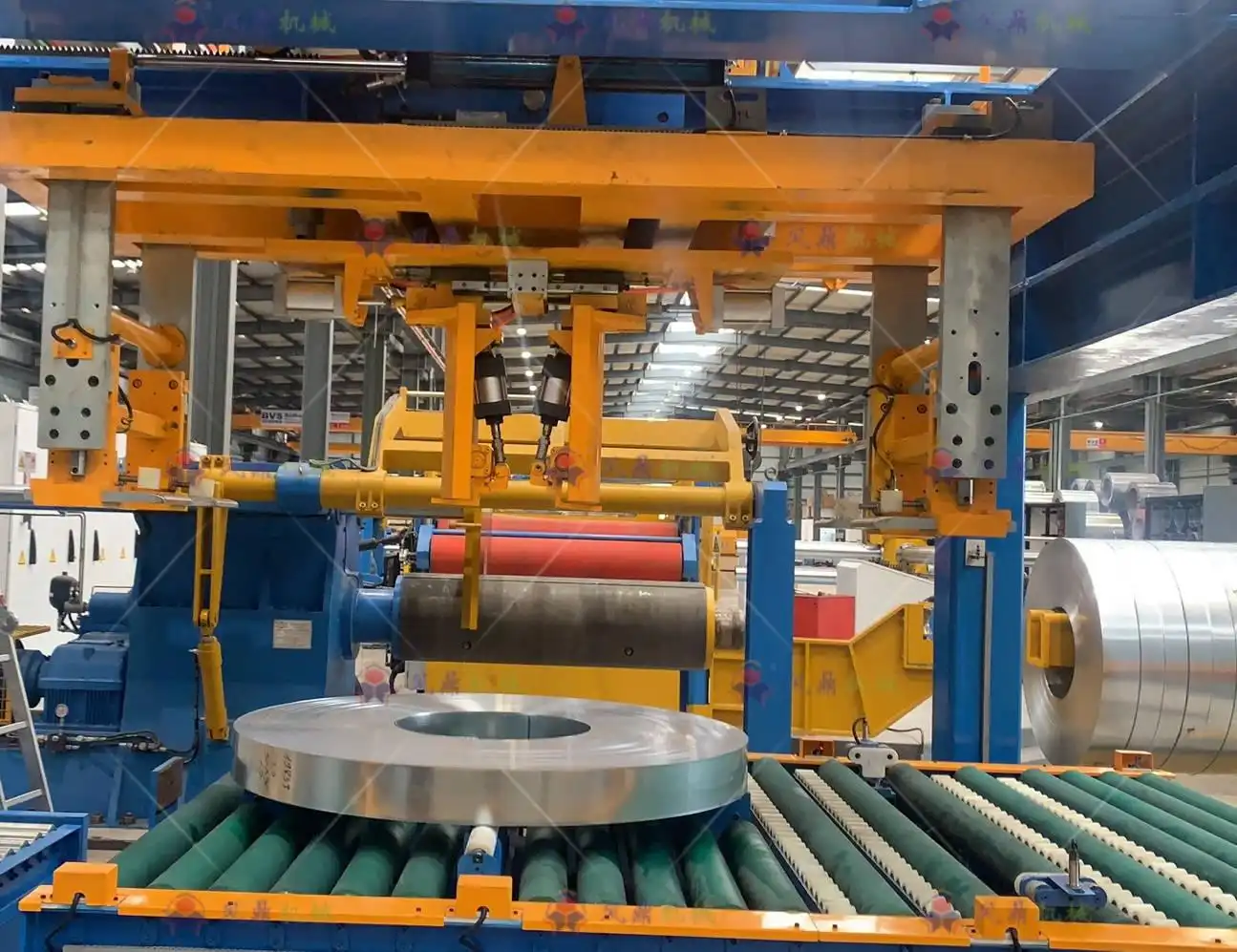
Click to enlarge

Click to enlarge
Watch How It Works
Discover how our automated packaging solutions optimize your production line efficiency. This video demonstrates the seamless operation designed for maximum protection.
Trusted by Steel Mills & Industry Leaders
Global manufacturers rely on FHOPE heavy duty packaging equipment


Ready to optimize your packaging line?
Get a custom quote with ROI analysis. Our engineers respond within 24 hours.
- Free layout design
- Global installation support
- 2-year warranty included
Your information is secure and will never be shared.
Related Machines
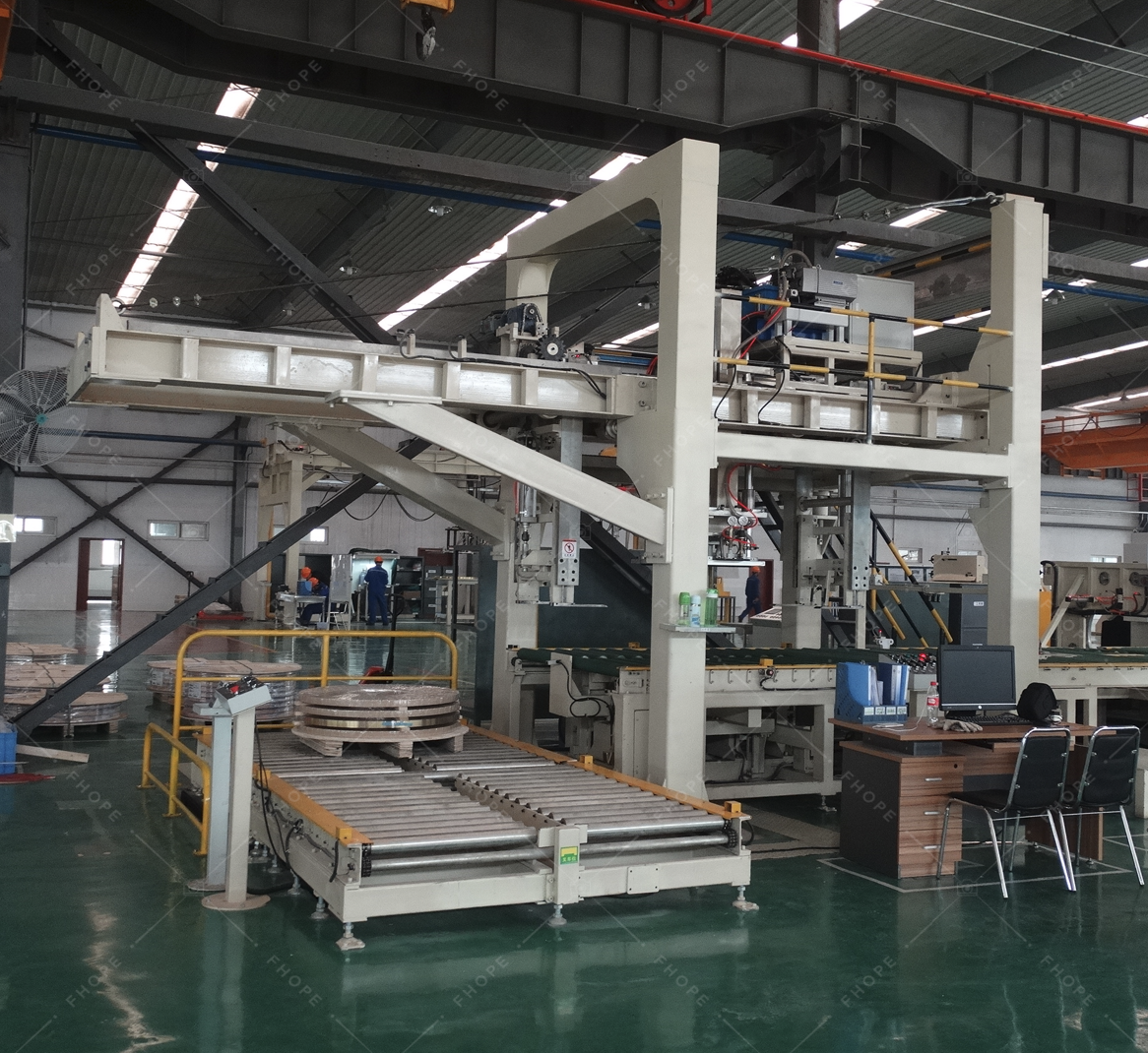
Steel Coil Packaging line
View Details →
Vertical coil packaging line
View Details →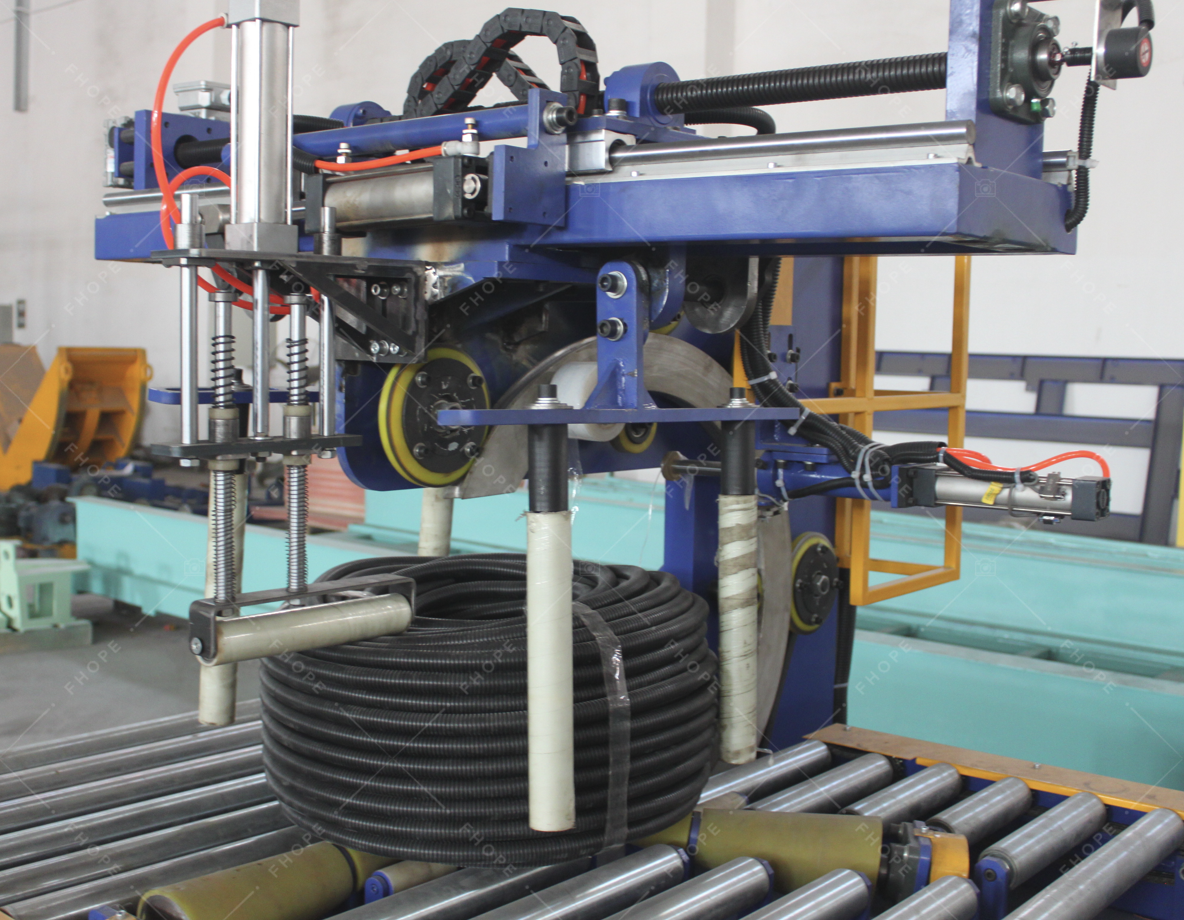
Hose Coil Packaging line
View Details →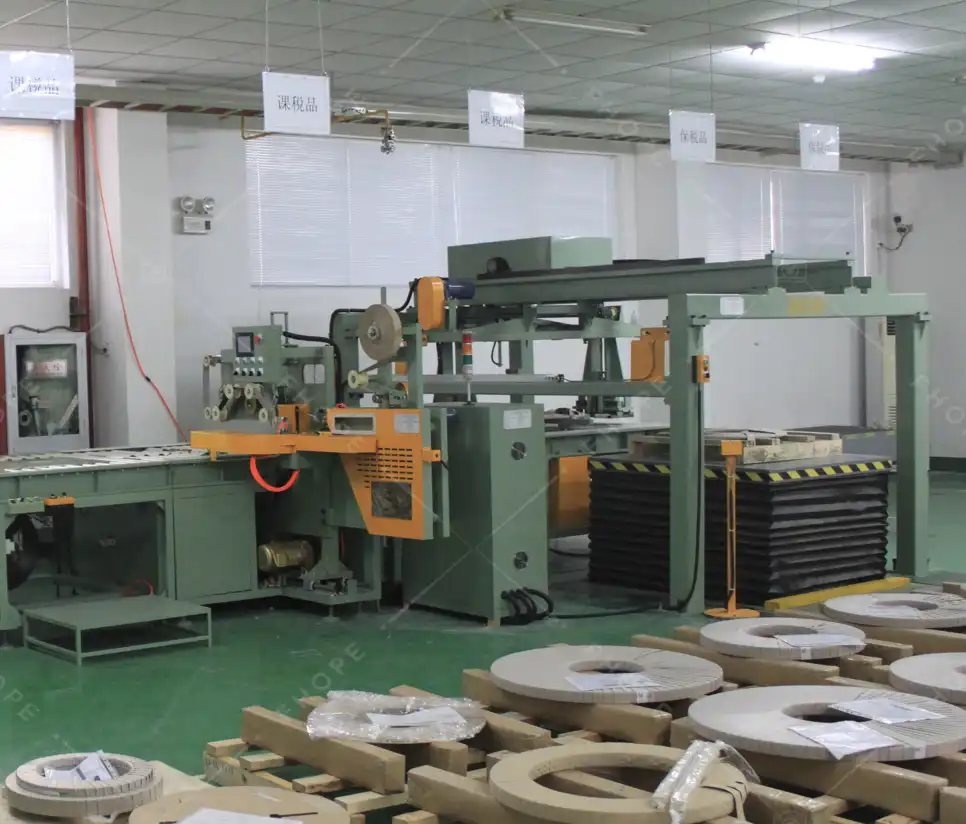
Copper Coil Packaging line
View Details →
Wire Coil Packaging line
View Details →
Panel Packaging line
View Details →
Pipe Bagging Machine
View Details →
Aluminum profile packing line
View Details →
FHOPE Automatic pipe tube bundling&strapping line
View Details →
Automatic pipe tube bundling & strapping line
View Details →
Automatic steel tube strapping machine
View Details →
FHOPE Automatic steel tube packing machine
View Details →
Automatic plastic Pipe strapping packing line
View Details →
Automatic PPR/PVC Pipe bagging line
View Details →
Platsic pipe bag packing machine
View Details →
Tyre Packing Machine FPT-200
View Details →
Tyre Packing Machine FPT-300
View Details →
Tyre Packing Machine FPT-400
View Details →
Cable Coil Packing Machine-FPCA100
View Details →