Executive summary Long boards and panels are hard to wrap by hand without gaps or loose film along their length. Our horizontal orbital stretch wrapper in this video takes long white boards on the conveyor, lowers the wrapping arm to the product and wraps it as it passes through the ring. Film per bundle follows from the ring turns times the bundle perimeter.
Table of Contents
- What the video shows
- How the boards are wrapped
- Film per bundle
- Controls and safety
- Selection checklist for a horizontal orbital wrapper for boards
- Engineering FAQ
- Next step
- Related reading
- Sources
What the video shows
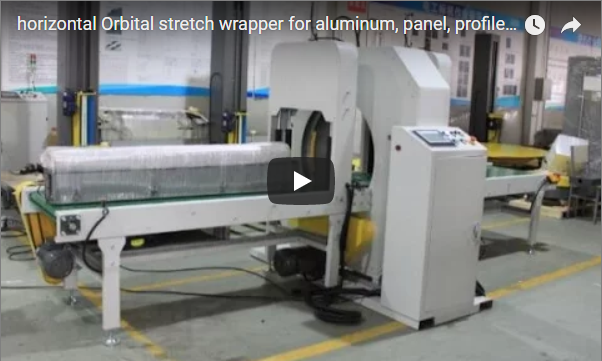
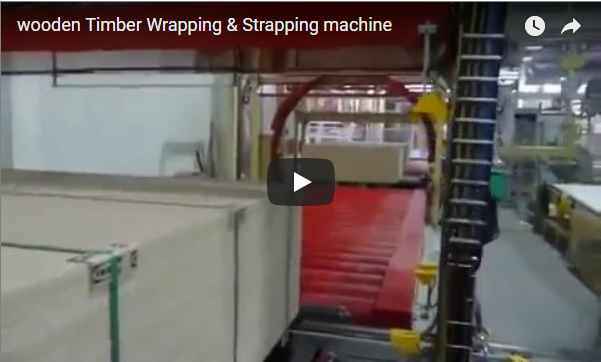
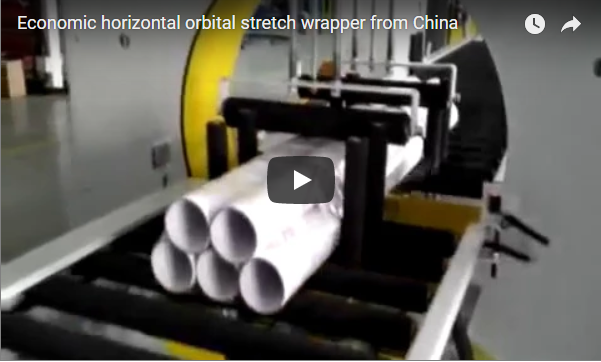
Long white boards come in from the left on the infeed conveyor. A unit above the conveyor comes down close to the product, and the ring turns round it, laying film on as the conveyor carries the boards through.
The wrapped boards then carry on along the outfeed conveyor and leave on the right. A control panel on the right of the machine has buttons, indicator lights and a red emergency stop. The www.fhopepack.com watermark shows in the corner of the video.
How the boards are wrapped
Times are read from the video timestamps.
| Step | What happens | Video time |
|---|---|---|
| Infeed | Boards enter on the conveyor | about 0–4 s |
| Wrap | The top unit comes down and the ring wraps the boards | about 4–12 s |
| Outfeed | Wrapped boards carry on and leave on the right | about 12–48 s |
Wrapping happens while the boards move, so long pieces are wrapped in one pass. Wrapping time depends on the product length, ring speed and conveyor speed; the 6 m example below is arithmetic, not the board in the video.
Film per bundle
Illustrative example:
| Item | Value |
|---|---|
| Bundle section (illustrative) | 300 × 100 mm |
| Perimeter, 2 × (300 + 100) | 800 mm |
| Bundle length (illustrative) | 6 m |
| Advance per ring turn (illustrative) | 125 mm |
| Ring turns, 6,000 ÷ 125 | 48 |
| Film laid, 48 × 0.8 m | 38.4 m |
A smaller advance per turn means more overlap and more film for the same bundle.
Controls and safety
The ring turns round the product at speed and the conveyor carries it through. Keep hands and loose clothing away from the ring while it turns, use the red emergency stop on the panel if needed, and change film only with the machine stopped and isolated.
The standards that apply depend on the destination market. For CE markets, ISO 12100 sets the risk-assessment method and EN 415-10 sets general requirements for packaging machines.
Selection checklist for a horizontal orbital wrapper for boards
- Bundle width, height and length range.
- Surface finish to protect.
- Film type and overlap.
- Infeed and outfeed conveyor lengths.
- Bundles per shift.
- End protection or labelling.
Engineering FAQ
Q: What does the machine do? A: It wraps long boards in film as they pass through the turning ring.
Q: How much film does a bundle take? A: Ring turns times perimeter: 48 × 0.8 m gives 38.4 m in our example.
Q: How are the ring turns worked out? A: Bundle length over advance per turn: 6,000 ÷ 125 mm gives 48.
Q: Where is the emergency stop? A: On the control panel at the right of the machine.
Q: Can it take my board sizes? A: Send the sections and lengths and we set the ring and conveyors.
Next step
We plan your horizontal orbital stretch wrapper in three steps:
- Submit your layout drawing with bundle sections and lengths to info@fhopepack.com.
- Receive a proposal within 48 hours, with film type and overlap.
- Book a site survey to check conveyor lengths and output.
Related reading
- Automatic horizontal stretch wrapper
- Video: precision orbital wrapping for extra-long panels
- Video: horizontal orbital ring stretch wrapper for sheet metal
Sources
- Machine content: FHOPE engineering team, 2026-10-04
- Film example: our worked example, illustrative values
- Machine in action: our video on YouTube
- Standards scope: ISO 12100:2010, EN 415-10:2014
Last reviewed: 2026-10-04