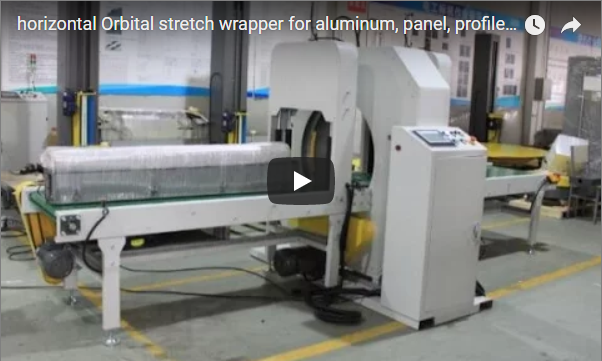
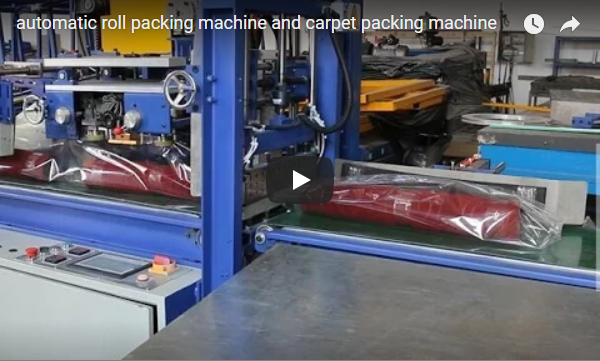
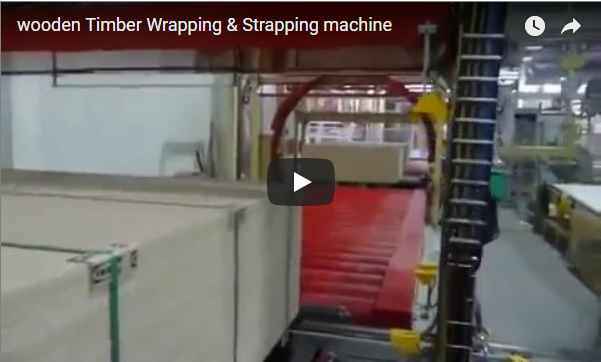
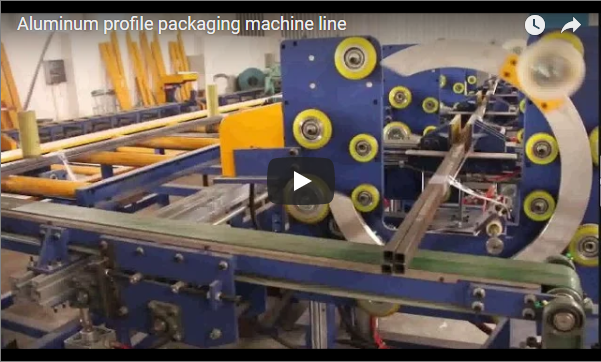
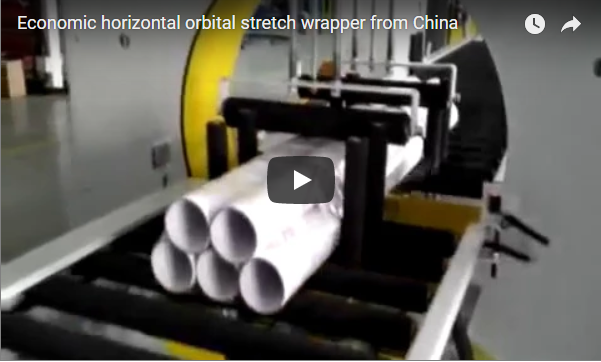
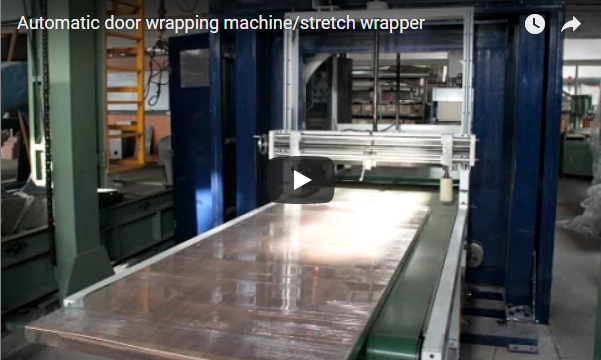
Executive summary Light cartons and paper products are easy to crush and easy to pull out of line, so the wrapper has to hold them gently and pull film softly. Our horizontal stretch wrapper carries the product through a rotating ring on powered conveyors while the film spirals around it. Film tension is set at the tensioner, and overlap is adjustable from 10% to 90%. The model is chosen by the product’s diagonal: the E100 takes 50–100 mm, the E300 100–300 mm.
Table of Contents
- How the horizontal wrapper works
- Why light products need care
- Choosing the model by diagonal
- Film width, overlap and ring speed
- E100 and E300 data
- Controls and safety
- Selection checklist
- Engineering FAQ
- Next step
- Related reading
- Sources
How the horizontal wrapper works
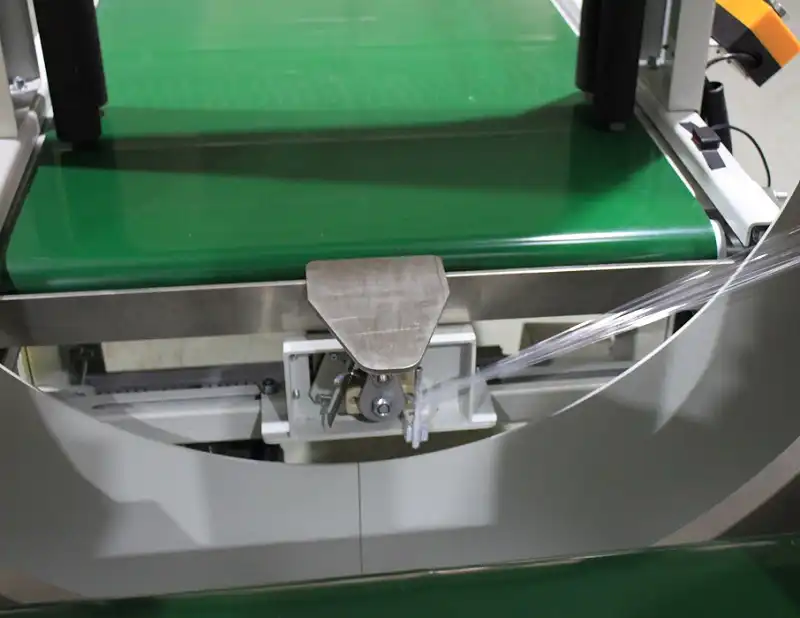
The product rides on the infeed conveyor into the wrapping station, where a ring carrying the film reel turns around it. As the conveyor moves the product forward, the film lays on in a spiral. A photocell sets where the wrap starts and when the film is cut. The automatic feeder clamps the film end for the next product and cuts the film behind the finished one, so the machine runs without an operator at the ring.
In our video, a carton travels in on the conveyor, is wrapped in clear film inside the ring, and leaves cut and wrapped on the far side. It keeps its shape and its line because powered conveyors carry it through the ring at a steady speed while the film goes on.
Why light products need care
On a heavy product, film tension is just a way of making the wrap tight. On a light carton, the same tension can squeeze the corners in, twist the carton on the conveyor or drag it backwards against the feed. Three settings stop that:
| Setting | What to do for light products |
|---|---|
| Film tension | Turn the tensioner down until the film lies flat without squeezing the corners |
| Overlap | Use less overlap for dust protection, more only where the carton needs strength |
| Conveyor | Keep the product supported on both sides of the ring, so the film never lifts it |
The conveyors are built to protect the product surface, and the infeed and outfeed are both powered. The product is always pushed through the ring rather than pulled by the film.
Choosing the model by diagonal
The product must pass through the ring, so the size that matters is its diagonal, √(width² + height²), not its width. Illustrative example: a carton 200 mm wide and 150 mm high has a 250 mm diagonal.
| Product | Diagonal | Model |
|---|---|---|
| Small tube or narrow box (example) | 50–100 mm | E100 |
| Carton 200 × 150 mm (example) | 250 mm | E300 |
Both models wrap products longer than 1,000 mm. Check your largest product against the diagonal range, and your lightest against the minimum weight: 8 kg on the E100 and 15 kg on the E300. “Light” here means light for its size, not below that minimum. Send us anything lighter so we can check how it sits on the conveyor before we quote.
Film width, overlap and ring speed
The conveyor speed that gives a set overlap follows from the film width and the ring speed:
Conveyor speed = film width × (1 − overlap) × ring speed
Illustrative example on the E300, with 150 mm film at 50% overlap and the ring at 90 r/min:
| Item | Value |
|---|---|
| Film width | 150 mm |
| Overlap | 50% |
| Advance per ring turn, 150 × 0.5 | 75 mm |
| Ring speed | 90 r/min |
| Conveyor speed, 75 mm × 90 | 6.75 m/min |
| Time to wrap a 1,200 mm carton | about 11 s |
That speed sits inside the E300’s 5–15 m/min wrapping range. The wrapping speed is the product’s advance while the ring turns. The 6–12 m/min conveyor speed is how fast the infeed and outfeed conveyors run. For lighter dust protection, a lower overlap lets the conveyor run faster for the same ring speed.
E100 and E300 data
| Item | E100 | E300 |
|---|---|---|
| Product diagonal | 50–100 mm | 100–300 mm |
| Product length | > 1,000 mm | > 1,000 mm |
| Product weight | 8–100 kg | 15–100 kg |
| Ring speed | 20–120 r/min | 20–90 r/min |
| Wrapping speed | 3–15 m/min | 5–15 m/min |
| Conveyor speed | 6–12 m/min | 6–12 m/min |
| In and out conveyors | 2,000 mm each, motorized | 2,000 mm each, motorized |
| Film width | 50–100 mm | 100–200 mm |
| Power | About 2.5 kW | About 2.5 kW |
Controls and safety
The PLC runs the wrap to your packing program, with a photocell for wrap position and cut timing. Faults show on the indicator and in the program, and the control panel is separate from the ring for easy operation and maintenance. A guardrail closes off the ring, and the ring starts and stops softly so the film does not snap on a light product.
The standards that apply depend on the destination market. For CE markets, ISO 12100 sets the risk-assessment method and EN 415-10 sets general requirements for packaging machines.
Selection checklist for a horizontal stretch wrapper
- Product width and height, and the diagonal.
- Product length, shortest and longest.
- Lightest and heaviest product.
- How easily the product crushes at the corners.
- Dust cover only, or a tight protective wrap.
- Products per hour.
- Local power supply.
Engineering FAQ
Q: How do I wrap light cartons without crushing them? A: Turn the film tension down at the tensioner and keep the carton supported on powered conveyors on both sides of the ring.
Q: Which model do I need? A: Work out the diagonal. The E100 takes 50–100 mm and the E300 100–300 mm.
Q: How do I set the overlap? A: Overlap is adjustable from 10% to 90%. Conveyor speed equals film width × (1 − overlap) × ring speed.
Q: How fast does it wrap? A: The E300 wraps at 5–15 m/min. A 1,200 mm carton at 6.75 m/min takes about 11 s.
Q: How is the film cut between products? A: A photocell times the cut, and the automatic feeder clamps, feeds and cuts the film.
Next step
We plan your horizontal stretch wrapper in three steps:
- Submit your layout drawing with product sizes, weights and output to info@fhopepack.com.
- Receive a proposal within 48 hours, with the model and wrap settings.
- Book a site survey to check the conveyor line and floor space.
Related reading
- E300 horizontal stretch wrapper
- E100 horizontal stretch wrapper
- Video: automatic horizontal wrapping machine and orbital wrapper
Sources
- E100 data, ring, conveyor and control features: E100 page
- E300 data: E300 page
- Machine in action: our horizontal stretch wrapper video on YouTube
- Diagonal and speed examples: our worked examples, illustrative values
- Standards scope: ISO 12100:2010, EN 415-10:2014
Last reviewed: 2026-10-04