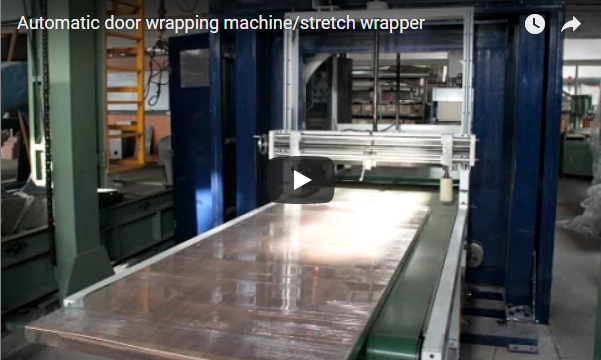
Executive summary Our aluminum profile packing line binds profiles into sub-bundles, wraps each one, then gathers them into a big bundle and wraps that too. The sub-bundle wrapper takes bundles of 100–300 mm OD and over 1,000 mm long at up to 12 m/min conveyor speed. We size the line around the station that sets the pace.
Table of Contents
- The stations in the line
- How the sub-bundle wrapper works
- Does the sub-bundle fit
- Which station sets the pace
- End taping
- Utilities and safety
- Selection checklist
- Engineering FAQ
- Next step
- Related reading
- Sources
The stations in the line
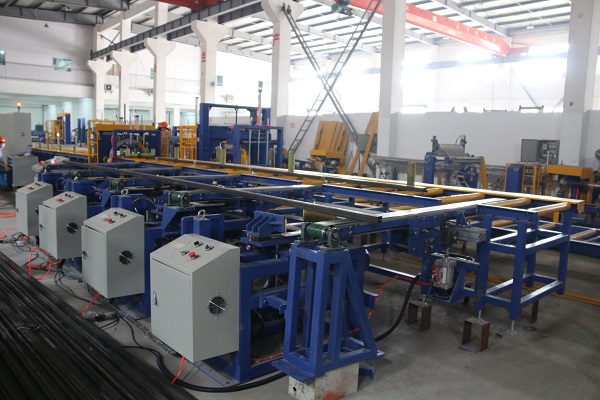
We design each line around the plant’s actual production needs. A typical sequence has seven steps:
| Step | Station |
|---|---|
| 1 | Automatic sub-bundle binding, 4 stations |
| 2 | Automatic sub-bundle transfer |
| 3 | Automatic sub-bundle wrapping |
| 4 | Sub-bundle gathering and aligning |
| 5 | Automatic big bundle making |
| 6 | Automatic big bundle wrapping |
| 7 | Automatic bundle outfeed |
The line wraps profiles and bundles with paper or stretch film. A 6-fork handling system places a whole layer of sub-bundles on a roller table, and the cycle repeats until the final layer is formed.
How the sub-bundle wrapper works
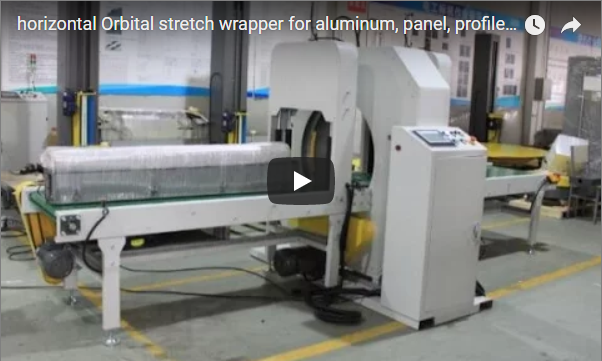
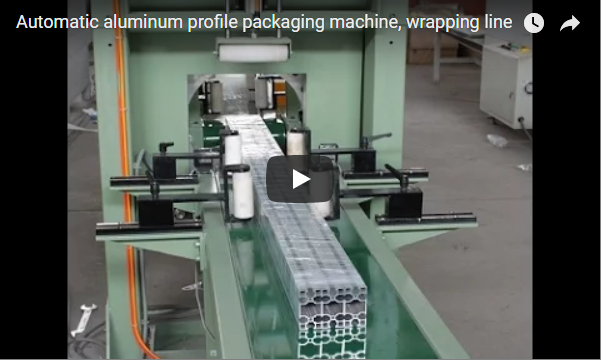
The sub-bundle runs on powered roller tables into a spiral wrapping ring. The ring carries the paper or film around the bundle while the conveyor moves it forward. Centering rollers on the infeed table keep the profiles centred before they enter the ring. Photocell sensors set the wrapping position, and a PLC runs the cycle.
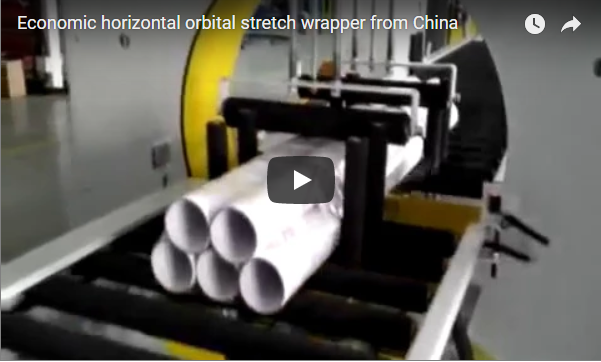
In our video, press-down rollers above the profile hold it on the roller table while white material spirals onto it. The conveyors are designed to protect the product surface.
Does the sub-bundle fit?
| Parameter | Sub-bundle wrapper |
|---|---|
| Bundle OD | 100–300 mm |
| Bundle length | over 1,000 mm |
| Bundle weight | 15–100 kg |
| Infeed and outfeed conveyors | 2,000 mm each, motor driven |
| Conveyor speed | 6–12 m/min |
| Ring speed | 20–90 r/min |
| Wrapping speed | 5–15 m/min |
| Overlap | 10–90% |
The page lists a wrapping speed up to 15 m/min but conveyor speed only up to 12 m/min, so we plan on 12 m/min. The 2,000 mm conveyors are the wrapper’s own. For 6 m profiles, we size the line’s roller tables to the profile length on your drawing.
Illustrative example: a sub-bundle of six profiles at 1.5 kg/m and 6 m long weighs 54 kg, inside the 15–100 kg range. Its cross-section must fit within the 300 mm OD.
Which station sets the pace?
There are four binding stations but only one sub-bundle wrapper, so the wrapper usually sets the pace. Illustrative example for a 6 m sub-bundle:
| Wrapping speed | Wrap time | Sub-bundles per hour |
|---|---|---|
| 12 m/min | 30 s | 120 |
| 5 m/min | 72 s | 50 |
These figures cover wrapping travel only. Transfer, film cutting and film changes add time on top. For a big bundle of 12 sub-bundles, wrapping travel alone is 12 × 30 s = 360 s, or 6 min, at 12 m/min. The big bundle wrapper has at least that window for its own cycle.
End taping
Our wrapping and taping machine tapes the bundle ends so the paper does not come loose after cutting. Taping starts while the profile is moving and wrapping, and the tape banding is synchronised with the wrap. That keeps taping off the critical path.
| Item | Detail |
|---|---|
| Wrapping material | paper or stretch film |
| Film roll | OD 100–200 mm, width 100–200 mm, core 50 mm |
| Material tension | adjustable |
| Film start and cut | automatic cutter and feeder (mechanical hand) |
Utilities and safety
| Utility | Sub-bundle wrapper only |
|---|---|
| Power supply | 380 V, 3 phase, 60 Hz |
| Power | about 2.5 kW |
A guardrail protects the ring area. We list power for the complete line in the proposal. The standards that apply depend on the destination market. For CE markets, ISO 12100 sets the risk-assessment method and EN 415-10 sets general requirements for packaging machines.
Selection checklist for an aluminum profile line
- Profile shapes, lengths and weight per metre.
- Profiles per sub-bundle and sub-bundles per big bundle.
- Paper or stretch film, and end taping yes or no.
- Surface finish, such as anodised or powder-coated.
- Target big bundles per shift.
- Layout drawing with available floor length.
- Local power supply.
Engineering FAQ
Q: What size sub-bundle can the wrapper take? A: 100–300 mm OD, over 1,000 mm long and 15–100 kg.
Q: How fast does it wrap a 6 m sub-bundle? A: 30–72 s at 5–12 m/min, before transfer.
Q: Can it wrap single profiles as well as bundles? A: The wrapper is built for both. The listed OD window starts at 100 mm, so we confirm small single profiles on your drawing.
Q: Why tape the ends? A: End taping stops the paper coming loose after cutting, and it runs during wrapping.
Q: Can we use paper instead of film? A: Yes. The line wraps with paper or stretch film.
Next step
We plan your aluminum profile line in three steps:
- Submit your layout drawing with profile lengths, bundle sizes and output to info@fhopepack.com.
- Receive a proposal within 48 hours, with the stations, wrapper and layout.
- Book a site survey to fit the line to your plant.
Related reading
- Automatic aluminum profile packing line
- Aluminum profile sub-bundle wrapping machine
- Automatic aluminum wrapping and taping machine
- Video: aluminum profile stretch wrapping machine
- Video: aluminum rod material wrapper
Sources
- Line stations: automatic aluminum profile packing line page
- Sub-bundle wrapper data: aluminum profile sub-bundle wrapping machine page
- End taping and centering rollers: automatic aluminum wrapping and taping machine page
- Machine in action: our aluminum profile packing line video on YouTube
- Standards scope: ISO 12100:2010, EN 415-10:2014
Last reviewed: 2026-10-04