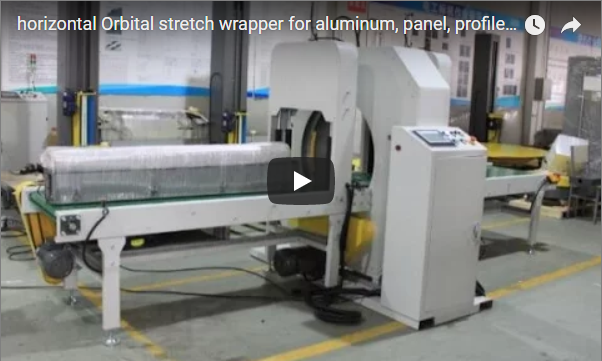
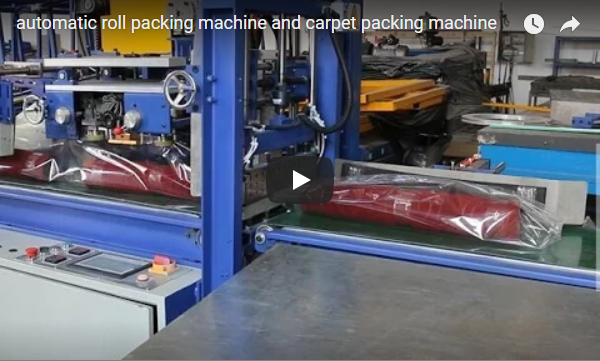
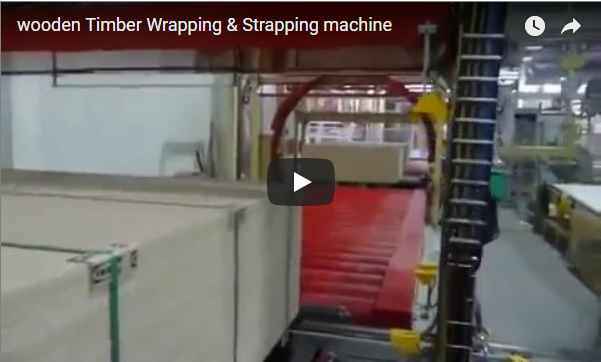
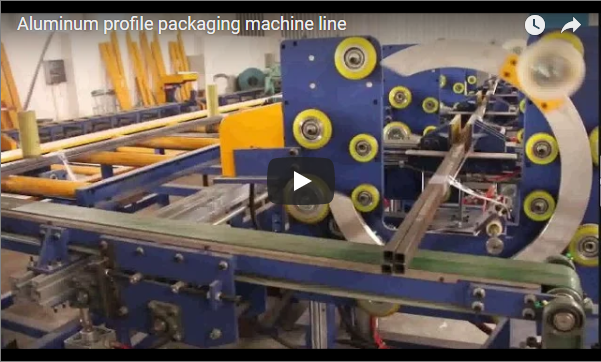
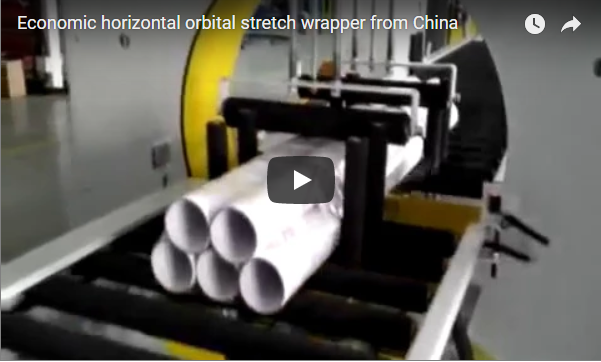
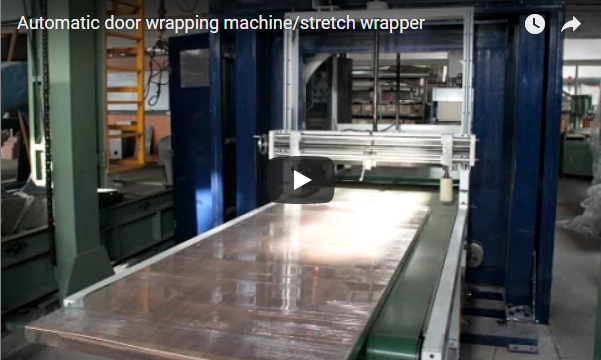
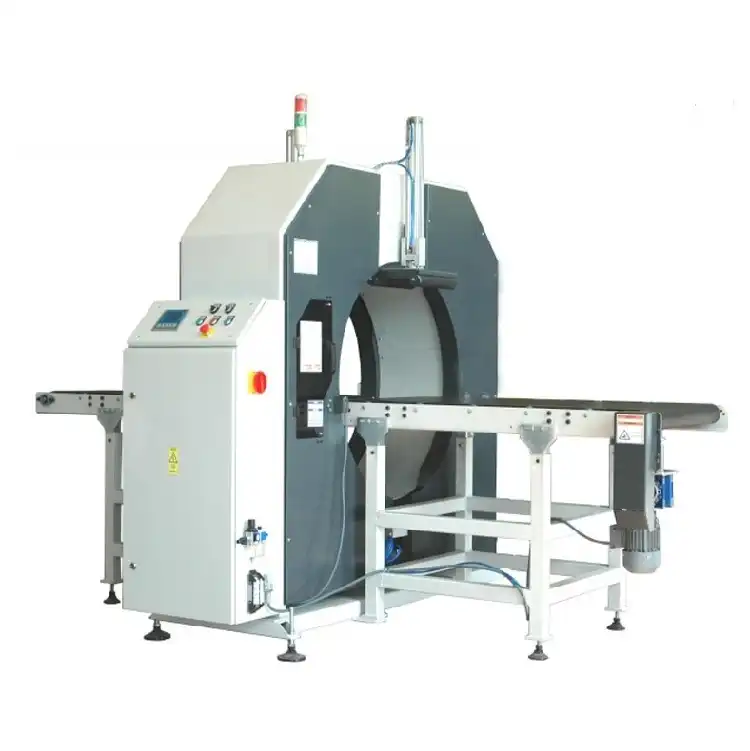
Executive summary Our horizontal ring orbital wrappers hold each load with press-down devices while the ring spirals film around it. That lets short loads from 800 mm long cross the gap at the ring without tipping. The E600 takes bundles of 200–600 mm OD, and the E1400 takes objects up to 1,400 mm wide and 1,000 mm high.
Table of Contents
- Why loads need holding
- How the press-down devices work
- E600 or E1400
- Time per load
- Partial wraps with head and end delay
- Utilities and safety
- Selection checklist
- Engineering FAQ
- Next step
- Related reading
- Sources
Why loads need holding
On a horizontal ring orbital wrapper, the load travels from the infeed conveyor across the ring to the outfeed conveyor. The ring needs a gap between the two conveyors to pass the film under the load. A short or light load can tip or shift at that gap, and film tension can twist a box as the ring turns.
Our wrappers solve this with press-down devices and supportive rollers that fix the load’s position. On the E1400, the press-down holds a short load steady, so it passes the gap between the conveyors without tipping.
How the press-down devices work
| Feature | E600 | E1400 |
|---|---|---|
| Press-down devices | two, on the infeed and outfeed conveyors | press-down device and supportive rollers |
| Contact surface | soft material, for glass surface protection | version chosen by load shape |
| Side guides | protective devices on both sides, adjusted by hand | confirmed in proposal |
| Press timing | adjustable action time | confirmed in proposal |
| Position sensing | four position sensors from infeed to outfeed | confirmed in proposal |
The press-down rollers hold the carton flat while film tension pulls on it, so the load keeps its line through the ring. Our video shows yellow press-down rollers on a carton inside the red ring.
E600 or E1400
| Parameter | E600 | E1400 |
|---|---|---|
| Load length | over 800 mm | 1,000–3,000 mm |
| Load size | bundle OD 200–600 mm | width 300–1,400 mm, height 50–1,000 mm |
| Load weight | 20–200 kg | confirmed in proposal |
| Conveyor speed | 3–12 m/min | 4–15 m/min |
| Ring speed | confirmed in proposal | 10–60 r/min |
| Material | LLDPE stretch film, paper or woven | paper, LLDPE stretch film, PE film or PVC |
| Material roll | 150–300 mm wide, 100–250 mm OD, 50 mm core | 300 or 500 mm wide, 200–300 mm OD |
Choose by cross-section. Illustrative examples: a 400 × 300 mm carton has a diagonal of √(400² + 300²) = 500 mm, inside the E600’s 600 mm window. Leave clearance for the film carriage as well, and we check the margin on your drawing. A 1,200 × 600 mm panel stack is too large for that window, so it needs the E1400.
Time per load
Travel time = load length ÷ conveyor speed. For a 1,200 mm carton (illustrative) on the E600:
- At 12 m/min: 1.2 ÷ 12 = 0.1 min, or 6 s.
- At 3 m/min: 1.2 ÷ 3 = 0.4 min, or 24 s.
The press devices close and open each cycle, and the film is clamped and cut, so we time the full cycle on your load.
Partial wraps with head and end delay
The E600 has a head delay and an end delay for partial wrapping. The ring starts wrapping a set distance after the load’s leading edge and stops before its trailing edge. That leaves the ends open for handling, labels or ventilation, and saves film. Ring speed and conveyor speed are set on the touch screen.
Utilities and safety
| Utility | E600 | E1400 |
|---|---|---|
| Power | about 4.5 kW | about 4.5 kW |
| Power supply | AC 380 V, 50 Hz, 3 phase | AC 380 V, 60 Hz, 3 phase |
| Machine size | about 5,200 × 1,800 × 1,800 mm | confirmed in proposal |
A protection shield covers the machine structure and moving parts. The standards that apply depend on the destination market. For CE markets, ISO 12100 sets the risk-assessment method and EN 415-10 sets general requirements for packaging machines.
Selection checklist for an orbital wrapper with press-down
- Shortest load length.
- Load width, height and weight.
- Surface finish: glass, lacquer or plain carton.
- Full wrap or partial wrap with open ends.
- Film, paper or woven material.
- Loads per hour.
Engineering FAQ
Q: How short can a load be? A: Over 800 mm on the E600, and from 1,000 mm on the E1400.
Q: Will the press-down device mark glass or lacquered surfaces? A: The E600’s top press device uses soft material for glass surface protection.
Q: Can the machine leave the ends of a load unwrapped? A: Yes. The E600’s head delay and end delay create partial wraps.
Q: How long does a 1,200 mm carton take? A: 6–24 s of travel at 3–12 m/min on the E600, before press and film cut.
Q: Which model for a 1,200 × 600 mm panel stack? A: The E1400, which takes objects 300–1,400 mm wide and 50–1,000 mm high.
Next step
We size your orbital wrapper in three steps:
- Submit your layout drawing with load sizes and loads per hour to info@fhopepack.com.
- Receive a proposal within 48 hours, with the model, press-down setup and material.
- Book a site survey to fit the wrapper to your line.
Related reading
- E600 horizontal stretch wrapper
- E1400 horizontal stretch wrapper
- E1800 horizontal stretch wrapper
- Video: horizontal orbital ring stretch wrapper for sheet metal
- Video: horizontal wrapping machine for furniture
Sources
- E600 data, press-down devices, head and end delay: E600 horizontal stretch wrapper page
- E1400 data and press-down function: E1400 horizontal stretch wrapper page
- Machine in action: our horizontal ring orbital stretch wrapper video on YouTube
- Standards scope: ISO 12100:2010, EN 415-10:2014
Last reviewed: 2026-10-04