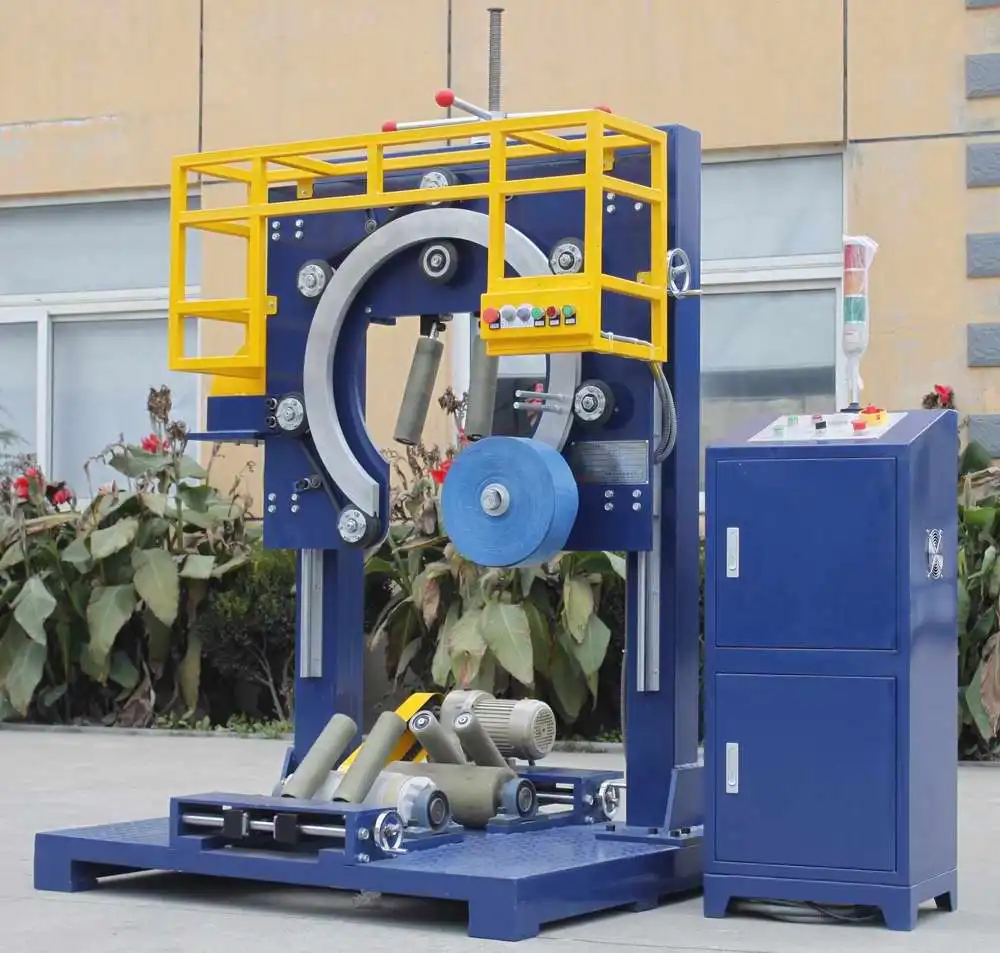
Steel Coil Wrapping Machine Cost: How to Calculate Total Ownership Cost
Buying a steel coil wrapper requires more than comparing equipment prices. This guide explains total cost of ownership factors, from startup costs to operation and maintenance, helping manufacturers evaluate long-term machine costs and make more informed automation decisions.

Total Cost of Ownership for a Steel Coil Wrapping Machine
Total Cost of Ownership for a Steel Coil Wrapping Machine
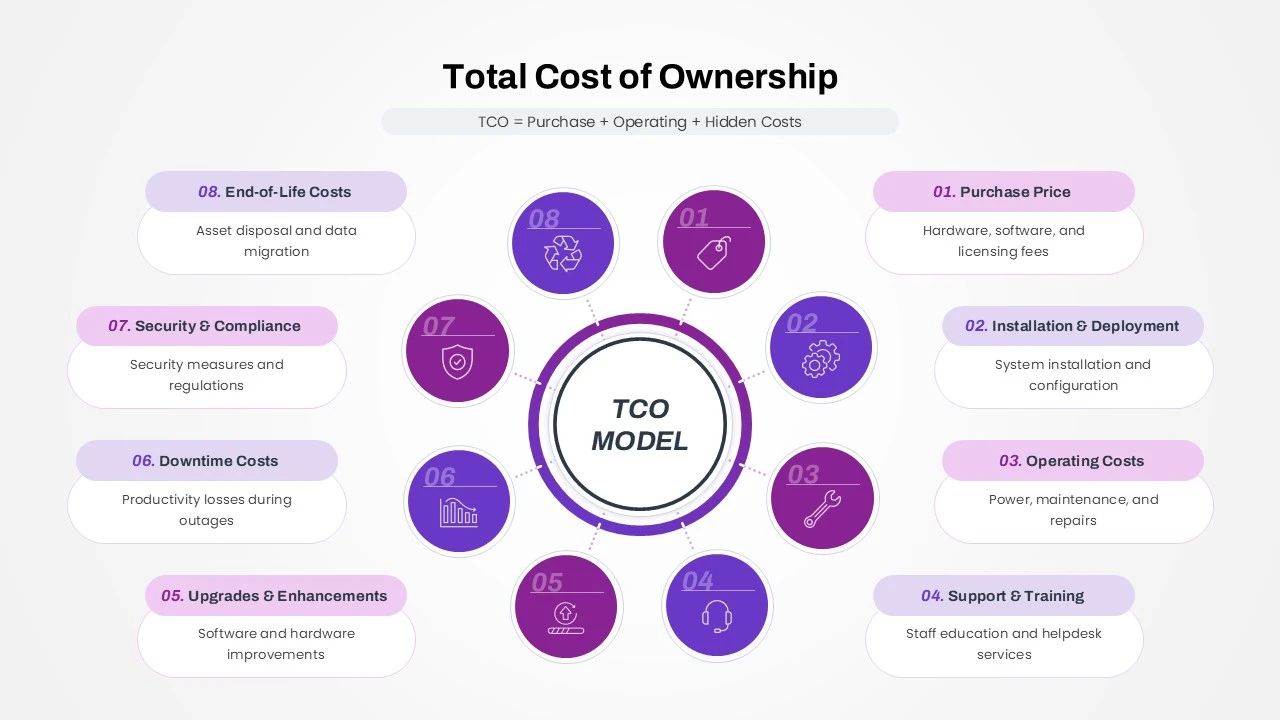
The purchase price is the beginning of a steel coil wrapper's cost, not the total. A useful total-cost-of-ownership (TCO) comparison follows the costs of acquiring, installing, operating, maintaining, supporting, changing, and ultimately retiring two alternatives that perform the same required job.
TCO answers "what will this option cost over the defined study period?" ROI answers "what benefit may the investment create?" Keep the models separate. This article provides a decision framework, not a cost estimate, supplier comparison, or financial approval.
Set One Purpose, One Period, and One Boundary
Choose a study period that matches the organization's decision rule and state the base date, currency, price basis, inflation treatment, and discount-rate policy. Define whether the comparison covers one wrapper, a handling-and-wrapping cell, or a broader packaging line. Both alternatives must satisfy the same minimum functional and acceptance requirements before their costs are compared.
List every included cost and every cost held by another department. If an upstream conveyor, crane interface, building work, or operator role sits outside the equipment purchase order but is necessary to run the solution, excluding it without explanation distorts the comparison.
Acquisition and Start-Up Cost
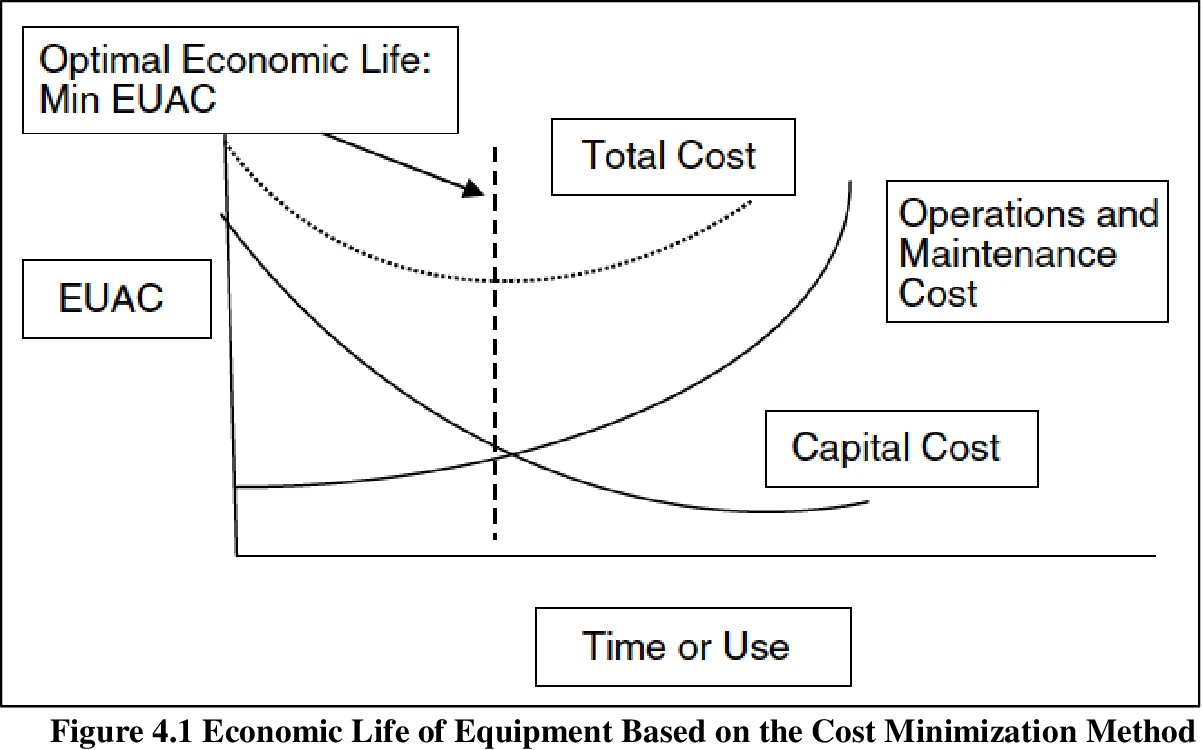
Acquisition may include equipment, options, engineering, freight, insurance, taxes/duties, and contractual contingencies. Start-up may include foundations, utilities, safeguarding, controls integration, installation, commissioning, training, production interruption, trial materials, acceptance work, and customer-provided lifting/access resources.
Record whether each number is a dated quotation, contract value, estimate, or approved internal budget. Do not combine values with different currencies, dates, delivery terms, or scope revisions without normalizing and documenting the method.
Recurring Packaging, Utility, and Labour Cost
For packaging material, use a defined product population and account for material issued, returned, waste, rework, and price basis. For energy and utilities, use measured consumption where possible, with a stated load profile and operating hours. Rated electrical power is a design characteristic, not an automatic annual consumption figure.
Labour includes more than the person at the wrapper: loading, unloading, replenishment, inspection, exception response, supervision, planned recovery, and any remaining manual process. State the activity boundary and whether the cost is incremental cash cost or an allocated internal cost.
Maintenance, Spares, Support, and Change
Build maintenance cost from the approved maintenance plan, work history where available, labour rate, wear parts, critical spares, external support, and planned outages. Include software, controls, cybersecurity, obsolescence, and parameter/document control if they are part of maintaining the intended service. A low initial price can be outweighed by long lead times or a support model that the site cannot sustain, but that conclusion requires evidence for the actual supplier, configuration, and operating context.
Downtime, Quality, and Damage Need Careful Treatment
Separate planned and unplanned downtime. To value lost production, show actual demand, the bottleneck, recovery route, contribution method, and whether the lost output can genuinely be recovered. Without that evidence, record downtime as an operational risk or scenario — not a cash loss in the base TCO.
Apply the same caution to rework, product damage, corrosion, customer claims, and quality inspection. Use dated records and a documented attribution method. A generic source cannot prove that a particular wrapper will prevent a project-specific loss.
Upgrades, Residual Value, and Retirement
Later-life costs can include component obsolescence, software change, retrofit, relocation, disposal, and environmental/contractual obligations. Residual value may be uncertain; state the basis and use a conservative treatment when evidence is weak. Do not offset an uncertain resale value against certain operating cost without making that asymmetry visible.
Compare Alternatives with a Transparent Financial Method
For a simple undiscounted view, sum the included costs over the study period and keep the timing of each cost visible. For a discounted comparison, discount future costs and residual value using the organization's approved rate and timing convention, then compare alternatives that meet the same required function.
Do not copy a discount rate or energy escalation assumption from an unrelated market. Use the organization's policy or an approved source, record the base date, and test sensitivity. The method is valuable because it exposes assumptions, not because it produces a precise-looking result.
Make the Next Action Cross-Functional
Create a one-page TCO charter: required function, alternatives, study period, financial policy, cost categories, data owners, source hierarchy, review dates, and decision owner. Then collect the records in stages — quotation and installation first, operating baseline next, maintenance/support and risk scenarios last.
When procurement, finance, operations, maintenance, engineering, and quality all approve the boundary, the resulting TCO comparison becomes a durable decision record rather than a price spreadsheet with hidden costs.
Visual Details

Click to enlarge

Click to enlarge

Click to enlarge
Click to enlarge
Watch How It Works
Discover how our automated packaging solutions optimize your production line efficiency. This video demonstrates the seamless operation designed for maximum protection.
Trusted by Steel Mills & Industry Leaders
Global manufacturers rely on FHOPE heavy duty packaging equipment


Ready to optimize your packaging line?
Get a custom quote with ROI analysis. Our engineers respond within 24 hours.
- Free layout design
- Global installation support
- 2-year warranty included
Your information is secure and will never be shared.
Related Machines

Customized Coil Packing Lines Achieve 90% Less Labor
View Details →
Copper Coil Packing Line Series - Complete Automated Packagin
View Details →
Coil Wrapping Machine For Pipe Coil
View Details →
Semi-Automatic and Fully Automatic Steel Coil Packing Lines D
View Details →
Data Integration for Automatic Coil Packing Lines with ERP/ME
View Details →
Turnkey Solution: Fully Automated Coil Slitting and Packing L
View Details →
Guide of the Coil Car for Integrating the Coil Rewinder with
View Details →
How to prevent coils being picked up missed together in coil
View Details →
Packaging Line Of Metal Rolls And Coils
View Details →
Metal Coil Wrapper Machine In India
View Details →
Coil Wrapping Machine In Vietnam
View Details →
Coil Wrapping Machine In Thailand
View Details →
Coil Wrapping Machine In Singapore
View Details →
Coil Wrapping Machine In Philippines
View Details →
Coil Wrapping Machine In Malaysia
View Details →
Coil Wrapping Machine In Indonesia
View Details →
Coil Wrapping Machine In Venezuela
View Details →
Coil Wrapping Machine In Uruguay
View Details →
Coil Wrapping Machine In Peru
View Details →