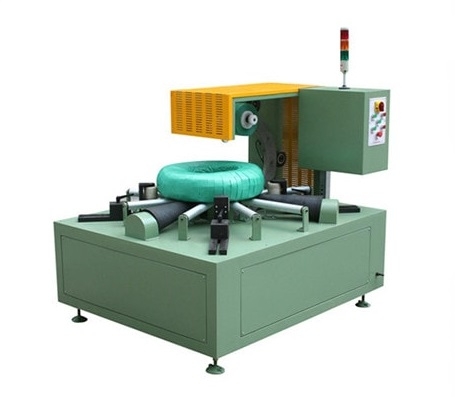
Eye-Through Steel Coil Wrapping Machine: Working Process and Applications
Learn the working principle of eye-through steel coil wrapping and explore how vertical coil wrappers achieve secure, uniform packaging through the coil eye. This guide explains machine structure, operation methods, suitable applications, and how automated wrapping improves industrial coil handling.
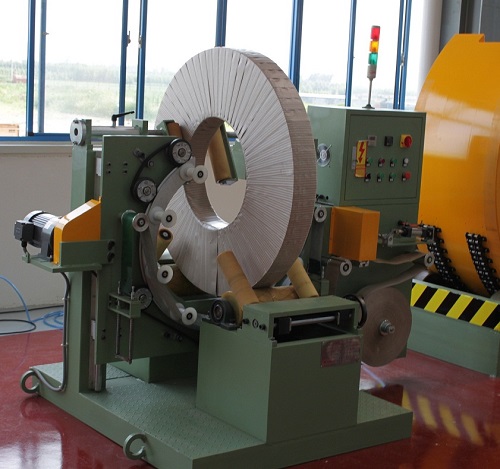
What Is Eye-Through Steel Coil Wrapping and How Does It Work?
Eye-through wrapping is a way of applying packaging material around a ring-shaped coil. The material passes through the coil eye, then travels around the coil cross-section while the relative motion of the coil and wrapping mechanism advances the coverage.
This matters because a steel coil is not a rectangular load. Its outer diameter, side faces, inner diameter, and edges can each need attention. Eye-through wrapping can help create continuous coverage around the selected path, but the wrapping pattern alone does not prove protection against moisture, corrosion, impact, or every logistics condition.

Why a Coil Needs a Different Wrapping Path
With a box or pallet, material can often be applied around the outside. A coil has a central opening and a curved cross-section. If the packaging objective includes areas near the inner diameter or both side faces, an outside-only path may not describe the required coverage.
That does not mean every coil needs the same package. The appropriate package depends on the surface condition, storage and transport route, packaging specification, handling method, and the risk the package is intended to reduce. The useful starting point is to define the final accepted package, not to begin with a machine name.
How the Wrapping Pattern Is Formed
Think of the process as three linked actions:
- Introduce the material. The packaging material is guided through the coil eye and placed on the intended starting area.
- Travel around the coil cross-section. A wrapping mechanism carries the material around the cross-section while the coil is supported and controlled by the approved arrangement.
- Advance the coverage. Relative movement gradually shifts each pass beside the previous pass. The amount of overlap and the number of layers determine the visible wrapping pattern.
The final pattern is therefore a result of the material width, relative movement, material behavior, coil geometry, tension control, and the chosen package specification. It should be observed and accepted on a representative sample; it should not be inferred from a generic diagram.
What Eye-Through Wrapping Can Cover—and What It Cannot Prove
An eye-through route can be designed to cover some combination of:
- the outer diameter;
- one or both side faces;
- the inner diameter;
- the coil edges; and
- selected areas where the material tail or additional protection is applied.
Coverage is not the same as performance. A coil may look fully wrapped while still requiring other packaging layers, edge protection, restraint, moisture control, identification, storage controls, or handling instructions. The required combination belongs in the approved packaging specification.
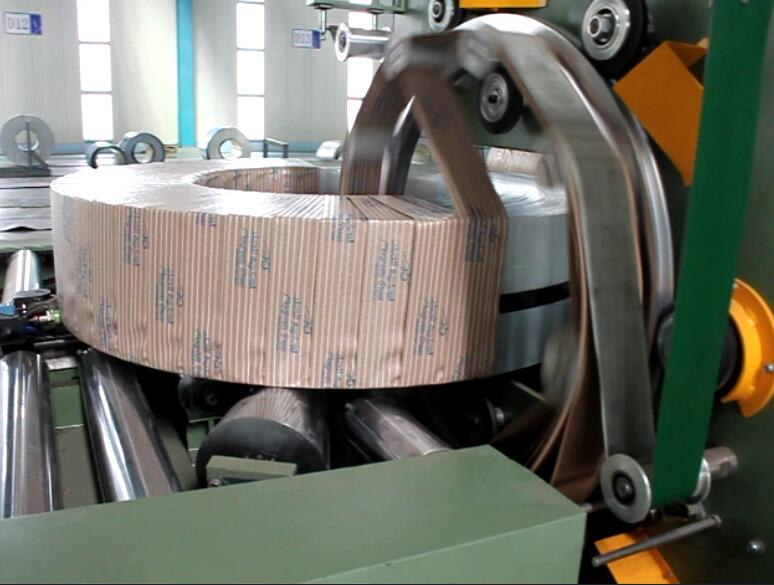
The Four Questions to Answer Before Choosing Equipment
1. Is There Enough Approved Clearance Through the Coil Eye?
The coil eye must accommodate the planned material path and the relevant part of the wrapping arrangement. The answer depends on the current machine design, material roll or carrier arrangement, coil dimensions, and safe operating clearance. Do not assume fit from a generic product category.
2. What Coverage Does the Package Actually Require?
Ask which surfaces must be covered, where extra edge or inner-diameter protection is needed, and which areas are intentionally left accessible for later handling or inspection. A clear drawing or sample package is more useful than the phrase "full wrapping."
3. Can the Selected Material Run Through the Planned Path?
Film, paper, woven material, VCI-containing materials, and composite layers can behave differently during feeding, tensioning, cutting, and tail securing. Material suitability requires the actual material specification and a representative trial; it cannot be guaranteed from the material name alone.
4. How Will the Result Be Accepted?
Agree the sample coil, material, visual or measured criteria, inspection method, exception handling, and acceptance owner before a trial. This prevents a disagreement after the machine has completed its motion but the package result is still unclear.
Tension and Overlap Are Packaging Controls, Not Decoration
Tension helps keep material in contact with the chosen path, while overlap reduces exposed gaps between adjacent passes. Too little control can leave loose or inconsistent coverage. Too much tension or an unsuitable path can create other problems, including distortion, tearing, marking, or poor material behavior.
There is no universal setting that can be published safely without the actual coil, material, package objective, and test method. Treat tension and overlap as approved recipe variables, then verify the package against defined acceptance criteria.
A Practical Inspection Sequence
After a representative package is complete, inspect the result in the same order a receiver or quality inspector would encounter it:
- Confirm the coil identity and approved package recipe or material record.
- Check the intended outer, side, inner, and edge areas for the specified coverage.
- Check for material damage, loose sections, excessive wrinkles, exposed areas, or an unsecured tail.
- Confirm any additional protection or restraint required by the package specification.
- Record the result, deviation, rework route, and release decision.
If a package fails, the useful question is not simply "Did the wrapper run?" It is which input, movement, material behavior, or acceptance definition produced the deviation.
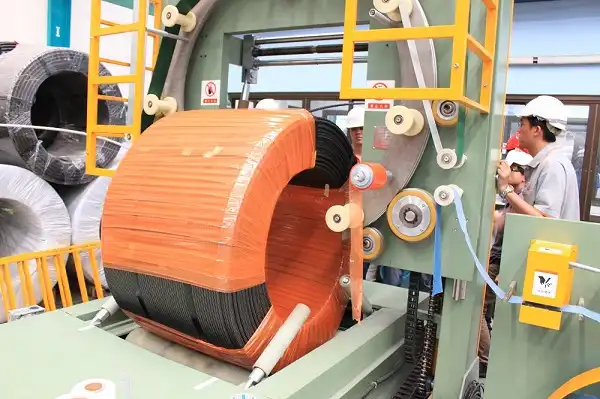
Demonstration only. Identify coil, material, conditions, and package criteria; captions or a transcript are required.
What to Ask a Supplier or Packaging Engineer
Bring a representative coil description, the intended package result, the packaging material specification, the current handling route, and any storage or transport requirement. Ask for a returned proposal or trial plan that makes the following visible:
- the confirmed coil range and the evidence used to confirm fit;
- the material path and included/excluded package components;
- the required operator actions and recovery method;
- the sample and acceptance criteria for a packaging trial; and
- the record that will show whether the result passed.
That conversation turns "eye-through wrapping" from a search term into a testable packaging decision.
Visual Details
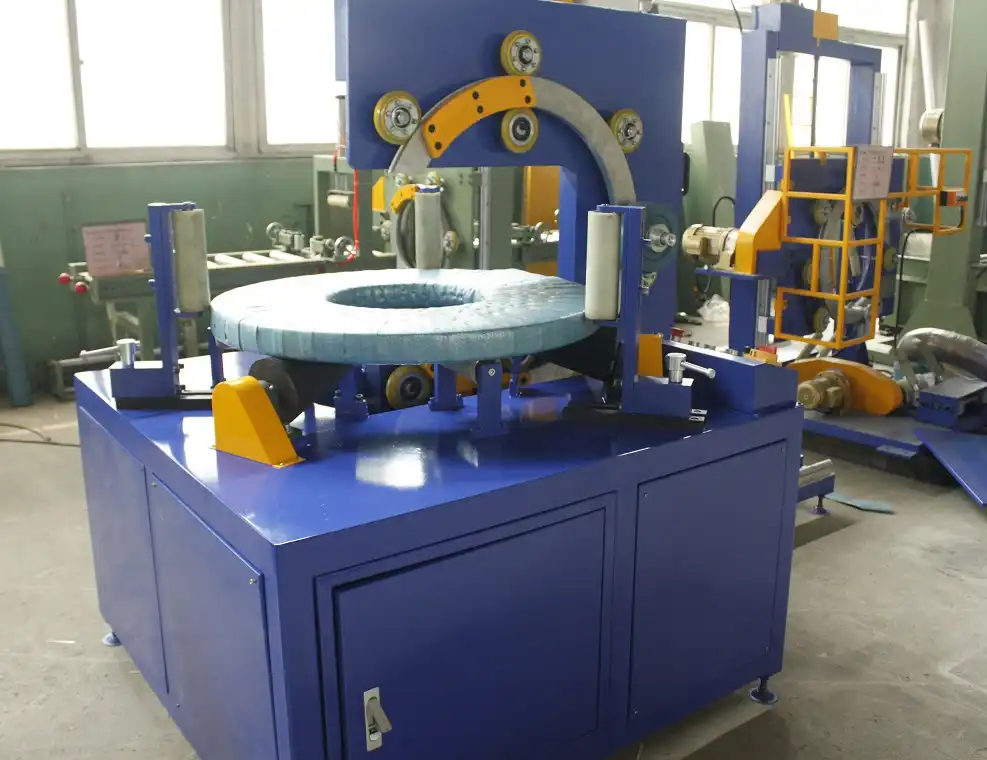
Click to enlarge
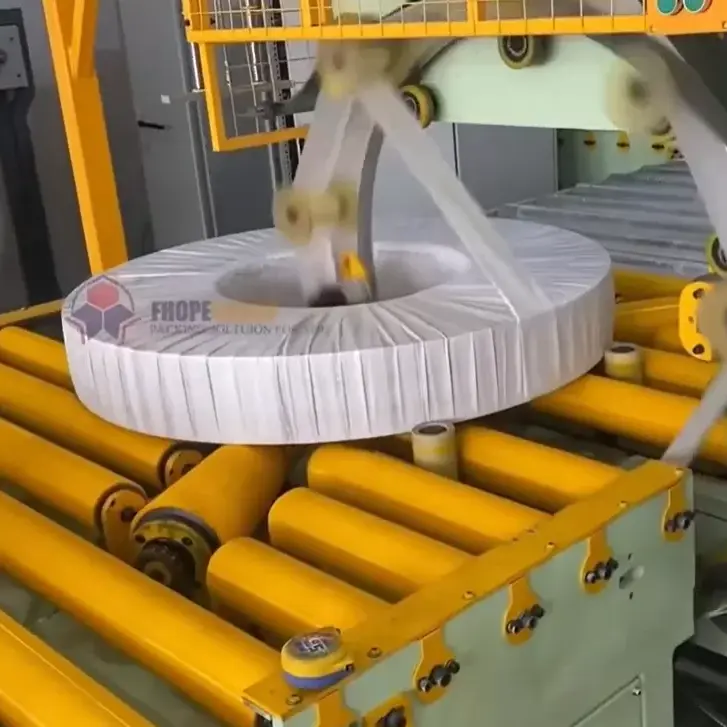
Click to enlarge
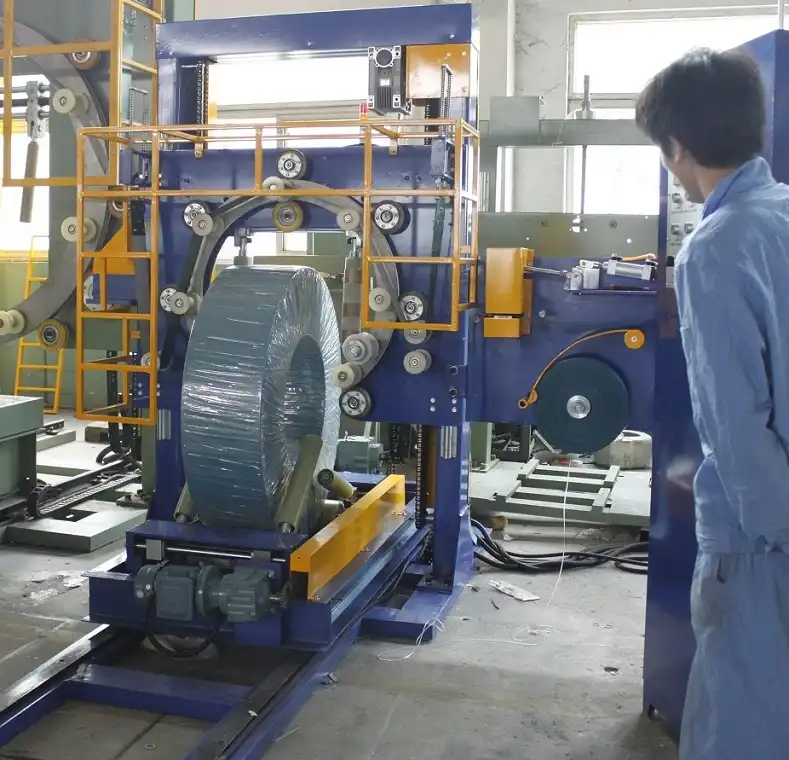
Click to enlarge
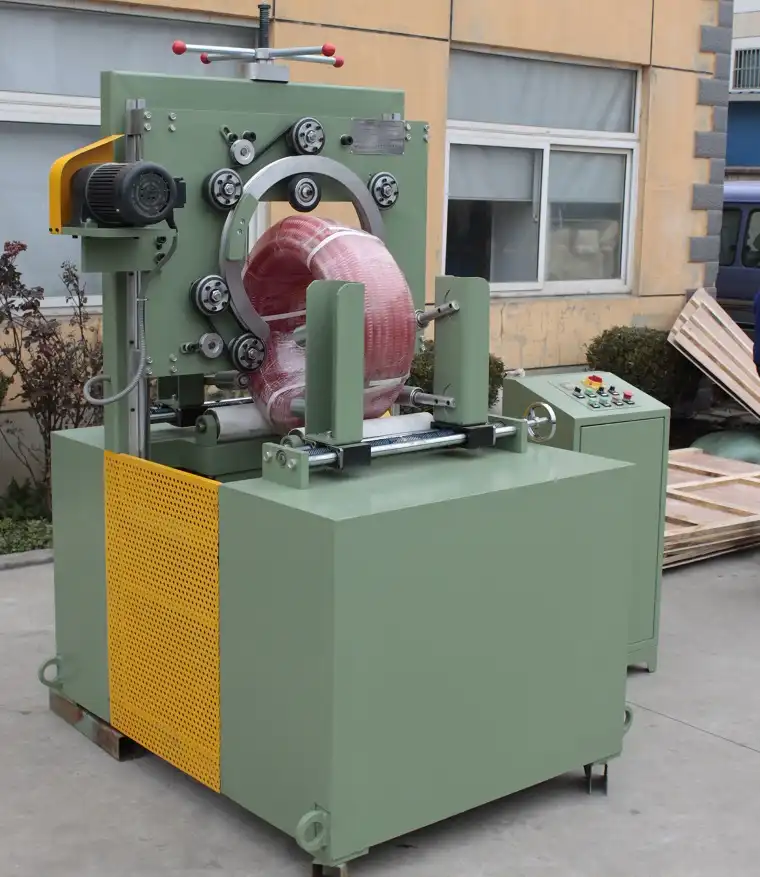
Click to enlarge
Watch How It Works
Discover how our automated packaging solutions optimize your production line efficiency. This video demonstrates the seamless operation designed for maximum protection.
Trusted by Steel Mills & Industry Leaders
Global manufacturers rely on FHOPE heavy duty packaging equipment


Ready to optimize your packaging line?
Get a custom quote with ROI analysis. Our engineers respond within 24 hours.
- Free layout design
- Global installation support
- 2-year warranty included
Your information is secure and will never be shared.
Related Machines
Steel Coil Packaging line
View Details →
Vertical coil packaging line
View Details →
Hose Coil Packaging line
View Details →
Copper Coil Packaging line
View Details →
Wire Coil Packaging line
View Details →
Panel Packaging line
View Details →
Pipe Bagging Machine
View Details →
Aluminum profile packing line
View Details →
FHOPE Automatic pipe tube bundling&strapping line
View Details →
Automatic pipe tube bundling & strapping line
View Details →
Automatic steel tube strapping machine
View Details →
FHOPE Automatic steel tube packing machine
View Details →
Automatic plastic Pipe strapping packing line
View Details →
Automatic PPR/PVC Pipe bagging line
View Details →
Platsic pipe bag packing machine
View Details →
Tyre Packing Machine FPT-200
View Details →
Tyre Packing Machine FPT-300
View Details →
Tyre Packing Machine FPT-400
View Details →
Cable Coil Packing Machine-FPCA100
View Details →