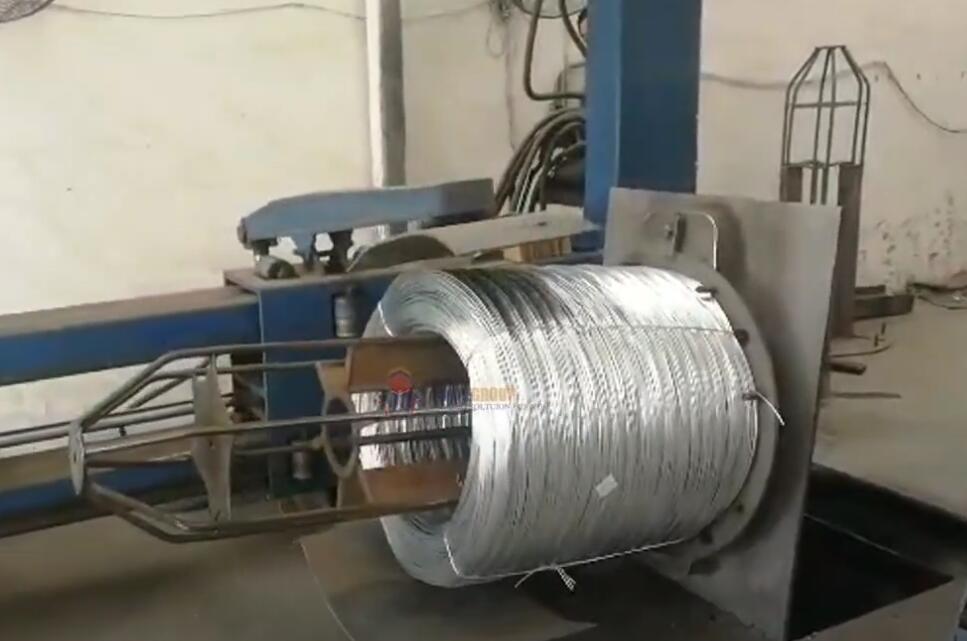
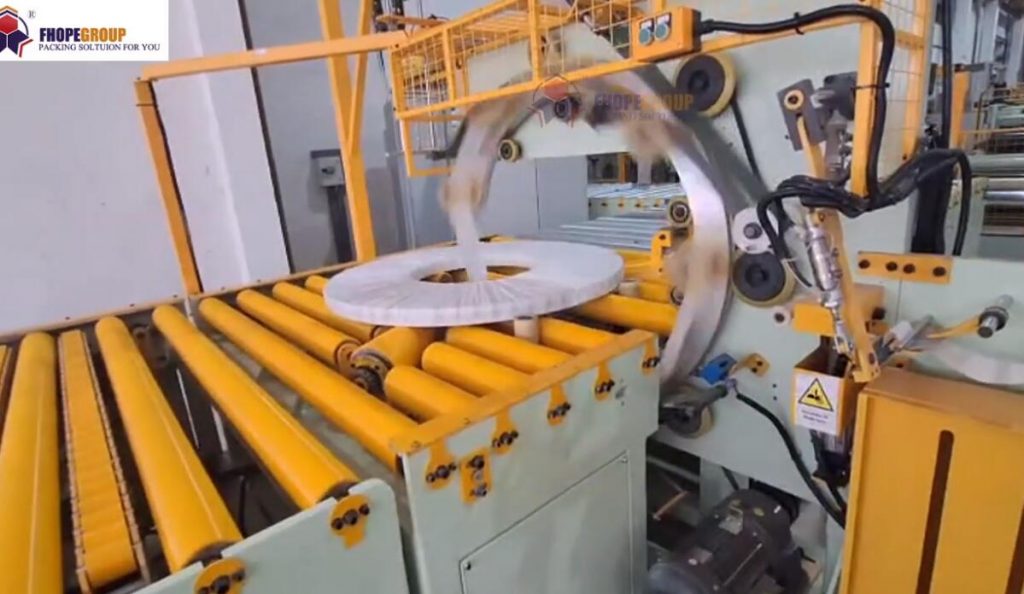
Executive summary This clip shows our electromagnetic coil lifter on an overhead crane. The orange magnet sits on top of an eye-vertical steel coil, lifts it clear of the floor and sets it down again, while the crane display shows the load. Part of the test opens the control box and cuts the power, to show the coil stays held while the backup supply takes over.
Table of Contents
- What the clip shows
- Why lift coils with a magnet
- Sizing the magnet
- What we set per crane
- Selection checklist
- Safety
- Engineering FAQ
- Next step
- Related reading
- Sources
What the clip shows
| Step | What you see |
|---|---|
| Pick | The magnet lands on top of an eye-vertical coil |
| Lift | The crane lifts the coil clear of the floor |
| Load | The crane display shows the lifted weight |
| Power-off test | The control box is opened and power is cut |
| Set down | The coil is lowered and released |
Why lift coils with a magnet
- No hooks or slings. Staff do not go under or beside the coil to rig it.
- No edge damage. Nothing touches the coil edge or eye.
- Fast cycle. Land, energise, lift, release.
- Tight storage. Coils can stand close together.
Sizing the magnet
Worked example (illustrative).
| Item | Value |
|---|---|
| Heaviest coil (illustrative) | 12 t |
| Safety factor for holding force (illustrative) | 2 |
| Holding force needed, 12 × 2 | 24 t |
| Magnet own weight (illustrative) | 2 t |
| Crane capacity needed, 12 + 2 | 14 t or more |
What we set per crane
| Setting | Depends on |
|---|---|
| Magnet size | Coil OD and ID |
| Holding force | Heaviest coil |
| Backup supply | Hold time after power loss |
| Control | Crane cab or pendant |
Selection checklist
- Coil OD, ID, width and weight.
- Coil temperature.
- Crane capacity.
- Backup supply hold time.
- Control from cab or pendant.
- Power supply.
Safety
- Never stand under a lifted coil.
- Test the backup supply on schedule.
- Lift only coils within the rated weight.
- For CE markets, the machine is designed to ISO 12100 and EN 13155.
Engineering FAQ
Q: How does a magnet lift a coil? A: The energised magnet holds the top face of an eye-vertical coil.
Q: What happens if power fails? A: A backup supply keeps the magnet energised while the coil is lowered.
Q: What crane do I need? A: One rated for the heaviest coil plus the magnet weight; a 12 t coil and 2 t magnet need at least 14 t.
Q: Does it damage the coil? A: No hooks or slings touch the edge or eye.
Q: Which standards apply? A: For CE markets, ISO 12100 and EN 13155.
Next step
We match a coil lifting magnet in three steps:
- Submit your layout drawing with coil sizes, weights and crane capacity, to info@fhopepack.com.
- Receive a proposal within 48 hours with the machine data and layout.
- Book a site survey so we confirm the crane and storage area.
Related reading
- Coil Tilter with 180 Degree Rotary Base
- Steel Coil Packaging Line: The Complete Process Step by Step
- Automatic Steel Coil Stacking and Palletizing Gantry
- Automatic packing lines
Sources
- Machine content: FHOPE engineering team, 2026-10-10
- Clip: the video on YouTube
- Magnet sizing: our worked example, illustrative values
- Standards scope: ISO 12100:2010; EN 13155:2020
- Proposal timing: approved house CTA (proposal within 48 hours)
Last reviewed: 2026-10-10