Summary: This guide evaluates robotic stacking systems and automated packing lines for coiled metal and wire handling, focusing on payload capacity, cycle time, and safety compliance. It highlights that final equipment selection depends on integration flexibility, maintenance complexity, and long-term operational costs. The text includes a disclaimer that performance metrics and labor savings are typical industry ranges that vary by configuration and facility layout.
[VIDEO PLACEHOLDER]
Disclaimer: Performance metrics, cycle times, footprint dimensions, and labor savings are typical industry ranges or vendor-dependent examples. Actual results vary by configuration, material type, facility layout, and operating conditions. Always validate specifications with certified suppliers before capital approval.
🛠️ Evaluation Criteria
Robotic stacking systems and automated packing lines both achieve high throughput, yet final selection depends on payload capacity, safety compliance, cycle time consistency, maintenance complexity, integration flexibility, and long-term operational cost projections.
Industrial packaging decisions require standardized measurement dimensions. Procurement teams evaluate equipment based on five core parameters that directly impact factory floor performance. Payload capacity determines the maximum coil weight tolerance during automated handling. Cycle time measures the duration required to complete one full stacking or wrapping sequence. Safety compliance verifies adherence to established machinery guarding protocols and emergency stop functionality. Maintenance complexity assesses routine lubrication intervals, sensor calibration frequency, and replacement part availability. Integration flexibility confirms compatibility with upstream conveyors and downstream strapping units. Each criterion translates directly into labor reduction metrics, product damage rates, and space utilization efficiency.
🏗️ Option A
Six-axis robotic coil stackers deliver precise load placement through specialized end-of-arm tooling, reduce manual handling injuries significantly, stabilize pallet geometry for safe transit storage, maintain continuous operation across multiple stations, and integrate directly with upstream conveyors under typical plant conditions.
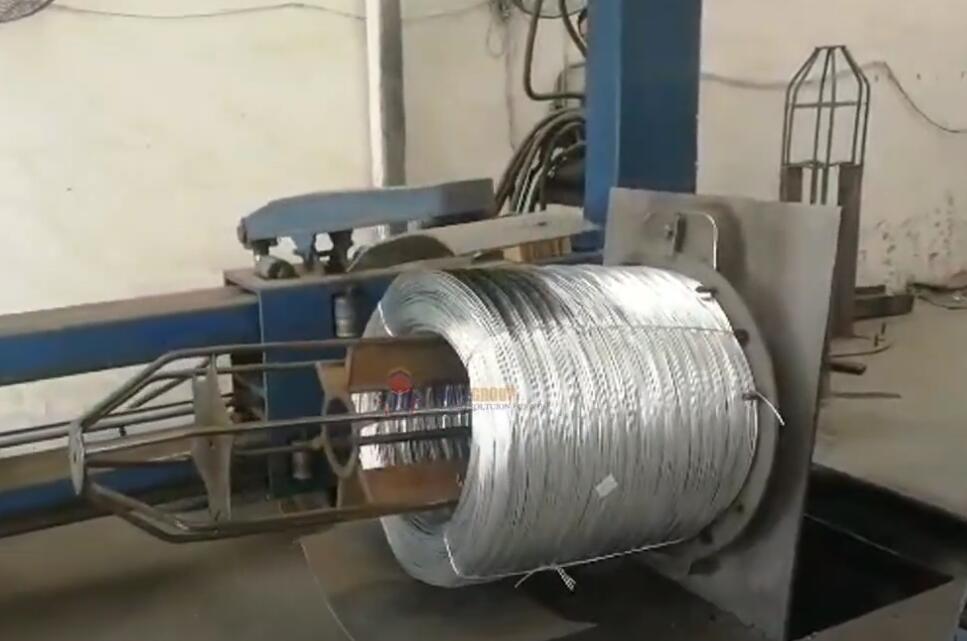
A six-axis articulated robot arm provides multi-directional movement required for complex coil positioning. The robotic unit accepts payloads up to 8,000–10,000 kg depending on structural mounting configuration (vendor-dependent example). Cycle time typically ranges from 30 to 60 seconds per pallet load at standard factory temperatures. End-of-Arm Tooling (EOAT) selection depends on material composition and coil inner diameter specifications. Fork grippers engage the internal bore for ferrous steel coils exceeding five metric tons. Magnetic lifters contact flat outer surfaces for carbon steel applications, requiring residual magnetism demagnetization protocols before release. Vacuum lifters handle coated aluminum or galvanized wire spools without surface marring. Control architecture relies on a Programmable Logic Controller (PLC) that coordinates motion paths with upstream conveyor signals. Human-machine interface panels enable recipe storage for varying coil diameters and stacking patterns. Safety fencing encloses the work cell while area scanners detect personnel entry. ISO 10218 compliance mandates immediate deceleration when safety zones are breached. Multi-station configurations allow a single robot to service four pallet positions simultaneously. Continuous operation typically reduces per-unit labor costs by 50–60% compared to manual positioning methods, driving measurable OEE improvement and shortening ROI timelines through consistent cycle execution.
🔗 Related: Explore more solutions
📈 Option B
Automated turnstile feeding paired with a rotary upender creates a continuous orientation workflow, minimizes factory floor space requirements, ensures uniform film application and strap tension across varying coil diameters, supports fully unmanned palletizing sequences, and operates reliably under standard industrial humidity levels.
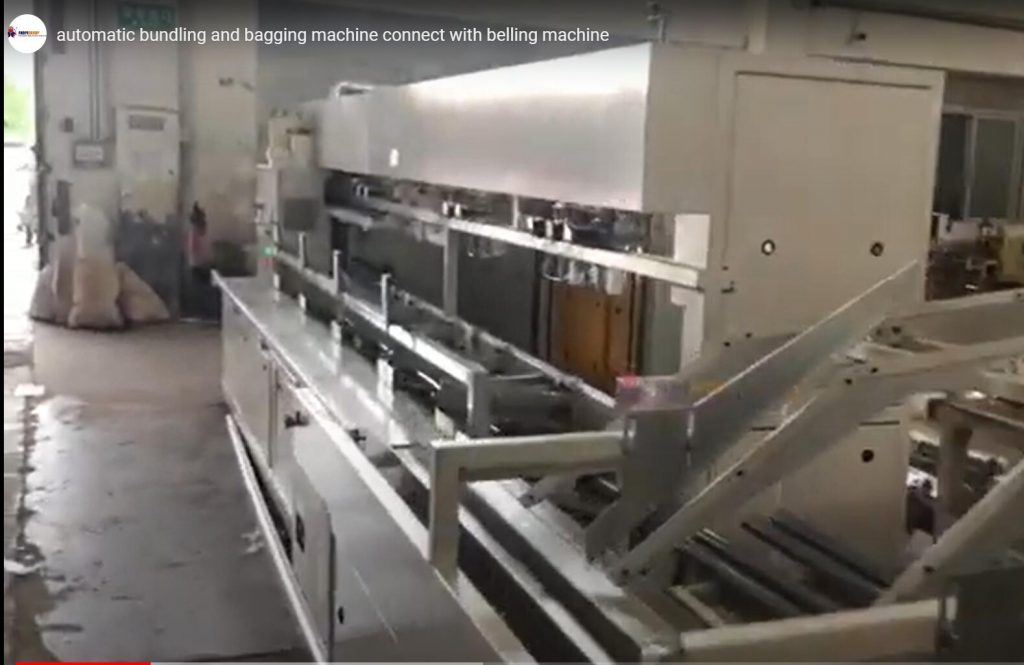
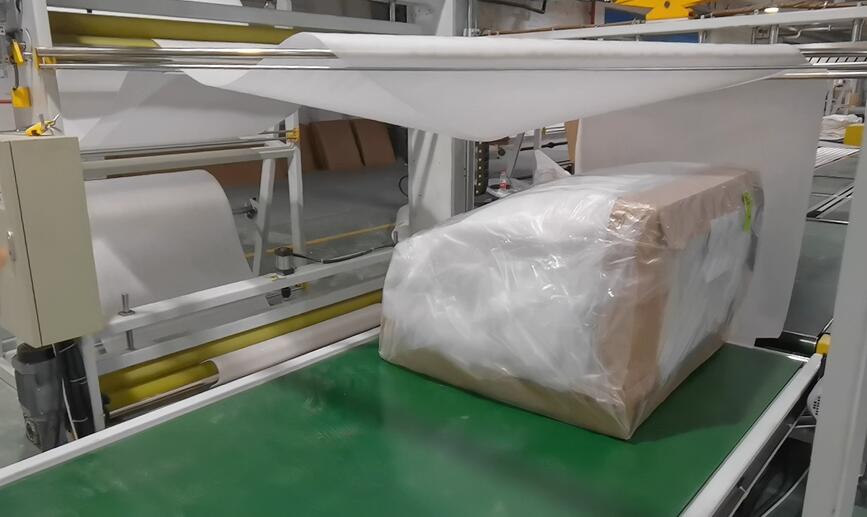
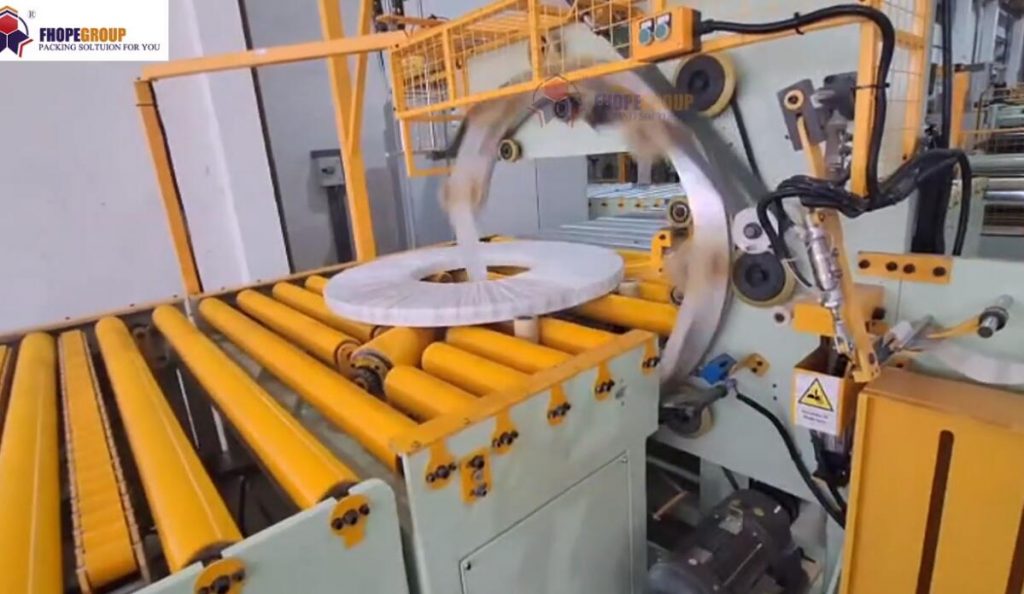
Conveyor-based packing lines utilize mechanical turning devices to align coils before wrapping or strapping operations. A turnstile mechanism regulates feed speed to match downstream processing rates. Orientation capability rotates coils from eye-to-wall positioning to eye-to-sky alignment for vertical stacking compatibility. Upending equipment handles heavy loads while maintaining center-of-gravity stability during 180-degree transitions. Standard 180-degree mold upenders typically support maximum load capacities and rotation tolerances that vary by manufacturer specifications. Film application units apply stretch wrap or Volatile Corrosion Inhibitor (VCI) corrosion inhibitors at controlled tension levels, typically between 10 and 30 N based on film type. Strap tensioning machines secure loads with plastic or steel bands set to predefined break points. The system interfaces directly with automated coiling stations, as demonstrated in standard vertical coiling machine integration guides. PLC controllers synchronize conveyor belts, upenders, and wrapping heads into a single synchronized sequence. Floor footprint typically measures approximately 5–7 meters by 3–5 meters for standard line configurations. Maintenance intervals require monthly inspection of hydraulic seals and belt tensioners. Labor savings often reach 50–70% due to eliminated manual repositioning tasks, directly reducing scrap rates from handling damage and improving overall space utilization efficiency.
🛡️ Comparison Table
Standardized evaluation matrices enable direct performance benchmarking across competing packaging technologies, highlighting operational trade-offs that directly influence capital expenditure allocation, return on investment timelines, and overall equipment effectiveness targets for procurement teams evaluating automated material handling solutions.
| Evaluation Dimension | Option A: Robotic Coil Stacker | Option B: Conveyor & Upender Line | Parameter Specification Format |
|---|---|---|---|
| Payload Capacity | 8,000–10,000 kg maximum per cycle (vendor-dependent) | 7,500–9,000 kg maximum per cycle (typical range) | Robot arm lifts up to 10,000 kg loads at 0.6 m/s under verified supplier conditions. Conveyor belt transports 8,500 kg coils at 0.4 m/s under standard load distribution. Both configurations directly impact throughput consistency and OEE targets. |
| Cycle Time | Typically 30–60 seconds per pallet position (vendor-dependent) | Typically 25–45 seconds per coil orientation (typical range) | Upender rotates 90-degree axis change in 10–15 seconds under smooth acceleration profiles. Stacker completes full placement sequence in 45 seconds under programmed path limits. Faster cycles correlate with reduced labor hours and improved ROI timelines. |
| Safety Compliance | ISO 10218 guarded work cell | ANSI/RIA R15.06 zone monitoring (typical standard) | Light curtains detect personnel entry within 30–50 cm of moving arms under factory illumination. Emergency stops halt all axes within 0.5 meters under rated voltage conditions. Compliance directly reduces incident-related downtime and insurance premiums. |
| Film & Strap Integration | Compatible with VCI wrap or banding (typical range) | Integrated tension-controlled wrapping head (vendor-dependent) | Wrapping head applies 15–25 N film tension at 1.0–1.5 m/s speed under ambient humidity range. Strapping unit secures loads with 700–900 N break strength under calibrated pressure settings. Proper tensioning minimizes transit damage and lowers scrap reduction costs. |
| Maintenance Complexity | Quarterly sensor calibration required (typical interval) | Monthly hydraulic seal inspection (vendor-dependent example) | Hydraulic cylinders maintain pressure within ±5% tolerance over 1,000 operating cycles. Vacuum pads retain suction force above 60 kPa after 500 attachment releases. Predictable maintenance schedules support accurate budget forecasting and planned downtime reduction. |
🔗 See Also: Related equipment
⚙️ Selection Advice
Procurement decisions must align equipment selection with actual maximum coil weights, required daily throughput volumes, available safety zone clearances, existing conveyor infrastructure compatibility, long-term maintenance budget constraints, and operator training requirements under typical plant operating conditions.
Heavy ferrous coils exceeding 8,000 kg typically require robotic stacking due to superior gripping flexibility and multi-station palletizing capability. Facilities with restricted floor space benefit from compact upender lines that combine orientation and wrapping in a single footprint. Production environments demanding zero surface contact should select vacuum-equipped robots over magnetic lifters to prevent coating damage and reduce scrap rates. High-volume operations processing mixed coil diameters achieve better throughput consistency with automated turnstile feeding systems. Maintenance budgets favor conveyor-based architectures because hydraulic and belt components standardize across multiple machine types. Safety compliance requirements dictate guarded work cells for robotic installations, while upender lines require perimeter zone monitoring. Verify all performance claims against supplier test reports before final capital approval. Total cost of ownership calculations must include energy consumption rates, replacement part pricing, and planned downtime frequency to ensure accurate financial forecasting and measurable ROI timelines.
Purchase-Decision Checklist
-
[ ] Confirm maximum coil weight and inner diameter tolerances match equipment specifications.
-
[ ] Measure available floor space against machine footprint requirements plus safety clearance zones.
-
[ ] Verify existing conveyor speeds align with automated feeding or robotic pick-up rates.
-
[ ] Review local machinery guarding regulations to determine required safety architecture.
-
[ ] Calculate expected labor reduction percentage based on current manual handling procedures.
-
[ ] Request supplier maintenance schedules and documented spare part lead times.
-
[ ] Validate film tension settings meet product protection standards for transit storage.
FAQ
Which system reduces surface damage rates more effectively for coated wire coils? Robotic stackers with vacuum end-of-arm tooling prevent contact scoring on protective coatings. Magnetic lifters and mechanical clamps require direct surface engagement that may compromise factory-applied finishes, directly impacting scrap reduction targets.
How does equipment selection impact warehouse storage density? Automated palletizing sequences produce uniform load heights and consistent edge alignment. Standardized stacking patterns maximize vertical space utilization while preventing shifting during transport handling, improving overall facility throughput efficiency.
What maintenance frequency applies to hydraulic upender mechanisms? Hydraulic cylinders typically require seal inspection every 2,500–3,500 operating hours (typical industry range). Fluid temperature monitoring prevents viscosity degradation under continuous duty cycles exceeding eight hours per shift, supporting predictable OEE improvement.