Executive summary
A wire coil wrapping and packing machine compacts each coil under a pressing head, tilts it to the horizontal and wraps it with a side drive unit while the coil turns. The outer side is then finished by hand. A compact, wrapped coil takes up less space on the truck and stays stable in transit. Coil size, press force and wrap pattern are confirmed per project.
Table of Contents
- Why compress and wrap
- What the machine does
- How the compression and wrap works
- Cycle time and control
- What the footage shows
- Typical configuration
- Selection checklist
- Operation and safety
- Engineering FAQ
- Next step
- Related reading
- Sources and standards
Why compress and wrap
A tall, loose coil wastes space on the truck and can shift during transport. Compressing the coil brings it closer to its final density, and a wrap keeps the layers in place until the coil is unwound.
Doing both at one machine avoids moving the coil between a press and a wrapper. Press force, coil height and wrap pattern are confirmed per project.
What the machine does
The machine is a press-and-wrap cell built around a circular base between two uprights. A coil is set on the base, the upper head presses the coil down to make it compact, and the coil is then turned to the horizontal and wrapped by a side drive unit.
The wrapped coil is lifted out of the cell with the side finish done. Coil size and working height are confirmed per project.
How the compression and wrap works
The two uprights carry a press head above the coil, so the head lowers and compresses the top of the coil while the coil stays seated on the base. A cage of vertical bars around the base keeps the coil contained under the press.
After the press step, the coil and base rotate to the horizontal position, and the drive unit on the side moves in to contact the coil and wrap it while it turns. The moving parts are arranged to suit the coil range per project.
Cycle time and control
The coil is set on the base and the press head lowers automatically to compact the top of the coil. The coil and base then rotate to the horizontal, the side drive unit moves in and wraps the coil as it turns, and the press head returns to start.
The cycle runs on its own once started, and the control layout is arranged per project. Press force, coil height and wrap speed are confirmed per project.
What the footage shows
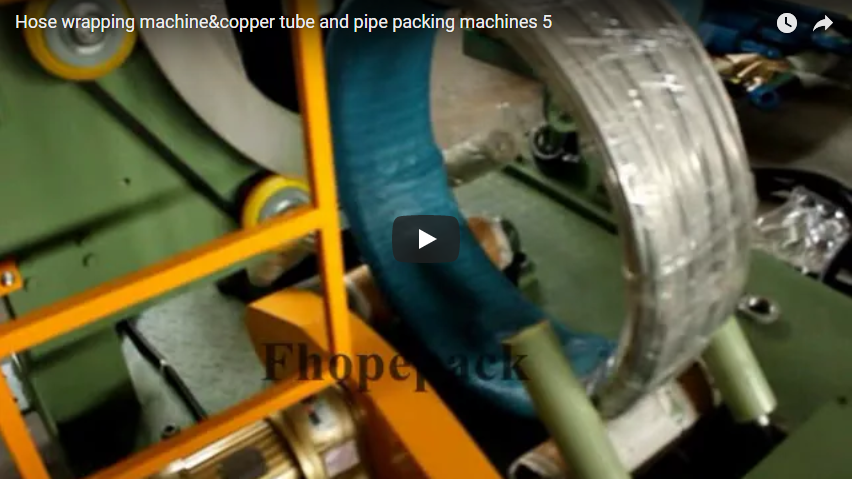
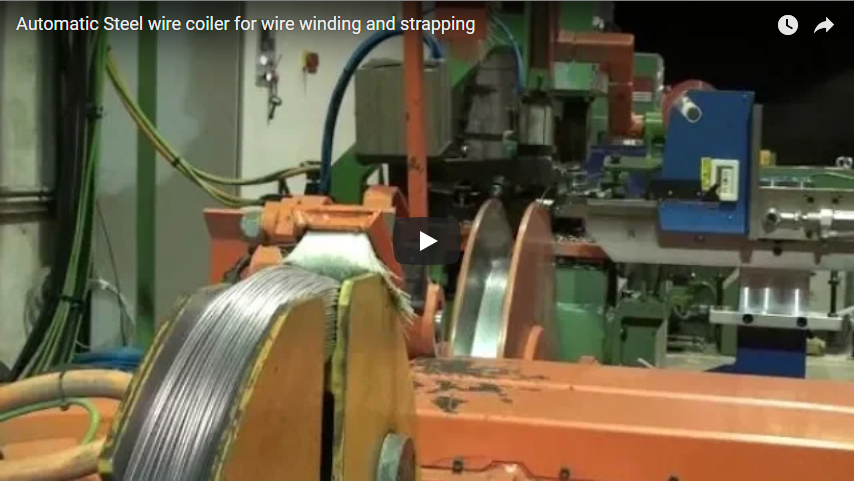
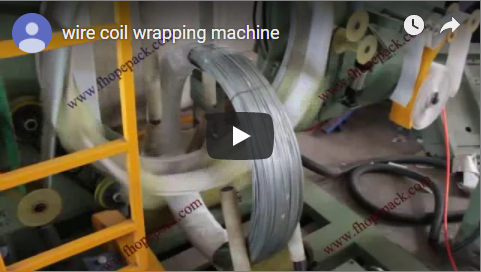
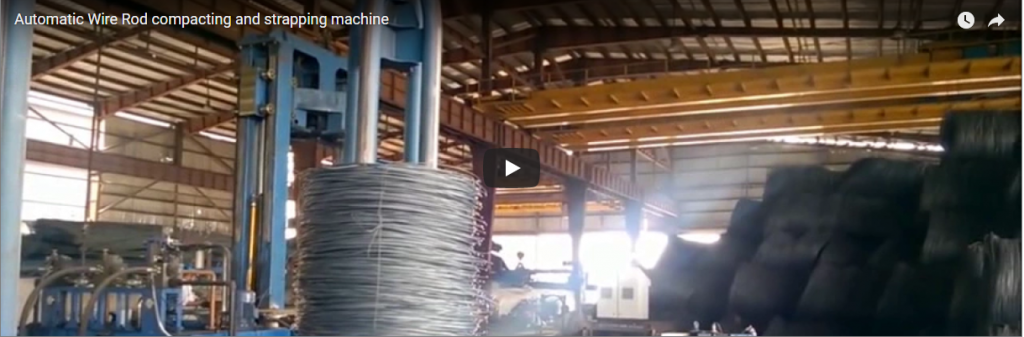
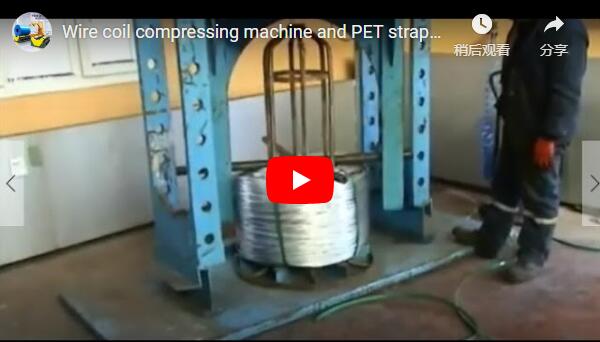
Our footage shows a large coil seated on the circular base while the upper head presses the top down under the uprights. The coil then tilts to the horizontal and the side drive unit contacts it, wrapping the coil as it turns, and an operator finishes the outer side by hand. It is a general demonstration, so your coil size, press force and wrap pattern are confirmed with us per project.
Typical configuration
Figures below list functional design boundaries rather than numeric values, and are confirmed per project.
| Parameter | Typical range, confirmed per project |
|---|---|
| Load | wire coils set on the circular base between the uprights |
| Press | upper head compresses the top of the coil |
| Tilt | coil and base rotate to the horizontal position |
| Wrap | side drive unit wraps the coil while it turns |
| Finish | outer side tied or secured by hand |
| Guarding | contained cell; guarding arranged per project |
| Control | cycle control arranged per project |
| Mount | floor, with access to the base on two sides |
| Electrical supply | 380 V three phase 50 Hz, or 220 V single phase for light machines, selected per project |
Selection checklist
| Question | Confirm per project |
|---|---|
| Coil range | outer and inner diameter, height, weight |
| Press | head travel, compacting force |
| Wrap | pattern, number of layers, speed |
| Finish | side securing method |
| Control | panel position, guarding around the cell |
| Electrical supply | voltage, phase and frequency on site |
Operation and safety
Set the coil on the base and start the press step, keeping clear of the head path and the tilting coil. Keep hands clear of the rotating coil and the side drive unit while the wrap runs, and confirm the coil is seated before each cycle.
Routine checks cover the press head, the base and the wrap unit, per the machine manual. Access to the base is arranged so the coil can be positioned safely.
Engineering FAQ
Q: What does this machine do? A: It presses a wire coil down to make it compact, then wraps the coil by a side drive unit while it turns.
Q: How much does it compress the coil? A: The head lowers until the coil reaches the compacted height set for that project, by a limit adjusted on the machine.
Q: Do we wrap the coil by hand? A: The main wrap runs automatically with the side drive unit after the coil is tilted to the horizontal. The outer side is then tied or secured by hand, and the side-finish method is confirmed per project.
Q: Can it handle wire rod and fine coils? A: The base, press head and drive unit are arranged for a coil range, with the wrapping force set by a per-project layout check.
Q: What does it suit? A: Wire and metal coils that need a compact, stable pack before transport, wrapped at a steady rate when the wrap speed is set per project.
Next step
- Email us at info@fhopepack.com with your coil size and weight.
- We send a pressing and wrapping proposal within 48 hours.
- We confirm the press force, tilt and wrap pattern for your coils.
Related reading
- Wire coil wrapping and packing machine video
- PET WRAPPING MACHINE
- Partial film wrapping and packing by orbital wrapper
- FHOPE packing machinery product lines
Sources and standards
- ISO 12100:2010 Safety of machinery, general principles for design and risk assessment
- EN 415-10:2014 Safety of packaging machines, general requirements
- EN ISO 13849-1:2023 Safety of machinery, safety-related parts of control systems
FHOPE wire coil wrapping and packing demonstration video. Reviewed as a general demonstration; coil size, press force and wrap pattern confirmed per project.
Last reviewed: 2026-10-12