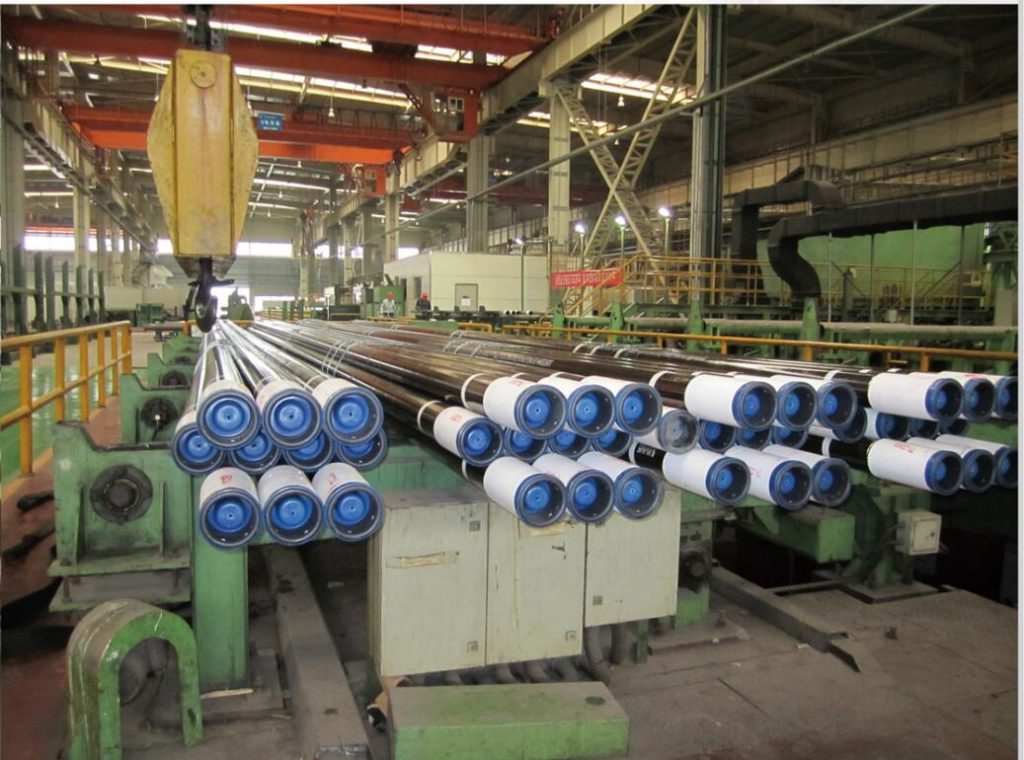
Executive summary Our automatic steel strapping machine bands a formed tube bundle with 5 to 7 straps, placed along the bundle according to its length. It uses blued, waxed steel strap 0.8 or 1.0 mm thick with 25 or 32 mm seals, joined by a double seal notch. We plan strap positions and strap use from your bundle length and cross-section.
Table of Contents
- How the automatic tube bundle strapping station works
- Strap count and spacing along the bundle
- Strap length for hexagonal and rectangular bundles
- Steel strap, seals and joint
- Strapping head data: tension, speed and pressure
- Utilities and safety
- Selection checklist for tube bundle strapping
- Engineering FAQ
- Next step
- Related reading
- Sources
How the automatic tube bundle strapping station works
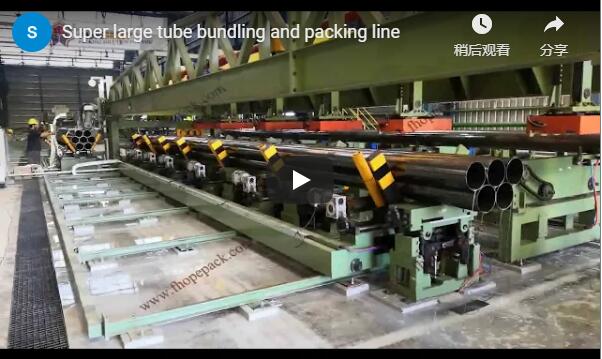
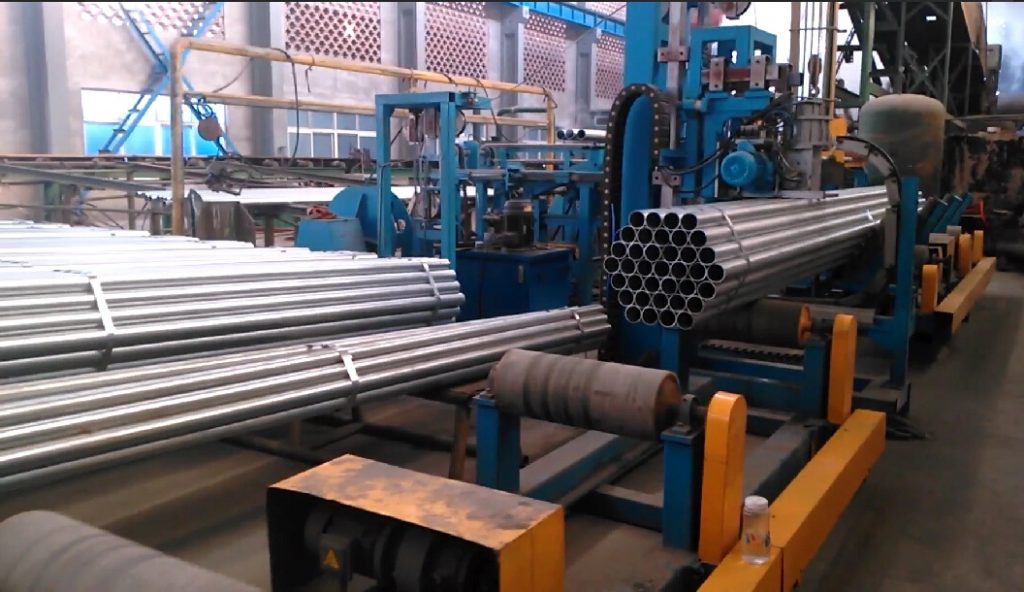
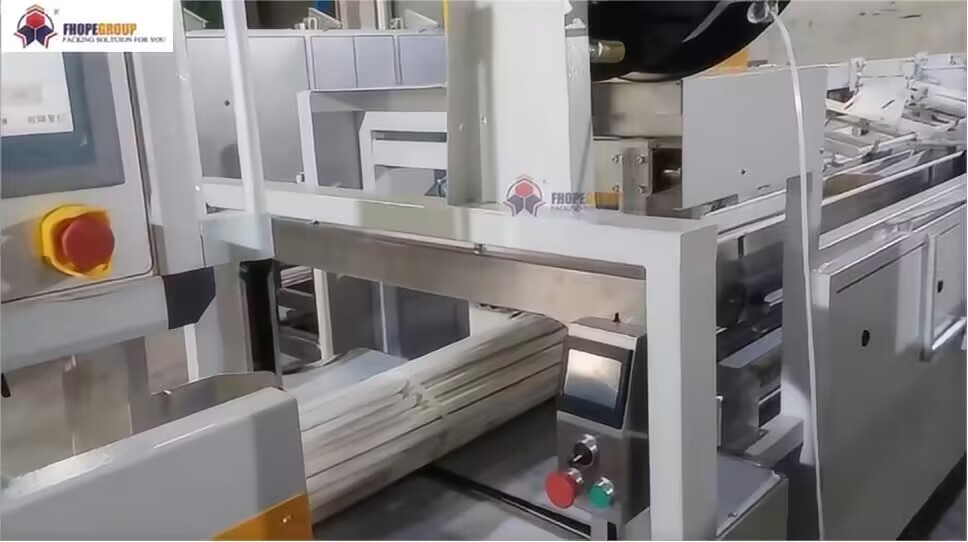
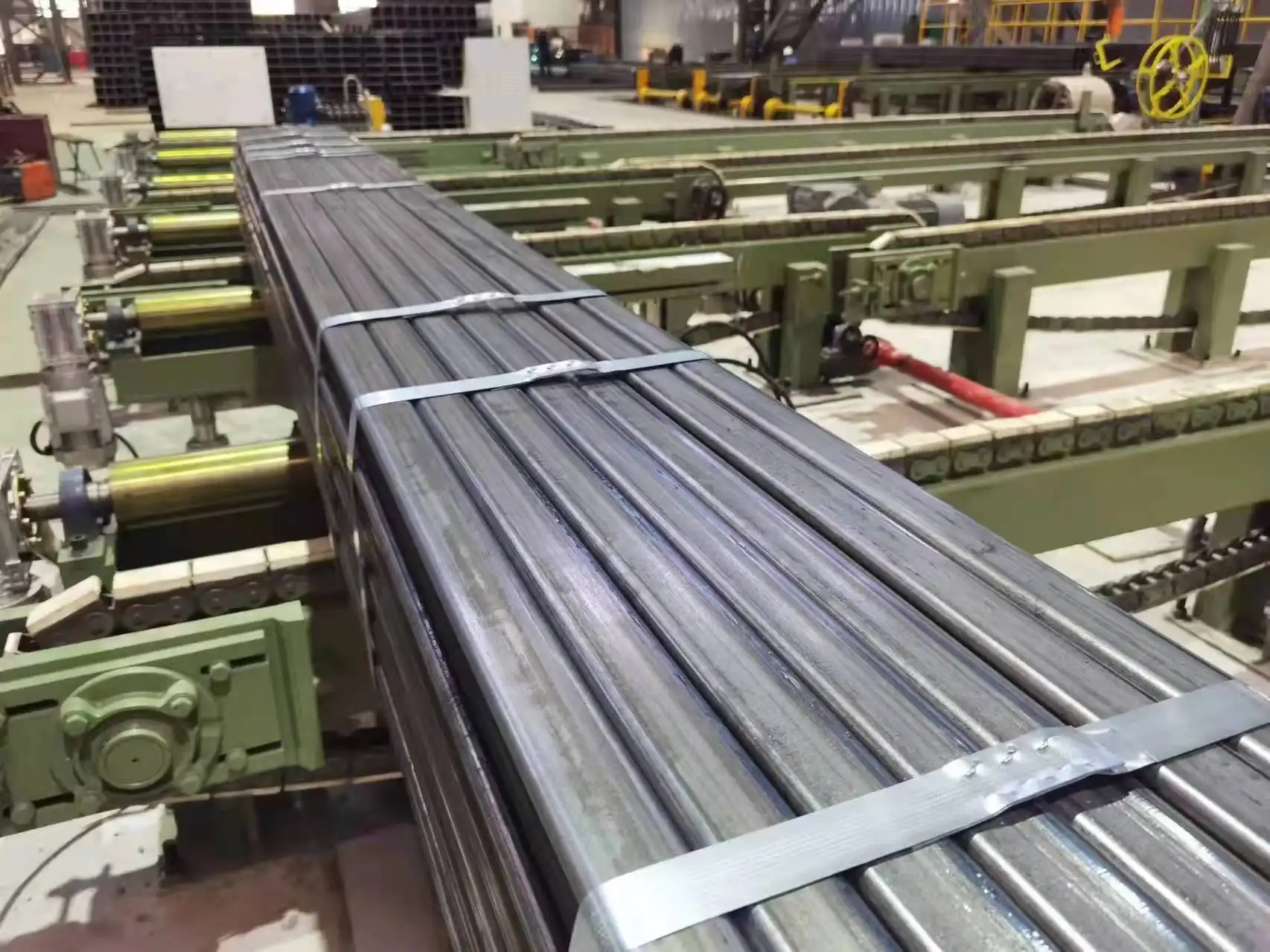
The formed bundle travels on the conveyor into the strapping station. The machine feeds steel strap around the bundle, tensions it, seals it with a double seal notch and cuts it, then moves to the next position along the bundle. It performs every strap at the positions set for that bundle length, automatically or with manual operation.
The bundle centre must line up with the conveyor centre while it moves. The strapping machine itself does not position the bundle, so we plan the strap positions with the line controls.
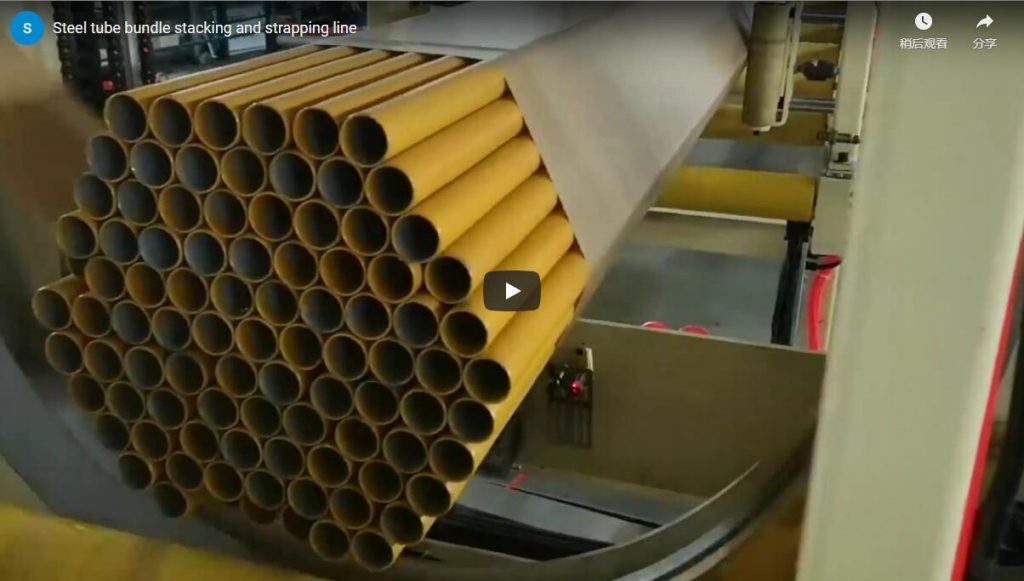
In our video, round tubes nest into a hexagonal bundle in the blue bundling frame before the bundle is banded with steel straps.
Strap count and spacing along the bundle
Illustrative example: we keep 500 mm from each end to the first strap and spread the rest evenly.
| Bundle length | Straps | End distance (illustrative) | Spacing |
|---|---|---|---|
| 6,000 mm | 5 | 500 mm | (6,000 − 1,000) ÷ 4 = 1,250 mm |
| 6,000 mm | 7 | 500 mm | (6,000 − 1,000) ÷ 6 = about 833 mm |
Tension for thin-walled tubes and heavy pipe
Too much tension can dent thin-walled outer tubes, while too few straps let the bundle loosen when it is lifted. For thin walls we use more straps at lower tension; heavy pipe takes fewer straps at higher tension.
Strap length for hexagonal and rectangular bundles
For a nested hexagonal bundle of round tubes, the band length is 6 × (n − 1) × d + π × d, where n is the number of tubes along one side and d is the tube OD.
| Example bundle | n | d | Band length | 7 straps |
|---|---|---|---|---|
| 37 tubes, hexagonal | 4 | 60 mm | 6 × 3 × 60 + π × 60 = about 1,270 mm | about 8.9 m |
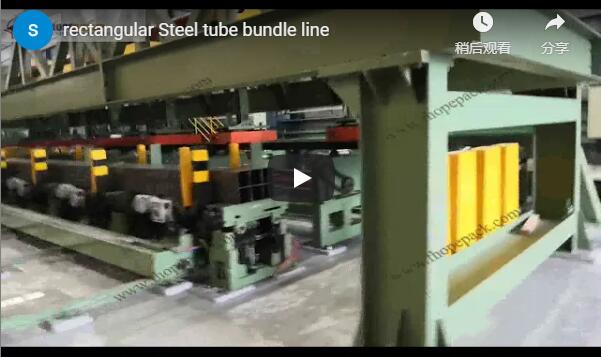
For a square or rectangular bundle, the band length is 2 × (bundle width + bundle height). Add the overlap at the seal to each band when you order strap.
Steel strap, seals and joint
| Item | Specification |
|---|---|
| Strap material | cold-rolled low-carbon steel |
| Finish | blued and waxed |
| Strap thickness | 0.8 or 1.0 mm (±10%) |
| Width tolerance | ±0.127 mm |
| Camber | under 8 mm per 2,000 mm of strap |
| Seal | cold-rolled low-carbon steel, magazine fed, about 180 seals per load |
| Seal width | 25 or 32 mm |
| Joint | double seal notch |
Strapping head data: tension, speed and pressure
| Item | Auto steel strapping machine |
|---|---|
| Strap tension | 7,000–18,000 N |
| Strap feed and take-up | 2–3 m/s |
| Tension speed | 6 m/min |
| Hydraulic pressure | 100 bar |
| Working pressure | 80–90 bar |
| Oil cooling | water |
Our banding data also give up to 13.7 kN at 0.54 MPa air pressure, so we confirm the tension your tubes need on trial.
Utilities and safety
The head runs on hydraulic oil at 80–90 bar working pressure with water cooling for the oil, and it needs compressed air. The standards that apply depend on the destination market. For CE markets, ISO 12100 sets the risk-assessment method and EN 415-10 sets general requirements for packaging machines.
Selection checklist for tube bundle strapping
- Tube OD, wall thickness and length.
- Bundle shape and tube count.
- Straps per bundle and positions.
- Strap thickness and seal width.
- Bundles per shift needed.
- Hydraulic, air and cooling water supply.
Engineering FAQ
Q: How many straps go on one bundle? A: 5 to 7, placed according to bundle length.
Q: What strap does it use? A: Blued, waxed cold-rolled steel strap, 0.8 or 1.0 mm thick, with 25 or 32 mm seals.
Q: How much strap does one band use? A: For a 37-tube hexagonal bundle of 60 mm tubes, about 1,270 mm plus the seal overlap.
Q: How tight is the strap? A: The head is rated 7,000–18,000 N, and our banding data give up to 13.7 kN at 0.54 MPa air. We set it on trial.
Q: Does the machine place the straps along the bundle? A: It straps at the set positions; moving the bundle to each position is planned with the line controls.
Q: How does tube wall thickness change the strapping? A: Too much tension can dent thin-walled outer tubes, and too few straps let the bundle loosen when it is lifted. Thin walls take more straps at lower tension; heavy pipe takes fewer straps at higher tension.
Q: What seals and joint does the head use? A: Magazine-fed cold-rolled low-carbon steel seals, 25 or 32 mm wide, about 180 seals per load, joined by a double seal notch.
Q: What utilities does the strapping head need? A: Hydraulic oil at 80–90 bar working pressure (100 bar hydraulic pressure) with water cooling for the oil, plus compressed air.
Next step
We plan your tube strapping in three steps:
- Submit your layout drawing with tube sizes, bundle shapes and lengths to info@fhopepack.com.
- Receive a proposal within 48 hours, with strap count and positions.
- Book a site survey to fit the station into your line.
Related reading
- Steel tube bundle strapping machine
- Steel tube strapping machines
- Video: automatic bar wrapping machine
- Video: automatic horizontal orbital wrapper for tube bundles
- Video: automatic bagging machine for tube and pipe
- Video: automatic reel and pipe packing machine
- Video: full-automatic bagging machine for aluminum profile and stainless steel pipe
Sources
- Strapping data: steel tube bundle strapping machine page
- Machine in action: our tube bundling and strapping video on YouTube
- Standards scope: ISO 12100:2010, EN 415-10:2014
Last reviewed: 2026-10-04