Executive summary An automatic nodular cast iron pipe strapping line secures ductile iron pipe bundles for transport and storage, applying controlled tension strapping in a fixed end-of-line sequence. Standard configurations handle pipe diameters from 100 to 1200 mm, apply up to 8000 N tension with steel or PET strap, and run on PLC control with a touchscreen HMI. This guide covers the line architecture, the operational parameters and the strap-selection points.
Table of Contents
- What the line does
- Pipe size coverage
- Line architecture
- Steel vs PET strap
- Operational parameters
- Applications
- Machine selection checklist
- Safety features
- Maintenance and support
- Engineering FAQ
- Next step
- Related reading
- Sources and standards
What the line does
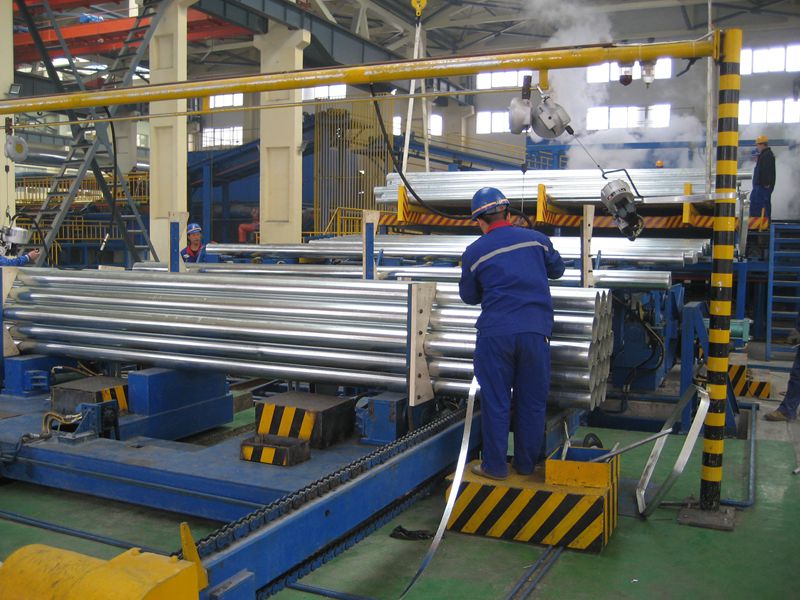
An automatic nodular cast iron pipe strapping line bundles ductile iron pipes at the end of the production line. Pipes are fed into an alignment system, grouped into bundles, and each bundle is strapped under controlled tension at set positions before it leaves for storage or shipping.
The automation removes the manual tensioning and material handling that dominate a manual strapping station. Straps land at consistent tension and spacing, which is what keeps heavy pipe bundles stable through transport and on-site handling.
Pipe size coverage
Standard configurations handle pipe diameters from 100 to 1200 mm, and custom variants cover specialized applications outside that range. The pipe weight drives both the strapping material and the tension target.
Based on our engineering standards, pipes above 800 mm diameter or bundles over 5 tons take steel strap for its rigidity, and smaller or cost-sensitive bundles run PET. Confirm the actual split against your pipe mix per project.
Line architecture
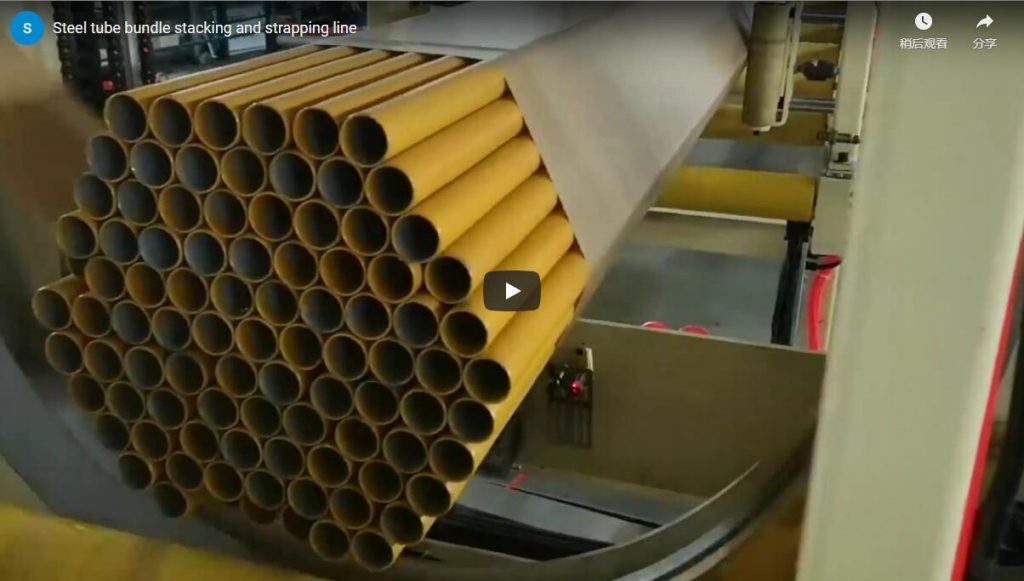
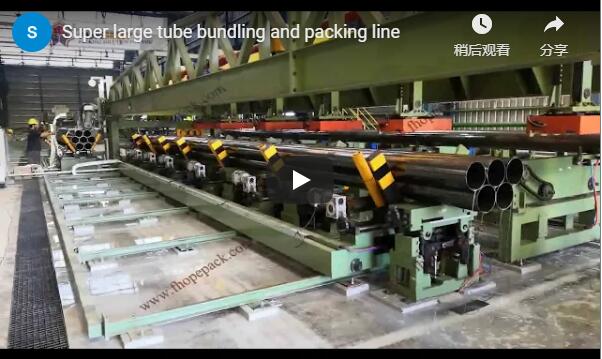
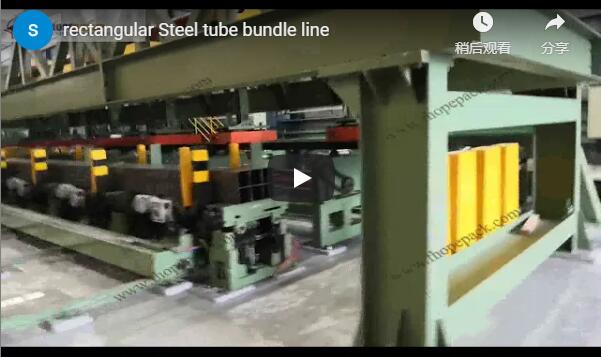
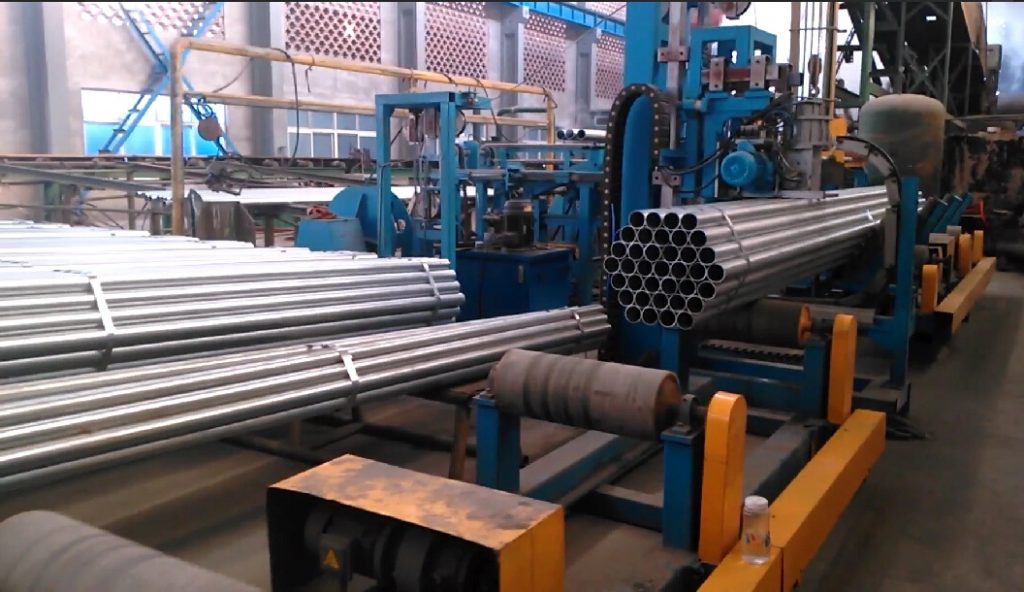
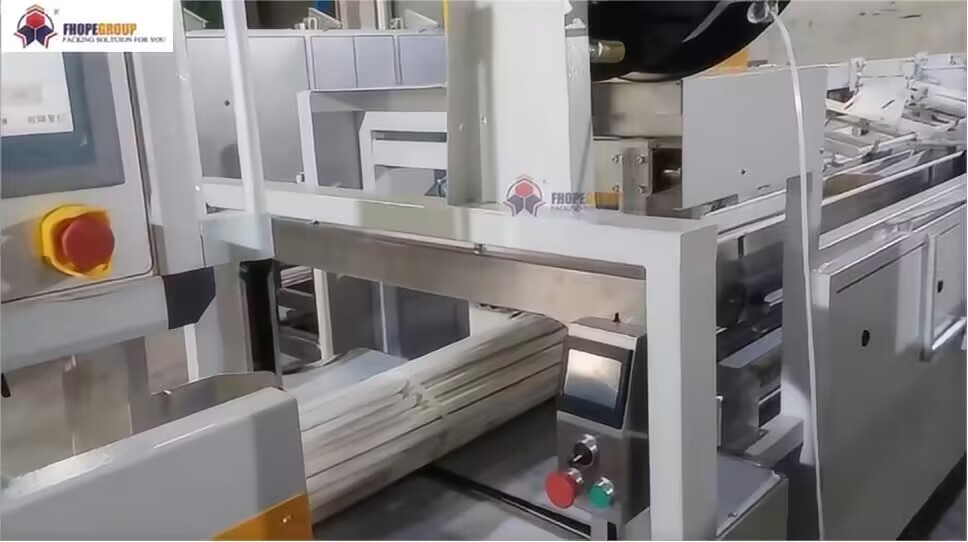
The line is a set of stations rather than a single machine. Pipes arrive on the infeed, align into bundle formations, move through the strapping heads, and leave on an output conveyor, the same multi-station layout as a steel tube bundle strapping line with a travelling head.
| Component | Function |
|---|---|
| Infeed and alignment | positions individual pipes or pre-bundled formations |
| Strapping head | applies up to 8000 N tension, steel notch or PET friction-weld sealing |
| Control system | PLC-based with HMI, recipes, MES or ERP integration capability |
| Frame | heavy-gauge steel, sized for pipe bundle loads |
Steel vs PET strap
The choice between steel and PET comes down to tension, corrosion and recoil behaviour. Use the table as a working reference and confirm against the bundle weights per project.
| Factor | Steel strap | PET strap |
|---|---|---|
| Tension | superior for extreme loads | moderate, medium-duty |
| Corrosion | needs coating protection | inherently resistant |
| Recoil | higher, needs safety protocols | lower, safer handling |
| Cost | higher initial, longer life | lower, more frequent replacement |
| Best for | large-diameter pipes over 800 mm | medium-diameter, cost-sensitive projects |
Operational parameters
The table lists the published typical configuration of the reference model NCISL-5000. Confirm the exact values against your pipe sizes and site supply per project.
| Parameter | Specification |
|---|---|
| Pipe diameter | 100 to 1200 mm |
| Strapping material | high-tensile steel (preferred) or high-strength PET |
| Maximum tension | up to 8000 N, adjustable |
| Throughput | up to 5 straps per minute per head |
| Strap width | 32 to 50 mm, model-specific |
| Electrical | 480 V, 60 Hz, 3-phase, customizable |
| Control | PLC with touchscreen HMI, recipe management |
| Line length | typically over 15 metres |
| Safety | emergency stop, guarding, optional light curtains |
| Compliance | CE, ISO 9001 |
Applications
Three sectors carry most of the demand for pipe strapping lines.
Municipal water and wastewater networks use ductile iron pipes as the distribution backbone, and pipes above 1000 mm diameter need stable bundles for long-distance transport. Construction sites rely on securely bundled pipe to keep unloading and on-site movement safe over uneven terrain. Manufacturers and distributors run the line at the end of production so bundles leave consistent and ready for the customer.
Machine selection checklist
Work through these points before you request a quote, and we confirm the rest per project.
| Item | What to confirm per project |
|---|---|
| Pipe range | diameters and lengths in your mix |
| Bundle weight | heaviest bundle and strap tension target |
| Strap material | steel, PET or both sealing types |
| Throughput | straps per minute and bundle rate |
| Heads | single or multi-head configuration |
| Integration | MES or ERP data connection |
| Utility | voltage, frequency and layout length |
Safety features
The safety set covers the two real risks on a strap line: strap recoil and the moving line itself. Emergency stop circuits and physical guarding are standard, and optional light curtains add protection at the loading and strapping zones.
Strap handling rules belong in the operator procedure, since steel strap stores energy under tension. Keep the recoil direction clear of personnel and follow the manufacturer’s handling instructions for the chosen strap material.
Maintenance and support
The wearing points are the strapping head, the strap feed paths and the tensioning mechanism. Planned maintenance covers these under our recommended schedule, with access to engineering support.
Support packages typically include installation supervision, operator training and optional preventative maintenance plans. Our standard warranty covers 2 years of support, confirmed per project agreement, and line configuration is confirmed with a site assessment before installation.
Engineering FAQ
Q: What pipe diameters fit the line? A: Standard configurations handle 100 to 1200 mm pipe diameter, with custom variants for specialized outside that range.
Q: Can the line use steel and PET strap? A: Yes. The strapping head is configured for high-tensile steel or heavy-duty PET, selected against pipe weight and budget per project.
Q: What is the throughput? A: Up to 5 straps per minute per strapping head, with multi-head configurations increasing the rate.
Q: How much tension can the head apply? A: Up to 8000 N, adjustable and model-dependent.
Q: Does the line integrate with plant systems? A: The PLC-based control supports integration with MES and ERP platforms for data flow and operational visibility.
Q: What electrical supply does the line need? A: The standard reference configuration runs on 480 V, 60 Hz, 3-phase power, customizable to local site utilities.
Q: What protects operators from strap recoil? A: Physical guarding and emergency stops are standard, with optional light curtains at the loading and strapping stations.
Q: What floor space is needed? A: The line typically exceeds 15 metres in length, with the final layout confirmed by a site assessment.
Next step
- Email us at info@fhopepack.com with your pipe diameters, bundle weights and throughput.
- We send a layout drawing and a strapping line proposal within 48 hours.
- We arrange a site survey to confirm the footprint, utility supply and integration needs.
Related reading
- Automatic pallet strapping machine
- Automatic M-Type pallet wrapper with film cutting, clamping and remote control
- Steel pipe bundling and strapping machine
- Steel tube bundle tapping and rod bundle packing machine
- FHOPE packaging machinery product lines
Sources and standards
- ISO 12100:2010 — Safety of machinery. General principles for design, risk assessment and risk reduction
- EN 415-10:2014 — Safety of packaging machines. General requirements
- EN ISO 13849-1:2023 — Safety of machinery. Safety-related parts of control systems
- FHOPE automatic nodular cast iron pipe strapping line demonstration video, YouTube.
Last reviewed: 2026-10-09