Executive summary: A bundle of large steel tubes is only worth its price when it arrives as one stable unit. This page is for buyers deciding whether a super large steel tube bundle forming and packing line fits that forming step. It describes what the footage shows the line doing with a tube bundle, what it does not, and gives the checklist that makes the purchase testable.
https://www.fhopepack.com/Automatic-Steel-Tube-Packing-Line/
Table of Contents
- What this page helps you decide
- Why a big bundle needs a line
- How the line carries a bundle
- What the overhead stations tell you
- What the safety picture shows
- What the clip shows
- Buyer’s verification checklist
- FAQ
- Related reading
- Next step

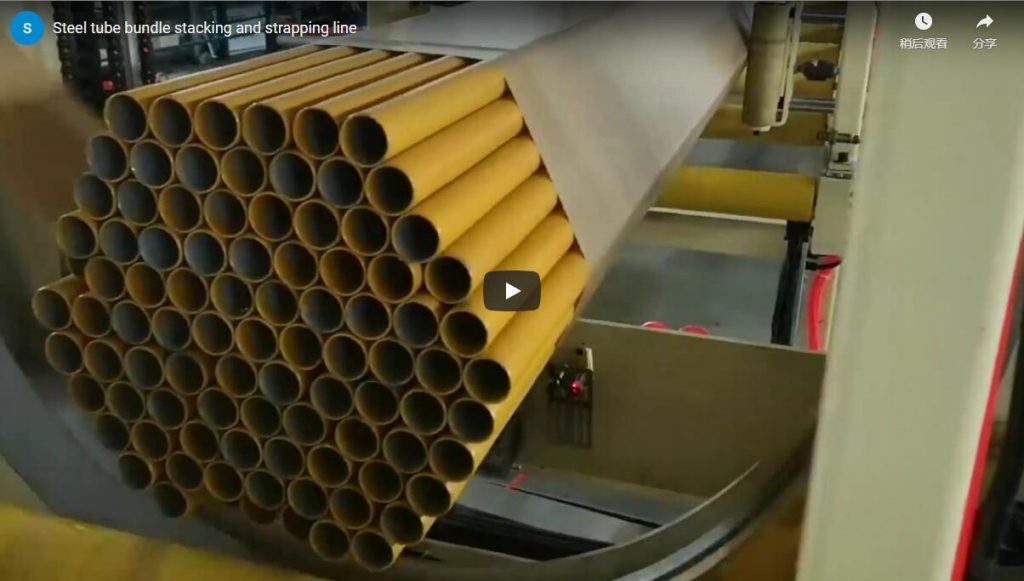
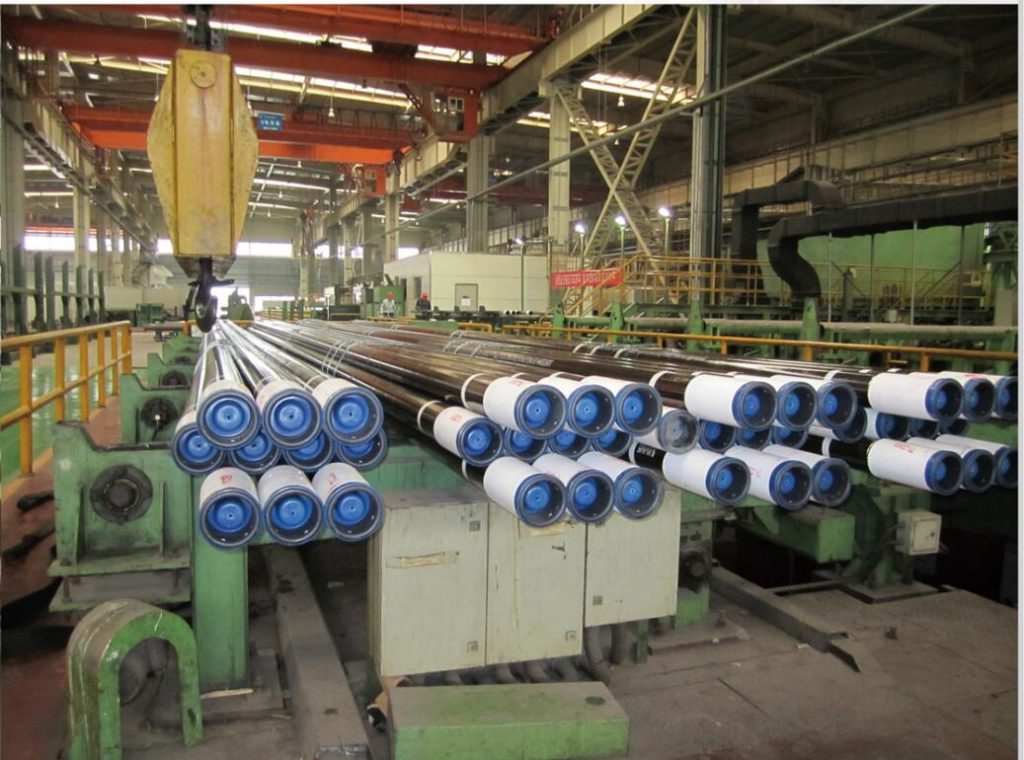
Caption: A steel tube packing line. Product-library reference image, not a still from the clip.
What this page helps you decide
A super large tube bundle is a freight event. The bundle has to stay square, stay tight and stay put from the forming bay to the flatbed, so the line that makes and carries it decides the whole logistics story.
This page is for the buyer evaluating a super large steel tube bundle forming and packing line. It records what the footage shows the line doing with a bundle, and it separates the conveying from the forming figures the clip never presents.
Why a big bundle needs a line
A bundle is only as good as its hold. The tubes have to sit flush, stay counted and keep their order, and a line that serves them through supports and strapping gives the bundle a stable shape it keeps to the destination.
A line also spreads the load. Large tubes are heavy, and mechanical supports carrying the bundle along the way beat a crane and a chain for every move.
The line also sets the pace. A bundle that forms and packs on one conveyor flow leaves the factory on schedule, which is the difference between a plan and a forecast.
How the line carries a bundle
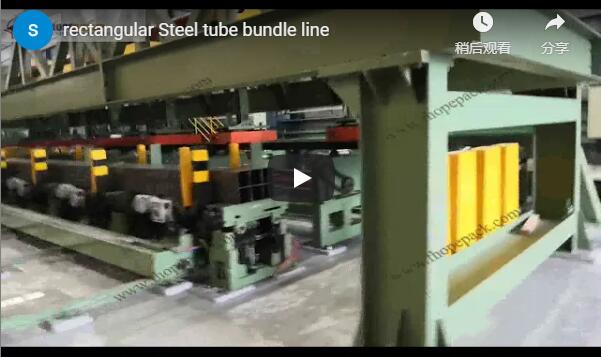
The footage shows a long conveyor on a green frame. A bundle of large steel tubes rides the conveyor from right to left, carried and guided by a series of support arms in the line.
The bundle in the clip is made of many tubes bound together, and its end shows the round cross-sections of the tubes side by side. The support arms hold the bundle clear of the frame as it travels.
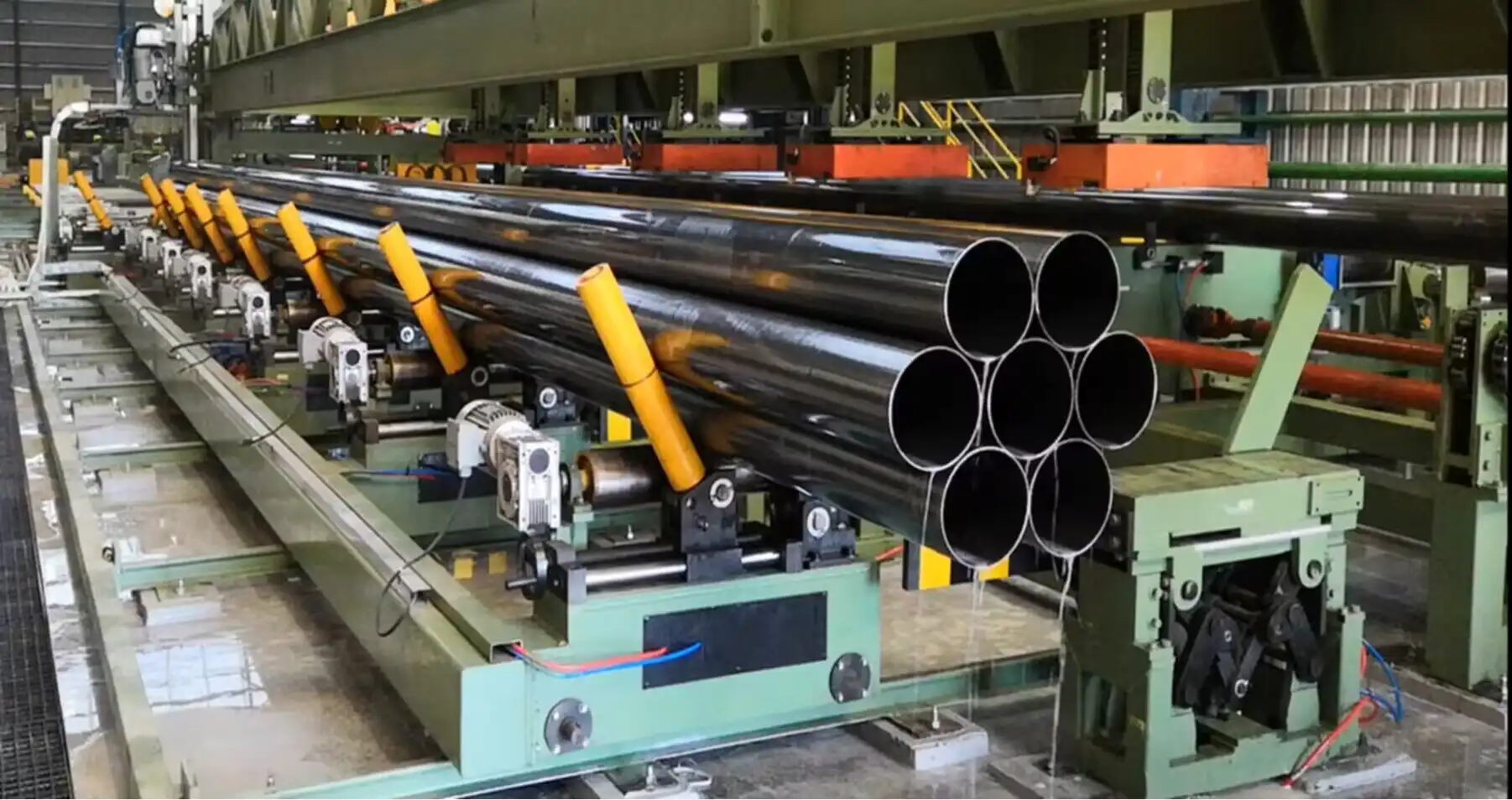
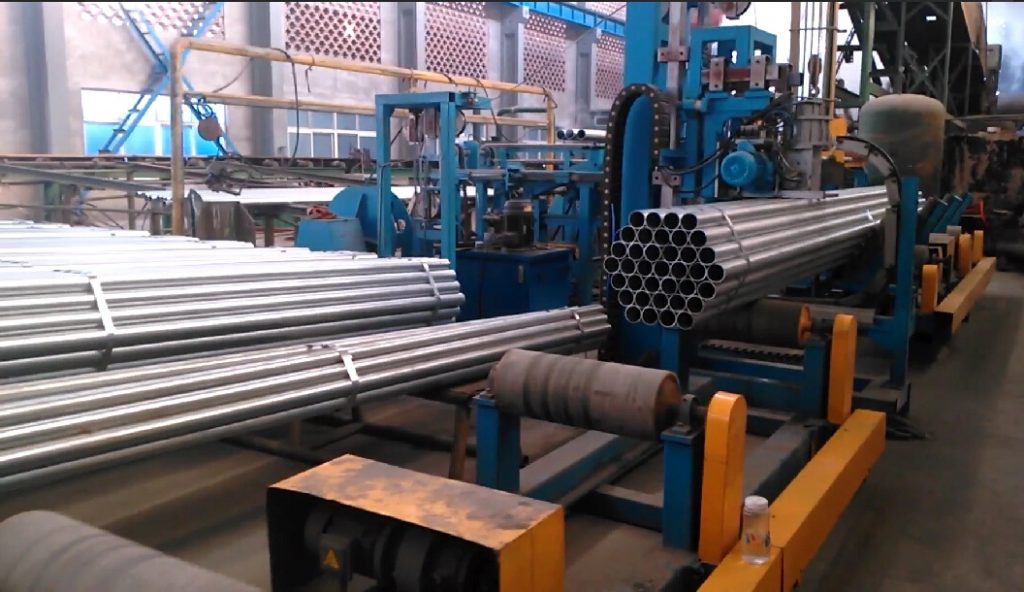
Caption: A steel tube packing line, second view. Product-library reference image, not a still from the clip.
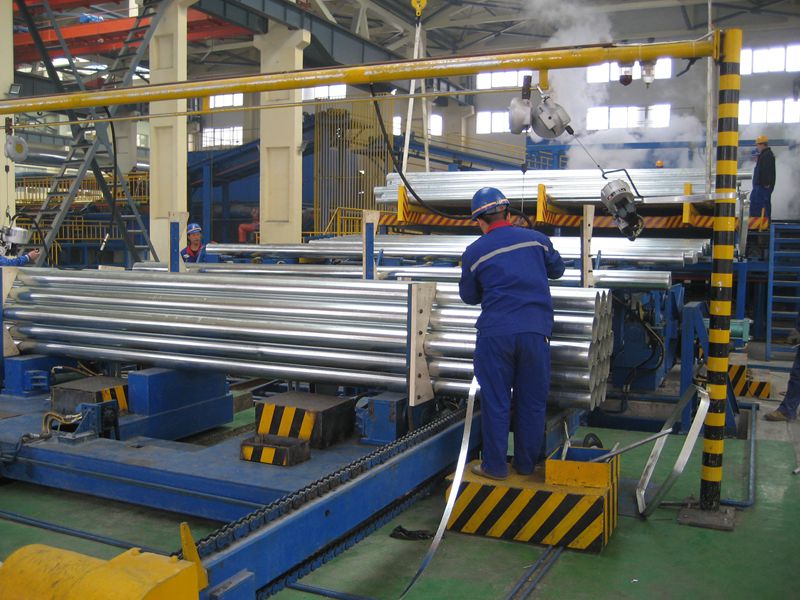
A worker in a yellow helmet stands beside the line as the bundle passes. The bundle stays horizontal through the footage, and the conveyor moves it steadily along the bay.
What the overhead stations tell you
The line has stations above the conveyor in the footage. Colored units hang over the travelling bundle, positioned where the fixing and packing actions happen as the bundle passes beneath.
The overhead units are the working heads of the line. Each station is set for one operation on the bundle, and the bundle arriving at the right height under each station is what makes the line run as one pass.
The individual action of each station is not read clearly in the sampled frames. The strapping or packing each head performs has to be confirmed against the line design from the supplier.

Caption: A steel tube packing line, overview. Product-library reference image, not a still from the clip.
What the machine’s safety picture shows
The line in the footage works at floor level through a production bay. The moving conveyor, the support arms and the overhead stations are the live hazards, and no guard fence or light curtain appears along the travel.
No emergency stop is clearly visible in the sampled frames. A worker stands within reach of the moving bundle, so the stop position and the guarding have to come from the supplier’s safety list.
The footage carries the maker’s own site watermark in the corners. No third-party brand or Chinese wall mark is legible in the sampled frames.
What the machine-line clip shows
What the video shows is a long conveyor on a green frame carrying a bundle of large steel tubes from right to left. The bundle is made of many tubes bound together, its end showing their round cross-sections, and a series of support arms carries and guides it. Overhead stations sit above the travelling bundle, and a worker in a yellow helmet stands beside the line during the pass.
The photos on this page are product-library reference images, not stills from the clip. Direct observation notes from the sampled frames, not a performance test.
What the clip does not show is the bundle length, weight and tube count range, the line speed, each station’s forming or strapping action in detail, the cycle time, the power ratings, or any certification.
The footage proves the supported travel and the station layout. The bundle envelope and the station roles have to come in writing.
Buyer’s verification checklist
Six questions decide whether the line fits your bundles. Ask them in writing, and keep the answers with the quotation.
| Ask the supplier for | Why it decides the purchase |
|---|---|
| Bundle length, weight and tube count range | No envelope number appears in the clip |
| Line speed and cycle time | The footage shows no clocked figures |
| Forming and strapping station roles | The stations hang; their actions stay unseen |
| Support arm pitch and bundle guidance | The clip shows arms, never a number |
| Infeed and outfeed arrangement | The bundle enters and leaves in shot |
| Guard, light curtain and emergency-stop list | No stop device is visible |
Send this to the supplier, and copy it as it stands:
- Your bundle length, weight and tube count.
- Your shift target in bundles per hour.
- Which forming and packing steps the line must do.
- The strapping pattern you need on the bundle.
- How the bundle enters and leaves the line.
- The safety device list along the full travel.
- A reference line running a bundle like yours.
FAQ
Does the line form the bundle or only carry it?
The footage shows a bound bundle travelling on the conveyor with overhead stations above it. The bundle enters already formed, so the forming step and each station’s action have to be confirmed with the supplier.
What size of bundle can it take?
Not shown. The clip demonstrates one long bundle, and no label states a range, so send the supplier your bundle length, weight and tube count and ask which line covers them.
Is the line automatic?
The bundle travels on the conveyor under the stations while a worker stands nearby. The level of each packing step depends on the line design and should be confirmed.
Related reading
- Automatic steel tube packing line — automatic steel tube packing lines.
- Steel tube strapping machine — strapping for steel tubes and bundles.
- Steel coil strapping machinery — strapping machinery for wound products.
- Pipe packing machine — packing for pipe products.
- Cable packing machine — packing for cable products.
- Automatic packing line — full automated packing systems.
Next step
Send the supplier your bundle size, weight and shift target first, and ask for the line speed and each station’s role. The footage proves the supported travel and layout; the stations have to come from them.
Then send the seven questions above, and ask for the guard and emergency-stop list.
Then walk a bundle through the line on site and time each station in turn. Use the contact page to start that exchange.
Last reviewed: 2026-09-29
Published: 2026-09-29