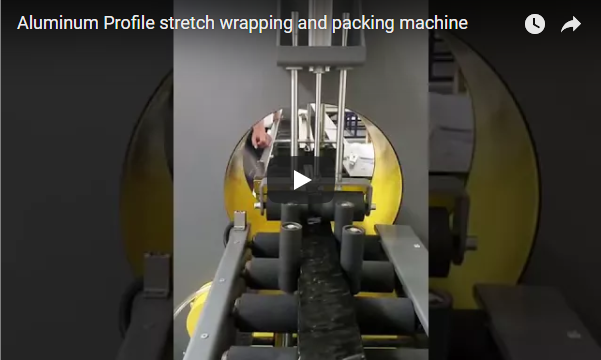
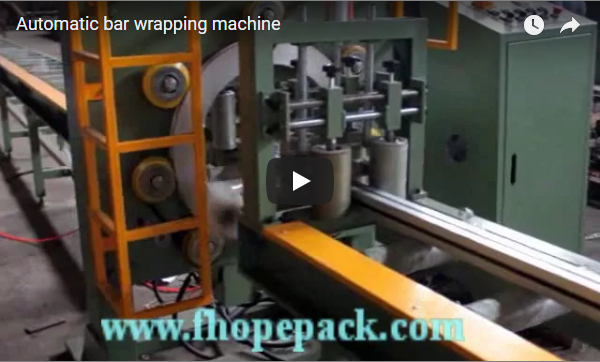
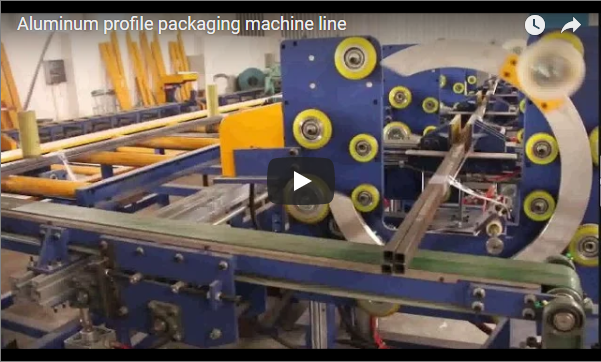
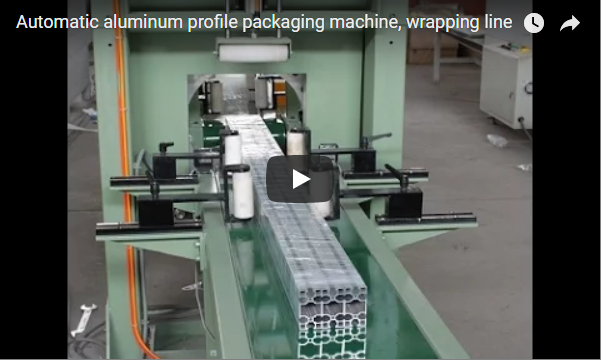
Executive summary Our automatic bar wrapping machine spiral wraps bundles of steel bars as they pass through a rotating ring, then cuts and holds the film for the next bundle with no operator. For steel bars, the bundle weight often limits the model before the diameter does. A 6 m, 20 mm steel bar weighs about 14.8 kg, so a 100 kg rated wrapper takes about 6 bars per bundle.
Table of Contents
- How the machine wraps a bar bundle
- Why weight decides the model
- Bars per bundle
- Model windows
- Unmanned film cut and feed
- Utilities and safety
- Selection checklist
- Engineering FAQ
- Next step
- Related reading
- Sources
How the machine wraps a bar bundle
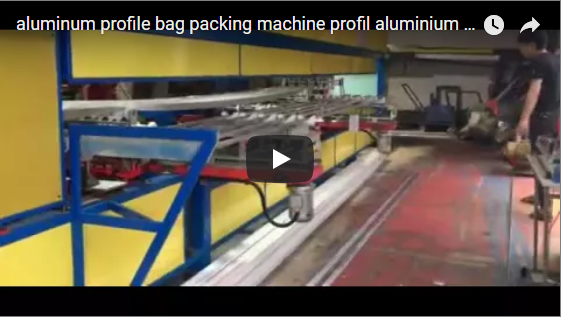
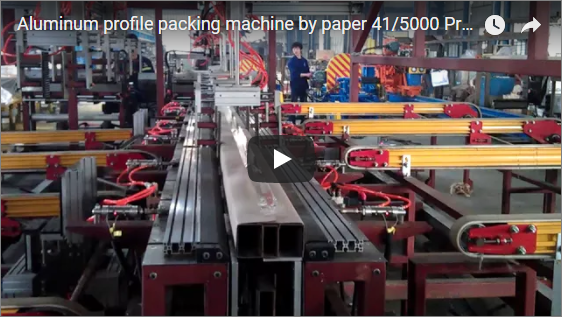
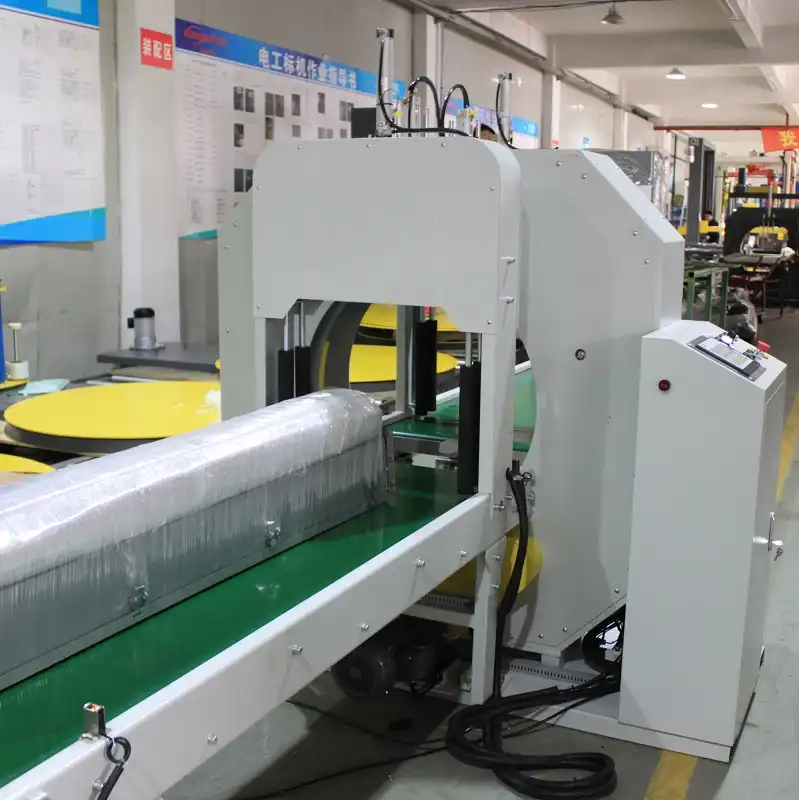
In this installation, our wrapper sits inline with the bar line’s roller conveyor, so bundles are wrapped as they pass through without being lifted off the line. The cycle has four stages:
- Infeed. The motor-driven entrance conveyor carries the bundle to the ring. A photocell sets the wrapping position.
- Wrap. The ring turns around the bundle while the conveyor moves it forward, laying a spiral of film.
- Cut and hold. The mechanical hand cuts the film and holds the tail.
- Outfeed. The outlet conveyor carries the wrapped bundle away.
Ring speed and conveyor speed are set by inverters, and the overlap is adjustable from 10% to 90%.
Why weight decides the model
Steel is heavy for its size. Each model has a weight limit as well as a bundle OD window, and for steel bars the weight limit is often reached first. Steel weighs about 7,850 kg per cubic metre, so the weight of one bar is:
- Weight per metre = 7,850 × π ÷ 4 × d², with d in metres.
- 20 mm bar: about 2.47 kg per metre, so a 6 m bar weighs about 14.8 kg.
- 12 mm bar: about 0.89 kg per metre, so a 6 m bar weighs about 5.3 kg.
Bars per bundle
Divide the model’s weight limit by the weight of one bar. For 6 m bars:
| Bar | Weight per bar | Up to 100 kg | Up to 200 kg |
|---|---|---|---|
| 12 mm | about 5.3 kg | 18 bars | 37 bars |
| 20 mm | about 14.8 kg | 6 bars | 13 bars |
Then check the bundle OD. Thirteen 20 mm bars make a slim bundle, well below 200 mm across. That is heavier than the 100 kg models allow, but below the 200 mm minimum OD of our 200 kg model. A bundle like this falls between standard windows, so we customise the ring and conveyors for it.
Model windows
| Model | Bundle OD | Weight | Min. length | Wrapping speed |
|---|---|---|---|---|
| E300 | 100–300 mm | 15–100 kg | over 1,000 mm | 5–15 m/min |
| E400 | 100–400 mm | 15–100 kg | over 1,200 mm | 5–25 m/min |
| E600 | 200–600 mm | 20–200 kg | over 800 mm | set in proposal |
The E300 and E400 have 2,000 mm motor-driven infeed and outfeed conveyors, conveyor speed 6–12 m/min and ring speed 20–90 r/min. The E400 also runs paper, PP and woven material on 50 or 76 mm cores. On the E600, side protective devices are adjusted by hand to keep the bundle from shaking during wrapping, and a top press device with soft material holds it from above.
Unmanned film cut and feed
The automatic cutter and feeder is what makes the machine run without an operator:
- Feeding. The film is clamped and fed automatically at the start of each bundle.
- Cutting. The film is cut automatically at the end.
- Position. The photocell sets the wrapping position, and a sensor resets the ring to its start position.
- Faults. Alarms show on the indicator and in the program.
The PLC runs the wrap to your packing goal, and the machine can connect to the packing line.
Utilities and safety
| Utility | E300 / E400 |
|---|---|
| Power | about 2.5 kW, 380 V, 3 phase, 60 Hz |
| Film roll | OD 100–200 mm, width 100–200 mm |
| Floor | flat, hard ground, load over 1 t/m² (E300) |
| Compressed air | confirmed in your proposal |
The ring has soft start and stop, and guardrails cover the moving parts. The standards that apply depend on the destination market. For CE markets, ISO 12100 sets the risk-assessment method and EN 415-10 sets general requirements for packaging machines.
Selection checklist for a bar wrapping machine
- Bar diameter, length and material.
- Bars per bundle, and the bundle weight this gives.
- Bundle OD, smallest and largest.
- Bundles per hour and the wrapping speed needed.
- Wrapping material: film, paper, PP or woven.
- Inline with the bundling line, or standalone.
Engineering FAQ
Q: How much does a 6 m, 20 mm steel bar weigh? A: About 14.8 kg, from 7,850 kg/m³ × π ÷ 4 × d² × length.
Q: How many 20 mm bars fit a 100 kg wrapper? A: About 6 bars of 6 m. A 200 kg model takes about 13.
Q: What if my bundle is heavy but slim? A: It can fall between standard windows, as with thirteen 20 mm bars. We customise the ring and conveyors for it.
Q: Does the machine need an operator? A: No. The automatic cutter and feeder clamps, feeds and cuts the film for unmanned operation.
Q: What is the shortest bundle the E300 can wrap? A: Over 1,000 mm, so the bundle spans the conveyors while it passes the ring.
Next step
We size your bar wrapper in three steps:
- Submit your layout drawing with bar sizes, bars per bundle and bundles per hour to info@fhopepack.com.
- Receive a proposal within 48 hours, with the model and conveyor layout.
- Book a site survey to fit the wrapper to your bar line.
Related reading
- Horizontal stretch wrapper E300
- Automatic horizontal stretch wrappers
- Video: automatic bar wrapping machine and small orbital wrapper
- Video: rod orbital wrapper and bar wrapping machine
- Video: copper sheet and bronze bar wrapping machine
Sources
- E300 window, cutter and feeder, utilities: E300 horizontal stretch wrapper page
- E400 window and materials: E400 horizontal stretch wrapper page
- E600 window: E600 horizontal stretch wrapper page
- Machine in action: our automatic bar wrapping machine video on YouTube
- Standards scope: ISO 12100:2010, EN 415-10:2014
Last reviewed: 2026-10-04