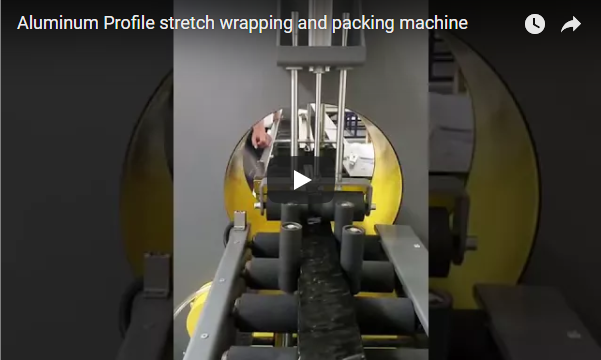
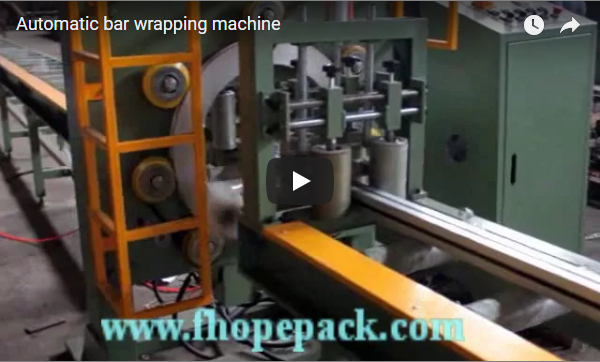
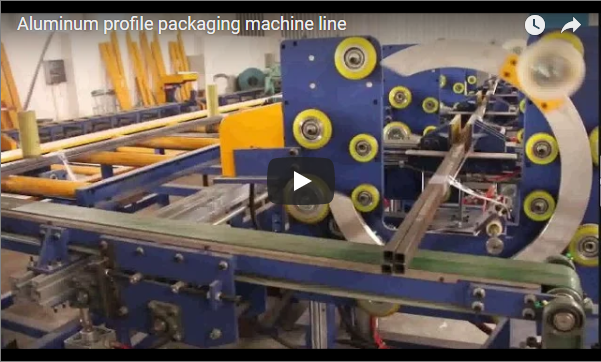
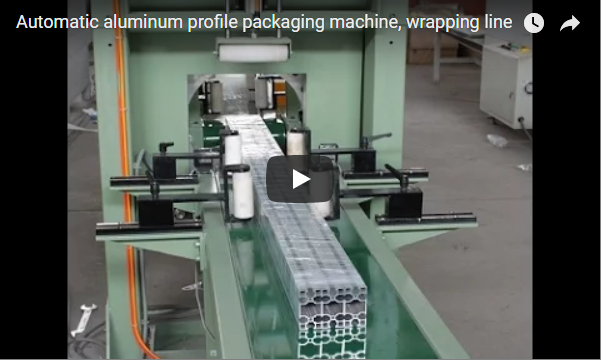
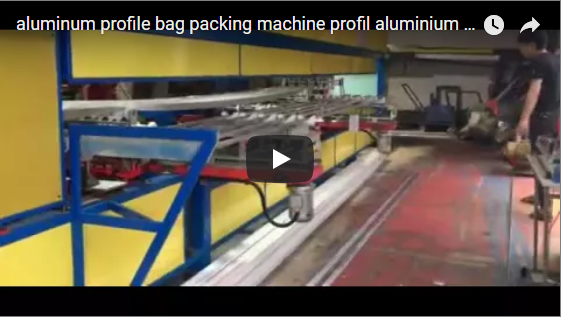
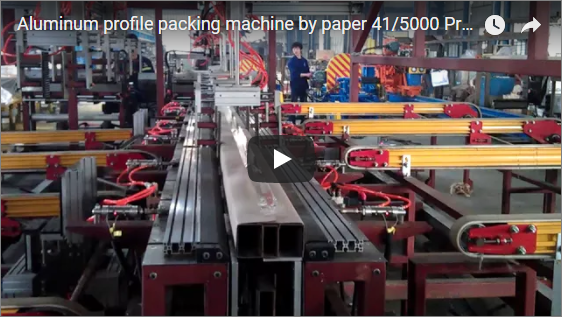
Executive summary The continuous horizontal profile bagging machine automatically envelopes single aluminum extrusions, stainless steel tubes, or nested sub-bundles into a protective plastic film sleeve, followed by synchronous heat-sealing and cutoff. Engineered for profile outside diameters (OD) of 9.5–50 mm (or bundled sections up to 150 × 120 mm) with standard lengths of 6,000 mm, the line delivers variable line speeds of 10–50 m/min. Final machine throughput is sized by product cross-section, conveyor pitch spacing, and required shift capacity.
Table of contents
- How bagging works
- Does the tube fit?
- Bagging speed and output
- Film and sealing
- Controls and changeovers
- Utilities and safety
- Selection checklist
- Engineering FAQ
- Next step
- Related reading
- Sources
How bagging works
The entrance conveyor receives profiles from upstream extrusion handling or manual loading tables and feeds them horizontally into the bagging unit. Flat roll stock is continuously pulled over an adjustable folding collar (forming shoe), wrapping the profile into an overlapping longitudinal envelope.
As the wrapped profile exits the forming zone, vertical and horizontal polyurethane guide rollers maintain axial alignment. A pneumatic transverse sealing jaw clamps, heat-seals, and severs the film in the gap between consecutive workpieces. The powered outlet conveyor then transfers the fully enclosed piece to kick-off arms or downline collection racks.
Unlike spiral orbital wrapping, which leaves exposed spiral overlaps, continuous bagging forms a seamless dust- and moisture-resistant barrier that protects sensitive anodized, electrophoretic, or polished surfaces throughout transport.

Does the tube fit?
| Parameter | Standard Machine Window | Engineered Options |
|---|---|---|
| Single Tube Outside Diameter (OD) | 9.5–50 mm | Up to 120 mm single tube |
| Profile / Bundle Cross-Section (W × H) | Min. 15 × 15 mm; Max. 150 × 120 mm | Custom forming collars on request |
| Workpiece Length | 6,000 mm standard | 2,000–12,000 mm via conveyor extensions |
| Bagging Speed | 10–50 m/min (inverter controlled) | Optimized via optical gap sensors |
| Forming Collar Range | Adjustable width and height tooling | Quick-change modular folding shoes |
Determining Envelope Compatibility
For circular tubes, ensure the outer diameter falls within the 9.5–50 mm tooling range.
For rectangular tubes, structural extrusions, or hex bundles, calculate the minimum required flat film roll width (W_film):
W_film ≥ 2 × (Profile Width + Profile Height) + Overlap Margin
Standard overlap margin is 30–50 mm for longitudinal thermal bonding or self-adhesive tracking.
Bagging speed and output
Theoretical line output depends on conveyor feed speed, workpiece length (6,000 mm reference), product pitch gap, and transverse seal dwell time:
Cycle Time per Piece (s) = (Length_piece + Pitch_gap) / (Line_speed / 60) + Dwell_time
6,000 mm Profile Production Reference Table
| Line Speed | Feed Travel Time (6 m piece) | Pitch Gap & Seal Dwell (350 mm gap + 1.0 s dwell) | Effective Cycle Time | Practical Output (OEE ≈ 85%) |
|---|---|---|---|---|
| 10 m/min (0.167 m/s) | 36.0 s | + 3.1 s | 39.1 s | ~78 pcs/h |
| 25 m/min (0.417 m/s) | 14.4 s | + 1.8 s | 16.2 s | ~188 pcs/h |
| 50 m/min (0.833 m/s) | 7.2 s | + 1.4 s | 8.6 s | ~355 pcs/h |
Note: Pure film travel calculation yields 500 pcs/h at 50 m/min. In actual industrial operation, introducing a profile spacing gap (300–500 mm) prevents tail-end collision with the vertical heat-sealing jaw. Practical throughput is generally limited by upstream crane delivery or manual destacking rates.
Film and sealing
| Item | Engineering Specification |
|---|---|
| Compatible Materials | BOPP, HDPE, LDPE, or Polyolefin co-extruded films |
| Film Thickness Range | 30–60 µm (single wall) |
| Film Roll Outer Diameter (OD) | 100–250 mm |
| Film Roll Core Inner Diameter (ID) | 75 mm (3.0 inches) |
| Longitudinal Sealing | Continuous overlap fold / static cling / thermal edge sealer |
| Transverse Sealing & Cutoff | Constant-temperature pneumatic hot-knife with dual-side mechanical clamp |
| Temperature Regulation | Digital PID controllers, adjustable from 120 °C to 220 °C (±2 °C precision) |
Surface Protection Mechanics
The hot-knife assembly produces clean, smokeless seals without molten polymer residue or toxic fumes. Non-marking polyurethane (PU) guide rollers and UHMW-PE low-friction forming shoes ensure that mill-finish and mirror-polished aluminum or stainless profiles pass through without abrasive surface scratches.
Controls and changeovers
| Subsystem | Standard Configuration |
|---|---|
| Programmable Logic Controller (PLC) | Siemens or Delta CPU with industrial I/O expansion |
| Operator Interface (HMI) | 7-inch color touchscreen with multi-language menu (English default) |
| Speed Modulation | Independent frequency inverters for infeed, wrapping, and outfeed conveyors |
| Workpiece Tracking | Fast-response optical through-beam sensors for front/rear profile detection |
| Operational Modes | Full-automatic running, manual setup, and jog-reverse diagnostic mode |
Changeover Routine
Switching between profile dimensions takes under 15 minutes:
- Release the locking levers on the forming collar to set the envelope width and height.
- Adjust the centering guide rollers to match the profile cross-section.
- Update the recipe parameters on the HMI (infeed speed, pitch gap delay, seal dwell time).
Utilities and safety
| Utility | Requirement | Operating Window |
|---|---|---|
| Electrical Power | 380 V AC, 3-Phase, 50/60 Hz | 220 V / 415 V / 480 V options available via internal transformer |
| Installed Capacity | 4.5–7.5 kW | Sized by conveyor length and drive ratings |
| Compressed Air Supply | 0.5–0.7 MPa (5–7 bar) | Clean, dry, non-lubricated compressed air |
| Air Consumption | ~120–180 Nl/min | Peak demand during pneumatic cutoff cycling |
Machinery Safety Compliance
- Risk Assessment & Ergonomics: Built in compliance with ISO 12100:2010 safety of machinery standards.
- Packaging Machinery Safety: Conforms to EN 415-10:2014 design requirements for horizontal form-fill-seal packaging equipment.
- Personnel Protection: Guarded envelope forming zone with interlocked access doors, conveyor pinch-point guards, thermal protection shrouds over the cutting bar, and dual-channel emergency stop circuits (Category 3 / PL d rated).
- Electrical Safety: Overcurrent, short-circuit, and thermal motor-overload safety breakers integrated into the main control cabinet.
Selection checklist for a profile bagging machine
- Detailed cross-section dimensions: single tube outer diameter (OD) or bundle width × height (mm).
- Profile length profile: minimum, nominal (e.g., 6,000 mm), and maximum lengths.
- Surface finish class: mill finish, anodized, powder-coated, or mirror-polished stainless steel.
- Preferred packaging material: BOPP, LDPE, or protective stretch/shrink film, including target thickness (30–60 µm).
- Required cycle speed: pieces per hour target and shift operational hours.
- Plant infeed configuration: direct tie-in from runout tables or standalone manual feeding.
- Pneumatic infrastructure: compressed air verification at 0.5–0.7 MPa.
- On-site grid voltage and frequency: e.g., 380 V 50 Hz, 460 V 60 Hz.
Engineering FAQ
Q: Can this machine handle both individual tubes and bundled profiles? A: Yes. It runs single tubes (OD 9.5–50 mm) or bundles with cross-sections up to 150 × 120 mm. Bundles must be rigid enough to prevent mid-span sagging; hexagonal or rectangular sub-bundles require manual or automated strapping before entering the infeed conveyor.
Q: Why does practical output differ from pure conveyor travel speed?
A: Pure travel speed calculations (6,000 mm / 50 m/min = 7.2 s) ignore mechanical indexing. The pneumatic hot knife requires a clear profile gap (typically 300–500 mm) to descend and seal without striking incoming profiles. Including gap transit and knife dwell time (0.8–1.2 s), a realistic high-speed throughput is approximately 320–360 pcs/h.
Q: How does the system prevent scratches on architectural-grade finishes? A: Contact surfaces throughout the infeed, wrapping, and outfeed sections use non-marking polyurethane rollers, polymer conveyor beds, and polished stainless or UHMW-PE forming shoes. No bare metal touches the critical surfaces.
Q: What is the main maintenance requirement for the hot-knife sealing station? A: Inspect and clean the Teflon-coated cutting bar once per shift to prevent resin buildup. Monitor pneumatic cylinder seals and inspect cutting blade sharpness every 500 operating hours.
Q: Does changing tube OD require changing the entire forming collar? A: Standard machines feature a multi-axis adjustable folding collar that accommodates standard size ranges via hand cranks. Radical profile geometry shifts (e.g., going from a 12 mm tube to a 150 mm wide extrusion) may require an interchangeable dedicated forming shoe.
Next step
Integrate an automatic bagging line into your packaging bay in three straightforward steps:
- Send Profile Drawings & Line Layout: Email your tube ODs, bundle envelope dimensions (W × H), profile lengths, and target hourly rate to info@fhopepack.com.
- Receive Engineering Proposal within 48 Hours: We provide a comprehensive system proposal complete with footprint layout, cycle-time calculations, and tooling recommendations.
- Line Integration & Factory Acceptance: Verify machine functionality through trial runs with your sample profiles at our manufacturing plant prior to final dispatch.
Related reading
- Automatic aluminum profile bagging machine
- Automatic aluminum profile packing line
- Aluminum profile sub-bundle wrapping machine
- Video: aluminum profile packing machine and wrapping line
- Video: aluminum profile stretch wrapping machine
Sources
- Machine Specifications: Automatic Aluminum Profile Bagging Machine
- Reference Video Demonstration: FHOPE Official Profile Packaging Video Hub
- Safety Standards: ISO 12100:2010 Safety of Machinery, EN 415-10:2014 Packaging Machines Safety
Last reviewed: 2026-10-04