Executive summary
Steel wire coils are heavy, and the steps between them, rewinding and binding, are the manual part of the job. This line automates those steps: an automated guided vehicle carries the coil in, the machine unwinds the wire, shapes and cuts it into the binding, and a control panel runs the process. We build steel wire rewinding and binding lines for wire producers. Coil range and binding pattern are confirmed per project.
Table of Contents
- Why wire handling is the hard part
- Transport by guided vehicle
- Rewinding the wire
- Feeding guides and rollers
- Shaping and cutting the binding
- The control panel
- What the video shows
- Typical configuration
- Selection checklist
- Operation and safety
- Engineering FAQ
- Next step
- Related reading
- Sources and standards
Why wire handling is the hard part
Steel wire coils are heavy, awkward and unforgiving to move by hand. Moving the coil, unwinding the wire and forming the binding are repetitive tasks that wear on a crew and slow the flow between stations. Automation takes over the transport and the binding steps, so the crew supervises the line instead of lifting the load. Replacing the manual part of coil handling is what the line delivers, and the coil range the line handles is confirmed per project.
Transport by guided vehicle
An automated guided vehicle carries the wire coil between machines and stops under the work frame, moving the coil without a forklift and crew. The vehicle follows the path and positions the coil for the rewinding station, so transport is repeatable rather than operator-dependent. Guided transport is the first automated step, and the vehicle path and coil sizes it must carry are confirmed per project.
Rewinding the wire
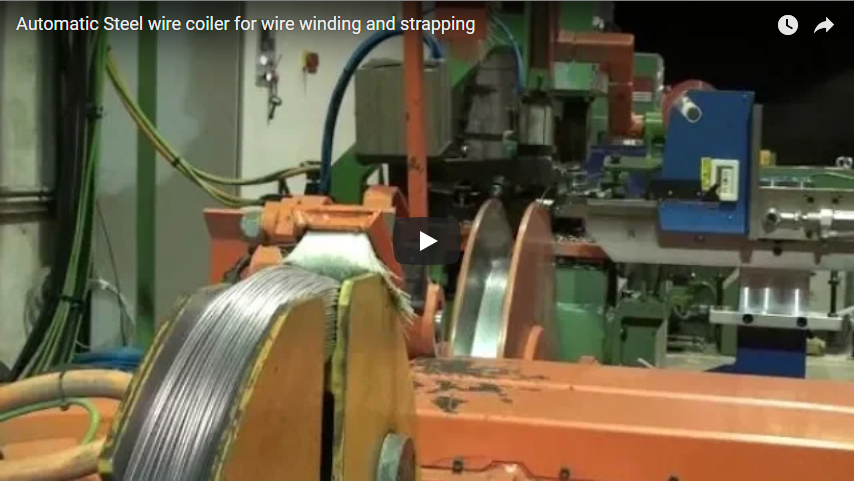
At the station, machine arms unwind the wire from the coil under controlled motion. Unwinding feeds the wire out of the storage coil so the binding can be produced from that wire, and the motion is controlled to keep the wire running true through the machine. Controlled unwinding is what the next stations depend on, and the wire size and coil the machine can rewind are confirmed per project.
Feeding guides and rollers
The wire is fed into guides and rollers that carry it toward the binding mechanism. Guides hold the wire on its path, and rollers drive it forward evenly, so the wire does not wander or jam between stations. Consistent feeding is what lets the binding be shaped from a steady wire supply. Guide and roller layout follows the wire range, confirmed per project.
Shaping and cutting the binding
A binding mechanism shapes the wire around the product and cuts it to length, producing the strap or binding that holds the coil together. The shaping and cutting work as one step, so the binding comes out uniform rather than hand-trimmed. The binding pattern and wire spec follow the product and the load it must hold, confirmed per project, with the cut location set per cycle.
The control panel
A control panel with a screen and buttons monitors the process and lets the operator run the line and follow each step. The panel is the operator’s window into the cycle, showing status and giving control without the operator standing at every station. Panel layout and monitoring points are confirmed per project to match how the line is supervised.
What the video shows
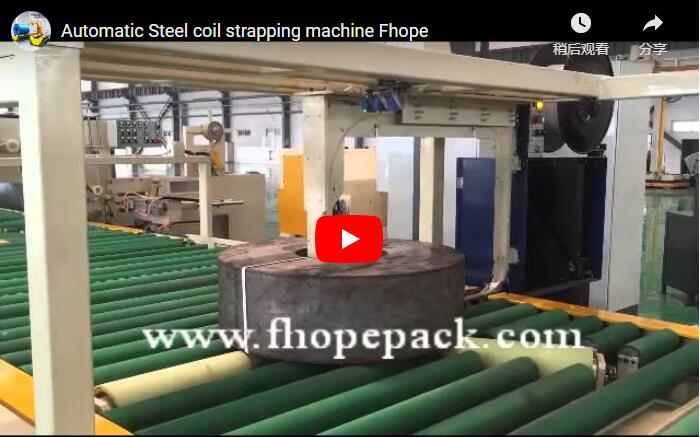
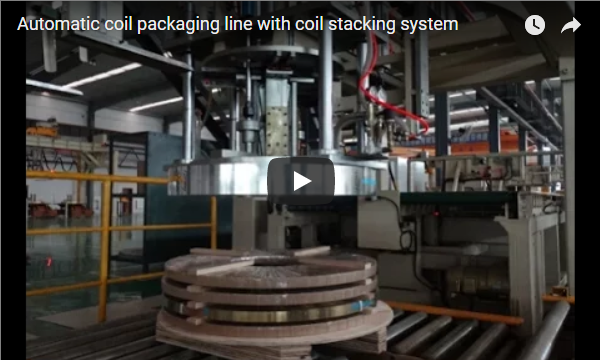
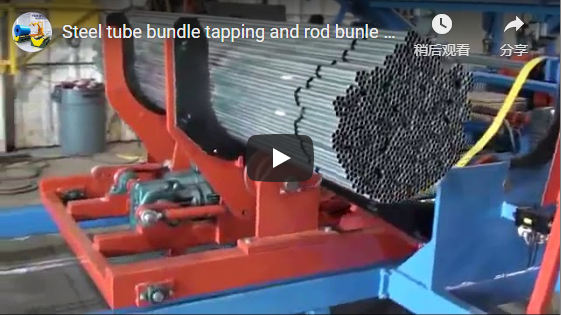
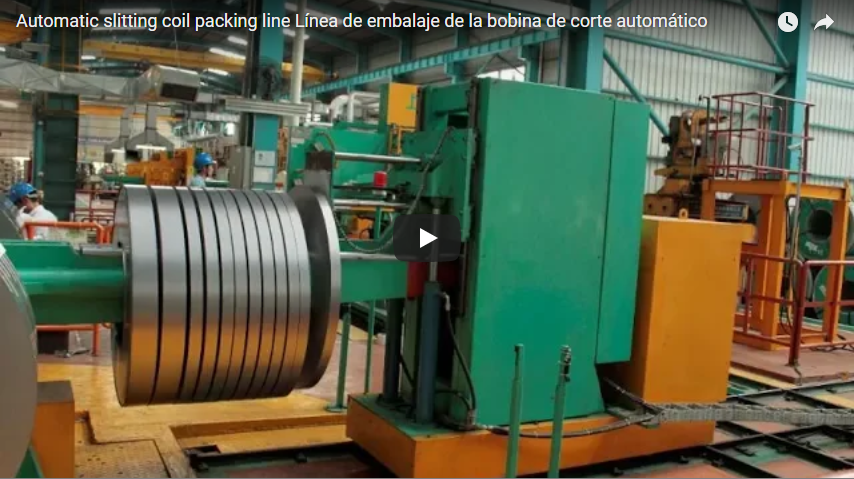
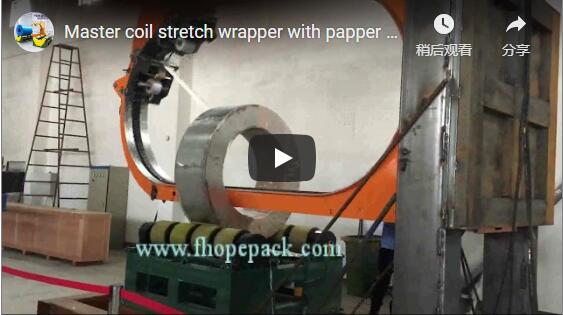
Our footage shows an automated steel wire rewinding and binding line in a factory demonstration: the guided vehicle carries the coil, the machine unwinds, binds and cuts the wire, and the panel runs the process. It is a general demonstration, so your coil range and binding pattern are confirmed with us per project.
Typical configuration
Figures below list functional design boundaries rather than numeric values, and are confirmed per project.
| Parameter | Typical range, confirmed per project |
|---|---|
| Coil | carried by guided vehicle |
| Wire | diameter range |
| Unwind | controlled arms |
| Binding | pattern per product |
| Control | panel and screen |
| Electrical supply | 380 V three phase 50 Hz, or 220 V single phase for light machines, selected per project |
Selection checklist
| Question | Confirm per project |
|---|---|
| Coil range | sizes and weights |
| Wire | diameter range |
| Binding | pattern and spec |
| Transport | guided vehicle path |
| Floor layout | line footprint |
| Electrical supply | voltage, phase and frequency on site |
Operation and safety
Run the line from the panel as the guided vehicle delivers coils and the station unwinds, shapes and cuts the binding automatically. Keep clear of the vehicle path, machine arms, guides and rollers while the line runs, with guarding and emergency stops at the operator position. Routine checks cover the vehicle, unwinding arms, guides, rollers, the binding mechanism and sensors, per the machine manual. Confirm the binding pattern against the product before each run.
Engineering FAQ
Q: What does this line automate? A: It automates coil transport, rewinding and binding, replacing the manual steps in between.
Q: How is the coil moved? A: An automated guided vehicle carries the coil between machines and stops under the frame.
Q: How is the binding made? A: Machine arms unwind the wire, guides and rollers feed it, and a mechanism shapes and cuts it.
Q: What is the control panel for? A: It monitors the process and lets the operator run and follow the line from one point.
Q: Which wire sizes run? A: The wire range and binding pattern are confirmed per project on the real product.
Next step
- Email us at info@fhopepack.com with your coil range, wire and volumes.
- We send a rewinding and binding line proposal and a layout drawing within 48 hours.
- We arrange a site survey to confirm coil range and floor layout.
Related reading
- Automatic steel wire coil winding and packing line
- Automatic steel wire winding machine
- Automatic cable wire coil winding strapping and packing
- FHOPE packing machinery product lines
Sources and standards
- ISO 12100:2010 Safety of machinery, general principles for design and risk assessment
- EN 415-10:2014 Safety of packaging machines, general requirements
- EN ISO 13849-1:2023 Safety of machinery, safety-related parts of control systems
FHOPE steel wire rewinding and binding line demonstration video. Reviewed as a general demonstration; coil range confirmed per project.
Last reviewed: 2026-10-10