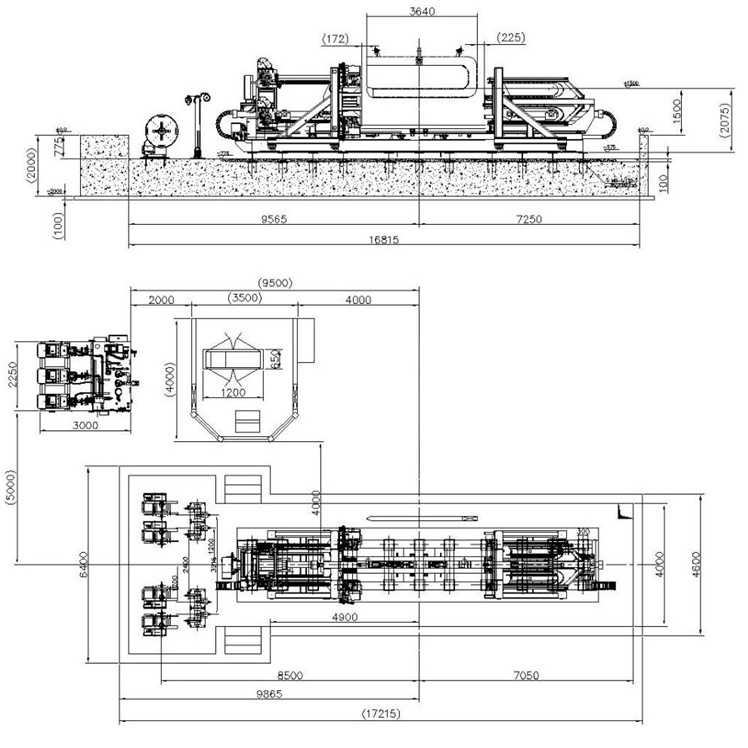
Executive summary A steel wire coil packing line runs four stages: roller conveyor infeed, through-the-eye orbital wrapping, outfeed, and 90° upending onto an edge rack. The FPW series covers coils from 40 kg up to 4000 kg, including PC wire and strand coils. Rewinding sits upstream; coils arrive eye vertical and leave wrapped, on edge.
Table of Contents
- What the machine does
- Station by station
- Why wire coils are wrapped through the eye
- Sizing the wrapper to the coil
- Wrap materials for steel wire
- Upending and stacking after the wrap
- Selection checklist for a wire coil packing line
- Controls and safety
- Engineering FAQ
- Next step
- Related reading
- Sources
What the machine does
The packing end prepares bare coils for dispatch:
- Infeed: a bare steel wire coil lies flat on a powered roller conveyor, eye vertical.
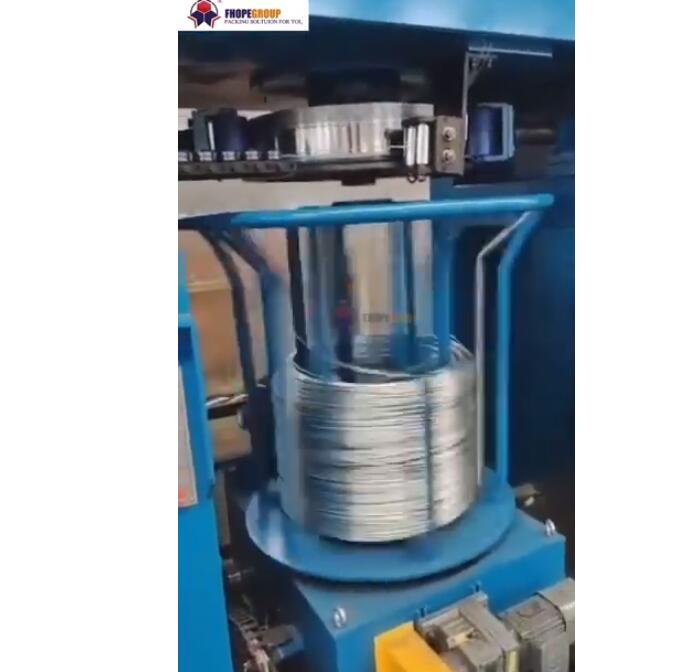
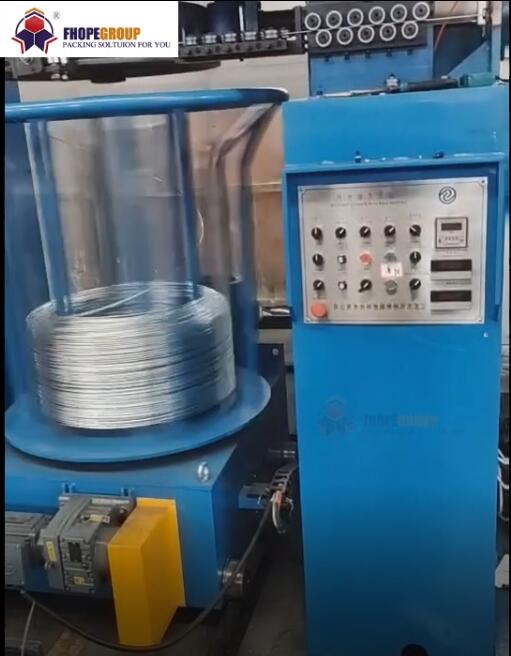
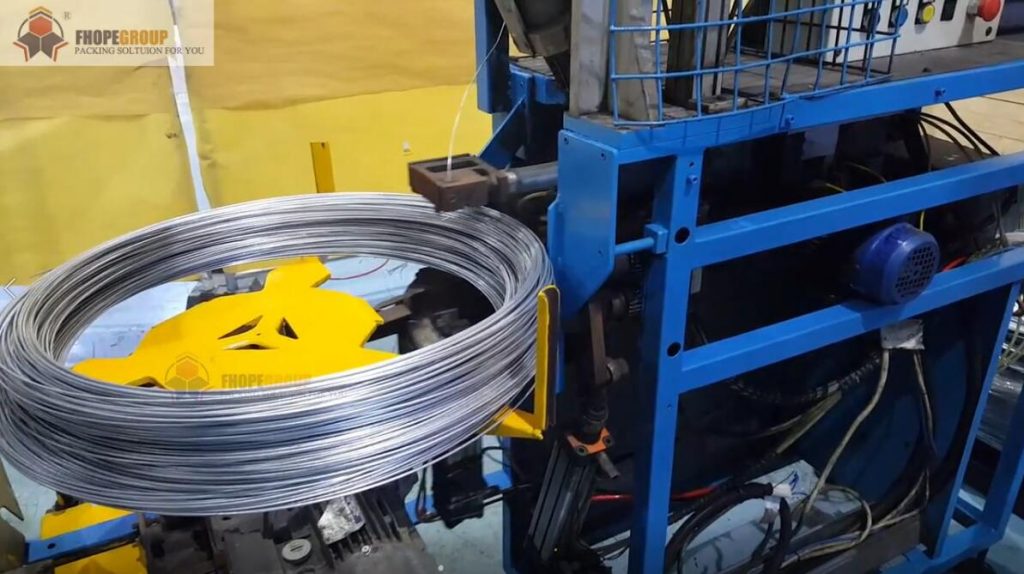
- Wrapping station: the coil stops between guide posts; the ring passes wrap through the open core until fully covered.
- Outfeed: the wrapped coil rolls out towards the end of the line.
- End station: the coil is turned onto its edge and placed on the end rack.
Station by station
The line links four sections:
| Station | What happens |
|---|---|
| Roller conveyor infeed | bare coil arrives flat, eye vertical |
| Wrapping station | coil wrapped through the eye, ring band after band |
| Outfeed conveyor | wrapped coil leaves the station |
| Upending and rack | coil upended from eye-vertical to eye-horizontal and racked |
Why wire coils are wrapped through the eye
A wire coil has an open centre. If the wrap only covers the outside, moisture enters through the eye and rust starts on the inner turns.
Eye-through wrapping passes the material through the core centre on every turn of the ring. The result is a 360° sealed package, inside and outside, against moisture and rust in storage and shipping.
Overlap is set on the machine, between 10% and 90% on our FPW wrappers, so a coastal shipment can get more cover than a short domestic run.
Sizing the wrapper to the coil
From our FPW wire coil wrapper pages:
| Model | Coil ID | Coil OD | Coil width | Coil weight | Power |
|---|---|---|---|---|---|
| FPW-400 | over 300 mm | 600–1200 mm | 40–400 mm | 40–400 kg | 1.5 kW |
| FPW-500 | 300–700 mm | 700–1300 mm | 50–500 mm | 40–1500 kg | 3.5 kW |
| FPW-600 | 300–850 mm | 700–1400 mm | 150–600 mm | 100–4000 kg | 4.5 kW |
Single models load by trolley; in a line the wrapper is fed by conveyor. The tables are a starting point; each line is built to the project coil range. The product pages also list [manufacturer rating]:
- Air supply: 4–6 bar (about 0.4–0.6 MPa).
- Power: 380 V, 50 Hz, 3 phase.
- Packing material rolls: core ID 50 mm; roll OD 100–250 mm (FPW-400) to 200–450 mm (FPW-600); roll width 100–300 mm (FPW-400) to 10–120 mm (FPW-600).
- Panel and options: a mechanical arm device feeds and cuts the material automatically; intelligent scanning is optional and reads the coil size into the control; the ring centre height is adjustable for small and large coil OD.
Wrap materials for steel wire
Our wire coil wrappers work with paper, film and knitted belts. On the FPW-600 page the list runs from woven belt, compound paper and crepe paper to non-woven fabric, stretch film, PE film and LLDPE.
- Stretch film or PE film: sealed against moisture, light and cheap.
- Woven belt: tougher outer skin for crane and forklift handling.
- Paper plus film: paper against the steel, film outside to keep the paper dry.
Wrap colour and material follow the project specification; the ring head is matched to the material named.
Upending and stacking after the wrap
A wrapped coil leaves the ring lying flat, eye vertical. Upending it 90° to eye-horizontal has two benefits:
- Less floor area per coil while the coils wait for dispatch.
- Handling through the eye, so a C-hook or forks can take the coil without touching the wrapped faces.
If your warehouse stores coils flat, the end station becomes a flat stacker; tell us how the coils leave the line and we lay out the end station to suit.
Selection checklist for a wire coil packing line
-
Coil ID, OD, width and weight, smallest and largest.
-
Coils per hour from the drawing or rewinding line.
-
Wrap material and overlap, and whether you also strap.
-
Storage at the end of the line: on edge, flat, or on pallets.
-
Conveyor height and the direction of flow in your hall.
-
Labelling or weighing needed before dispatch.
Controls and safety
The standards depend on the destination market. For CE markets, ISO 12100 sets the risk-assessment method and EN 415-10 covers general requirements for packaging machines, fixing guarding and the emergency-stop arrangement.
Our FPW wrappers run on a PLC, and the ring speed, tension and overlap are set on the panel. The upending and stacking end is fenced to suit each layout.
Engineering FAQ
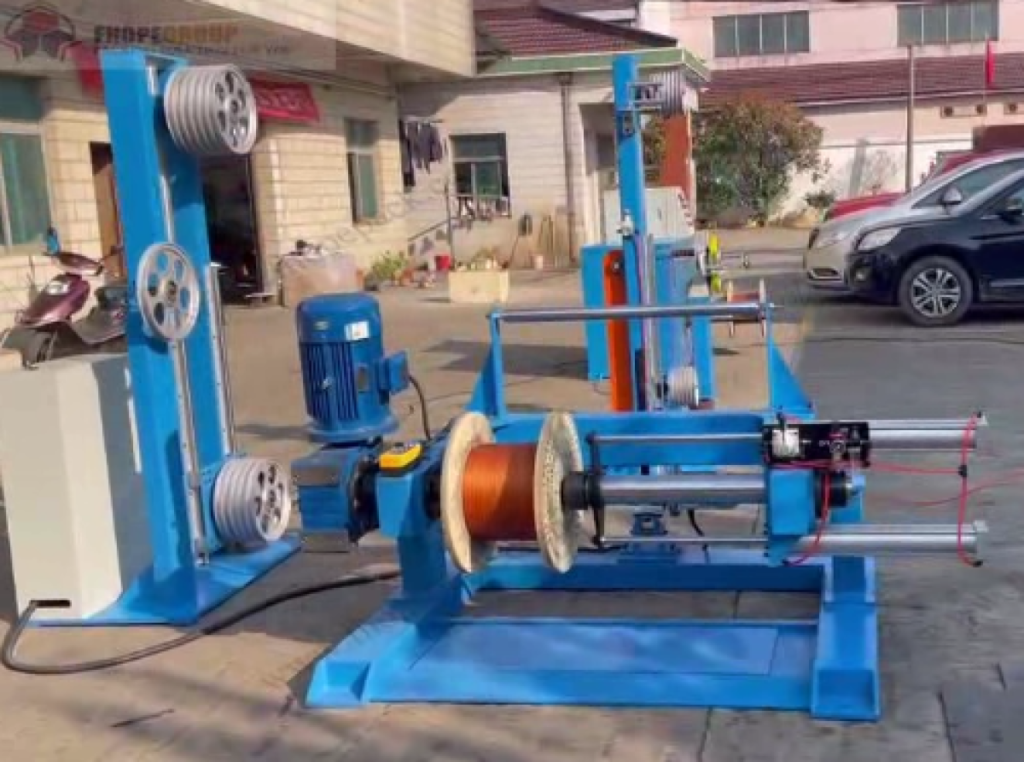
Q: Does the line include wire rewinding? A: No. The packing end covers conveyor, wrapping, upending and racking; rewinding is upstream.
Q: What coil weight can our wire coil wrappers take? A: From 40 kg on the FPW-400 up to 4000 kg on the FPW-600, by model.
Q: How much overlap can be set? A: Between 10% and 90%, set per coil type.
Q: Can the line wrap with paper and film? A: Yes. Paper, film and knitted belts are all options. We set the ring head for the materials you name.
Q: How does the coil orientation change through the line? A: Coils arrive flat with the eye vertical for wrapping, and are upended 90° to eye-horizontal at the end station for racking.
Q: Which wrapping settings are set on the panel? A: Ring speed, tension and overlap, with overlap between 10% and 90%, through the PLC panel.
Q: Why stand the coils on edge at the end? A: It saves floor area and lets a C-hook or forks lift the coil through the eye.
Next step
We size a wire coil packing line in three steps:
- Submit your layout drawing with the coil range, coils per hour and wrap material, to info@fhopepack.com.
- Receive a proposal within 48 hours, with the wrapper model, conveyor layout and end station.
- Book a site survey so we confirm the link to your drawing or rewinding line and the storage area.
Related reading
- Steel Wire Coil Wrapping Machine and Packing Machine: FPW-500 or FPW-600
- Automatic Steel Wire Coil Rewinding and Compacting Line
- Steel Wire Rod Coil Upender: 90 Degree Hydraulic Tilter
- Wire coil wrapping machine
Sources
- Machine in action: the video on YouTube
- FPW-400 values: FPW-400
- FPW-500 values, 360° sealed package, overlap: FPW-500
- FPW-600 values and materials: FPW-600
- Through-the-core wrapping, paper/film/knitted belts: Wire coil wrapping machine
- Standards scope: ISO 12100:2010; EN 415-10:2014
- Proposal timing: approved house CTA (proposal within 48 hours)
Last reviewed: 2026-10-29