Executive summary Our master coil wrapper parks the coil on blocker roller stations while shuttles on a ring pass paper and stretch film through the coil eye. Shuttles can carry two or three material rolls, so one pass can lay an inner and an outer layer. Our stainless master coil design takes coils of 1,000–12,500 kg, and our cold-rolled design takes up to 30,000 kg.
Table of Contents
- How master coil wrapping works
- Paper and film layers
- Which design fits your coil
- Planning wraps and material
- Automation features
- Utilities and safety
- Selection checklist
- Engineering FAQ
- Next step
- Related reading
- Sources
How master coil wrapping works
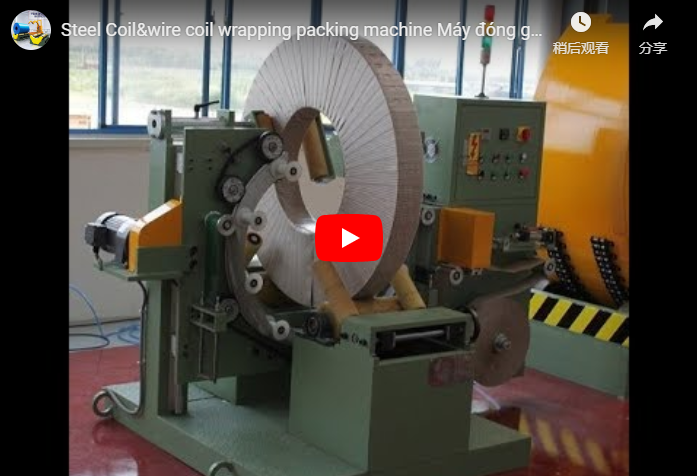
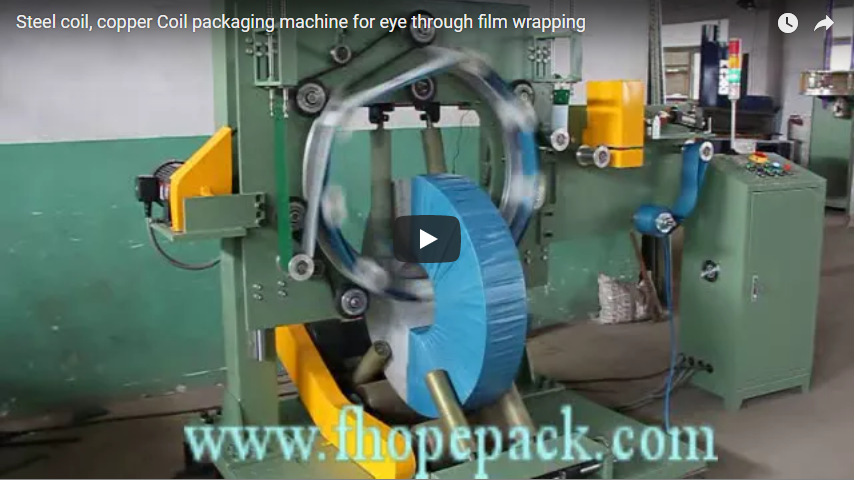
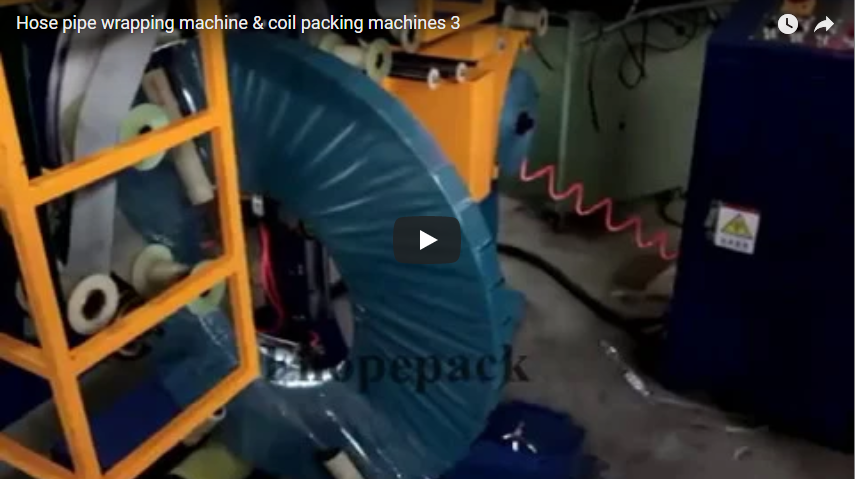
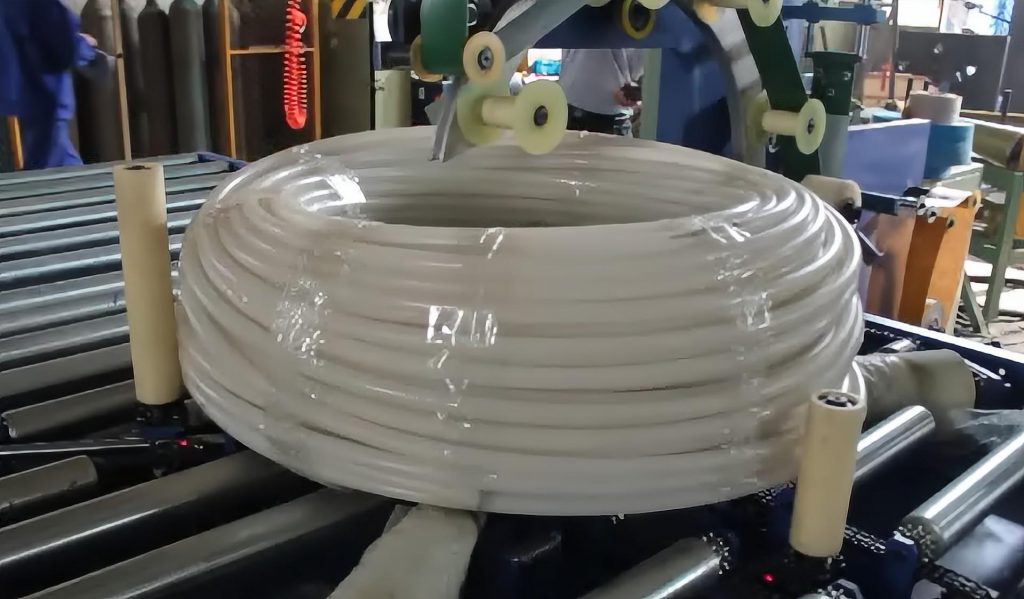
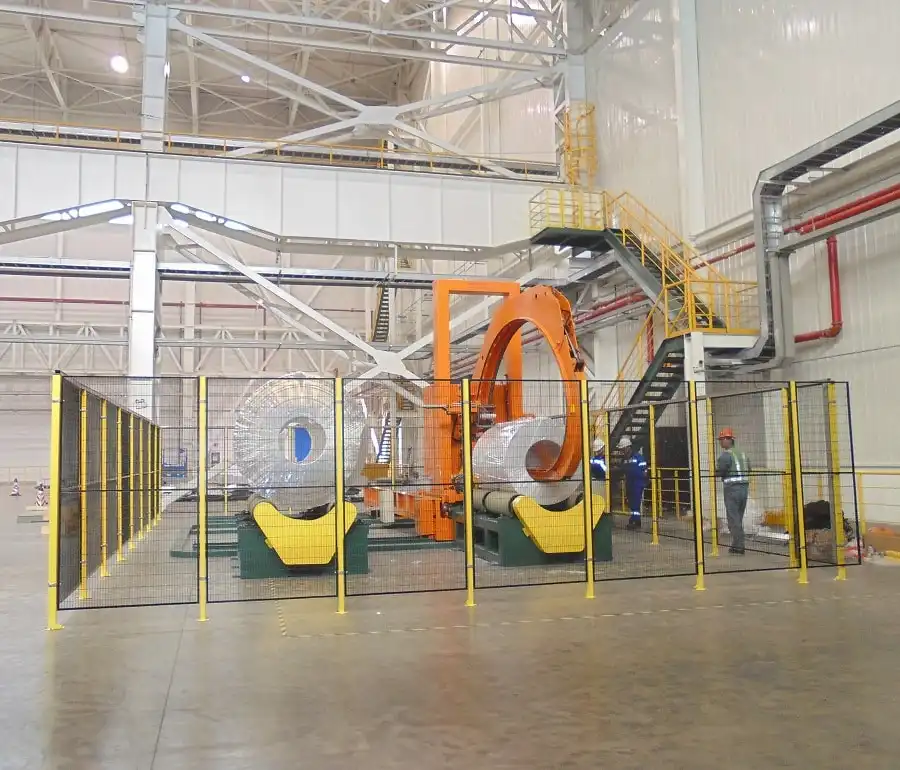
The coil sits eye-horizontal on two blocker roller stations. The wrapping ring opens a path through the coil eye, and shuttles carrying the material rolls run around it, so each turn lays material over the outside, both faces and the bore. The roller stations turn the coil slowly, so the wraps step around the whole coil with overlap.
The operator enters the coil OD, ID and width, and the machine sets the other parameters. The wrapper moves left and right to position itself, and a motor adjusts the ring height to centre it on the coil.
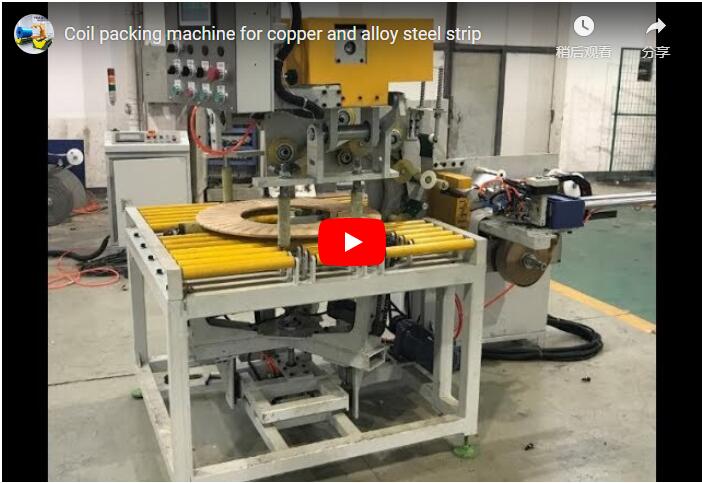
In our video, the shuttles carry material through the coil eye on every turn of the ring while the rollers turn the coil, so each wrap overlaps the one before.
Paper and film layers
Master coils can be wrapped in VCI stretch film, paper, PP or PE. With shuttles that carry two or three rolls, we lay an inner layer and an outer layer in the same cycle.
| Layer | Typical material | Job |
|---|---|---|
| Inner | paper or VCI film | covers the steel surface |
| Outer | stretch film or opaque film | seals out dust and moisture |
Our stainless master coil design wraps stretch film plus opaque film as two layers, from rolls with a 76 mm core, 100–250 mm OD and 200–250 mm width. A brake on the material release stops the material folding, and tension is adjustable.
Which design fits your coil
| Parameter | Stainless master coil wrapper | Cold-rolled master coil wrapper |
|---|---|---|
| Coil width | 500–1,800 mm | 800–2,000 mm |
| Coil OD | 800–2,000 mm | 1,000–2,100 mm |
| Coil ID | 500–600 mm | 610–760 mm |
| Coil weight | 1,000–12,500 kg | 2,000–30,000 kg |
| Shuttle speed | about 2–3 m/s | about 2–3 m/s |
| Overlap | 20–90% | 20–90% |
Choose by ID and weight first. A coil with a 610 mm ID or heavier than 12,500 kg needs the cold-rolled design. The precise sizes are confirmed after design.
Planning wraps and material
Overlap is set at the outside diameter, where the wraps spread furthest apart. Illustrative example for a coil 1,800 mm OD, 600 mm ID and 1,200 mm wide, with 250 mm material at 50% overlap:
| Step | Calculation | Result |
|---|---|---|
| Advance per wrap at OD | 250 mm × 50% | 125 mm |
| Wraps per layer | π × 1,800 ÷ 125 | about 45 |
| Coil section perimeter | 2 × (1,200 + 600) | 3.6 m |
| Material per layer | 45 × 3.6 m | about 162 m |
The section perimeter uses the 600 mm wall, half of 1,800 minus 600. Real roll use differs: stretching the film shortens the length drawn from the roll, while start and end wraps add to it, so we confirm it on trial.
Automation features
| Feature | Stainless master coil wrapper |
|---|---|
| Control | PLC and HMI |
| Modes | manual and automatic |
| Shuttles | two, crossing the coil ID |
| Positioning | automatic left and right; sensors for trolley position |
| Ring height | adjusted by motor to the coil OD |
| Material | automatic cutting and feeding |
| Overlap | set by inverter |
| Reset | wrapping position reset |
Utilities and safety
| Utility | Stainless design | Cold-rolled design |
|---|---|---|
| Power | about 12 kW | about 15 kW |
| Power supply | 380 V, three-phase five-wire | 380 V, three-phase five-wire |
| Hydraulic supply | 140 bar | — |
| Air supply | 4–5 kgf/cm² | — |
The cold-rolled page does not state hydraulic or air supply, so we confirm them with your layout. Guardrails and soft start and stop protect the operator, and an alarm shows faults automatically. The standards that apply depend on the destination market. For CE markets, ISO 12100 sets the risk-assessment method and EN 415-10 sets general requirements for packaging machines.
Selection checklist for a master coil wrapper
- Coil OD, ID, width and weight, smallest to largest.
- Inner and outer materials.
- Number of layers.
- Coil car or crane loading.
- Coils per shift needed.
- Local power, hydraulic and air supply.
Engineering FAQ
Q: Can one pass lay paper and film? A: Yes. Shuttles can carry two or three rolls, so the inner and outer layers go on in the same cycle.
Q: How heavy a master coil can it wrap? A: Up to 12,500 kg on the stainless design and up to 30,000 kg on the cold-rolled design.
Q: What coil IDs fit? A: 500–600 mm on the stainless design and 610–760 mm on the cold-rolled design.
Q: How much material does one layer use? A: For an 1,800 mm OD coil at 50% overlap with 250 mm material, about 45 wraps and about 162 m.
Q: Does the operator set every parameter? A: No. The operator enters OD, ID and width, and the machine sets the rest.
Next step
We plan your master coil wrapper in three steps:
- Submit your layout drawing with your coil list and materials to info@fhopepack.com.
- Receive a proposal within 48 hours, with the design and layer plan.
- Book a site survey to plan coil loading.
Related reading
- Master coil wrappers
- Stainless master coil wrapper
- Cold-rolled master coil wrapper
- Video: integrating stretch wrapping and downender stacking for heavy steel coils
- Video: coil packing machine, packing and handling
Sources
- Materials: master coil wrapper page
- Stainless design data: stainless master coil wrapper page
- Cold-rolled design data: cold-rolled master coil wrapper page
- Machine in action: our master coil wrapping video on YouTube
- Standards scope: ISO 12100:2010, EN 415-10:2014
Last reviewed: 2026-10-04