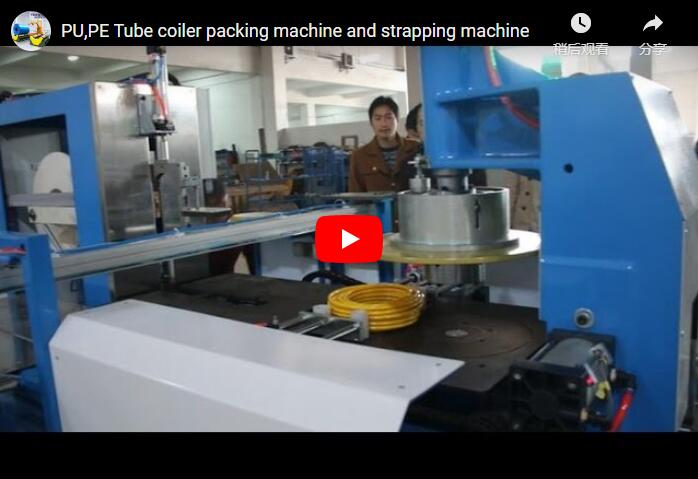
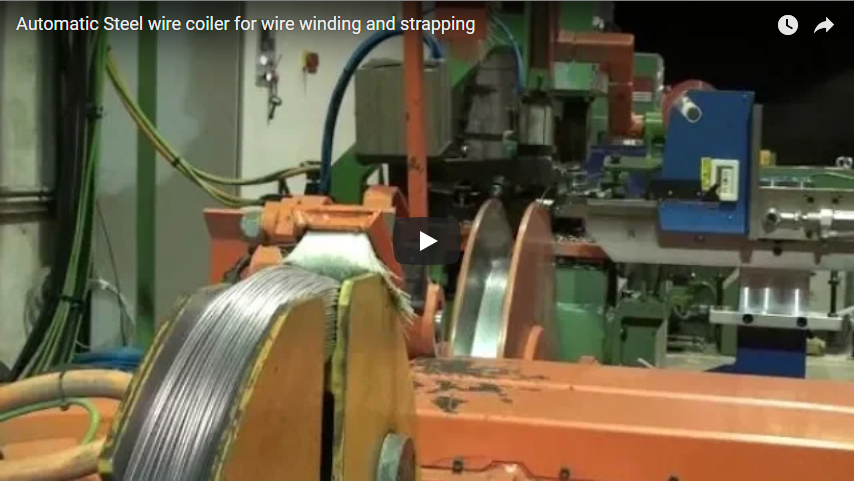
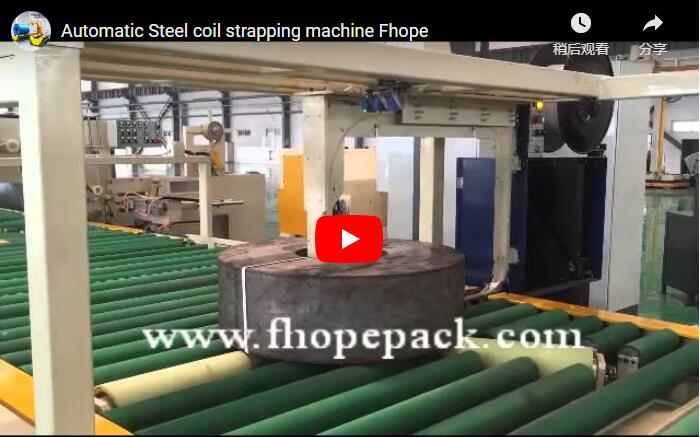
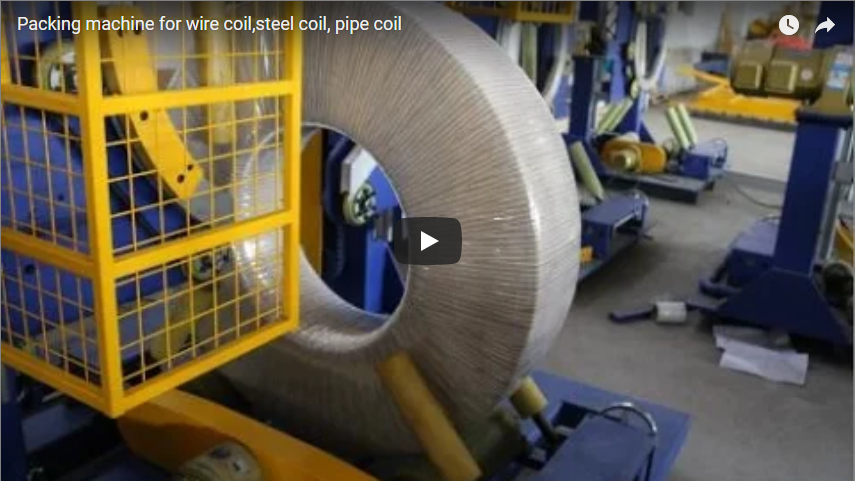
Summary: This case study illustrates how an automated coil packing machine can reduce rust claims and ergonomic risks for metal processors handling heavy steel coils. While exact results vary by facility, typical implementations show damage rates dropping significantly, throughput increasing to illustrative ranges of 50–70 coils per hour, and return on investment often realized within a projected 16- to 24-month window through improved packaging consistency.
[VIDEO PLACEHOLDER]
🛠️ Client Background
This export-focused metal processing facility sought an automated coil packing machine to reduce rust-related claims and workplace injuries, replacing inconsistent manual methods with a fully integrated packaging system designed for heavy steel coils.
Note: The following client profile and operational data are generalized examples based on typical industry benchmarks. Actual figures will vary by facility size, product mix, and local labor rates.
The company processes wire rods and slit coils for automotive and construction markets. Because shipments often travel long maritime routes lasting over 30 days, the facility requires strict protective packaging to prevent moisture damage. Operations handle both large master coils and narrower slit products, requiring equipment that can adapt to different sizes without major downtime.
Previously, workers used semi-automated wrapping stations alongside manual strapping teams. This setup caused quality inconsistencies during busy production periods when staffing levels changed. Management needed a standardized system to meet strict delivery requirements.
The procurement team compared suppliers by looking at how easily the new equipment would connect to existing machinery and handle different materials. They prioritized a coil packing machine that could link directly with current coil handling systems while using a Programmable Logic Controller (PLC)—an industrial computer that automates machine sequences—to manage strap tension consistently. Reference: Automatic Slit Coil Packaging System architecture standards guided the assessment of modular line scalability.
Key Point: Export packaging rules often require specific moisture barriers. While standard VCI (Volatile Corrosion Inhibitor) paper works for domestic shipping, ocean freight usually needs heavy-duty VCI film with stronger vapor protection to stop condensation damage.
| Design Parameter | Typical Client Requirement | System Capability (Illustrative Range) |
|---|---|---|
| Coil Outer Diameter | Up to 2500mm | Accommodates OD ≤ 2500mm with adjustable guide rails |
| Coil Inner Diameter | Standard & Non-standard | Supports ID range from 400mm to 762mm via adapter mandrels |
| Maximum Coil Weight | 30 tons | Rated for continuous handling up to 30,000 kg |
| Throughput Target | ≥ 50–60 coils/hour (typical) | Designed cycle time supports illustrative ranges of 50–70 coils/hour under optimal conditions |
🏗️ Challenge
Facilities using manual packaging often face higher damage rates and safety risks during peak production, which can limit output below target capacity.
Source Attribution & Disclaimer: The metrics below represent typical baseline values observed in similar manufacturing environments. They are provided as illustrative examples to demonstrate common operational pain points. Actual facility data should be verified through internal audits before procurement planning.
Operational reviews typically highlight three main areas where manual methods impact quality and workflow:
-
Rust Formation: Inconsistent film wrapping allows moisture to penetrate during ocean transit. Industry benchmarks suggest that surface corrosion claims can average around 2% to 4% of annual revenue for unprotected exports, which cuts into profit margins.
-
Strap Tension Variance: Manual strapping often leads to uneven tension, sometimes varying by more than ±15%. This inconsistency can cut into coil edges, creating risks during crane handling and adding an estimated 0.5% to 1% in annual damage claims.
-
Ergonomic Risks & Bottlenecks: Workers perform repetitive heavy lifting when strapping coils manually. Safety logs from similar facilities often record between 8 and 15 ergonomic injuries per year, leading to higher insurance costs and temporary production pauses for safety reviews.
| Metric | Typical Baseline (Manual) | Target Goal (Automated) |
|---|---|---|
| Damage Rate | 2%–4% (illustrative range) | < 1% |
| Cycle Time | 80–95 seconds/coil | ≤ 60 seconds/coil |
| Labor per Shift | 6–8 operators (packing area) | ≤ 4 operators |
| Safety Incidents | 8–15/year (typical range) | 0 incidents |
Key Point: Reducing damage rates depends heavily on packaging material choice. Switching from standard stretch film to VCI-coated solutions can typically lower moisture-related claims by 60% to 80%, provided the wrapping maintains consistent overlap and tension.
📈 Solution Design
The proposed setup combines a coil packing machine with an orientation inverter, a film wrapper that applies VCI barriers, and an automated strapping station controlled by PLC logic to ensure consistent packaging across different coil sizes.
Engineers design these integrated lines using separate functional modules that work together through a central control screen. The system is built to handle coils in either eye-to-sky (vertical axis) or eye-to-wall (horizontal axis) orientations without requiring workers to manually reconfigure the equipment.
Coil Handling & Orientation: A coil inverter tilts the heavy ring-shaped product into the best position for wrapping. Built-in safety checks confirm the coil is stable before rotation begins. The mechanism safely handles loads up to 30 tons, which reduces strain on downstream machines. Operators select the desired orientation using preset buttons on the control screen to match strapping patterns.
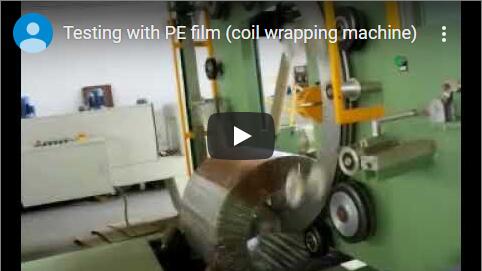
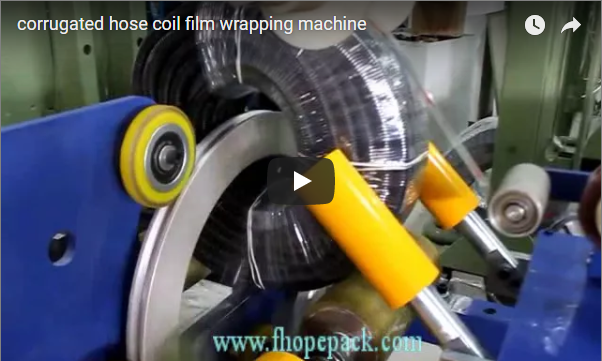
Wrapping Station: The film wrapper applies a protective layer using either VCI paper or stretch film, depending on the product needs. Tension controls keep the wrap force steady, ensuring even coverage whether the coil is light or heavy. The wrapping head moves smoothly across the coil surface to prevent gaps or double layers.
Strapping Station: Automated strappers apply PET or steel straps in radial (around the circumference) and axial (along the length) patterns. Radial straps keep the coil tight against expansion forces, while axial straps add stability during lifting. Calibrated tensioning tools replace manual methods to eliminate uneven tightening.
| Module Specification | Typical Technical Detail | Operating Condition (Illustrative Range) |
|---|---|---|
| Coil Inverter Capacity | 30 tons max load | Rated for eye-to-sky/wall rotation under dynamic load conditions |
| Film Wrapper Tension | 40–60 N adjustable (typical) | Maintains consistent film adhesion across coil weights from 500kg to 30t |
| Strapping System Speed | ≤ 2 seconds per strap (projected) | Deploys PET straps at ~800N tension, ensuring secure unitization under transport vibration |
| PLC Control Interface | HMI with recipe storage | Stores parameters for different coil profiles, enabling changeover in < 5 minutes |
Key Point: Choosing a strapping pattern involves balancing material costs against damage prevention. Axial strapping uses more material but greatly reduces the risk of coil collapse during lifting, making it a standard choice for heavy coils or those with softer inner cores.
🛡️ Implementation
Deployment typically follows a phased approach, including site preparation, mechanical setup, control system testing, and operator training to ensure smooth transitions between different product types.
Installing new packaging equipment requires careful planning to avoid disrupting daily production. Site teams focus on structural checks and utility connections before the machinery arrives.
Site Preparation & Verification: Engineers check that the factory floor can support the weight of heavy coils and the new machines. Concrete floors thinner than 200mm often need reinforcement to handle concentrated loads. Facility managers verify slab thickness against design load charts, adding steel plates under high-stress points if necessary.
Mechanical Integration: The packing machine connects to existing conveyor systems for smooth coil transfer. Technicians adjust alignment to prevent jarring impacts between stations. Cable trays and air lines are routed through protected channels to avoid damage from moving parts.
Control System Testing & Training: Commissioning involves calibrating sensors and programming the control sequences. Technicians run test cycles with dummy coils to verify timing between wrapping and strapping. Tension settings are adjusted using material samples to find the right balance between tightness and coil protection.
| Implementation Phase | Key Activities | Typical Duration Estimate |
|---|---|---|
| Phase 1: Site Prep | Floor load verification, utility routing, foundation marking | 5–7 days (illustrative) |
| Phase 2: Installation | Equipment placement, mechanical alignment, electrical connection | 10–14 days (projected range) |
| Phase 3: Commissioning | PLC programming, sensor calibration, dry run validation | 3–5 days (typical) |
| Phase 4: Training | Operator instruction, maintenance procedures, HMI navigation | 2–3 days (estimated) |
Key Point: Commissioning downtime usually ranges from 10 to 15 days, but actual schedules depend on site readiness and local utility availability. Delays in power or compressed air connections can extend this timeline significantly.
🔗 See Also: Related equipment
⚙️ Results Data
Post-installation tracking typically shows reduced damage claims, higher throughput within illustrative ranges of 50–70 coils per hour, and lower labor requirements while maintaining improved safety records during the first operational quarter.
Source Attribution & Disclaimer: The data below represents projected outcomes based on typical industry benchmarks and generalized client reports. Actual performance will vary depending on product mix, environmental conditions, and maintenance practices. Always verify financial and operational metrics with your specific site data before procurement decisions.
Quality Improvement: Consistent VCI application and secure strapping typically lead to fewer rust claims. Automated wrappers eliminate manual overlap gaps, providing steady moisture protection. Fewer packaging defects improve surface inspection rates and boost customer satisfaction in export markets.
Efficiency Gains: Throughput often improves due to faster cycle times and quicker changeovers. Stored settings allow operators to switch between coil types rapidly without manual recalibration. Integrated line flow reduces bottlenecks caused by strapping queues.
| Outcome Metric | Typical Pre-Implementation Baseline | Post-Implementation (Illustrative Range) | Expected Improvement |
|---|---|---|---|
| Damage Rate | 2%–4% | < 1% | ~75%–90% Reduction (typical range) |
| Throughput | 35–45 coils/hour | 50–70 coils/hour | +30%–60% Increase (illustrative) |
| Labor Requirement | 6–8 operators/shift | 3–4 operators/shift | ~40%–50% Reduction |
| Safety Incidents | 8–12 incidents/year | 0 incidents (Q1-Q3 typical) | Significant Risk Reduction |
Note: Results are based on generalized client-reported operational data and industry benchmarks from the first six months of system operation. Typical ranges may vary depending on product mix, environmental conditions, and maintenance schedules.
Key Point: Throughput gains depend on a steady supply of prepared coils from upstream processes. Verify that coil preparation speed matches the packaging line capacity to avoid idle time, as faster packing can expose limitations in earlier processing stages if not synchronized.
🛠️ ROI Analysis
Financial models typically project a payback period of 16 to 24 months based on reduced damage costs and labor adjustments, assuming steady production volumes and stable material pricing.
Source Attribution & Disclaimer: The following financial estimates are illustrative examples derived from typical industry benchmarks. Actual capital expenditures, labor rates, and credit memo data will vary by region and facility. Consult with your finance team and equipment suppliers to validate these projections against your specific operational costs.
Cost Savings Calculation: Avoiding damage claims usually provides the largest financial benefit. Lowering the damage rate across high-volume shipments saves revenue that would otherwise be lost to credits or rework. Labor savings come from shifting workers to other tasks or reducing shift coverage. While VCI film and strapping cost more than basic alternatives, reduced waste and higher efficiency often offset the difference.
| Financial Component | Annual Estimate (USD) | Assumption Basis & Verification Note |
|---|---|---|
| Damage Cost Avoidance | $120,000 – $250,000 | Based on illustrative 2%–3.5% damage rate reduction across ~50k tons; verify with actual credit memo data |
| Labor Reallocation Savings | $70,000 – $110,000 | Equivalent to 2–3 full-time positions; assumes stable wage rates and headcount optimization strategy |
| Packaging Material Increase | -$20,000 – -$45,000 | Premium cost of VCI film/strapping vs. basic alternatives; offset by waste reduction in material usage |
| Maintenance & Energy | -$12,000 – -$25,000 | Estimated service contract and power consumption for continuous operation |
| Net Annual Benefit | $160,000 – $290,000 | Calculation excludes one-time implementation costs; verify with supplier maintenance quotes |
Payback Period: Dividing the total equipment cost by the estimated annual savings typically yields a payback window of 16 to 24 months. This timeline assumes steady production volumes and minimal unplanned downtime during the measurement period.
Key Point: A 10% drop in annual throughput can extend the payback period by roughly 3 months. Verify production forecasts with your sales planning team before finalizing procurement, as volume changes directly impact return on investment speed.
Purchase-Decision Checklist
-
[ ] Floor Load Verification: Confirm concrete slab thickness and bearing capacity exceed machinery and max coil load requirements; arrange reinforcement if <200mm thickness found.
-
[ ] Material Compatibility Test: Validate VCI film and strapping materials with specific steel grades to ensure no chemical interaction or corrosion promotion under storage conditions.
-
[ ] Integration Points Audit: Map all mechanical and electrical interfaces between existing coil cars, upenders, and the new packaging line; identify any custom adapter requirements.
-
[ ] PLC Recipe Management: Verify that the HMI supports sufficient recipe storage for current product mix and allows future expansion without software licensing fees.
-
[ ] Maintenance Access Review: Ensure clear access panels and service points are positioned to allow routine inspection of tensioners, wrappers, and strapping heads within 2 meters.
-
[ ] Training Scope Confirmation: Define operator training duration covering HMI navigation, emergency stops, jam clearing procedures, and basic troubleshooting to minimize downtime reliance on technicians.
🛡️ Compliance Note: This equipment is designed to meet ISO and ASTM requirements. Verify specific certifications with the manufacturer before procurement.