Executive summary Our automatic steel coil strapping machine straps slit coils through the eye as they lie flat on a roller conveyor. One strapping head can run steel or polyester (PET) strap, and the operator picks the strap type on the control panel. Coils get 2, 3, 4 or 6 straps, and the PET strapper in our slit coil line lists a cycle of about 15 s.
Table of Contents
- How eye strapping works
- Steel or PET strap
- Straps per coil and cycle time
- Strap use and strap coil life
- Line integration
- Utilities and safety
- Selection checklist
- Engineering FAQ
- Next step
- Related reading
- Sources
How eye strapping works
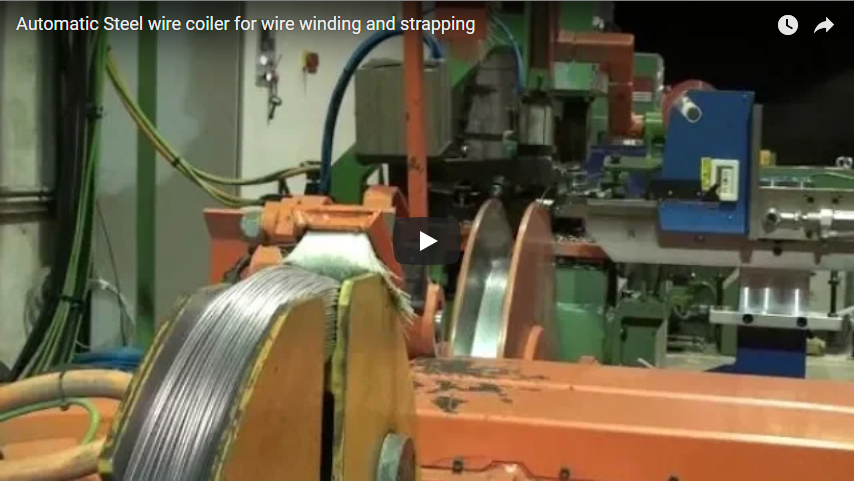
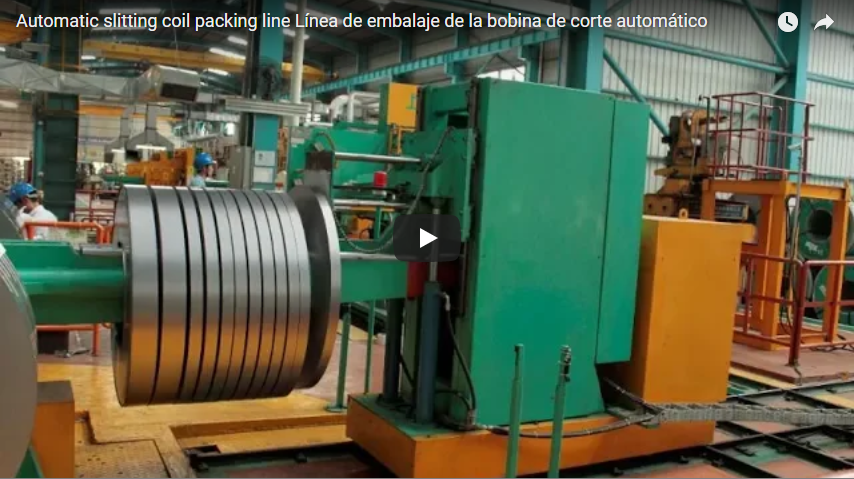
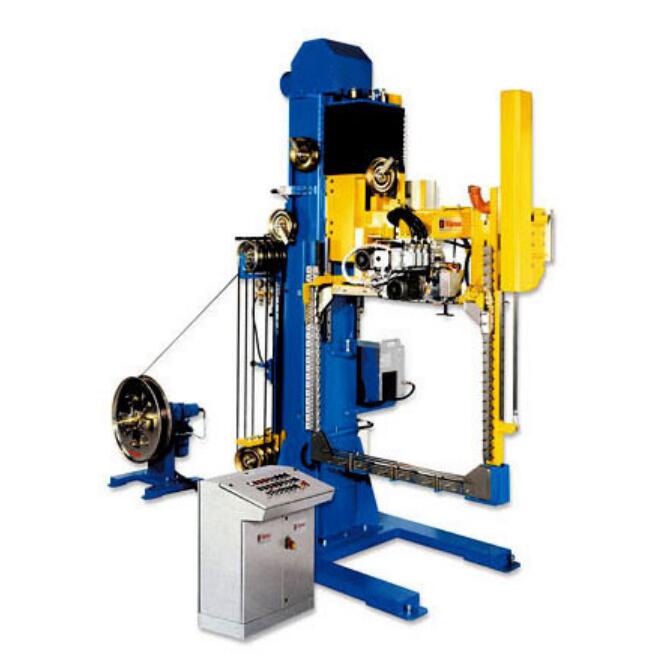
Our slit coil strapping machine positions each coil automatically on the roller conveyor. The strapping head then feeds the strap through the coil eye and around the coil wall, tensions it, seals it and cuts it. The heads sit on the top sides of the table, so they reach coils of different widths. In our video, the conveyor brings a flat slit coil under the strapping frame, and the head lowers to strap it through the eye.
Each radial strap ties the coil wraps together, so the coil keeps its shape when it is lifted and stacked.
Steel or PET strap
The same head works with both strap types in a range of sizes, so you can choose per order:
| Point | Steel strap | PET strap |
|---|---|---|
| Choice | on the control panel | on the control panel |
| Typical use | heavy coils, long-distance transport | lighter coils, no rust marks on the coil |
| Strap spec on our eye strapper | 31.75 mm wide, 0.8–1 mm thick | confirmed in your proposal |
| Strength | yield point 900 MPa or greater | confirmed in your proposal |
On our slit coil eye strapper, the head creates up to 22,000 N of tension, precisely adjustable, and uses the stretch of the steel strap to prevent breaks. The strap tension is variable on every model, and the coil surface is not damaged in strapping.
Straps per coil and cycle time
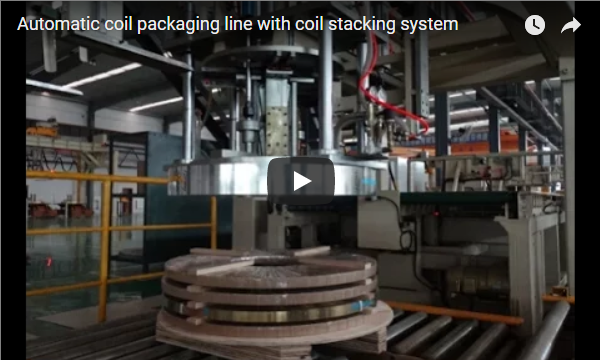
Coils get 2, 3, 4 or 6 straps per setting. In our slit coil packaging line with turntable stacker, the PET strapper lists a 15 s cycle with automatic 3, 4 or 6 strapping. We confirm on trial whether that covers every strap on your coil, including turning the coil between straps. If it does:
- Ceiling. 3,600 ÷ 15 = 240 coils per hour.
- Per master coil. A master coil slit into 12 coils (illustrative) needs 12 × 15 s = 180 s, or 3 min, of strapping.
We compare this with your slitter’s output per master coil, so the strapper never holds up the line.
Strap use and strap coil life
For an illustrative slit coil of 508 mm ID, 1,200 mm OD and 150 mm width:
- Coil wall. (1,200 − 508) ÷ 2 = 346 mm.
- One radial strap. 2 × (150 + 346) = 992 mm, so about 1 m.
- Four straps. About 4 m of strap per coil.
- Strap weight. 31.75 mm × 0.8 mm steel strap weighs 0.03175 × 0.0008 × 7,850 = about 0.2 kg/m.
- Strap coil length. A 430 kg strap coil holds about 430 ÷ 0.2 = 2,150 m.
- Coils per strap coil. 2,150 ÷ 4 = about 537 slit coils.
Our eye strapper feeds from a 500 kg class vertical strap feeder with extra-large rolls, which cuts downtime for strap changes. A pre-feed function also feeds the next strap to the rail at the end of each bale.
Line integration
The strapping machine connects to the conveyor system and adapts automatically to different coil sizes. Around it, we design the strapping system with conveyors, turning tables, upending and robots, and we supply it with or without top, bottom, side or corner protection.
Utilities and safety
| Item | Detail |
|---|---|
| Strap coil (eye strapper) | OD under 840 mm, ID 406 mm, height 190 mm, about 430 kg |
| Pneumatics | standardized motors, cylinders and valves |
| Maintenance | easy head access, quick change of wearing parts, debris blowing at the nip unit |
The machine is fully assembled and tested in our factory before shipment. The standards that apply depend on the destination market. For CE markets, ISO 12100 sets the risk-assessment method and EN 415-10 sets general requirements for packaging machines.
Selection checklist for a slit coil strapper
- Slit coil ID, OD, width and weight range.
- Steel or PET strap, and strap size.
- Straps per coil: 2, 3, 4 or 6.
- Slit coils per master coil, and master coils per hour.
- Edge or corner protection.
- Conveyor, turning table or stacker after strapping.
Engineering FAQ
Q: Can one machine use steel and PET strap? A: Yes. The same head runs both, and the operator selects the strap type on the control panel. We confirm the head setup for your strap sizes in the proposal.
Q: How fast is it? A: The PET strapper in our slit coil line lists about 15 s. If that covers the whole coil, the ceiling is 240 coils per hour; we confirm it on trial.
Q: How many straps does a coil get? A: 2, 3, 4 or 6 per setting.
Q: How long does a strap coil last? A: About 537 slit coils for a 430 kg coil of 31.75 × 0.8 mm steel strap at four 1 m straps per coil.
Q: Will strapping mark the coil? A: Tension is adjustable, and the process does not damage the coil surface. Corner protection is optional.
Next step
We size your slit coil strapper in three steps:
- Submit your layout drawing with coil sizes, strap type and coils per hour to info@fhopepack.com.
- Receive a proposal within 48 hours, with the strapper, strap plan and conveyors.
- Book a site survey to fit the strapper to your slitting line.
Related reading
- Slit coil eye strapping machine
- Slitting coil strapping machine
- Slitting coil packaging line with turntable stacker
- Steel coil strapping machinery
- Automatic coil packing line
Sources
- Steel/PET head, strap counts, integration: slitting coil strapping machine page
- Strap spec, tension, feeder, maintenance: slit coil eye strapping machine page
- 15 s PET cycle: slitting coil packaging line with turntable stacker page
- Machine in action: our automatic steel coil strapping machine video on YouTube
- Standards scope: ISO 12100:2010, EN 415-10:2014
Last reviewed: 2026-10-04