Executive summary A rewinding and tying machine takes wire or cable from a large reel, measures and cuts it, winds it into small coils and ties them. Our equivalent solution is an off-line cutting, winding and tying machine that divides a large volume into several smaller coils. It makes non-spindle coils of 120–200 mm ID, 200–450 mm OD and 50–200 mm high, up to 5 kg each. The key planning step is checking that your coil length fits the winding window.
Table of Contents
- What the machine does
- Coil window
- Will your length fit?
- Weight limit
- Tying and length control
- Moving up to a full line
- Selection checklist
- Engineering FAQ
- Next step
- Related reading
- Sources
What the machine does
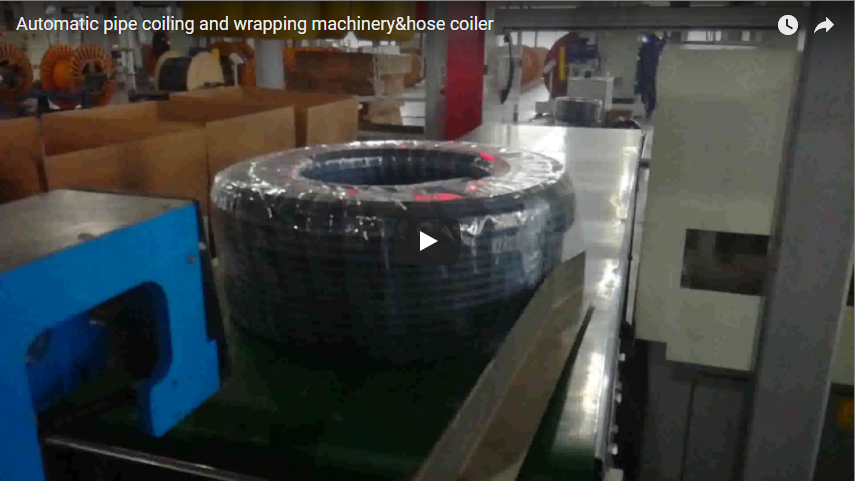
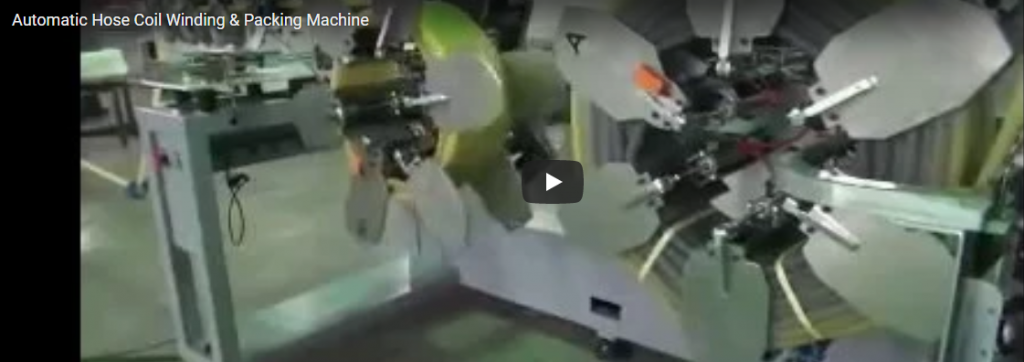
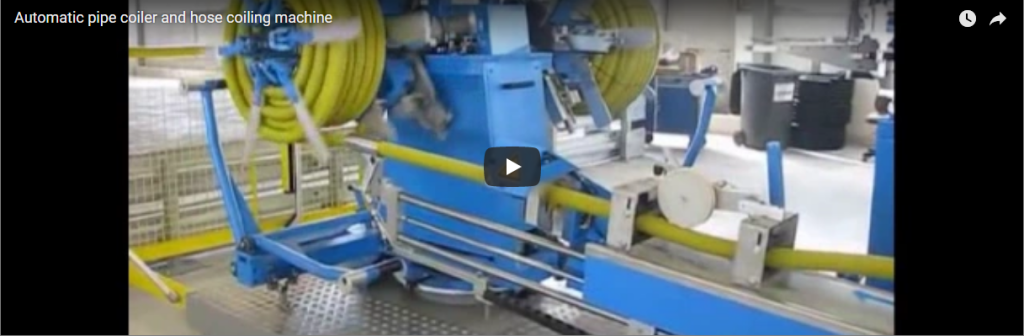
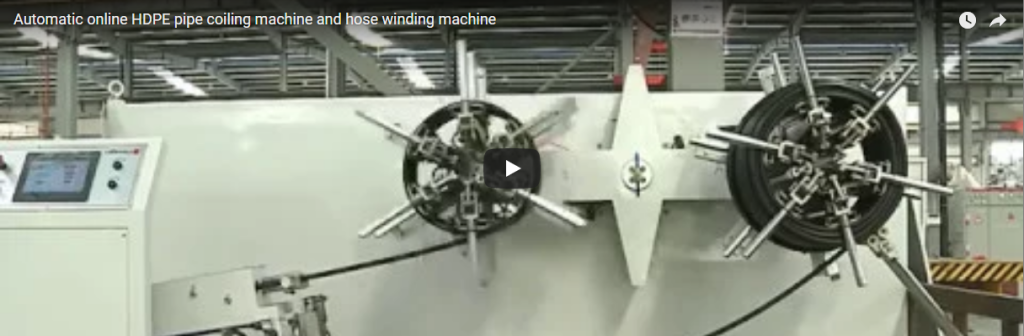
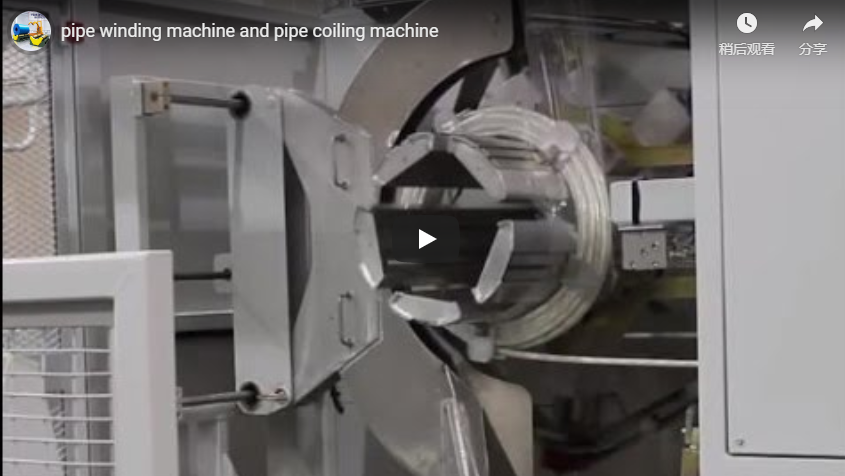
The video shows a rewinding and tying cell built around a winding head, a linear slide and a tying unit. The slide moves the wound coil from the winding head to the tying position, so winding and tying happen in sequence.
The process has four steps:
- Pay-off. Wire or cable runs from the large reel.
- Measure and cut. The machine counts the length and cuts at the set value.
- Wind. The winding head forms a small coil with no spindle left inside.
- Tie. The coil is tied so it holds its shape, then taken off.
Our equivalent solution works off-line, next to the pay-off, so you can split large reels into small retail or installer coils.

Coil window
| Parameter | Value |
|---|---|
| Coil ID | 120–200 mm |
| Coil OD | 200–450 mm |
| Coil height | 50–200 mm |
| Coil weight | up to 5 kg |
| Coil type | non-spindle |
Will your length fit?
The winding window is the ring between ID and OD, times the coil height. An illustrative check for 100 m of 6 mm cable in a coil of 160 mm ID, 300 mm OD and 100 mm height:
- Window area. (300 − 160) ÷ 2 × 100 = 7,000 mm².
- Turns that fit. Each turn of 6 mm cable takes about 6 × 6 = 36 mm², so about 7,000 ÷ 36 = 194 turns.
- Length per turn. The mean diameter is (300 + 160) ÷ 2 = 230 mm, so one turn is about 0.72 m.
- Capacity. 194 × 0.72 m = about 140 m. So 100 m fits, with room to spare.
This assumes the turns stack in a neat square pattern. Real winding packs less evenly, so the true capacity is lower, and we confirm the coil size on a trial with your wire.
Weight limit
Each coil can weigh up to 5 kg. Weigh one metre of your wire or cable and multiply by the coil length. For example, at an illustrative 0.04 kg per metre, a 100 m coil weighs about 4 kg, which is inside the limit.
If your coils are heavier or larger, we move to a bigger coiler from our range.
Tying and length control
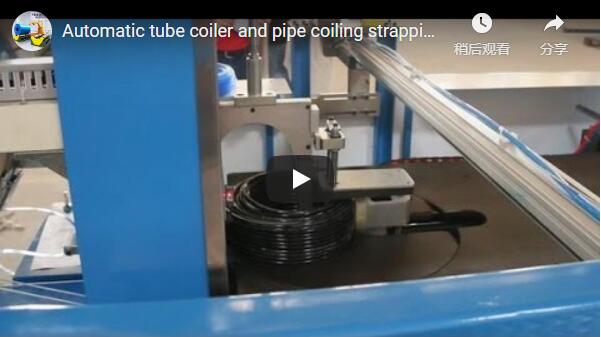
Our automatic tube coiling and tying machine shows how we control length and tying. It is a tube machine, so we confirm the same functions for your wire on a trial:
- Length. An encoder calculates the length automatically, with coiling and cutting accuracy of 3 mm per 10 m.
- Tying. Two binding points are made at one time.
- Tension. Tension control keeps soft material from deforming as it is coiled.
- Drive. A servo motor drives the coiling and the coil positioning.
- Faults. The machine detects errors and alarms when trouble occurs.
Parameters are set in English on the PLC and HMI.
Moving up to a full line
For high volumes, our automatic cable coiling, wrapping and stacking line runs with no operator at the line. It coils at up to 2 coils per minute and one person can monitor 4–6 lines.
| Parameter | Coiling, wrapping and stacking line |
|---|---|
| Coil ID | 135–220 mm |
| Coil OD | 180–400 mm |
| Coil height | 80–130 mm |
| Cable diameter | 1.5–6 mm |
| Length setting (meter counter) | 0.01–200 m |
| Air supply | 6 bar |
| Power | AC 380 V, 50 Hz, 3 phase |
The standards that apply depend on the destination market. For CE markets, ISO 12100 sets the risk-assessment method and EN 415-10 sets general requirements for packaging machines.
Selection checklist for a rewinding and tying machine
- Wire or cable diameter, and weight per metre.
- Coil length, ID, OD and height.
- Coil weight.
- Number of ties per coil.
- Coils per hour, and off-line or inline with the line.
- Power and compressed air at the station.
Engineering FAQ
Q: What coil sizes can it make? A: Non-spindle coils of 120–200 mm ID, 200–450 mm OD, 50–200 mm high and up to 5 kg.
Q: Will 100 m of 6 mm cable fit a 160/300 mm coil, 100 mm high? A: Yes. The window holds about 194 turns of about 0.72 m, so about 140 m.
Q: How accurate is the length? A: On our tube coiling and tying machine, the encoder gives coiling and cutting accuracy of 3 mm per 10 m.
Q: How many ties does each coil get? A: Two binding points are made at one time on our tube coiling and tying machine.
Q: What if I need higher output? A: Our coiling, wrapping and stacking line runs at up to 2 coils per minute, and one person can watch 4–6 lines.
Next step
We match the machine to your wire in three steps:
- Submit your layout drawing with wire size, coil length and coils per hour to info@fhopepack.com.
- Receive a proposal within 48 hours, with the machine and layout.
- Book a site survey to fit the machine next to your pay-off.
Related reading
- Automatic cable coiling and tying machine
- Automatic tube coiling and tying machine
- Cable coiling, wrapping and stacking line
- Cable packing machines
- Wire coil wrapping machines
Sources
- Coil window and off-line function: automatic cable coiling and tying machine page
- Length accuracy, binding, tension, servo: automatic tube coiling and tying machine page
- Full line data: cable coiling, wrapping and stacking line page
- Process in action: wire coil rewinding and tying video on YouTube
- Standards scope: ISO 12100:2010, EN 415-10:2014
Last reviewed: 2026-10-04