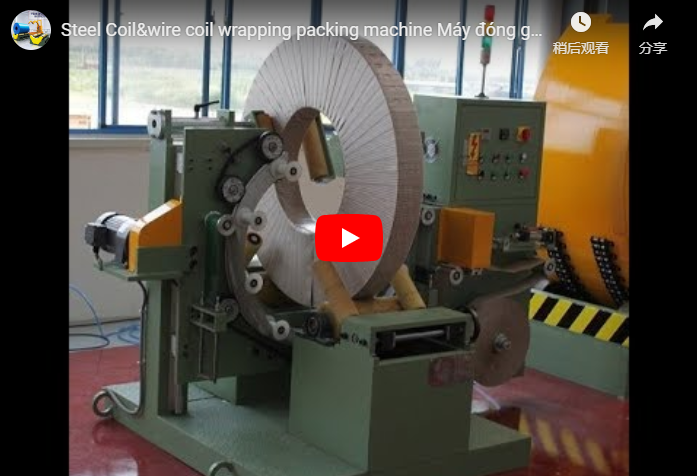
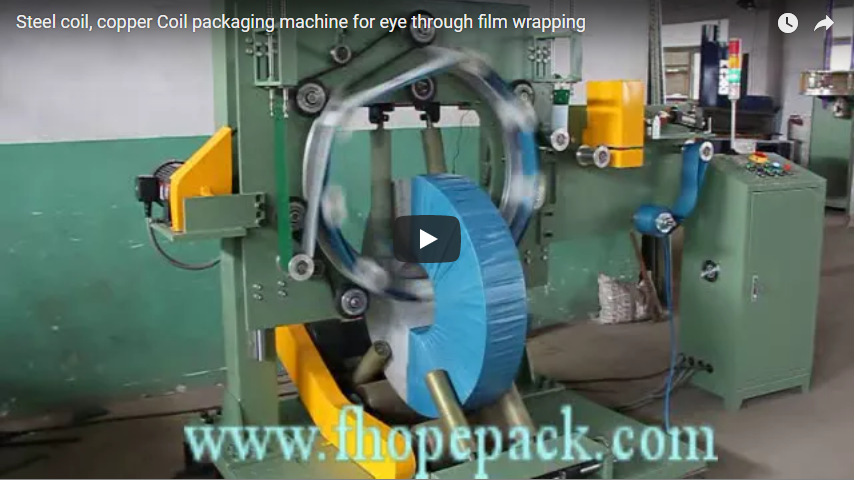
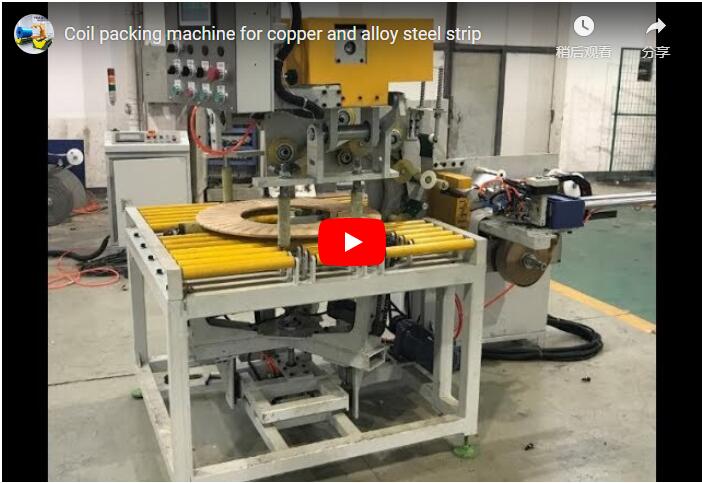
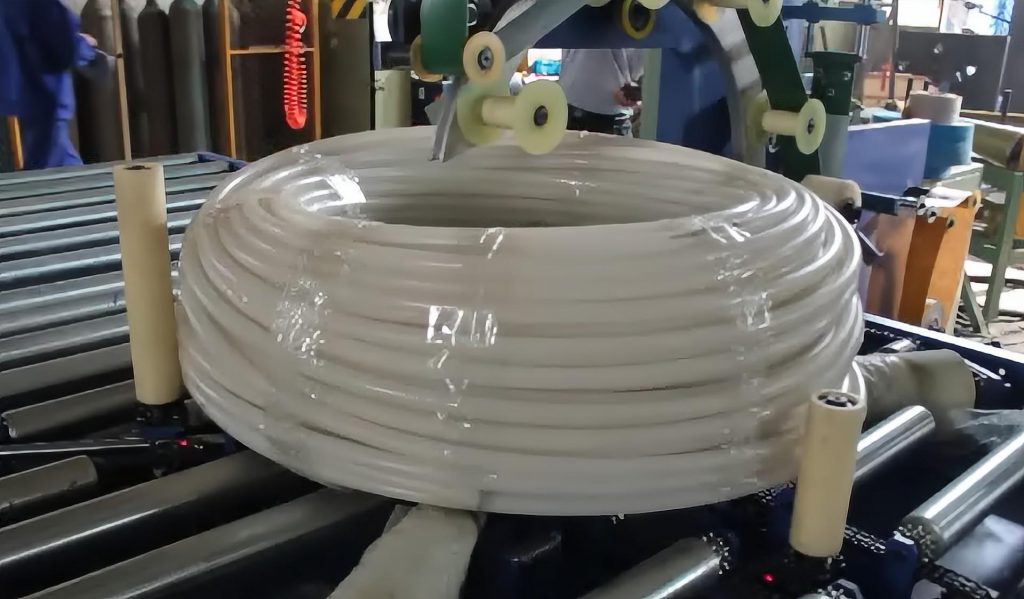
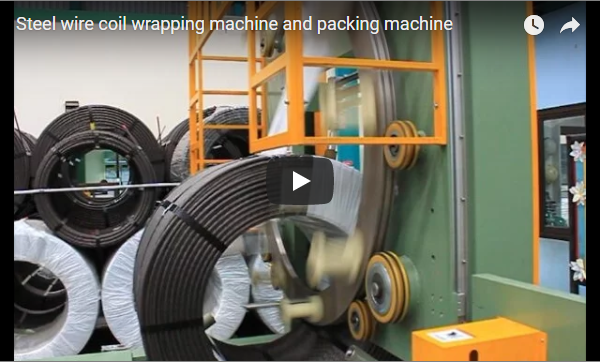
steel strips packing line for narrow coil showcase

Executive summary This video showcases a steel strips packing line for narrow coil handling in a factory setting. You can see coil infeed by conveyor, clamping and rotation for packing, an operator at a control console, and finished coils stacked on pallets. The footage confirms the line’s general layout and workflow, but does not display capacity, cycle time, dimensions, or model details — those need confirmation from the manufacturer.

Narrow steel strip coils are awkward products to pack by hand. They are heavy relative to their size, their edges are sharp, and manual wrapping produces inconsistent results that vary from shift to shift. A dedicated packing line exists to solve exactly these problems, and the video embedded above is one of the clearest ways to evaluate such a line before you ever talk to a salesperson.

This article walks through what the footage actually shows, what it deliberately leaves out, and which questions you should bring to the manufacturer if this type of line looks like a fit for your plant.

What the video shows

The footage is organized around one full pass of material through the line, with operators present throughout. Here is the sequence, tied to approximate timestamps:

Time What happens on screen
0–4 s The line stands in standby. A light-green welded steel frame is visible, with a vertical support structure on one side and a rotating worktable on the other. A large silver-grey cylindrical coil is held on the rotating table. An operator moves near the machine.
4–8 s The rotating table begins turning the coil. A yellow vertical support structure — likely a clamp or guide — moves up and down over the coil, positioning or pressing it. An operator appears at the console.
8–12 s A new coil enters on the infeed conveyor while the operator works at the control console.
12–28 s A mechanical arm and clamp assembly move around the coil in vertical and horizontal motions, performing the packing operation. The coil stays fixed on the rotating table as it is processed.

The second half of the video shifts perspective slightly and shows the downstream side of the same workflow: the yellow roller conveyor feeding coils in, the arm clamping and processing each coil, and finished, packed coils stacked on pallets on the right side of the frame.

Direct observation notes

The following notes stay close to the raw frame-by-frame observations and are limited to what is visible in the footage:

  • Machine body: light-green metal frame, welded structural steel, with some components in yellow.
  • Main components observed: a rotating worktable; a mechanical arm with clamp/guide elements; an infeed conveyor (yellow roller type in later shots); a control console with screen and buttons.
  • Layout: an L-shaped / long arrangement — conveyor on one side, rotating table and arm in the center, pallet area with finished coils on the right, console positioned for operator monitoring.
  • Product: cylindrical narrow steel strip coils, silver-grey with slight surface reflection and no visible defects; relatively wide diameter, low height.
  • Control panel: console with a black screen showing an operating interface; buttons and indicator lights in red, green, and yellow (console view) and black and red (operator-side view).
  • Signage: a blue sign reading “FHOPE GROUP” and “PACKING SOLUTION FOR YOU” on the upper left of the machine; a yellow triangular warning label with a black exclamation mark on the right side; the same label includes the text “FHOPE” and a Chinese warning word; red and blue circular “C” and “D” markings visible on the machine’s right side in early frames.
  • Safety hardware observed: the warning label only. No emergency stop button, guarding fence, light curtain, or interlock was visible in the sampled frames.

What the video does not show

This is equally important for a buyer. The footage does not display:

  • Rated production capacity (coils per hour)
  • Cycle time per coil
  • Machine dimensions (length, width, height)
  • Model designation
  • Power requirements
  • Any safety or quality certification marks
  • The coil output/egress step in full

None of these numbers appear anywhere in the video, so this article will not invent them. If any of these figures matter to your purchase decision — and for most plant managers, they do — request them from the manufacturer in writing before comparing quotes.

The workflow, station by station

Based on the observed sequence, the line follows a straightforward three-stage pattern:

  1. Infeed. The coil arrives on a roller conveyor and is positioned at the start of the processing area. In the footage, this handoff is visible around the 8–10 second mark, when a fresh coil enters while the previous one is still being worked.
  2. Packing. The coil is held on the rotating table. The arm-and-clamp assembly moves vertically and horizontally around the coil while the table rotates, applying the packing material. The operator monitors from the console and does not touch the coil during this phase.
  3. Stackout. Finished coils are placed on pallets on the right side of the line, where a visible stack of packed coils accumulates over the course of the video.

For a procurement audience, the meaningful takeaway is that the operator’s role is supervisory — loading, monitoring, and oversight — not manual wrapping. For an operator audience, the takeaway is that your stations are the infeed point and the console; the rotating table and arm operate on their own once a cycle starts.

Why this matters for narrow coils specifically

Narrow slit coils have characteristics that make automated packing disproportionately valuable:

  • Edge protection. Loose strip edges are easily damaged; a clamped, controlled rotation wraps more consistently than hand tension can.
  • Weight-to-size ratio. Even small-diameter narrow coils can be surprisingly heavy; removing lifting and turning from the manual task list reduces strain injuries.
  • Consistency. Every coil leaves the line packed the same way, which matters if your customers inspect packaging on receipt.

These are inferences drawn from the type of machine shown, not measured results from the video — the footage does not quantify any of these benefits.

Applications and fit

A line of this configuration suits plants that:

  • Slit wide coil into narrow strip coils and need to pack them for shipment
  • Handle medium-volume coil throughput where full automation pays off over manual wrapping
  • Want palletized, stackable output ready for forklift handling

It is probably not the right fit if you need very high-speed continuous packing, extremely large coils beyond what the table size suggests, or a fully unmanned cell — the video shows an operator present, and the level of autonomy is not demonstrated.

What to verify with the manufacturer

Before requesting a quote, put these on your checklist:

  • Rated capacity and realistic cycle time per coil
  • Coil size range the machine accepts (min/max OD, ID, width, weight)
  • Packing material type and consumption per coil
  • Machine footprint and required pit/foundation work
  • Power supply and control voltage requirements
  • Safety package: guarding, e-stops, light curtains, interlocks — none were visible in the video
  • Certification documentation (CE or equivalent for your market)
  • Installation, commissioning, and spare parts support terms

FAQ

Does the line run without an operator? The video shows an operator at the console and near the infeed throughout. Full autonomy is not demonstrated — treat the observed setup as supervised operation and confirm automation level with the manufacturer.

What size coils can it handle? The coils in the video are cylindrical, silver-grey narrow strip coils with a relatively large diameter and low height. Exact dimensional limits are not shown — check with the manufacturer.

Is the line safe to stand next to? The footage shows a warning label but no fencing, light curtain, or emergency stop. This does not mean the machine lacks these features — only that they were not visible in the sampled frames. Confirm the delivered safety package before installation.

How fast does it pack one coil? Cycle time is not shown or stated in the video. Request a measured figure for your coil size from the manufacturer.

What does the control console include? The console has a screen displaying an operating interface, plus buttons and indicator lights in red, green, and yellow. Its software functions are not demonstrated — verify capabilities with the manufacturer.

Source and method

This article is based on frame-by-frame analysis of the video above. The footage contains background music only — no narration or speech — so no transcription was performed. Observations were made by a vision model on sampled frames and are reported in the “Direct observation notes” section as close to the raw findings as practical. Anything not visible in those frames is either omitted or explicitly marked for manufacturer confirmation.

Related reading

Next step

If the workflow shown here matches your plant’s narrow coil packing needs, the most productive next move is a short conversation with real numbers attached: your coil dimensions, your target throughput, and your floor space. Visit our contact page to request specifications, cycle-time data for your coil size, and a quotation.