Coil packing machine for copper and alloy steel strip

Executive summary This video shows a coil packing machine wrapping a horizontal metal strip coil with a continuous layer of light-colored paper or film. The footage covers the full sequence: operator start from the control panel, coil rotation, overhead arm wrapping, and exit of the finished coil. Specs such as capacity, dimensions, and cycle time are not shown and must be verified with the manufacturer.

Copper and alloy steel strip coils are expensive, and their surfaces scratch easily. A coil that arrives at a customer with edge damage, contamination, or moisture staining often becomes a claim, a discount, or a rejected shipment. That is why packing matters as much as rolling or slitting in a strip processing plant.

This page is built around a short factory video of a coil packing machine in operation. Everything factual in this article comes from what is visible in that footage. Where the video does not show something — and there are several important gaps — we say so clearly and list it as a point to verify with the manufacturer rather than guessing.

What the video shows

The footage runs roughly twenty seconds and captures one wrapping cycle from start to near-finish. Here is the sequence with approximate timing:

Time What happens
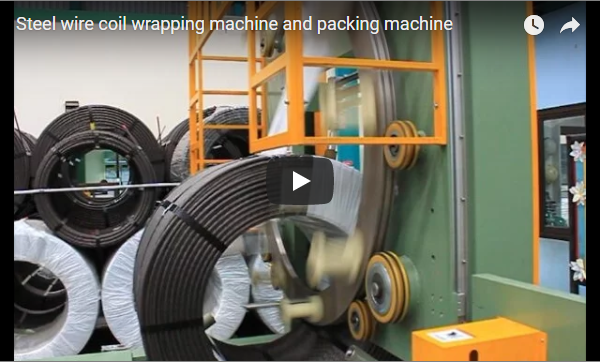
0–4 s Wide shot of the machine in a factory. A dark, flat coil of strip rests on yellow roller conveyors. An operator interacts with the control panel.
4–8 s The machine starts. The coil begins rotating on its support.
8–20 s A large curved overhead arm descends and wraps a continuous layer of light-colored paper or film around the rotating coil until the coil is fully covered, then the wrapped coil moves toward the exit side.

Three things stand out on a close viewing:

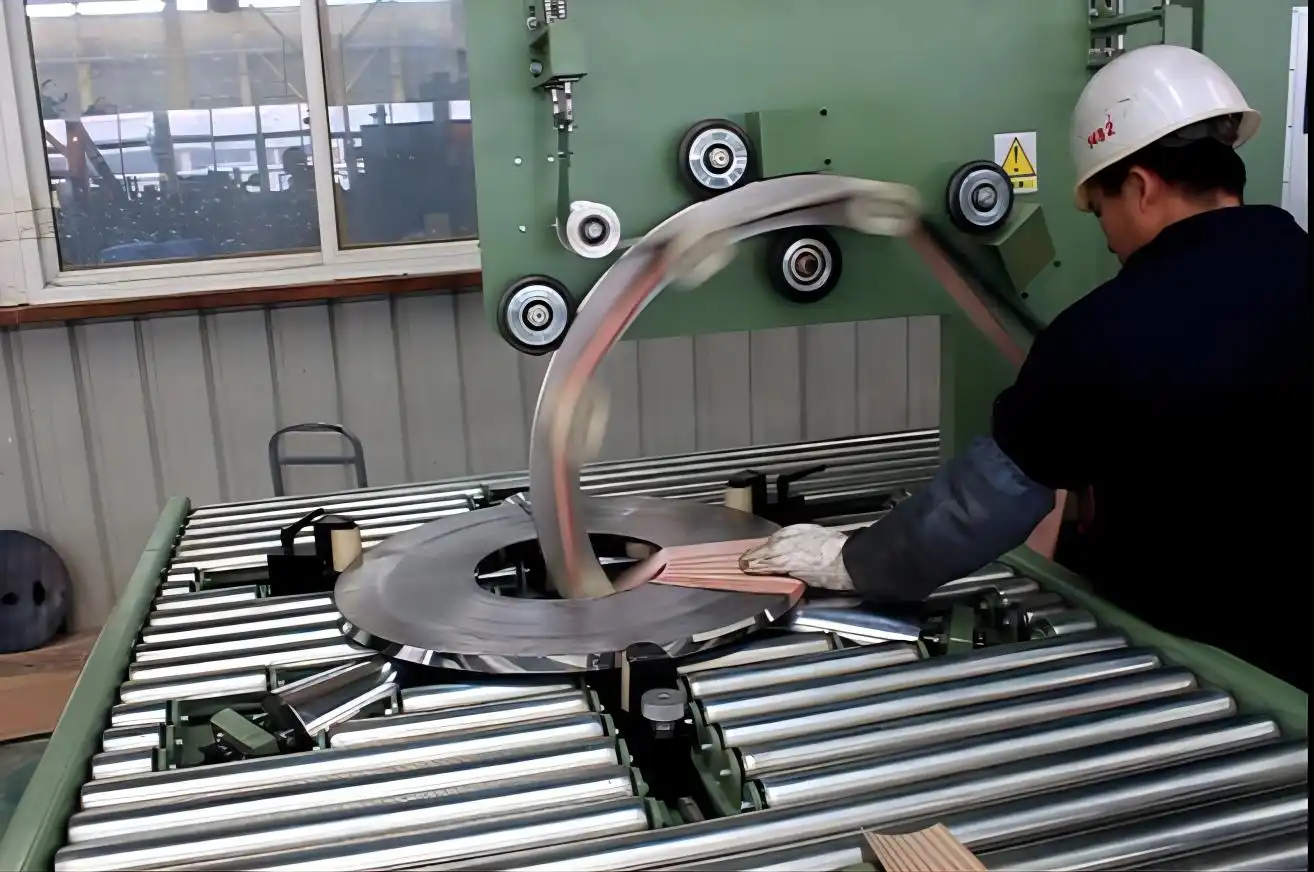
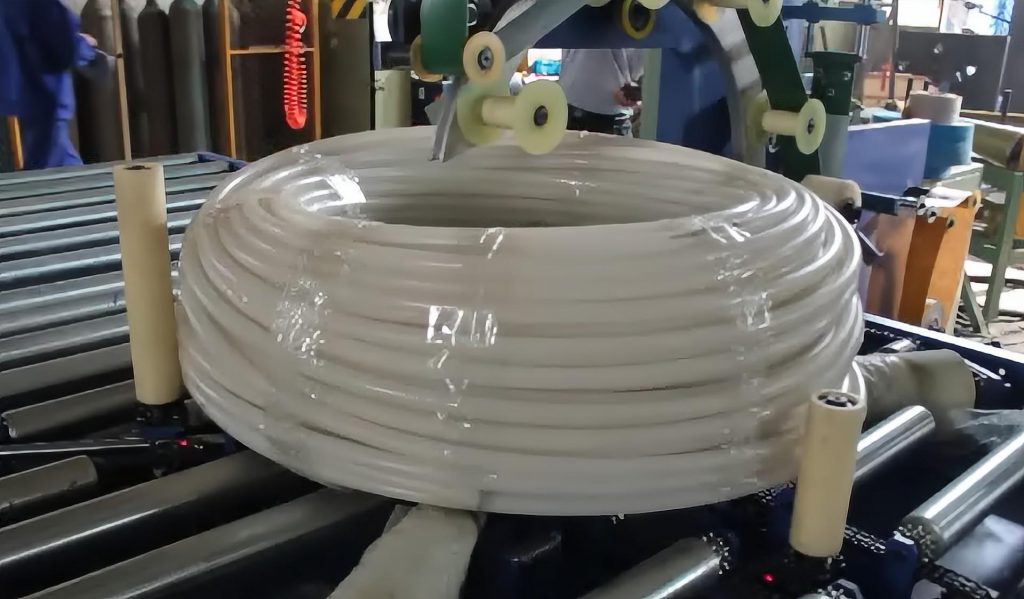
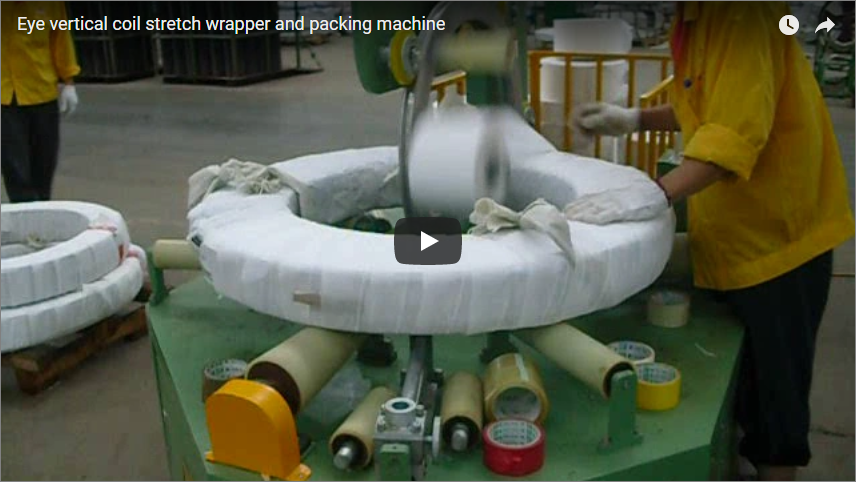
  1. The coil stays horizontal. The strip coil sits flat on the conveyor with its circular face up, and it rotates in place while the wrapping arm works. This is the classic horizontal ring-wrap arrangement for strip coils.
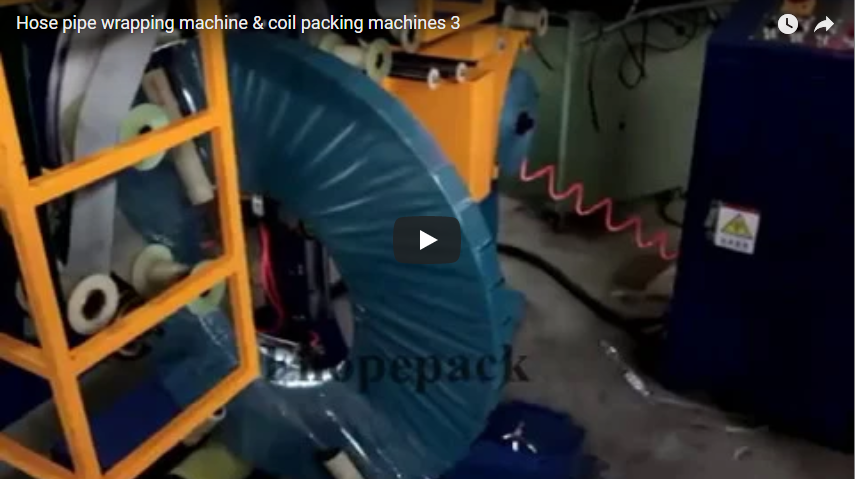
  2. The wrap is continuous. The paper or film is applied in one continuous pass around the rotating coil, which is what gives full circumferential coverage without gaps.
  3. One operator starts the cycle from a panel. A hand pressing a button is visible at the start — the machine does the rest of the wrap without visible manual intervention during the cycle shown.

The machine in action: step by step

Breaking the footage into operational steps makes it easier to compare against your own workflow:

  1. Load. The strip coil is positioned on the roller conveyor section of the machine. The video opens with the coil already in place, so the loading method (crane, forklift, or upstream conveyor) is not shown.
  2. Set up and start. The operator works at a control panel fitted with a digital display and push buttons. Pressing a button initiates the cycle.
  3. Rotate and wrap. The coil rotates on its support while the overhead curved arm wraps light-colored protective paper or film around the outer circumference. The arm geometry follows the coil’s round profile.
  4. Complete and exit. Once the coil is fully covered, rotation continues briefly and the wrapped coil travels toward the exit end of the machine.

For a plant running copper or alloy steel strip, step 3 is where the value sits: an even, machine-applied wrap protects the exposed coil edges and outer wraps from scuffing, dust, and handling damage during storage and transit.

Direct observation notes

The block below stays close to the visual facts of the footage, with only grammar-level editing for readability:

  • The video opens on a wide shot of a coil packing machine in a factory. A person’s arm is visible on the left, interacting with the machine’s control panel. The machine is stationary, with a dark, flat coil of material on its yellow roller conveyor.
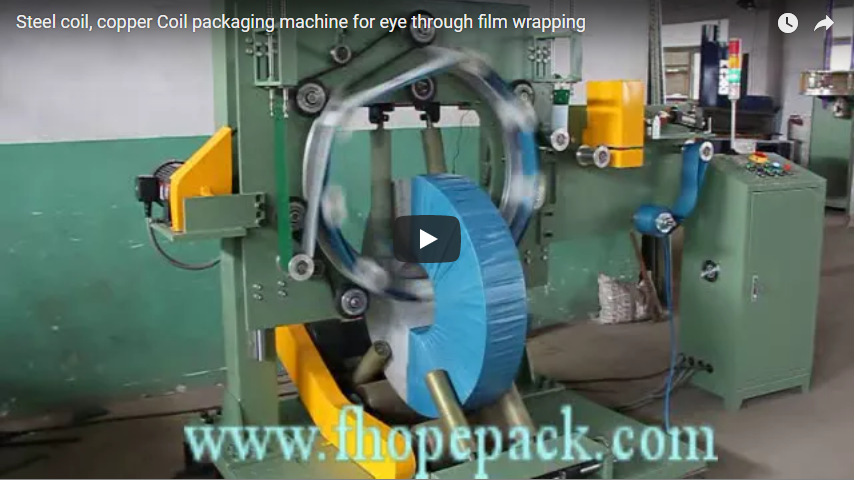
  • The machine begins operation: the coil rotates on the conveyor. A large, curved mechanical arm, part of the wrapping mechanism, descends and begins to wrap a light-colored paper or film around the rotating coil. The camera zooms in slightly, focusing on the wrapping action. The process continues until the coil is fully covered.
  • The machine’s frame is primarily white or light gray painted metal. The conveyor rollers are bright yellow. The main wrapping arm and its housing are a combination of yellow and gray metal. Motors, sensors, and wiring are visible in their natural metallic and plastic colors.
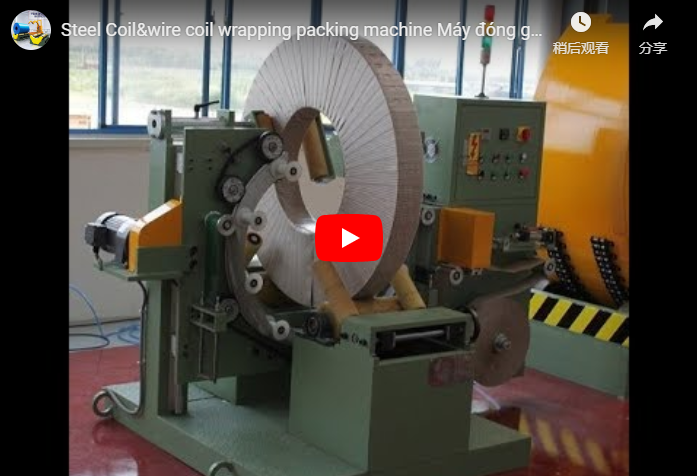
  • Main components: a central conveyor system with yellow rollers, a rotating platform for the coil, a large overhead wrapping arm, a film/strap dispenser on the right side, and a control panel on the left enclosed in a yellow protective cage.
  • The control panel features a digital display screen and several push-button controls. A person’s hand is seen pressing a button to start the process.
  • The product is a large, circular coil of flat metallic strip with a dark gray or black surface, oriented horizontally with its flat face up. Its surface appears smooth and uniform and is covered in a continuous wrap.
  • A red emergency stop button is visible on the control panel. A yellow safety cage surrounds the control panel area. No warning labels are clearly visible in the frames.
  • A watermark for the manufacturer’s website is visible across the bottom of the screen, and a small white label reading “FHOPE PACK” appears on the control panel.

What the video does not show

This is the part buyers should read twice. The footage is a short demonstration, and several decision-critical facts are simply not observable:

  • Coil capacity limits — maximum coil weight and the accepted range of coil inner/outer diameters are not specified anywhere in the video.
  • Machine dimensions and footprint — overall length, width, and height are not visible.
  • Cycle time — the exact time for one full wrapping cycle cannot be measured from the sampled frames.
  • Model number and power requirements — voltage, phase, and model designation are not indicated.
  • Certifications — no CE, ISO, or similar certification marks are visible in the footage.
  • Loading and unloading method — how coils enter and leave the line (crane, fork truck, conveyor handoff) is not shown.
  • Wrapping material options — the video shows one light-colored paper/film pass; whether the machine supports other materials or multiple layers is not demonstrated.

Each of these is a standard question to put to the manufacturer before quoting. A short verification checklist appears later in this article.

Why horizontal wrapping suits copper and alloy steel strip

Copper strip is soft and marks easily; alloy steel strip is often supplied with a finished or coated surface that must reach the customer clean. Both share the same packaging problem: the coil’s curved outer surface and exposed edges are vulnerable wherever they touch something harder than the wrap.

A horizontal ring-wrapping machine addresses this in a few ways:

  • Consistent overlap. The machine applies the wrap with repeatable tension and overlap, coil after coil. Manual wrapping quality depends on who is holding the roll and how tired they are.
  • Contact-free wrapping. Once the coil is loaded, nothing presses on the strip surface itself — only the protective paper or film does.
  • Reduced manual handling. The operator starts the cycle; the machine performs the wrap. For heavy strip coils, cutting out manual circling with a roll of film is both a productivity gain and a safety improvement.

These are qualitative observations drawn from what the footage shows of the automated process; actual throughput gains depend on your current manual process and should be discussed with the manufacturer.

Applications and fit

Based on the coil type and wrap format visible in the video, this style of machine typically fits:

Application fit Reasoning from the footage
Copper strip coils Soft surface needs continuous protective cover; the video shows smooth coils being wrapped without contact tools.
Alloy steel strip coils Dark finished strip coils shown in the footage match this product family.
Medium-to-large horizontal coils The rotating platform and overhead arm geometry suit round, horizontally oriented coils.
Less suitable Very small, very large, or irregularly shaped coils — the arm and platform are built around a defined coil size range, which must be confirmed.

If your plant handles a mixed coil size range, treat the size envelope as the first qualification question, not an afterthought.

Buyer verification checklist

Before requesting a quotation, put these points in writing to the manufacturer:

  • Minimum and maximum coil weight, outer diameter, inner diameter, and width the machine accepts
  • Wrapping material options (paper, stretch film, or both) and overlap settings
  • Cycle time per coil at your coil size
  • Loading method compatibility with your existing handling equipment
  • Power supply requirements (voltage, phase) at your site
  • Safety features in detail: cage interlocks, e-stop layout, guarding around the rotating platform
  • Warranty terms, spare parts availability, and commissioning support

Operating and safety notes for your team

The footage offers a few concrete cues for operators:

  • The control panel is caged. The yellow protective enclosure around the panel suggests the manufacturer treats the control area as a guarded zone. Whether the cage includes interlocks that stop the machine when opened should be confirmed — the video cannot show this.
  • An emergency stop is within reach. A red e-stop button is visible on the panel. Operators should know its location before the first cycle.
  • Loading remains the risky step. The wrap itself is automated, but placing heavy strip coils onto the conveyor is where handling risk concentrates. Train loaders separately from machine operators.
  • No visible warning labels in the footage does not mean the shipped machine lacks them — check the delivered machine’s labeling and manual.

FAQ

Does the machine wrap the coil automatically once started? Yes. The video shows the operator pressing a start button, after which rotation and wrapping proceed without further manual action visible in the cycle.

What wrapping material does it use? The footage shows a continuous light-colored paper or film. Whether the same machine can run other materials — confirm with the manufacturer.

What coil sizes can it handle? Not shown in the video. The maximum weight, outer diameter, and strip width are key specification questions to raise directly.

Is it suitable for both copper and steel strip? The video context pairs the machine with copper and alloy steel strip coils, and the wrap process shown is material-agnostic on the surface side. Confirm that the intended wrap material suits your metal’s surface finish.

How long does one cycle take? Cycle time is not measurable from the sampled frames. Ask for a timed figure at your coil dimensions.

Does it include safety guarding? A yellow safety cage around the control panel and a red emergency stop button are visible. The full extent of guarding and any interlock functions should be verified before purchase.

Related reading

Next step

If the wrap process in the video matches your coil format, the fastest way forward is to send the manufacturer your coil drawings — outer diameter, inner diameter, width, and weight per coil — together with your target packing rate. Use the contact page to request a quotation, machine specifications, or a factory demonstration, and ask for the verification items in the checklist above to be answered in writing.

Source and method: this article is based solely on the embedded video of the coil packing machine in operation. Frames were sampled and analyzed with a vision model; the video contains background music only, with no narration or speech, so no spoken content was transcribed. Claims not observable in the footage are marked as points to verify with the manufacturer.

Published: 2026-09-03