Executive summary Wire, steel strip and plastic pipe all leave the line as coils with an open centre, and all of them can be wrapped the same way: through the eye. Our coil packing machine stands the coil on drive rollers and passes its wrapping ring through the eye, inside a yellow mesh guard. Wraps for full cover follow from the outside diameter and the wrap width. Both are set per project.
Table of Contents
- What the video shows
- How the coil packing machine works
- Wire, steel and pipe coils
- Setting wraps for full cover
- Controls and safety
- Selection checklist for a coil packing machine
- Engineering FAQ
- Next step
- Related reading
- Sources
What the video shows
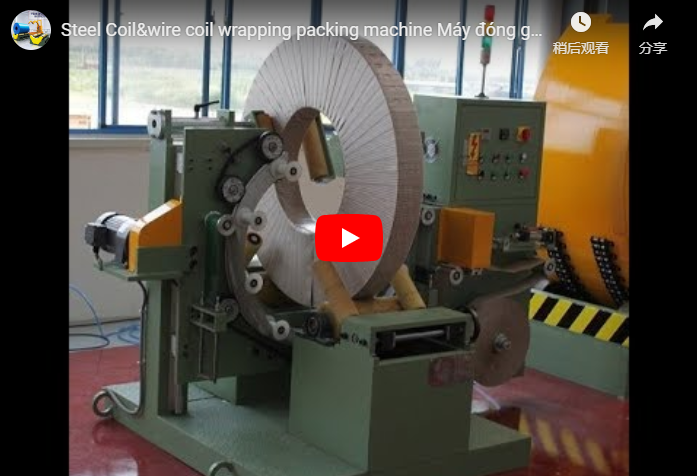
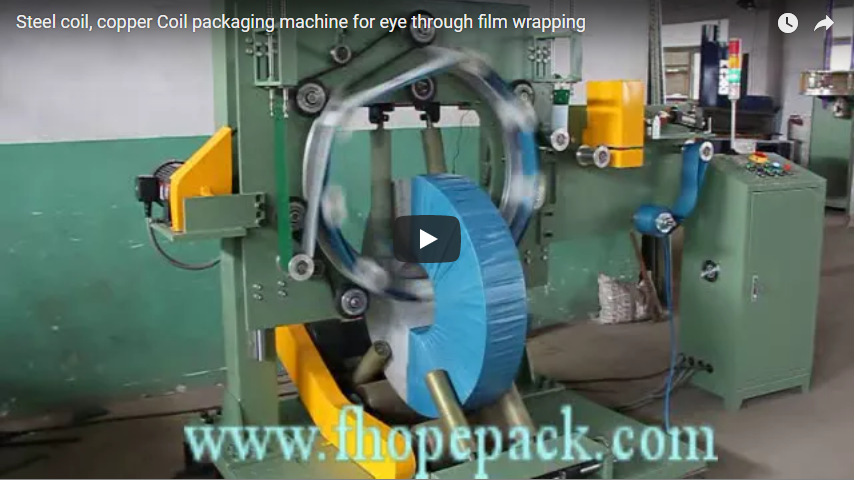
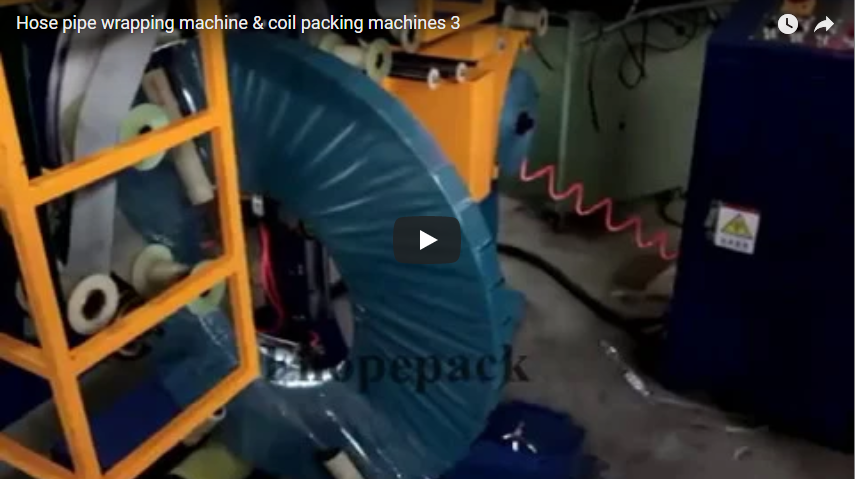
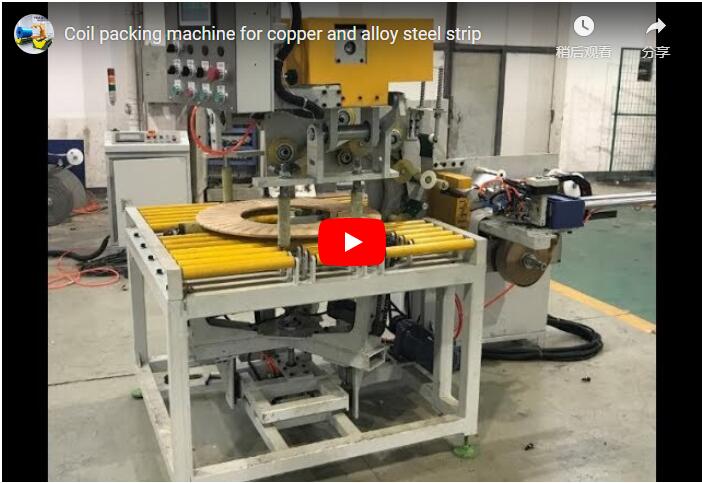
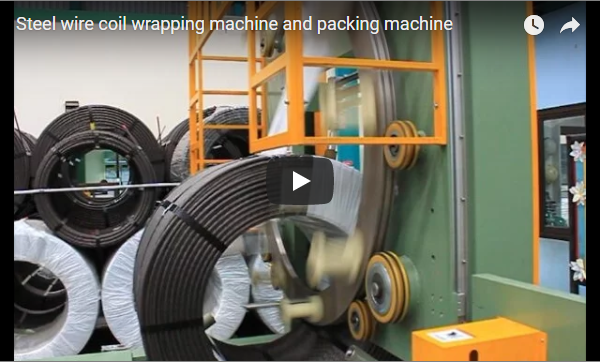
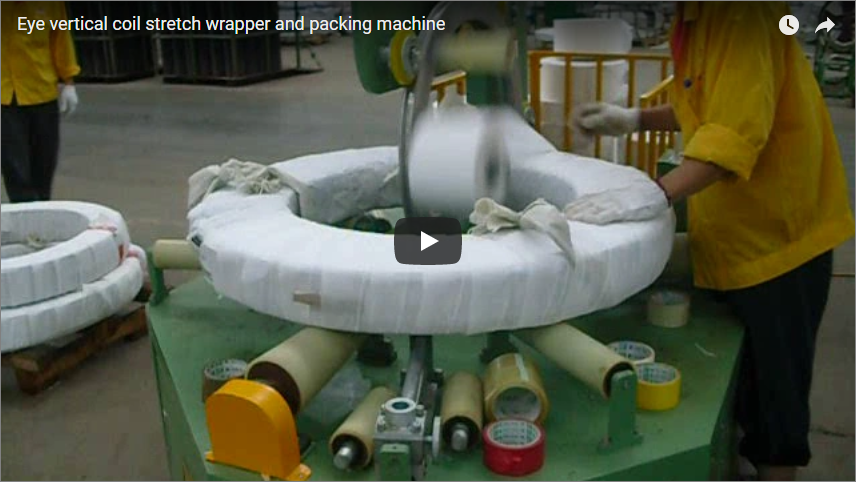
An operator in a hard hat stands a coil upright on the rollers of our blue and yellow machine. The wrapping ring passes through the coil’s eye inside a yellow mesh guard.
As the ring turns, the coil turns slowly on its rollers, and the wrap builds up round the wall until the coil is covered. Several more machines of the same kind stand in the workshop behind. The fhopepack.com mark runs along the foot of the clip.
How the coil packing machine works
| Step | What happens |
|---|---|
| Load | The coil is set upright on the drive rollers |
| Ring through the eye | The ring passes through the coil centre |
| Wrap | The ring carries the wrap round the coil wall |
| Coil turn | The rollers turn the coil so each wrap sits beside the last |
| Unload | The wrap is cut and the coil lifted off |
The guard covers the ring, which is the fastest moving part. The operator loads and unloads from the open side.
Wire, steel and pipe coils
| Coil | What the wrap protects against |
|---|---|
| Wire coil | Rust and loose outer turns |
| Steel strip coil | Edge damage and damp |
| Plastic pipe coil | Dirt and sunlight in outdoor storage |
The same machine handles all three when the ring opening and rollers suit the coil sizes. Tell us the full range of coils you pack.
Setting wraps for full cover
Wraps sit furthest apart on the outside, so full cover is set there. Illustrative example for a coil with 600 mm inside and 1,000 mm outside diameter, 100 mm wrap width, at half overlap on the outside:
| Item | Value |
|---|---|
| Outside circumference, π × 1,000 | about 3,142 mm |
| Advance per wrap, half of 100 mm | 50 mm |
| Wraps for full cover, 3,142 ÷ 50 | about 63 |
| Advance on the inside, π × 600 ÷ 63 | about 30 mm |
Set the coil turning speed so the wraps land at this pitch on the outside. The inside then gets more overlap and is fully covered too.
Controls and safety
A yellow mesh guard covers the wrapping ring, and a warning label is fixed to it. Keep hands outside the guard while the ring turns, and stop the machine before loading or unloading.
The standards that apply depend on the destination market. For CE markets, ISO 12100 sets the risk-assessment method and EN 415-10 sets general requirements for packaging machines.
Selection checklist for a coil packing machine
- Coil ID, OD, width and weight.
- Wire, steel or pipe coils, and the mix.
- Coils per hour.
- Film, paper or woven tape.
- Loading by crane, hoist or conveyor.
- Floor space for the machine and coil storage.
Engineering FAQ
Q: Can one machine pack wire, steel and pipe coils? A: Yes, when the ring opening and rollers suit the full size range.
Q: Why wrap through the eye? A: The wrap covers the coil inside and out and holds the outer turns in place.
Q: How many wraps does a coil need? A: Outside circumference divided by the advance. Our 1,000 mm OD example needs about 63.
Q: Is the ring guarded? A: Yes. A yellow mesh guard covers it.
Q: How is the coil loaded? A: It is set upright on the drive rollers by hand or with a hoist, as the coil weight requires.
Next step
We plan your coil packing machine in three steps:
- Submit your layout drawing with coil sizes and output to info@fhopepack.com.
- Receive a proposal within 48 hours, with the wrap plan.
- Book a site survey to check the loading method and floor space.
Related reading
- Automatic coil packing line
- Video: steel coil, copper coil packaging machine for eye-through film wrapping
- Steel coil strapping machines
Sources
- Machine content: FHOPE engineering team, 2026-10-04
- Wrap example: our worked example, illustrative values
- Machine in action: our video on YouTube
- Standards scope: ISO 12100:2010, EN 415-10:2014
Last reviewed: 2026-10-04