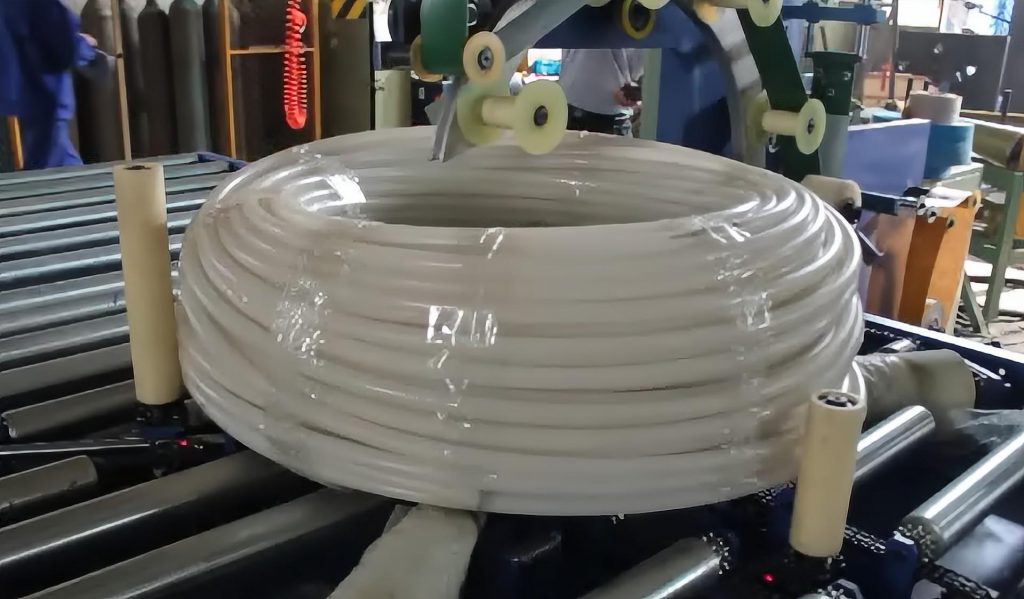
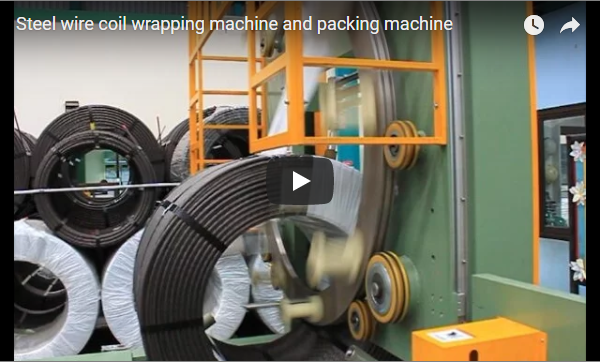
Executive summary Big export coils are often too large or too few to justify a full automatic packing line. A roller station turns the coil on two driven rollers so a small crew can cover and strap it in one place. On the station in our video, the crew wraps the coil in protective material, covers its outside with a steel sheet and straps the pack together. The station replaces crane turning between steps, which is the slow and risky part of manual coil packing.
Table of Contents
- What the roller station does
- The packing sequence
- Why a steel sheet cover
- Cutting sheet and straps to length
- Roller station or packing line
- Safety on a roller station
- Selection checklist
- Engineering FAQ
- Next step
- Related reading
- Sources
What the roller station does
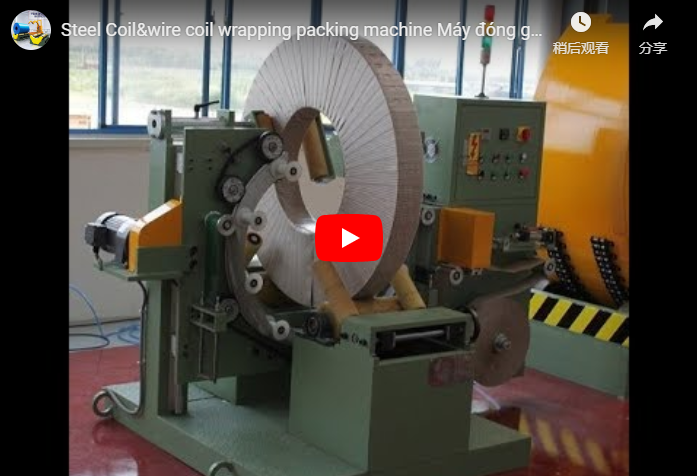
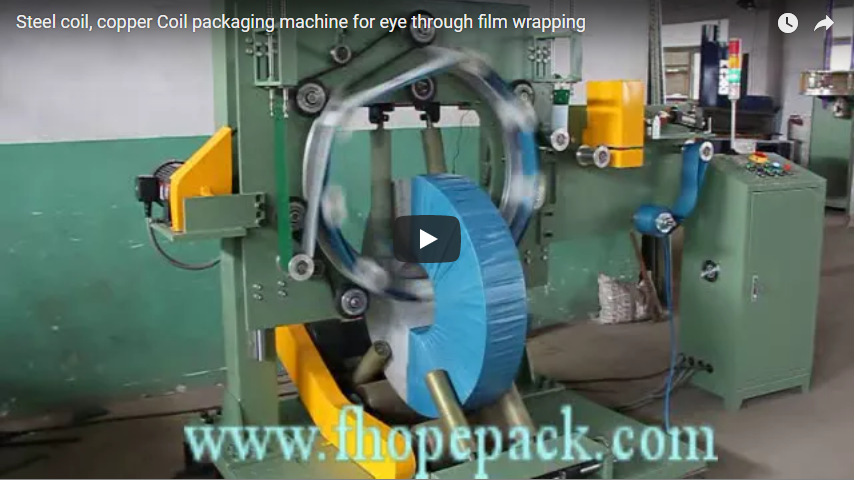
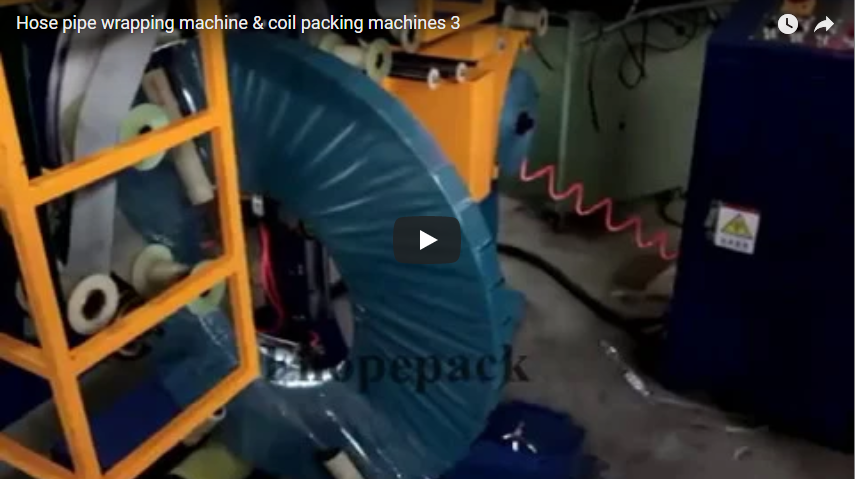
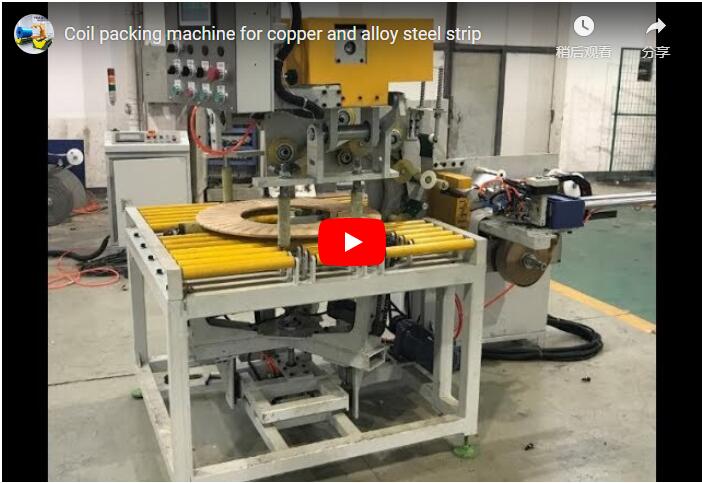
We build the station as a heavy base with two parallel coil turning rollers, and the coil lies eye-horizontal across them. When the rollers turn, the coil turns with them, so every part of its outside comes round to the packer.
The crew turns the coil in short steps, so it stops where the next joint or strap goes. That one motion does the job a crane would otherwise do several times per coil: turning the coil to reach the next section of wrap, the next sheet joint or the next strap position.
Because the coil only rolls in place, it never leaves the station during packing. It arrives by crane or coil car, is packed, and leaves fully strapped.
The packing sequence
Our video shows the whole packing process on one station:
| Step | What happens | Why |
|---|---|---|
| 1 | Coil set on the rollers | One handling move in, none during packing |
| 2 | Protective wrap around the coil | Keeps moisture and dirt off the steel surface |
| 3 | Steel sheet covering around the outside | Takes knocks from slings, forks and other coils |
| 4 | Strapping | Holds the cover tight and keeps the coil from opening |
| 5 | Coil lifted off | Packed coil goes to storage or loading |
The rollers turn the coil between steps 2 and 4, so the crew works from one side of the station. The protective layer goes on first because it must sit directly on the steel; the sheet goes over it, and the straps go over both.
Why a steel sheet cover
Film and paper protect the surface but not the shape. A big coil is lifted by sling or C-hook, set down on hard floors and stowed against other coils in a ship’s hold. Each contact concentrates on the outer laps, and a dented outer lap is scrap for the customer.
A steel sheet wrapped around the outside spreads those contacts over a wide area and stops them reaching the coil. The straps then pull the sheet tight against the protective wrap, so the cover cannot slide or flap open in transit.
Cutting sheet and straps to length
The crew cuts the sheet and straps before the coil arrives, so the lengths are worth working out once per coil size. Illustrative example for a coil of 1,800 mm OD, 610 mm ID and 1,500 mm width:
| Item | Formula | Value |
|---|---|---|
| Outer circumference | π × OD | about 5.65 m |
| Steel sheet length | Circumference + overlap at the joint | about 5.65 m plus overlap |
| Circumferential strap | π × OD + joint allowance | about 5.65 m plus joint |
| Radial strap through the eye | 2 × width + (OD − ID) + joint allowance | about 4.19 m plus joint |
Radial straps run through the eye and around the coil wall, so they hold the laps together. Circumferential straps run around the outside and hold the sheet cover closed. A heavy export coil usually gets both.
Roller station or packing line
| Choose | When |
|---|---|
| Roller station | Few big coils per shift, many sizes, export packs with steel sheet covers |
| Automatic packing line | Steady coil flow, repeat sizes, wrapping and strapping done by machine |
A roller station is a low-cost start: it removes the crane from the packing steps without changing how the crew packs. When the coil count grows, the same coil sizes can move to an automatic line with an orbital wrapper, strapping machine and downender.
Safety on a roller station
The danger points are the nips where the coil meets the rollers, and the coil itself if it rolls off. Keep hands and tools away from the roller nips while the coil turns, and stop the rollers before fitting a strap. The coil must sit centred between the rollers, so that its weight stays between them.
The standards that apply depend on the destination market. For CE markets, ISO 12100 sets the risk-assessment method and EN 415-10 sets general requirements for packaging machines.
Selection checklist for a coil roller station
- Heaviest coil and its OD, ID and width.
- Coils per shift.
- Pack spec: protective wrap, steel sheet cover, edge protection.
- Radial and circumferential straps per coil.
- How coils arrive and leave: crane or coil car.
- Floor space around the station for the crew.
- Later move to an automatic line, if planned.
Engineering FAQ
Q: What does a roller station do in coil packing? A: It turns the coil on two rollers so the crew can wrap, cover and strap it without a crane turning it between steps.
Q: Why cover a coil with steel sheet? A: The sheet spreads knocks from slings, forks and other coils, so the outer laps are not dented in transit.
Q: How long should the steel sheet be? A: The coil circumference, π × OD, plus an overlap at the joint. A 1,800 mm OD coil needs about 5.65 m plus overlap.
Q: Which straps go on a big coil? A: Radial straps through the eye hold the laps together, and circumferential straps hold the sheet cover closed.
Q: When should I move to an automatic line? A: When coil flow is steady and sizes repeat, so wrapping and strapping can be done by machine.
Next step
We plan your coil packing station in three steps:
- Submit your layout drawing with coil sizes, weights and your pack spec to info@fhopepack.com.
- Receive a proposal within 48 hours, with the roller station or line layout.
- Book a site survey to check crane access and the packing area.
Related reading
- Steel coil turnstile
- Video: master steel coil stretch wrapper with paper
- Video: coil packing machine, packing and handling
Sources
- Packing process on the roller station: our roller station video on YouTube, confirmed by the FHOPE engineering team, 2026-10-04
- Sheet and strap lengths: our worked example, illustrative values
- Standards scope: ISO 12100:2010, EN 415-10:2014
Last reviewed: 2026-10-04