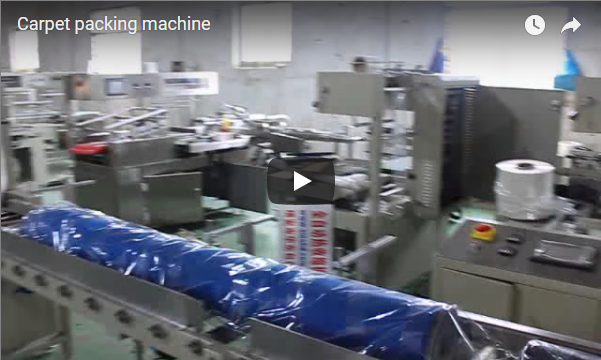
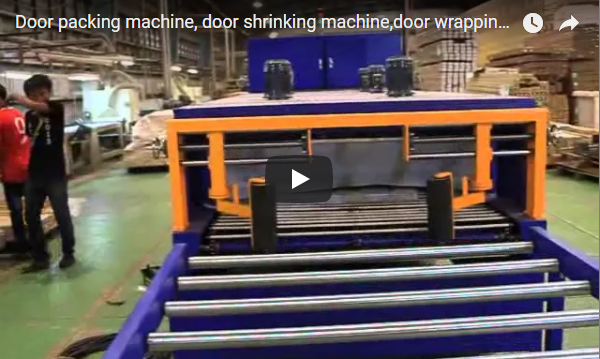
Executive summary Small copper tube coils can be sealed in centre-folded POF film on an L-bar sealer, then shrunk tight in a heat tunnel. Our equivalent solution packs 10–25 packs per minute, depending on size. The key check is the sealing window: a coil up to 350 mm across and 125 mm high, with width + height up to 400 mm. Larger coils need a side sealer or an orbital coil wrapper.
Table of Contents
- What the process does
- Checking the coil against the sealing window
- Specifications
- When the coil is too large
- Film and sealing
- Utilities and safety
- Selection checklist
- Engineering FAQ
- Next step
- Related reading
- Sources
What the process does
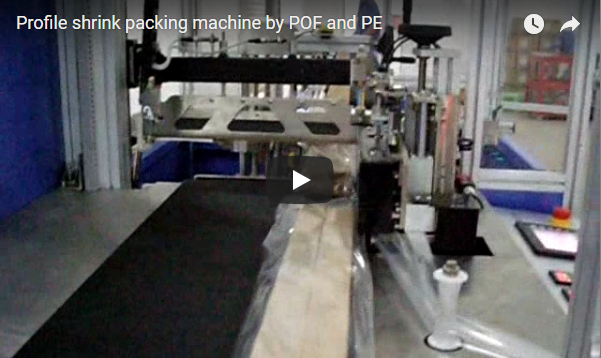
The video shows small, flat copper tube coils packed one at a time:
- Infeed. The coil lies flat on the infeed conveyor.
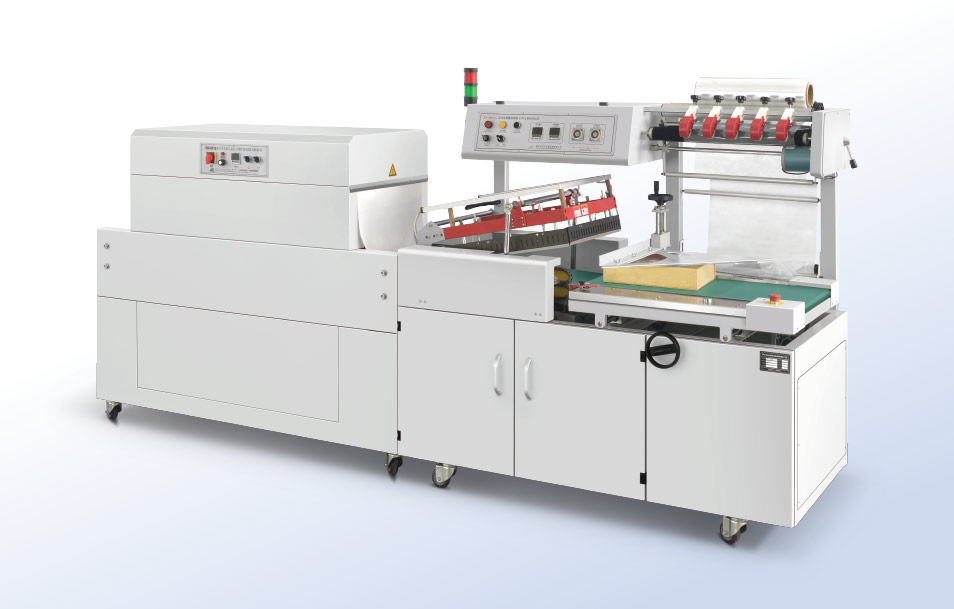
- Film and seal. Centre-folded film opens over a triangular film frame and wraps the coil. The L-shaped knife seals the open side and the end.
- Shrink. A roller conveyor carries the pack through the heat tunnel, where the film tightens around the coil.
- Outfeed. The wrapped coil leaves on the roller conveyor.
Shrink film keeps dust and moisture off the copper and holds the coil turns together. Our equivalent solution for this job is the L-bar shrinking machine FP-400LA with tunnel SH-450C.
Checking the coil against the sealing window
A flat coil is round, so its length and width are both its outer diameter (OD). Check four limits:
| Limit | L-bar sealer FP-400LA |
|---|---|
| Sealing height | 125 mm or less |
| Packing width | 350 mm or less |
| Width + height | 400 mm or less |
| Length + height | 480 mm or less |
Two examples, both illustrative:
- Coil OD 300 mm, height 60 mm. Width 300 mm and height 60 mm are inside the limits. Width + height = 360 mm and length + height = 360 mm. It fits.
- Coil OD 380 mm, height 60 mm. The width of 380 mm is over 350 mm. It does not fit the L-bar sealer.
Specifications
| Parameter | Value |
|---|---|
| Sealing type | L-bar sealing |
| Packing capacity | 10–25 packs per minute (depends on product size) |
| Film | centre-folded POF film |
| Max film roll | 530 mm wide, 280 mm outer diameter |
| Sealer power | 1.5 kW (sealer only) |
| Working height | 780–850 mm |
| Sealer weight | 390 kg |
At 10–25 packs per minute, one coil takes 2.4–6 s. We confirm the real rate with your coil size and the tunnel speed.
The 1.5 kW rating covers the sealer. The shrink tunnel is a separate, larger heating load, and we state its power in your proposal so you can plan the supply.
When the coil is too large
If the coil is larger than the L-bar window, we move to another machine:
- Side sealer MO-900. It takes products with width + height between 400 and 900 mm, and up to 300 mm sealing height. The 380 mm OD coil above, with width + height = 440 mm, fits here. The tunnel needs up to 28 kW.
- Copper tube coil wrapper. For large coils of 600–1,200 mm OD and 50–300 kg, we wrap through the coil eye with stretch film, paper or woven material instead of shrinking. The overlap is adjustable from 20% to 90%.
Film and sealing
- Knife. An aluminium alloy sealing knife with DuPont Teflon coating resists heat and does not stick to film.
- Temperature. An Omron digital temperature controller sets the sealing temperature accurately.
- Detection. Photocells detect thin and small products, so low coils are sealed reliably.
- Feeding. Automatic film feeding with a punch device, and automatic waste winding.
- Line use. The machine can run unmanned in a production line.
Utilities and safety
| Utility | Requirement |
|---|---|
| Power | 380 V, 50–60 Hz, 3 phase |
| Air | 0.5 MPa (5 bar) or less |
The sealing knife has automatic protection and an alarm, which improves operator safety. The standards that apply depend on the destination market. For CE markets, ISO 12100 sets the risk-assessment method and EN 415-10 sets general requirements for packaging machines.
Selection checklist for copper coil shrink packing
- Coil OD, ID and height, smallest and largest.
- Coil weight.
- Coils per minute needed.
- Film: centre-folded POF, roll width and diameter.
- Inline with the coiler, or a standalone station.
- Power and compressed air at the station.
Engineering FAQ
Q: What coil size fits the L-bar sealer? A: Up to 350 mm wide and 125 mm high, with width + height up to 400 mm and length + height up to 480 mm.
Q: How fast is the machine? A: 10–25 packs per minute, depending on product size.
Q: What if my coil is 380 mm across? A: It is over the 350 mm packing width. The side sealer MO-900 takes it, since width + height falls in its 400–900 mm window.
Q: What film does it use? A: Centre-folded POF film, on rolls up to 530 mm wide and 280 mm in diameter.
Q: How do you pack large copper coils? A: Coils of 600–1,200 mm OD go on our copper tube coil wrapper, which wraps through the eye with an overlap from 20% to 90%.
Next step
We select the right machine for your coils in three steps:
- Submit your layout drawing with coil OD, ID, height, weight and coils per minute to info@fhopepack.com.
- Receive a proposal within 48 hours, with the machine and line layout.
- Book a site survey to fit the machine to your coiling line.
Related reading
- L-bar shrinking machine FP-400LA + SH-450C
- Side sealer shrinking machine MO-900
- Copper tube coil packing machine
- Copper coil packing machines
- Automatic coil packing line
Sources
- L-bar sealing window, capacity, film, sealing, utilities: FP-400LA + SH-450C L-bar shrinking machine page
- Side sealer window and tunnel power: MO-900 side sealer shrinking machine page
- Large coil sizes and overlap: copper tube coil packing machine page
- Process in action: copper tube coil packing and shrinking video on YouTube
- Standards scope: ISO 12100:2010, EN 415-10:2014
Last reviewed: 2026-10-03