Overview
An automatic rewinder with a rosette basket takes wire off a spool or a production line and lays it down again into a fresh, even coil, ready to be strapped and shipped or to pay off at the next forming, drawing or stranding process. The rosette (flower-shaped) pattern is what matters: each turn is laid with a small offset from the one before, so the coil forms an even ring with an open centre that pays off cleanly later. This article explains the rewinding cycle, why rosette laying matters, and how to estimate coil weight. It is written for production engineers and plant managers at steel wire, drawn-wire and flexible-wire producers.
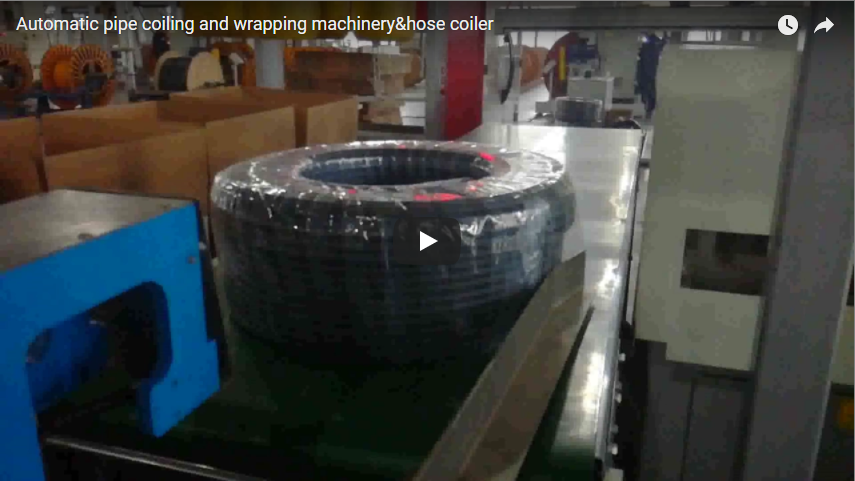
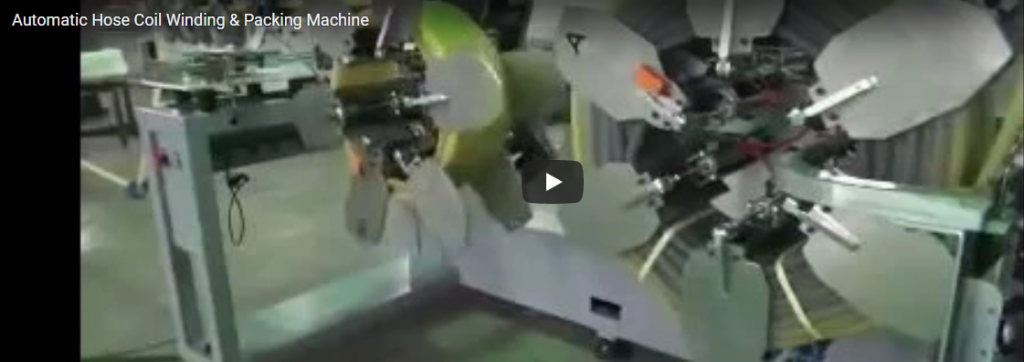
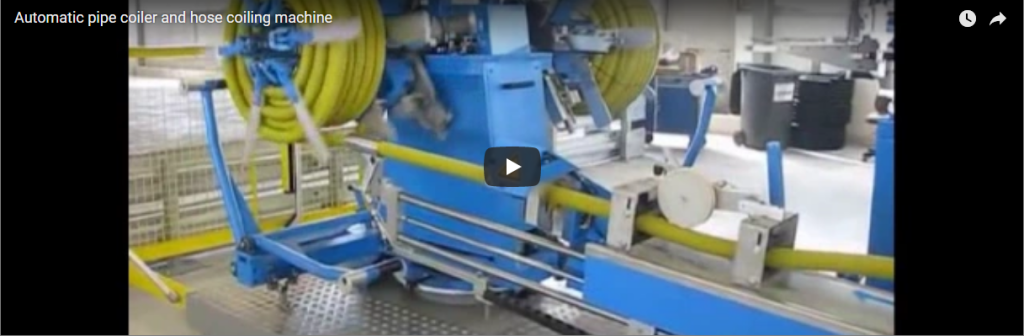
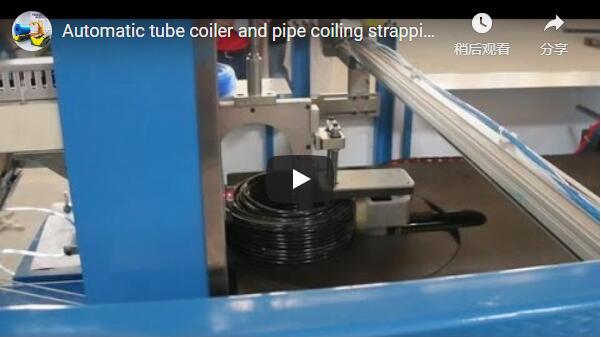
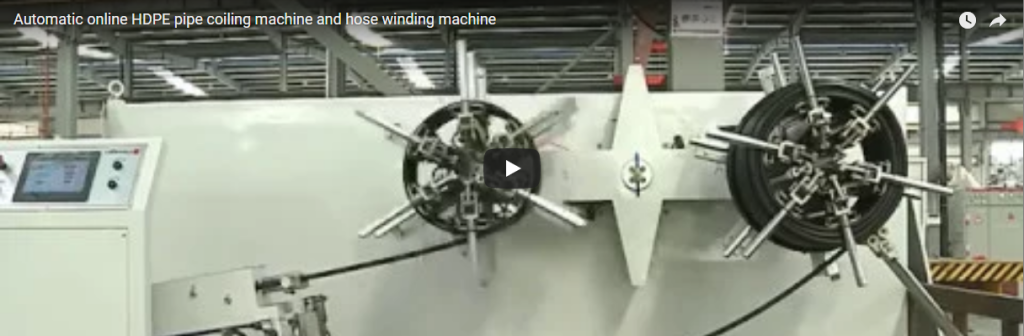
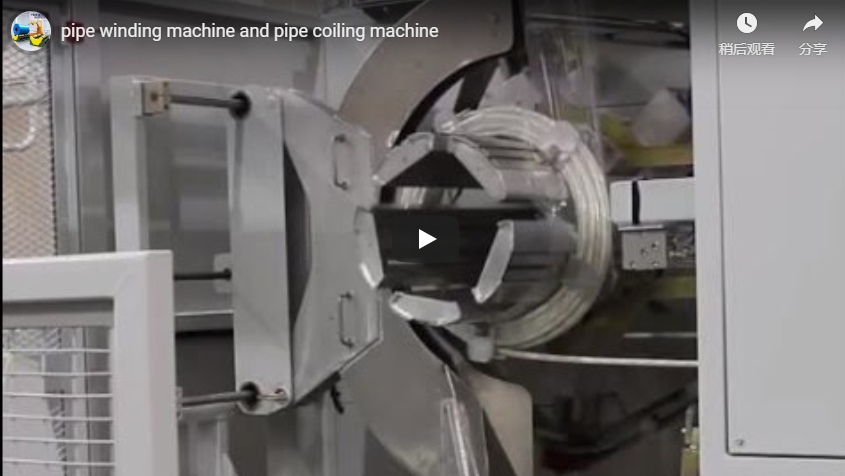
The video below shows the rewinder building a rosette coil into its basket:
How the Rosette Rewinder Builds a Coil
| Stage | What happens |
|---|---|
| Pay-off | Wire is drawn from the source coil or the line input. |
| Guiding | Guides lead the wire to the laying head. |
| Rosette laying | The laying head places each turn with a small angular offset from the last. |
| Build-up | The rosette rings build up in the basket to the set coil size. |
| Discharge | The full coil is lifted out for strapping or transport. |
The rosette pattern comes from the offset between turns: because each turn crosses the previous one evenly, the coil keeps a round shape with an open centre instead of building uneven banks, and the wire sits in the basket while it grows so the pattern is held in place. Laying head and basket are matched to wire diameter, coil size and the target weight on each project; the coil size built in the basket is confirmed with your wire rather than read from the footage as a fixed value.
Why Rosette Laying Pays Off Cleanly
| Point | Rosette coil | Tight layered coil |
|---|---|---|
| Pay-off | Turns lift off one at a time | Turns can bind or tangle |
| Coil shape | Even ring with an open centre | Shape depends on the spool or winder |
| Handling | Strapped as a loose, stable coil | Often stays on a spool |
At the next process the wire is paid off from a static stand, so clean, layer-by-layer release matters more than how tightly the coil is packed. Rosette-laid coils give drawing, forming and stranding plants predictable payoff without snagging or tangling, which is why this laying pattern is preferred for wire sold to those processes.
Estimating Coil Weight
Coil weight is the ring volume times the packing density. For a basket coil of about 1,000 mm outside diameter, 600 mm inside diameter and 500 mm height at an illustrative packing density of 2,000 kg/m³:
| Item | Value |
|---|---|
| Ring area | π ÷ 4 × (1.0² − 0.6²) ≈ 0.50 m² |
| Coil volume | 0.50 × 0.5 ≈ 0.25 m³ |
| Coil weight | 0.25 × 2,000 ≈ 500 kg |
These figures are illustrative. Packing density depends on wire diameter and on how the rosette is laid, so weigh a sample coil of your own wire; basket size, coil dimensions and the weight target are confirmed per project.
What the Footage Shows, Safety and Verification
The footage shows a wire rewinder building a rosette coil into its basket: wire runs from the cabinet, passes through the guides, and is laid turn by turn into the basket under the lid. The full coil is then discharged for strapping; strapping and any downstream wrapping are performed by separate equipment and configured per project.
Wire moves at speed between the cabinet and the basket, and the basket turns during laying — keep hands and clothing clear of the wire path and the basket while the rewinder runs, and follow the machine manual for guard positions. For CE markets, EN 415-10 is used as the packaging-machinery safety reference and ISO 12100 guides the risk assessment; confirm the applicable standards with the manufacturer for your market. As a stated manufacturer practice for this machinery family, each unit undergoes sustained functional and safety testing before delivery (about 24 hours where stated), including the control system and the emergency-stop function; treat this as the stated family practice for acceptance planning.
FAQ
Q: What is a rosette coil?
A: A coil whose turns are each laid with a small angular offset from the last, forming an even, flower-like ring with an open centre.
Q: Why lay wire as a rosette?
A: So the turns lift off one at a time at payoff and the wire does not bind or tangle at the next process.
Q: How heavy is a basket coil?
A: Ring volume times packing density; the 1,000 mm illustrative example above works out near 500 kg, and a sample coil of your own wire confirms the true value.
Q: Does it suit any wire?
A: The laying head and basket are set to the wire diameter and material; state your range to the manufacturer for a confirmed configuration.
Q: What happens to the full coil?
A: It is lifted out of the basket and strapped for storage or shipment; strapping is separate and configured per project.
Next Step
Send wire diameter and material, wire speed, and the target coil outside and inside diameter, height and weight to info@fhopepack.com, so the basket size and laying head are confirmed on the approval drawing.
Related Resources
- Automatic Steel Wire Coiler for Wire Winding and Strapping – Wire winding and strapping in the same wire-coil family.
- Automatic Wire Coil Rewinding and Tying Machine – Rewinding with automatic tying for the finished coil.