Executive summary
A steel wire coil winding and packing machine centres each coil on a rotating worktable, runs a vertical head over the coil while it turns, and hands the finished coil to the conveyor below. The cell keeps the path between steps short, so coils pass through with less manual lifting. Coil size, working stroke and cycle rhythm are confirmed per project.
Table of Contents
- Why one worktable
- What the machine does
- How the cell works
- Cycle time and control
- What the footage shows
- Typical configuration
- Selection checklist
- Operation and safety
- Engineering FAQ
- Next step
- Related reading
- Sources and standards
Why one worktable
A coil that is lifted between several machines picks up handling time and risks edge damage at each move. A single worktable that carries the coil through the winding and packing steps keeps the part in one place and the operators clear of heavy lifts.
Seating each coil on a rotating table also gives the cycle a steady reference point, so the coil is worked around a fixed axis. Coil size and swing radius are confirmed per project.
What the machine does
The machine is a compact cell laid out around a rotating worktable. Coils are placed on the table, a vertical head runs over the top while the table turns, and an arm with rollers carries the finished coil onto the conveyor below.
The cell moves the coil across in a short path, ready for the next operation. Coil size, stroke and conveyor height are confirmed per project.
How the cell works
The rotating worktable carries the coil and turns it under the vertical head, so the working stroke meets every point of the coil face. The vertical head lowers from above and lifts clear when the step is done.
An arm with rollers picks up the finished coil and moves it to the chain conveyor, while pneumatic lines feed the moving parts. The table, head and arm are arranged to suit the coil range per project.
Cycle time and control
With the coil seated on the table, the operator starts the cycle from the control panel on the left of the machine. The table turns while the vertical head runs, then the head lifts and the arm moves the coil to the conveyor, after which the next coil is set on the table.
A stop button and indicator lights sit on the panel within reach of the operator. Cycle rhythm, stroke and table speed are confirmed per project.
What the footage shows
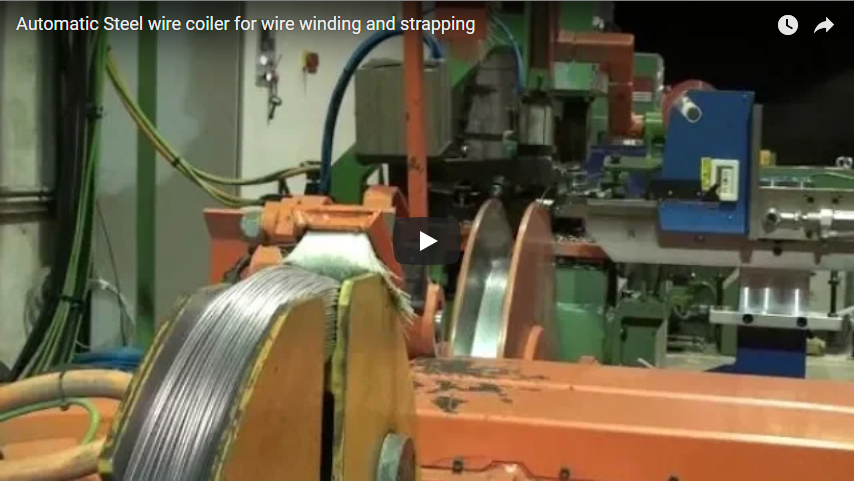
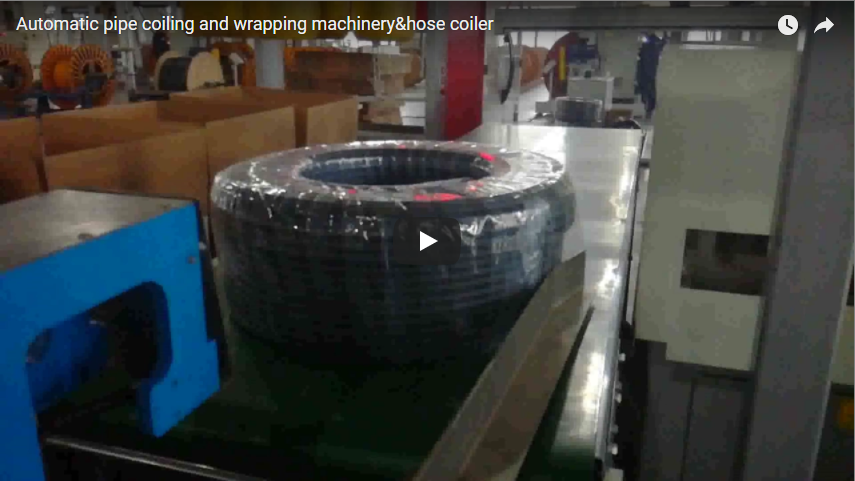
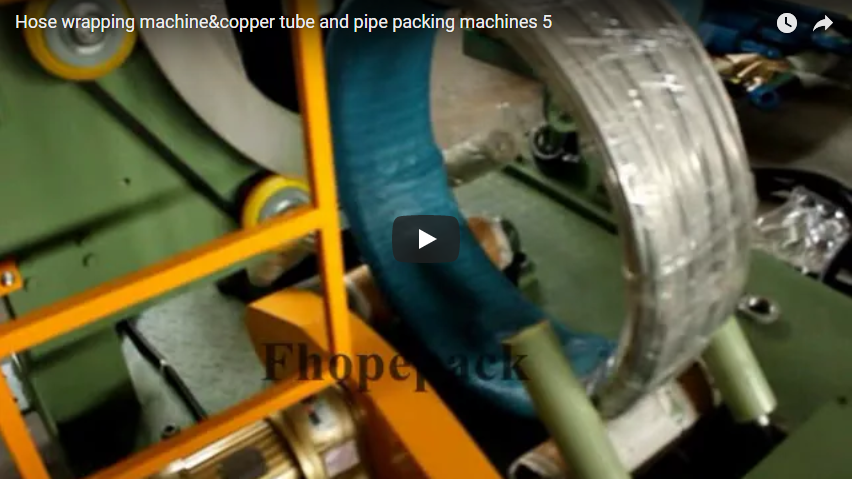
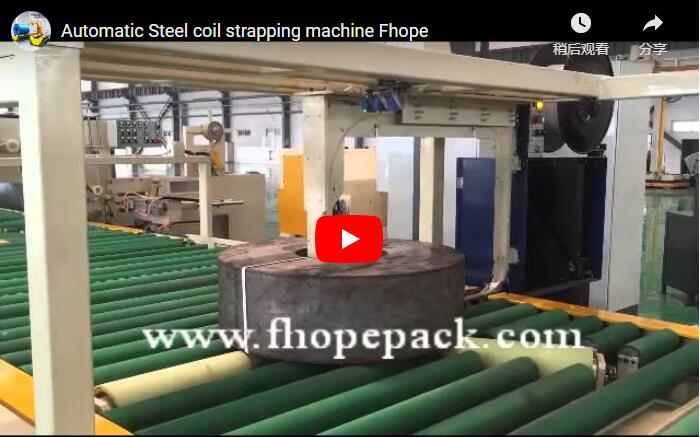
Our footage shows a coil set on the rotating worktable while the vertical head runs over the top as the table turns. An arm with light-coloured rollers then carries the finished coil to the chain conveyor below, and a new coil is placed for the next cycle, with the pneumatic lines visible. It is a general demonstration, so your coil size, working stroke and cycle rhythm are confirmed with us per project.
Typical configuration
Figures below list functional design boundaries rather than numeric values, and are confirmed per project.
| Parameter | Typical range, confirmed per project |
|---|---|
| Load | steel wire coils set on the rotating worktable |
| Process | vertical head over the coil while the table turns |
| Transfer | arm moves the finished coil to the chain conveyor |
| Control | push buttons, stop button and indicator lights on the panel |
| Drive | pneumatic lines feeding the head and the arm |
| Guarding | partition around the cell, arranged per project |
| Cycle | stroke and rhythm staged from the control panel |
| Mount | floor, beside the conveyor run |
| Electrical supply | 380 V three phase 50 Hz, or 220 V single phase for light machines, selected per project |
Selection checklist
| Question | Confirm per project |
|---|---|
| Coil range | outer and inner diameter, height, weight |
| Process | stroke, table speed, packing pattern |
| Transfer | conveyor height, arm reach |
| Control | panel side, guarding around the cell |
| Site | floor space and access |
| Electrical supply | voltage, phase and frequency on site |
Operation and safety
Seat the coil on the table, start the cycle from the control panel, and let the head run while the table turns. Keep hands clear of the rotating table, the head and the arm while the machine is running, and use the stop button if a coil shifts.
Routine checks cover the table, the head and the conveyor, per the machine manual. Confirm the coil is seated before each cycle.
Engineering FAQ
Q: What does this machine do? A: It seats each steel wire coil on a rotating worktable, runs a head over the coil while it turns, and moves the packed coil to the conveyor by a short transfer step.
Q: How does the cycle run? A: The table turns while the head works from above, then the head lifts and the arm transfers the coil, step by step.
Q: Do we load each coil by hand? A: A coil is set on the table by the operator or a crane, and the rest of the cycle runs from the control panel.
Q: Can it handle different coil sizes? A: The table, head and arm are arranged to suit a given coil range, and the working stroke is set by a per-project layout check.
Q: What does it suit? A: Coils that need winding and packing at one station, when the line runs at a steady rhythm set per project.
Next step
- Email us at info@fhopepack.com with your coil size and weight.
- We send a winding and packing proposal within 48 hours.
- We confirm the worktable size, stroke and conveyor height for your coils.
Related reading
- Steel wire coil winding and packing machine video
- PET WRAPPING MACHINE
- Partial film wrapping and packing by orbital wrapper
- FHOPE packing machinery product lines
Sources and standards
- ISO 12100:2010 Safety of machinery, general principles for design and risk assessment
- EN 415-10:2014 Safety of packaging machines, general requirements
- EN ISO 13849-1:2023 Safety of machinery, safety-related parts of control systems
FHOPE steel wire coil winding and packing machine demonstration video. Reviewed as a general demonstration; coil size, stroke and cycle rhythm confirmed per project.
Last reviewed: 2026-10-12