Executive summary The 360 degree turning machine rotates large or heavy panels in production, with programmable flips at 90, 180, 270 and 360 degrees. It handles panels up to 3000 x 1500 mm and 250 to 1000 kg, flips a panel in about 10 to 25 seconds, and integrates with the surrounding conveyors over standard I/O or Industrial protocols. This guide covers the rotation and clamping design, the parameter table and the selection points.
Table of Contents
- What the machine does
- Rotation and clamping design
- Key components
- Technical specifications
- Control and line integration
- Applications
- Safety features
- Maintenance
- Machine selection checklist
- Engineering FAQ
- Next step
- Related reading
- Sources and standards
What the machine does
The machine grips a panel by its edges and rotates it to the angle the next station needs, including a 180-degree flip and a full 360-degree turn. It sits between conveyors, takes the panel in, turns it under PLC control, and hands it back to the line. The process covers access to both sides of a workpiece and the orientation changes that follow-up work calls for.
Rotation and clamping design
Clamps grip the panel edges without marking the surface, with pressure set for the panel material and thickness. An electric motor, a high-torque gearbox and precision bearings drive the rotation, and the variable frequency drive gives soft starts and stops so the panel is not stressed at the turning point.
A welded heavy steel frame carries the dynamic forces, with the structure checked against the panel weight in the design stage. Panels are held by pneumatic or hydraulic cylinders with soft gripping pads. Pneumatic is the usual default; hydraulic is chosen per project where panel mass and surface sensitivity call for higher or more finely set holding force.
Key components
| Component | Role |
|---|---|
| Main frame | welded heavy-gauge steel, structural support |
| Rotation assembly | drive motor, gearbox, main shaft and bearing housings |
| Clamping units | pneumatic or hydraulic cylinders with gripping pads and guidance, selected per project |
| Drive motor | three-phase AC induction, sized for required torque |
| Gear reducer | increases torque, controls rotational speed |
| Control system | PLC, common brands include Siemens, Allen-Bradley and Mitsubishi |
| Sensors | proximity, photo-eye or laser for presence, position and clamping status |
| HMI | touchscreen for status, modes and parameters |
| Safety | emergency stop, guarding or light curtains, interlocks |
Technical specifications
Values are indicative; exact figures are confirmed per model against your panel and line.
| Parameter | Range |
|---|---|
| Rotation capability | 0 to 360 degrees, programmable at 90, 180, 270, 360 |
| Panel size | up to 3000 x 1500 x 100 mm, customizable |
| Panel weight | 250 to 1000 kg standard; custom above 1000 kg |
| Cycle, 180 degree flip | about 10 to 25 seconds, excluding transfer |
| Cycle, 360 degree turn | about 15 to 35 seconds, excluding transfer |
| Clamping | pneumatic or hydraulic, adjustable pressure |
| Control | PLC, e.g. Siemens S7 or Allen-Bradley ControlLogix |
| Electrical | 400 V or 480 V, 3-phase, 50/60 Hz |
| Footprint | varies with panel size, e.g. 4 x 3 m |
| Integration | Profinet, Ethernet/IP, standard I/O |
Control and line integration
The machine works as a node in the line rather than a standalone cell. It exchanges handshake signals with upstream and downstream conveyors, so a panel transfers only when both sides are ready. It also sends or receives signals from CNC routers, sanding machines and assembly stations to keep operations synchronized.
Positioning is not limited to fixed angles. The PLC stops the rotation at any precise angle the process needs, and the control reduces the buffering area that manual handling would leave between stations. Downstream, the turned panel feeds a precision orbital wrapping line for extra-long panels where the pack is applied at line speed.
Applications
| Sector | Use |
|---|---|
| Woodworking and furniture | rotating panels for edge banding, sanding, finishing, assembly |
| Metal fabrication | sheet metal for inspection, welding access, coating, including steel sheet 180-degree turning and upending where stack inversion is the requirement |
| Glass and windows | large fragile glass sheets and window frames |
| Aerospace and automotive | composite panels and sub-assemblies |
| Appliances | flipping chassis and housings during assembly |
| Packaging | orienting large cardboard blanks and finished containers |
Safety features
Emergency stop buttons sit at the working positions, and safety light curtains, physical guarding and electrical interlocks stop the machine from operating when the safety zone is breached. The interlocks are the protection boundary for the moving clamp and rotation area.
Maintenance
The routine schedule covers the moving parts: lubricate the bearings and guides, inspect the clamping pads for wear, check the pneumatic and hydraulic lines for leaks, and verify the sensors. Following the schedule on our recommended intervals keeps the turn cycle consistent.
Machine selection checklist
| Item | What to confirm per project |
|---|---|
| Panel envelope | length, width, thickness and weight |
| Required angles | fixed flips or arbitrary stop angles |
| Cycle target | flip and turn time that fits the line beat |
| Clamping | pneumatic or hydraulic, pad material for your surface |
| Integration | conveyor handshake and PLC protocol |
| Electrical | voltage, frequency, footprint on site |
Engineering FAQ
Q: What weight can a standard model take? A: Standard models handle 250 to 1000 kg; custom configurations are engineered above 1000 kg, depending on frame structure and motor torque.
Q: Can it handle glass or finished furniture? A: Yes. Adjustable pneumatic clamping with soft pads and VFD-controlled soft start and stop prevent surface marking and structural shock during the turn.
Q: What are the cycle times? A: About 10 to 25 seconds for a 180-degree flip and 15 to 35 seconds for a 360-degree turn, excluding transfer.
Q: Is the rotation angle programmable? A: Yes, the PLC sets precise angles such as 90, 180, 270 and 360 degrees from the HMI, and intermediate positions per process need.
Q: How does it integrate with existing conveyors? A: Standard I/O plus Profinet or Ethernet/IP handshake with the existing PLC, with in-feed and out-feed synchronized.
Q: What safety features are included? A: Emergency stops, safety light curtains, physical guarding and electrical interlocks.
Q: What panel thickness do the standard clamps take? A: Standard clamping units take panels up to 100 mm thick, inside the 3000 x 1500 x 100 mm envelope, with custom dimensions engineered per project.
Q: How is clamping adjusted? A: Clamp pressure is set on the pneumatic or hydraulic circuit for the panel material and thickness, confirmed per project.
Next step
- Email us at info@fhopepack.com with your panel sizes, weights and required angles.
- We send a layout drawing and turning machine proposal within 48 hours.
- We arrange a site survey to confirm the conveyor integration and utilities.
Related reading
- 180 degree rotation pallet inverter with double clapper
- Hydraulic 90 degree coil tilter with adjustable working table
- Automatic profile and panel bagging and shrinking line
- Vertical door wrapping machine
- FHOPE packing machinery product lines
Sources and standards
- ISO 12100:2010 — Safety of machinery. General principles for design, risk assessment and risk reduction
- EN 415-10:2014 — Safety of packaging machines. General requirements
- EN ISO 13849-1:2023 — Safety of machinery. Safety-related parts of control systems
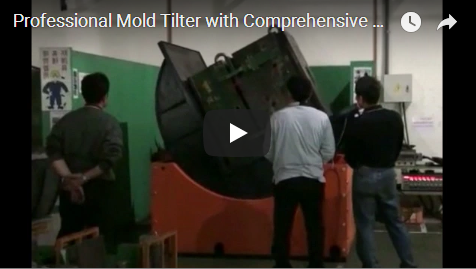
- FHOPE 360 degree turning machine for rotating and handling the panel in production demonstration video, YouTube.
Last reviewed: 2026-10-09