Executive summary
Heavy steel and aluminum coils are damaged most often at the pallet: the bottom pallet breaks, gets contaminated, or has to be swapped for export. A 180-degree double-clamp pallet inverter holds the coil between two pressure plates, rotates it through a complete turn and lets the pallet be changed without anyone touching the load. We build coil upending and turning machines for coil processing plants. Coil range and clamp plan are confirmed per project.
Table of Contents
- Why coils are damaged at the pallet
- How the 180-degree inverter works
- Loading the coil
- Clamping between the plates
- Rotation and exchange
- Automated line integration
- Typical configuration
- What the video shows
- Selection checklist
- Operation and safety
- Engineering FAQ
- Next step
- Related reading
- Sources and standards
Why coils are damaged at the pallet
The bottom layer of a coil stack carries the whole load, and the pallet underneath takes every hit. Damaged pallets, contaminated battens and export rules that demand a clean pallet all force the same risky operation: changing the pallet under a heavy coil. Done by hand with forklift tilting, that swap crushes coil edges and strains the crew.
A dedicated inverter removes the manual tilting step and holds the load flat while the pallet is exchanged, which is what prevents edge deformation and rework.
How the 180-degree inverter works
The inverter secures the coil between two opposing pressure plates, rotates it smoothly through a full turn, and lets the pallet be exchanged or the underside accessed without destabilizing the load. The machine works in four sequenced steps: load, clamp, rotate and exchange. Because the coil never hangs or tilts free, the operation is controlled from the first clamp to the release, and the coil leaves with the new pallet seated under it rather than a repacked load.
Loading the coil
A forklift places the palletized coil onto the inverter platform, or the load arrives by conveyor on automated lines. The platform positions the coil so the clamp plates engage the load squarely, which matters on coils whose center of gravity is not at the geometric middle. Loading is the step that decides whether the rest of the cycle is clean, so the platform is matched to the coil range, confirmed per project.
Clamping between the plates
Two clamps engage simultaneously from top and bottom, applying controlled, even pressure across the coil width. The double clamp holds the load from both faces instead of gripping one side, so the film, the wind or the bundle is not squeezed from a single direction.
For coils, clamp force is set so the load cannot shift during rotation but the surface is not marked, confirmed per project. Even clamping is what lets a heavy coil turn without a single edge touching anything.
Rotation and exchange
With the load held, the inverter rotates it through a full turn, bringing the coil bottom up and the pallet to the top for direct access. The operator or the system then exchanges the pallet and the inverter rotates back, setting the coil down onto the new pallet. The whole movement is controlled, so the coil arrives seated rather than dropped, and the operation suits both pallet swap and underside inspection, confirmed per project.
Automated line integration
On automated lines the inverter ties into the conveyor flow, receiving the coil, running the turn and releasing it to the next station in rhythm. The cycle is confirmed per project so the inverter matches the line instead of becoming a manual island in the middle of it. Integration covers the conveyor interface, clamps and controls, and the sequence is verified on the real coil range before the line is handed over.
Typical configuration
Figures below list functional design boundaries rather than numeric values, and are confirmed per project.
| Parameter | Typical range, confirmed per project |
|---|---|
| Coil | width, OD, weight |
| Clamp | double plate, controlled pressure |
| Rotation | full 180-degree turn |
| Load | forklift or conveyor |
| Cycle | single or line-integrated |
| Electrical supply | 380 V three phase 50 Hz, or 220 V single phase for light machines, selected per project |
What the video shows
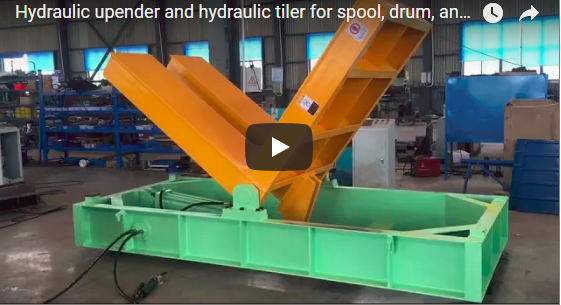
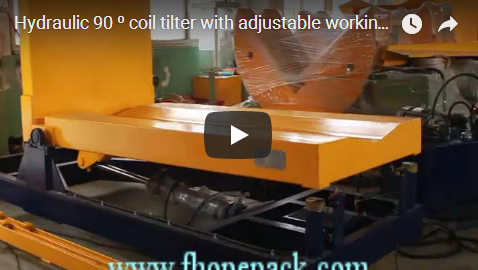
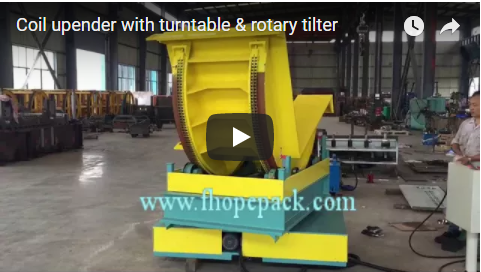
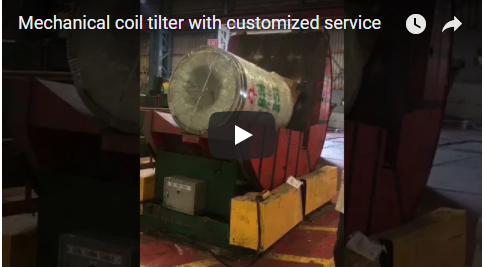
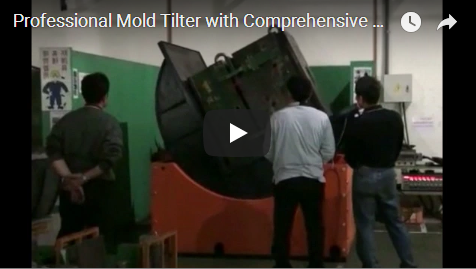
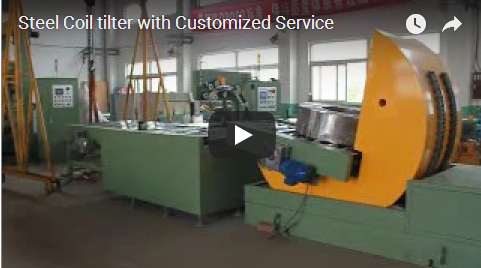
Our footage shows a 180-degree double-clamp pallet inverter turning a palletized coil. It is a general demonstration, so your coil range is confirmed with us per project.
Selection checklist
| Question | Confirm per project |
|---|---|
| Coil range | width, OD, weight |
| Clamp pressure | surface-safe setting |
| Rotation | full turn requirement |
| Loading | forklift or conveyor |
| Line fit | cycle and controls |
| Electrical supply | voltage, phase and frequency on site |
Operation and safety
Bring the coil to the platform and run the cycle from the panel; the machine clamps, rotates and returns automatically. Keep clear of the clamp plates and rotation zone while it runs, with guarding and emergency stops at the operator position. Routine checks cover the clamp plates, drive, rotation bearings, platform and sensors, per the machine manual. Confirm clamp pressure against the coil before the first cycle of each shift.
Engineering FAQ
Q: What does a coil upending and turning machine do? A: It holds a palletized coil between two plates, rotates it through a full turn and lets the pallet be changed without manual tilting.
Q: Why two clamping plates? A: The double clamp holds the load from both faces, so the coil cannot shift during rotation and no single side is squeezed.
Q: How does the pallet get swapped? A: After rotation the bottom is on top, so the pallet is exchanged and the inverter rotates the coil back onto it.
Q: Can it run on a line? A: Yes, on automated lines it integrates with the conveyor flow, confirmed per project.
Q: What keeps the coil surface safe? A: Controlled clamp pressure holds the load without marking the coil, confirmed per project.
Next step
- Email us at info@fhopepack.com with your coil range and pallet needs.
- We send an inverter proposal and a layout drawing within 48 hours.
- We arrange a site survey to confirm coil range and line flow.
Related reading
- Reclining and rotating pallet inverter manufacturer
- Pallet changers machine
- Pallet transfer changing machine: complete guide
- FHOPE packing machinery product lines
Sources and standards
- ISO 12100:2010 Safety of machinery, general principles for design and risk assessment
- EN 415-10:2014 Safety of packaging machines, general requirements
- EN ISO 13849-1:2023 Safety of machinery, safety-related parts of control systems
FHOPE coil upending and turning demonstration video. Reviewed as a general demonstration; coil range confirmed per project.
Last reviewed: 2026-10-10