Executive summary
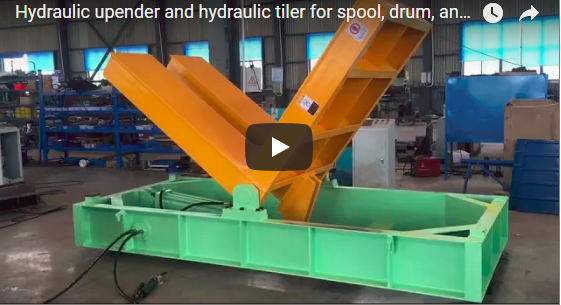
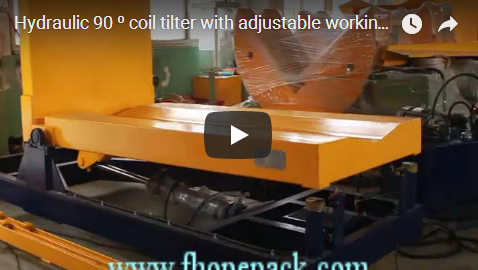
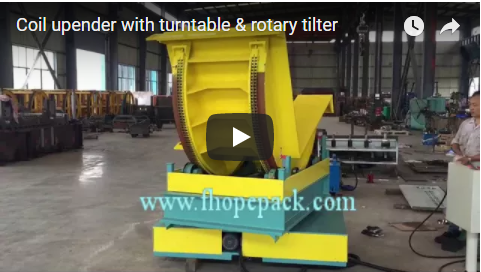
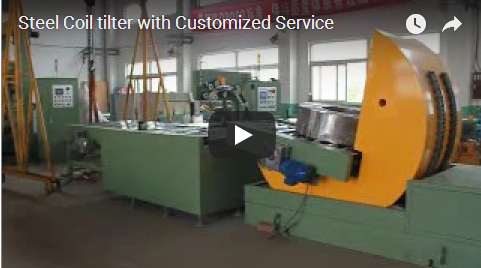
A mechanical coil tilter turns a heavy coil from horizontal to vertical, or back, on a geared drive instead of hydraulics. Our standard FPCT mechanical models cover 3 t to 20 t. Customized service means we adapt the cradle, platform, tilt angle, loading method and controls to your coils and your floor. This page explains what can be customized, how the design process runs and what to send us.
A standard tilter fits standard coils. Large wrapped coils, transformer windings or tight floor layouts usually need a tilter built around the load.
Table of Contents
- Why a mechanical drive
- Standard mechanical coil tilter models
- What we customize
- How the customized design runs
- Selection checklist
- Safety: EN 415-10 and ISO 12100
- Engineering FAQ
- Next step
- Related reading
- Sources
Why a mechanical drive
Our mechanical tilters use a gear motor with helical gears and a worm reducer. The worm reducer resists back-driving, so the cradle holds its position if power is lost. The motor brake arrangement for asymmetric loads is confirmed at quote. The turn can be stopped at any angle. There is no hydraulic unit, so there are no hoses, oil or pressure checks to maintain.
An inverter controls the speed, which gives a smooth start and a soft stop with a heavy coil.
Standard mechanical coil tilter models
| Model | Coil weight | Tilt time |
|---|---|---|
| FPCT-03 | 3 t | 50–90 s |
| FPCT-05 | 5 t | 50–90 s |
| FPCT-10 | 10 t | 60–90 s |
| FPCT-20 | 20 t | 60–100 s |
Platform size and motor power depend on the coil and are confirmed at quote. Customized builds start from the nearest standard frame.
What we customize
- Cradle and platform. V-deck or flat platform, sized to coil OD, ID and width, with polyurethane or nylon lining for wrapped or coated coils.
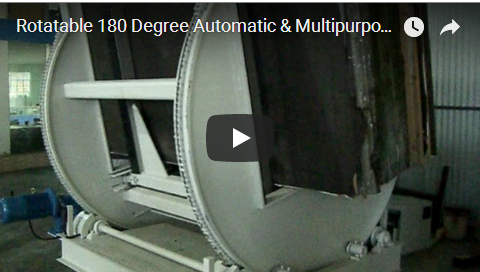
- Tilt angle. 90° as standard, or 180° turnover.
- Loading. Forklift, crane, or a working table with conveying so coils run in and out of a line.
- Controls. Switch panel, inverter speed control and interlocks with the rest of the line.
- Footprint. Frame and base adapted to pits, floor height or space limits.
How the customized design runs
- You send coil data, the turn you need and a layout sketch.
- We choose the base frame and work out the cradle and drive.
- We send a proposal with a general arrangement drawing.
- After approval, we build and test the tilter in our workshop.
- We ship it with manuals, and support installation.
Selection checklist: what to send us
- Heaviest and lightest coil weight.
- Coil OD, ID and width, and whether it is wrapped.
- Turn: 90° or 180°, and in which direction.
- Loading and unloading method.
- Cycles per hour.
- Floor space and any line connections.
Safety: EN 415-10 and ISO 12100
When integrated into packing lines, tilters follow EN 415-10, with the risk assessment done to ISO 12100. The hazards are the turning cradle and a heavy coil in motion. Two displacement restrictors limit the turn, a positioning lock holds the cradle, and the E-stop sits on the panel. Guarding is set for each layout. The machines are CE marked and built under ISO 9001.
Engineering FAQ
Q: Mechanical or hydraulic? A: Mechanical suits most loads up to 20 t and needs less maintenance; hydraulic suits the heaviest loads.
Q: What happens if power fails mid-turn? A: The worm reducer holds the cradle; the brake arrangement is set in the design.
Q: Can you match an odd coil size? A: Yes. The cradle is designed to your coil range.
Q: What warranty applies? A: Two years.
Next step
- Send your coil data and layout to info@fhopepack.com.
- We design the tilter around your load.
- We reply within 24 hours with a proposal and quotation.
Related reading
- Mechanical coil upender tilter (product)
- Custom engineered upenders and tilt tables (product)
- Multipurpose automatic coil tilter with slide table
- Practical well-designed coil tilter and upender
- Top quality upender and tilter for coil and mold
Sources
- FHOPE product pages: mechanical coil upender tilter; custom engineered upenders
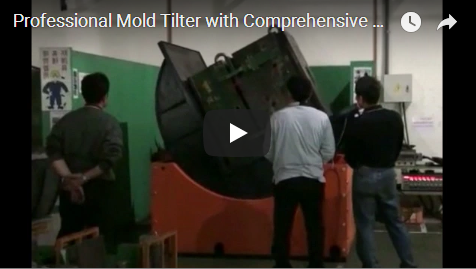
- Our mechanical coil tilter shown above
Last reviewed: 2026-10-19