Executive Summary
In high-throughput panel manufacturing—encompassing gypsum wallboards, structural plywood, and medium-density fiberboard (MDF)—inadequate end-of-line packaging directly causes catastrophic moisture absorption and edge crushing during transit. Conventional four-sided horizontal wrapping leaves stack leading and trailing ends exposed, requiring supplemental corrugated headers or manual plastic wrapping. The fully automated six-sided horizontal orbital stretch wrapper integrates continuous orbital film application with synchronized end-face protection into a single inline cycle. By securing all six faces and perimeter edges without manual turning or operator intervention, this packaging platform guarantees fully sealed, all-weather dust- and moisture-proof protection for delicate architectural panels.
1. Why Boards Need Full Six-Sided Coverage
[Derived Engineering Insight]
Standard four-sided sleeve wrapping leaves the front and rear faces of a board bundle open. In warehouse environments and flatbed intermodal transit, this incomplete barrier introduces severe structural and commercial liabilities:
- Transverse Moisture Penetration: The core matrix of cut-edge gypsum boards and the resin matrix of porous MDF panels exhibit extreme capillary action. Uncovered end cross-sections absorb ambient humidity, causing core hydration, edge swelling, and irreversible delamination.
- Corner Shear and Chipping: Forklift fork strikes, dunnage banding pressure, and rough handling during container stuffing concentrate kinetic energy directly onto unprotected corners. An unsupported board edge shears easily under standard transport vibration.
- Stack Shifting and Telescoping: High-gloss melamine and pre-sanded plywood exhibit low inter-sheet friction coefficients. Without integrated longitudinal retention along the front and rear faces, horizontal acceleration forces during freight transport cause bundle internal sliding (telescoping), compromising load stability.
Securing all six planes converts the stacked boards into a single rigid monolith, eliminating internal movement and sealing micro-voids against ambient vapor ingress.
2. How Six-Sided Orbital Wrapping Works
[Derived Engineering Insight]
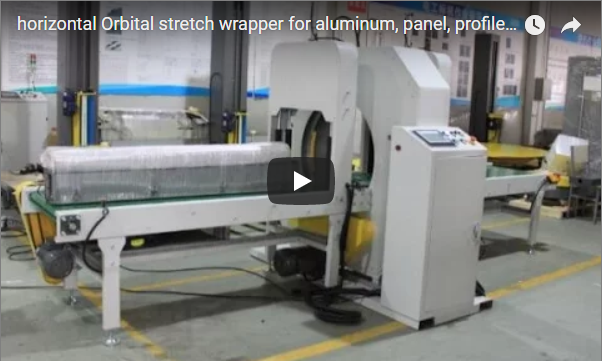
Achieving complete six-sided sealing in a continuous horizontal flow demands coordinated mechanical interaction across three primary sub-assemblies:
[Infeed Conveyor] ---> [Top Hold-Down / Side Guides] ---> [Orbital Ring Axis] ---> [Outfeed Conveyor]
                                  │                               │
                                  ▼                               ▼
Prevents Bundle Shifting Continuous 360° Film Wrap- Bundle Infeed and Alignment: The square panel stack enters the packaging line via an inline roller or belt conveyor. Lateral centering guides position the bundle along the structural centerline of the orbital ring.
- Top Hold-Down Stabilization: Overhead pneumatic stabilizing rollers compress the panel stack, expelling trapped air between sheets and preventing shifting induced by film tension.
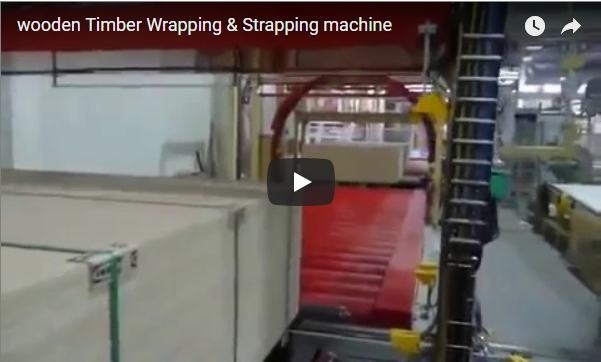
- End-Face Film Application and Orbital Encapsulation: The packaging cycle initiates by capturing the film tail and depositing protective film layers over the bundle’s leading edge. As the motorized carriage rotates around the horizontal ring, the bundle advances forward. The overlapping helical stretch film envelops the bottom, top, and longitudinal sides in a unified pass.
- Trailing Edge Cut and Seal: Once the trailing end reaches the wrapping axis, the feed slows or pauses while the orbital carriage deposits redundant transverse wraps over the end-face corners. Automatic mechanical cut-and-clamp arms sever the film, wiping the trailing tail flat against the bundle for a weather-tight bond.
3. What the Six-Side Design Guarantees
[Manufacturer Rating]
Operating as a dedicated heavy-duty production platform, the six-sided orbital wrapper ensures the following performance and build specifications:
- Complete Six-Sided Continuous Enclosure: Fully encapsulates all four longitudinal faces plus both transverse ends and peripheral corners in a continuous, single-stage automated cycle.
- Zero Manual Turning: Eliminates hydraulic tilting, crane flipping, or manual repositioning during the wrapping cycle, safeguarding operators and preventing surface scratching on high-value architectural boards.
- High-Value and Fragile Board Protection: Delivers defect-free perimeter containment specifically engineered for structural plywood, moisture-sensitive MDF, raw drywall, and coated acoustic panels.
- Recyclable Film Compatibility: Operates seamlessly with industry-standard, 100% recyclable stretch films (LLDPE), supporting enterprise carbon footprint and industrial circularity objectives.
- All-Weather Sealing: Forms a hermetic dust-proof and moisture-proof outer barrier capable of enduring exposed yard storage and ocean freight condensation.
- Factory Quality Assurance: Fully CE certified and manufactured under rigorous ISO 9001 quality management protocols, backed by a standard 2-year warranty.
4. Platform Sizing Reference: E1800-Class Horizontal Wrapper
To evaluate mechanical envelope compliance for wide-board industrial processing, the design utilizes the structural engineering framework of the verified E1800 horizontal stretch wrapper.
E1800 Standard Platform Specifications
| Parameter Category | Engineering Metric / Range | Verification Status |
|---|---|---|
| Bundle Length Range | > 1200 mm | [Manufacturer Rating] |
| Bundle Width Range | 400–1800 mm | [Manufacturer Rating] |
| Bundle Height Range | 50–1500 mm | [Manufacturer Rating] |
| Maximum Bundle Outer Diameter (OD) | < 1800 mm | [Manufacturer Rating] |
| Infeed / Outfeed Conveyor Length | 2000 mm (Infeed) / 2000 mm (Outfeed) | [Manufacturer Rating] |
| Conveyor Surface Protection | Heavy-duty PVC conveyor belt (prevents panel scratching) | [Manufacturer Rating] |
| Conveyor Linear Line Speed | 4–15 m/min (Variable frequency regulation) | [Manufacturer Rating] |
| Orbital Ring Rotation Speed | 10–60 r/min | [Manufacturer Rating] |
| Film Carriage Overlap Range | 10%–90% adjustable | [Manufacturer Rating] |
| Total System Drive Power | Approximately 4.5 kW | [Manufacturer Rating] |
| Electrical Power Utility | AC 380V, 60Hz, 3-Phase | [Manufacturer Rating] |
| Compatible Packaging Materials | LLDPE, PE, and PVC industrial stretch films | [Manufacturer Rating] |
| Film Roll Web Width | 250 mm / 300 mm / 500 mm selectable | [Manufacturer Rating] |
| Film Roll Diameter Envelope | Outer Diameter (OD): 100–220 mm; Inner Core ID: 50 mm / 76 mm | [Manufacturer Rating] |
| Bundle Restraint System | Integrated light-pack top hold-down pressing unit | [Manufacturer Rating] |
5. Gypsum Board vs Plywood vs MDF Considerations
[Derived Engineering Insight]
Configuring the wrapper for distinct board chemistries requires targeted adjustments across three primary operational parameters:
Gypsum Wallboard
- Core Challenge: Low compressive edge shear strength; high core friability.
- Operational Adjustment: Utilize wider 500 mm LLDPE film rolls to distribute radial hoop tension over a broader surface area. Pneumatic hold-down top rollers must be set to soft-clamping pressures to avoid crushing fragile gypsum cores while preserving full surface tension.
Structural Plywood
- Core Challenge: Surface splintering, sharp corners, and high stack self-weight.
- Operational Adjustment: Configure film carriage overlap to 50%–70% to reinforce corner puncture resistance. Heavy-duty PVC conveyor belts isolate face veneers from direct roller shear, preventing drag marring.
Medium-Density Fiberboard (MDF)
- Core Challenge: High surface slip (burnished wax additives) and severe moisture vulnerability along cut ends.
- Operational Adjustment: Maintain orbital ring rotation in the upper range (40–60 r/min) with overlap set above 60% at leading and trailing bundles. The integrated light-pack hold-down unit maintains constant mechanical pressure to prevent layer decoupling under film pull.
6. RFQ Checklist and Next Step
To configure an inline orbital packaging system tailored to your exact plant layout and board specifications, confirm the following technical parameters when submitting your inquiry:
- Bundle Envelope Dimensions: Minimum and maximum stack Length × Width × Height (mm), plus maximum combined stack weight (kg).
- Substrate Profiles: Type of material (raw drywall, marine plywood, melamine-faced MDF, or solid timber panels).
- Target Packaging Throughput: Required linear line speed (m/min) or total finished stacks per hour.
- Upstream / Downstream Integration: Inline conveyor elevation, roller center-to-center pitch, and factory electrical supply ratings.
Our mechanical design engineering team delivers a complete 3D packaging layout and formal technical proposal within 24–48 hours of receipt.
Last reviewed: 2026-11-03