Executive summary Our steel sheet inverter clamps a stack of sheets in a C-shaped frame and turns it 180 degrees, so the bottom face comes up or the pallet can come off. It takes stacks up to 3,000 mm long, 1,850 mm wide and 350 mm high, and up to 15 t. A full-size steel stack at that height weighs about 15 t, so the size and weight limits match.
Table of Contents
- How the 180-degree turn works
- Why invert a steel sheet stack: face change and pallet swap
- Stack size and load limits, up to 15 t
- Technical specifications and integration envelope
- Hydraulics and safety
- Selection checklist for a sheet inverter
- Engineering FAQ
- Next step
- Related reading
- Sources
How the 180-degree turn works
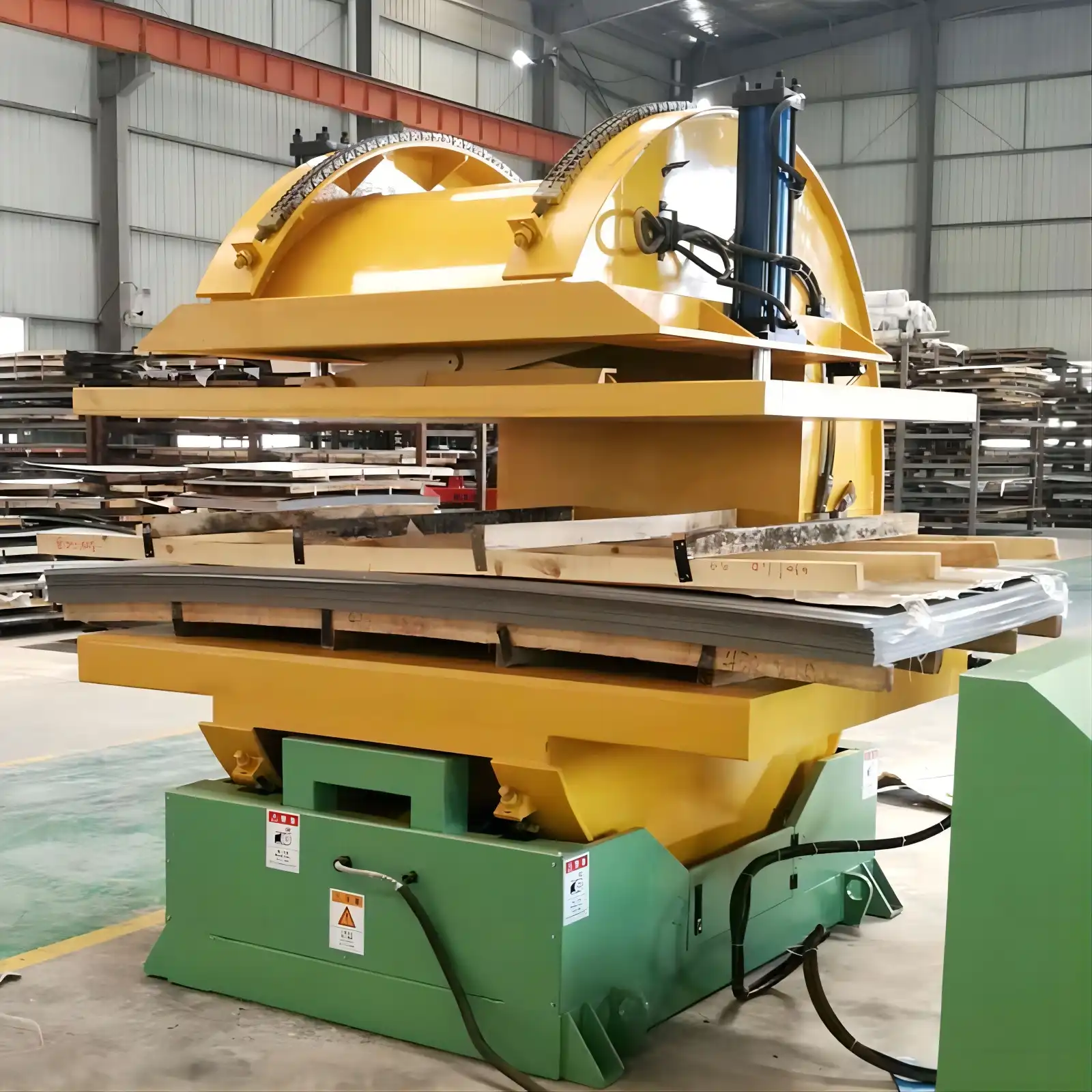
Plants also call this machine a plate inverter or plate turnover machine. The cycle runs in five steps:
- A forklift sets the sheet stack on the lower table of the C-shaped frame.
- Double-acting hydraulic cylinders close the upper table onto the stack and clamp it.
- A motor turns the whole C-frame through 180 degrees on its base, at an adjustable speed.
- The machine stops automatically at the end of the turn, and mechanical and electric stop blocks hold the end position.
- The clamp opens and the forklift takes the stack away, now upside down.
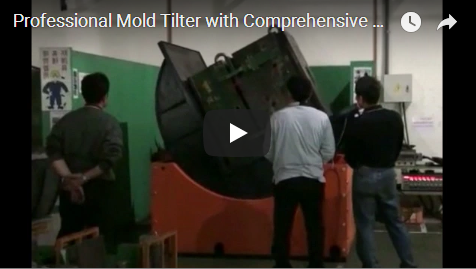
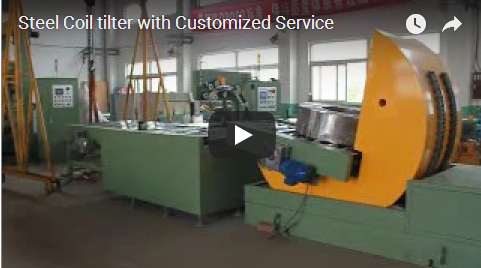
The video walkthrough follows that cycle end to end: clamp, a 90-degree vertical pass, a 180-degree finish, with the stack held between both tables the whole way.
Why invert a steel sheet stack: face change and pallet swap
We turn sheet stacks for two reasons. The first is to change the face that is up, for example so the underside can be inspected or the next process, such as a steel sheet packing line, sees the right face. The second is a pallet swap: after the turn the pallet is on top and lifts off, and a new pallet or dunnage goes on before turning back.
Stack size and load limits, up to 15 t
| Parameter | Steel sheet inverter |
|---|---|
| Stack length | 100–3,000 mm |
| Stack width | 250–1,850 mm |
| Stack height | 10–350 mm |
| Load weight | up to 15 t |
Steel weighs about 7.85 t per cubic metre. A stack at the largest size, 3,000 × 1,850 × 350 mm, is 1.94 m³, or about 15.2 t, so the size and weight limits meet at about the same point.
| Example stack | Size | Volume | Weight |
|---|---|---|---|
| Full window | 3,000 × 1,850 × 350 mm | 1.94 m³ | about 15.2 t |
| Common sheet | 2,500 × 1,250 × 150 mm | 0.47 m³ | about 3.7 t |
A full-size stack is right at the limit, so we confirm the heaviest stack on your list. The basic parameters can also be designed to your load specification.
Technical specifications and integration envelope
| Parameter | Steel sheet inverter |
|---|---|
| Turning | 180 degrees, speed adjustable |
| Motor | 2.5 kW |
| Hydraulic system | 4.5 kW |
| Hydraulic cylinder | 100 mm (listed as OD), double acting |
| Machine size | about 3,000 × 2,200 × 2,600 mm (L × W × H) |
| Machine weight | about 4 t |
| Loading | by forklift |
| Control | control panel (standard) or remote operation (selection per project) |
Hydraulics and safety
Oil pressure, clamp force and contact pressure
The hydraulic oil pressure is up to 14 MPa. That oil pressure acts on the cylinder pistons and creates the press-down force that keeps the load clamped during rotation.
The pressure on the sheet is a different number. It is that force divided by the area in contact with the sheet, so a small contact area gives a very high pressure. Illustrative example for one cylinder with a 63 mm bore (the 100 mm in the specifications is the listed cylinder OD):
| Item | Value |
|---|---|
| Oil pressure | 14 MPa |
| Piston area, π ÷ 4 × 63² | about 3,117 mm² |
| Press-down force, 14 × 3,117 | about 43.6 kN |
| Pressure on the sheet through a 100 × 100 mm pad | about 4.4 MPa |
| Pressure on the sheet through a 10 mm² point | about 4,360 MPa |
That is why the clamp tables press through wide, flat faces rather than points. After a power failure, the machine locks its position automatically and resets softly. Mechanical and electric stop blocks limit the turn. The standards that apply depend on the destination market. For CE markets, ISO 12100 sets the risk-assessment method and EN 415-10 sets general requirements for packaging machines.
Selection checklist for a sheet inverter
- Stack length, width and height, smallest to largest.
- Heaviest stack weight.
- Sheet surface: oiled, coated or bare, and whether the sheets go on to a protective film application machine.
- Reason for turning: face change or pallet removal.
- Forklift capacity and access.
- Local power supply.
Engineering FAQ
Q: How heavy a stack can it turn? A: Up to 15 t, which is about a full 3,000 × 1,850 × 350 mm steel stack.
Q: How thin can the stack be? A: The listed stack height starts at 10 mm.
Q: How is the stack held during the turn? A: Double-acting hydraulic cylinders press rigid flat tables across the stack’s upper and lower faces, keeping a constant clamping force all the way through the rotation.
Q: What happens if the power fails mid-turn? A: The machine locks its position automatically and resets softly when power returns.
Q: How is the stack loaded? A: By forklift, onto the lower table.
Q: How does the clamp avoid marking thin or coated sheets? A: The clamp tables press through wide, flat faces rather than points, so the cylinder force is spread over a large contact area and the pressure on the sheet stays low.
Q: How is the turn controlled? A: From the control panel or by remote operation, with an adjustable turning speed.
Q: How does the machine prevent over-rotation at 180 degrees? A: Mechanical and electric stop blocks halt the C-frame automatically at the completed 180-degree position.
Q: What drives the clamping and rotation? A: A 2.5 kW motor turns the C-frame at adjustable speed, and a 4.5 kW hydraulic power unit drives the double-acting clamp cylinders at up to 14 MPa.
Q: How big is the machine itself? A: About 3,000 × 2,200 × 2,600 mm (L × W × H) and about 4 t.
Next step
We plan your sheet inverter in three steps:
- Submit your layout drawing with your stack sizes and weights to info@fhopepack.com.
- Receive a proposal within 48 hours, with the frame size and capacity.
- Book a site survey to plan forklift access.
Related reading
- Steel sheet inverter and upender
- Load inverter
- Die mould upender
- Video: C-type 180-degree pallet turnover and pallet inverter
- Video: why 90-degree mold upenders are replacing overhead cranes
Sources
- Inverter data: steel sheet inverter and upender page
- Machine in action: our steel sheet turning video on YouTube
- Steel density: 7.85 t/m³, standard value for carbon steel
- Standards scope: ISO 12100:2010, EN 415-10:2014
Last reviewed: 2026-10-09