Executive summary
Steel wire, cable and rope arrive as continuous lengths and have to become coils that can ship. Manual coiling and wrapping is labor-intensive, inconsistent and a source of handling risk. This machine transforms a continuous length from the payoff into a neatly coiled, securely wrapped package: it feeds the wire with controlled tension, coils it, wraps it and moves the package out. We build coiling and wrapping machines for steel wire and cable, with the wire range and coil spec confirmed per project.
Table of Contents
- Why steel wire needs automation
- From spool to secure package
- Infeed and tension control
- Precise coiling
- Wrapping the coil
- A package ready to ship
- Typical configuration
- What the video shows
- Selection checklist
- Operation and safety
- Engineering FAQ
- Next step
- Related reading
- Sources and standards
Why steel wire needs automation
Handling long lengths of steel wire, cable or rope is a standing challenge in manufacturing and distribution. Manual coiling and wrapping are labor-intensive, inconsistent and can carry handling risk, and the wire arrives as a continuous length that will not coil itself evenly. Without tension control the coil comes out loose, and a loose coil cannot ship straight.
Automating coiling and wrapping makes the package consistent, reduces the manual work and takes handling risk off the crew. The wire range to cover is confirmed per project.
From spool to secure package
The machine’s core function is transforming a continuous length from the payoff or production line into a neatly coiled, securely wrapped package. The wire runs in, is fed with controlled tension, coiled to a set size, wrapped and moved out, with the steps synchronized. A continuous length arrives and a finished package leaves, without an operator between steps. The covered steps and their sequence are confirmed per project on the real wire range.
Infeed and tension control
Wire or cable is fed into the machine with the tension held steady during the run. Dancer arms and electronic tension systems keep the wire under consistent tension as it feeds, so the coil receives a uniform force rather than a hand-timed one. Tension control is what protects the wire and the coil: too loose and the coil sags, too tight and the wire marks. The tension profile follows the wire type and stiffness, confirmed per project.
Precise coiling
The wire is coiled to a set coil diameter and width, laid so the coil is round and layers sit evenly. Precise coiling is what makes the coil handleable and stackable, and it depends on the feed staying in step with the coiling unit. The coiling settings follow the wire and the package required, confirmed per project, so the coil comes out the same shape every cycle. A round coil is the base the wrapping step protects.
Wrapping the coil
After coiling, the machine wraps the coil to cover it and hold it for handling. Wrapping protects the wire surface and keeps the coil together,
and it is applied automatically so the cover is complete coil after coil. The wrap plan follows the coil size and the journey ahead, confirmed per project, and the wrapper works from the coil as it leaves coiling. A wrapped coil is a protected coil on the way to shipment, and the same package every cycle is what the warehouse and the customer can rely on.
A package ready to ship
The finished package is a coiled, wrapped unit ready for storage or shipment, and it arrives that way without the manual work that used to build it. The package holds the wire tight and keeps the surface clean, so it arrives at the customer as it left the line. Package requirements are confirmed per project on the actual wire.
Typical configuration
Figures below list functional design boundaries rather than numeric values, and are confirmed per project.
| Parameter | Typical range, confirmed per project |
|---|---|
| Wire | steel wire, cable, rope |
| Tension | dancer arm, electronic |
| Coil | diameter, width |
| Wrap | cover plan |
| Output | storage or shipment |
| Electrical supply | 380 V three phase 50 Hz, or 220 V single phase for light machines, selected per project |
What the video shows
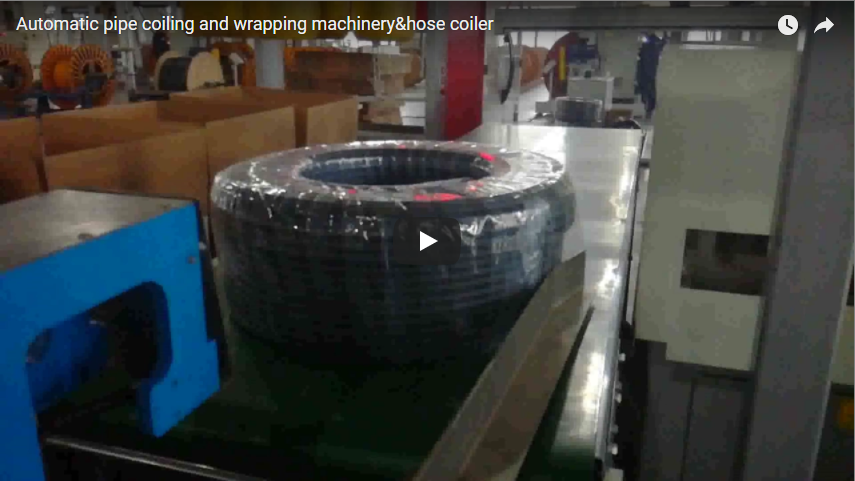
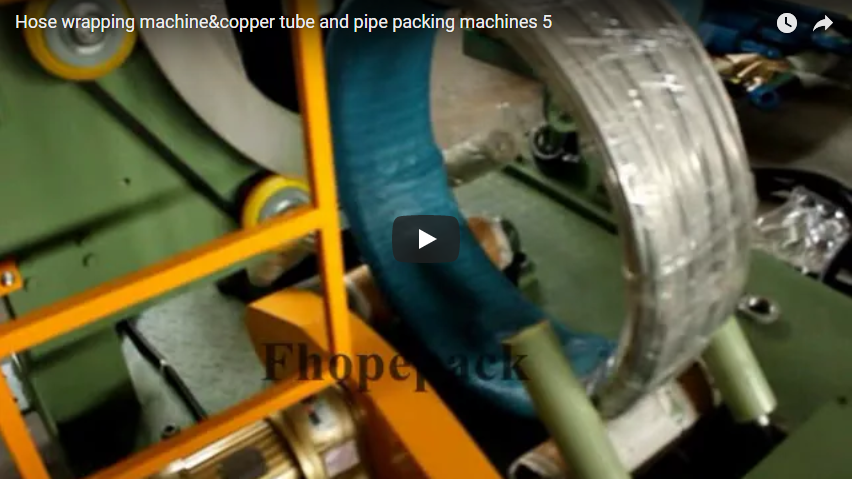
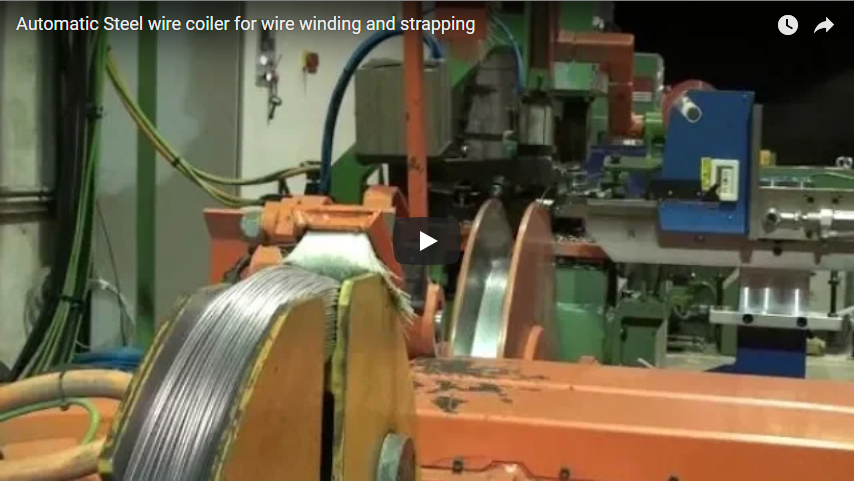
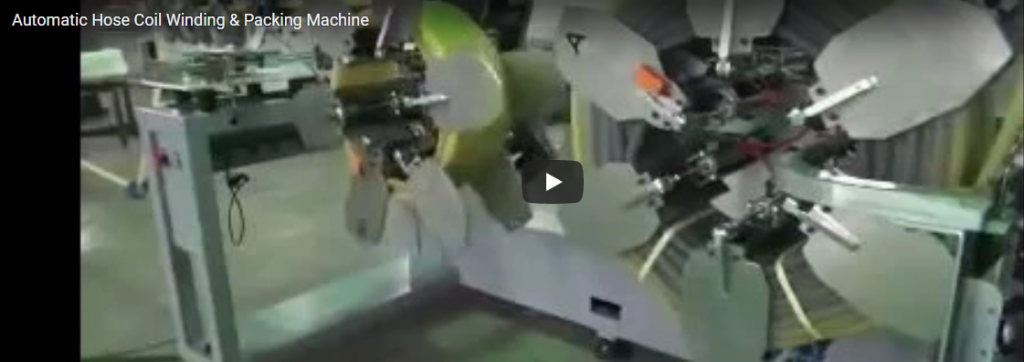
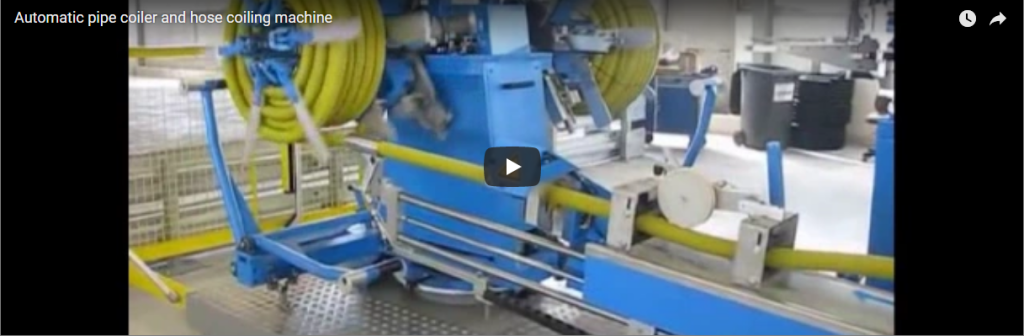
Our footage shows an automatic coiling and wrapping machine running steel wire or cable through infeed, coiling, wrapping and output. It is a general demonstration, so your wire range and coil spec are confirmed with us per project.
Selection checklist
| Question | Confirm per project |
|---|---|
| Wire range | diameters, stiffness |
| Tension | control profile |
| Coil | diameter and width |
| Wrap | cover plan |
| Output | storage or shipment |
| Electrical supply | voltage, phase and frequency on site |
Operation and safety
Run the sequence from the panel and the machine feeds, coils, wraps and delivers each wire length automatically. Keep clear of the infeed, coiling unit, wrap station and outfeed while the machine runs, with guarding and emergency stops at the operator position. Routine checks cover the tension system, coiler, wrap mechanism, sensors and output, per the machine manual. Confirm the coil settings against the wire before each run so coils stay round and tight.
Engineering FAQ
Q: What does this machine do? A: It feeds steel wire or cable with controlled tension, coils it and wraps the finished coil.
Q: Why is tension controlled? A: Consistent tension keeps the coil from sagging loose or marking the wire.
Q: How is the coil kept precise? A: The wire is coiled to a set diameter and width with even layering.
Q: What happens after coiling? A: The coil is wrapped automatically to protect the surface and hold it together.
Q: What does the machine output? A: A coiled, wrapped package ready for storage or shipment, the same every cycle.
Next step
- Email us at info@fhopepack.com with your wire range, coils and volumes.
- We send a coiling and wrapping proposal and a layout drawing within 48 hours.
- We arrange a site survey to confirm wire range and floor layout.
Related reading
- Steel wire coil winding and banding machine
- Automatic steel wire coiling machine
- Coiling and packing machine for corrugated pipe
- FHOPE packing machinery product lines
Sources and standards
- ISO 12100:2010 Safety of machinery, general principles for design and risk assessment
- EN 415-10:2014 Safety of packaging machines, general requirements
- EN ISO 13849-1:2023 Safety of machinery, safety-related parts of control systems
FHOPE steel wire coiling and wrapping machine demonstration video. Reviewed as a general demonstration; wire range confirmed per project.
Last reviewed: 2026-10-10