How to Plan Maintenance and Spares for Coil Packing Lines
A missing spare part can stop a coil packing line for days. This guide shows how to build a maintenance matrix—component, failure mode, early sign, action, and spare-part risk—so wear failures are prevented, not discovered mid-shift.

Preventive Maintenance and Spare Parts for Coil Packing Lines
Preventive Maintenance and Spare Parts for Coil Packing Lines
Preventive maintenance reduces the failures that are caused by wear, contamination, misalignment, and material buildup. It cannot remove every risk, but it can make the line's behavior more predictable and keep the spare-parts plan aligned with the real failure modes.
This guide helps maintenance, engineering, and operations teams build a practical plan for an automatic coil packing line without turning every task into a major shutdown.
| Maintenance matrix column | What it records |
|---|---|
| Component | The item that wears or drifts over time |
| Failure mode | The way it can fail |
| Early sign | The visible or recorded signal before failure |
| Maintenance action | The check or task that reduces the risk |
| Spare-part risk | The effect of failure and the time to obtain a replacement |
Start from the Failure Modes
List the components that wear or drift over time: film and strapping drives, rollers, bearings, brakes, cutting and sealing elements, sensors, guards and interlocks, hydraulic or pneumatic parts, and control components.
For each item, record the failure mode, the early sign, the consequence, and the maintenance action that reduces the risk.

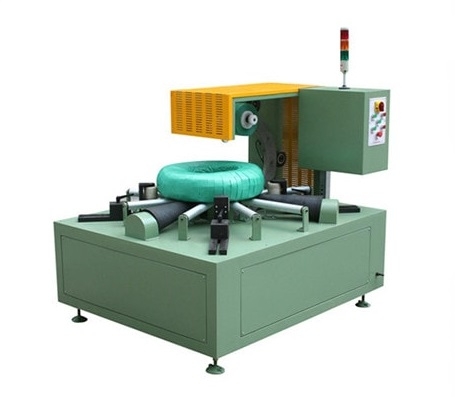
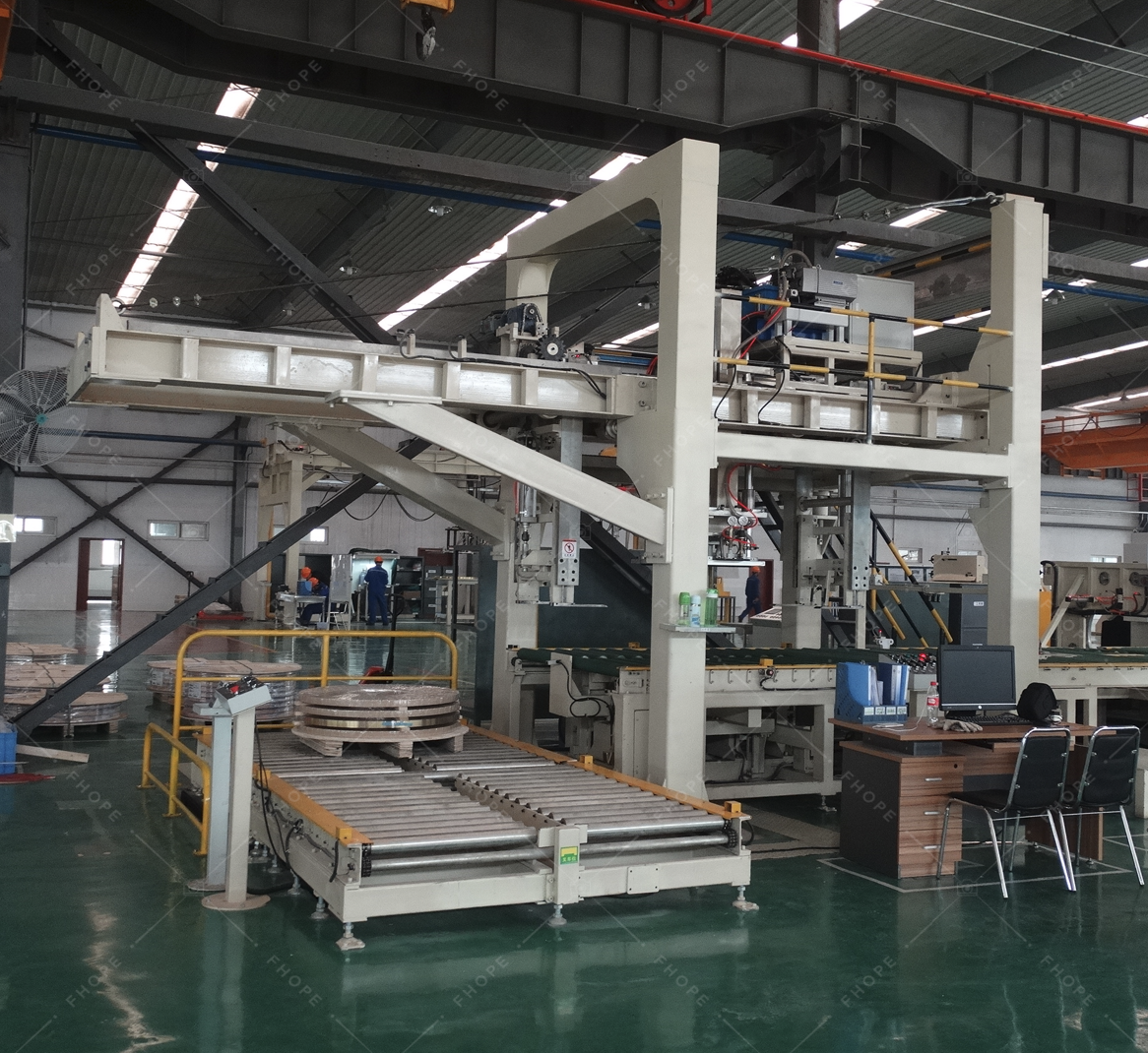
The image shows a steel coil packing line in an operating context. The maintenance plan should be built around the components visible on this kind of line, not around a generic machine list.
Separate Daily, Weekly and Planned Tasks
Use a tiered schedule:
- Daily or shift checks: material path, guards and interlocks, film or strapping condition, unusual noise, and basic cleanliness.
- Weekly checks: rollers, alignment, sensors, tension system, and cutting or sealing quality.
- Planned interval tasks: lubrication, belt or bearing replacement, hydraulic or pneumatic inspection, and control-system backup.
Do not make every task a long shutdown. Group work by access and by the state required to do it safely.
Make Inspection Observable
The best checks produce a visible result: a marked point, a recorded tension, a sample package, or a photograph. An inspection that only says "checked" does not help the next shift.
Use the operating record to focus maintenance. If the line logs repeated stops at one station, the maintenance plan should address that station first.
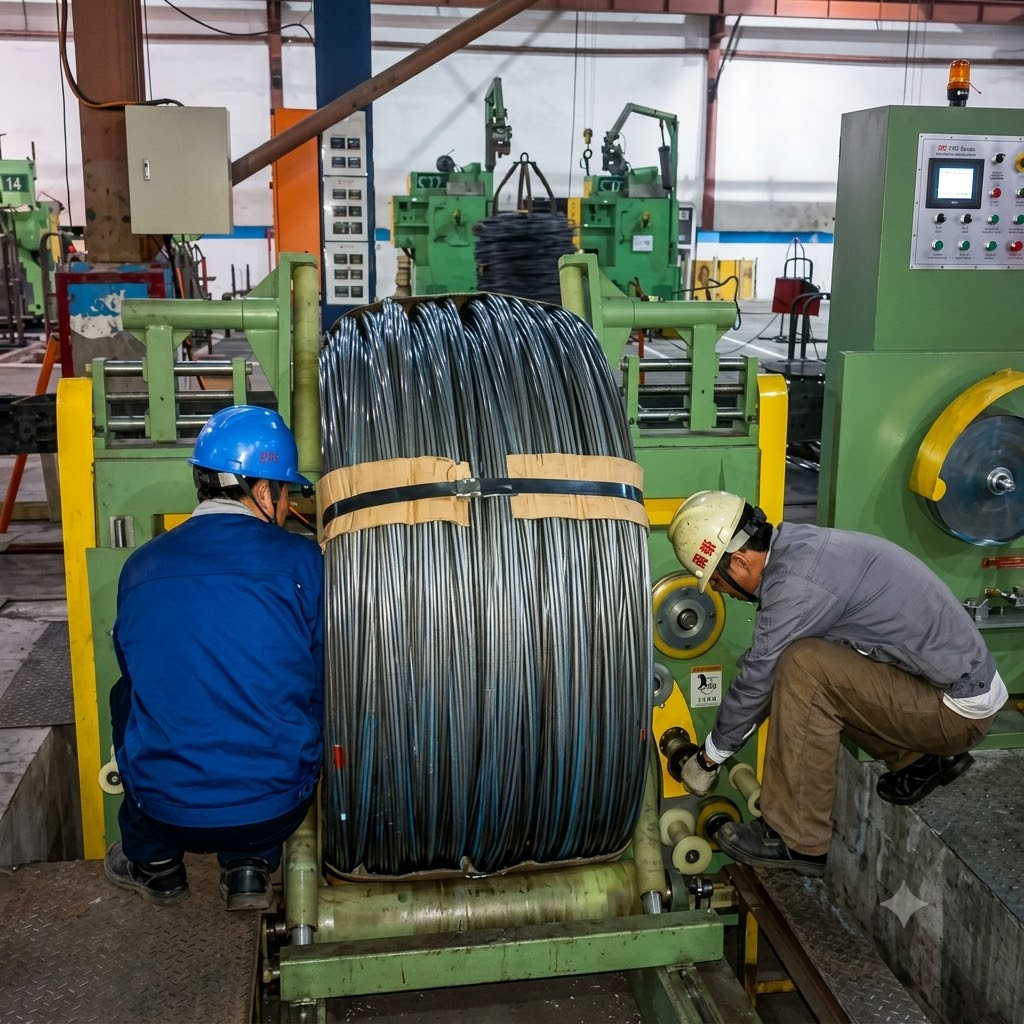
The image shows people around an FPS series automatic wrapping machine. The inspection points on the machine, such as film path, tension system, and sealing elements, need to be visible and observable for the next shift.
Manage Spare Parts by Risk
Classify parts by the effect of failure and the time to obtain a replacement. Critical parts that can stop the line for days need a defined stock and replenishment rule. Common consumables need a reorder point, not a guess.
Keep the spare-parts list tied to the actual machine configuration. A generic list will either miss a critical item or hold parts that are never used.
Control Lubrication and Material Compatibility
Use the lubricants and materials specified for the machine. The wrong film, strapping, or lubricant can create wear, contamination, or quality problems that look like a mechanical fault.
Record the material lot or specification when a quality issue appears.
Schedule Safely
Maintenance tasks must respect the line's guarding, energy isolation, and lockout-tagout requirements. Plan the safe state, access, and release owner before the task begins.

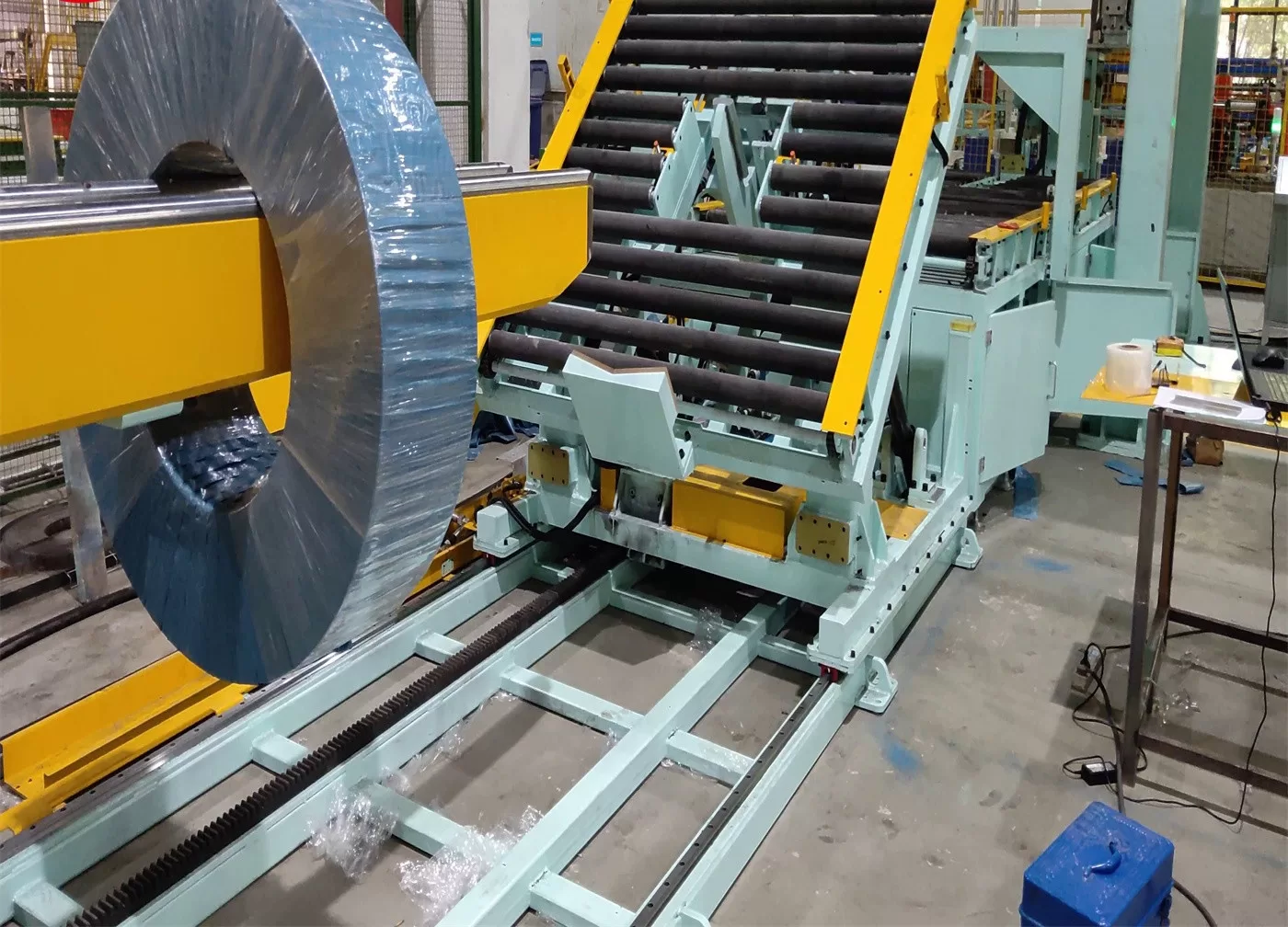
The image shows people involved in FAT/SAT project management. Maintenance, operations, and the supplier should review the maintenance matrix together, with the same safe-state and release-owner discipline used during acceptance testing.
A Practical Next Step
Build a maintenance matrix with the component, failure mode, check, interval, responsible role, spare part, and safe-state requirement. Review it with operators, maintenance, and the supplier, then update it after each significant failure.
Keep the maintenance plan tied to the actual automatic coil packing line configuration and to the operating record so it stays useful after every change.
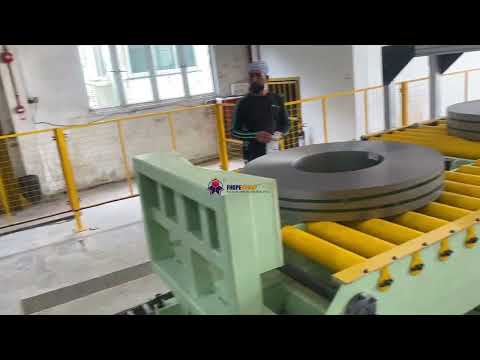
Watch a steel coil upending, strapping, wrapping and stacking line in operation:
Visual Details
Click to enlarge

Click to enlarge

Click to enlarge

Click to enlarge
Watch How It Works
Discover how our automated packaging solutions optimize your production line efficiency. This video demonstrates the seamless operation designed for maximum protection.
Trusted by Steel Mills & Industry Leaders
Global manufacturers rely on FHOPE heavy duty packaging equipment


Ready to optimize your packaging line?
Get a custom quote with ROI analysis. Our engineers respond within 24 hours.
- Free layout design
- Global installation support
- 2-year warranty included
Your information is secure and will never be shared.
Related Machines
Steel Coil Packaging line
View Details →
Vertical coil packaging line
View Details →
Hose Coil Packaging line
View Details →
Copper Coil Packaging line
View Details →
Wire Coil Packaging line
View Details →
Panel Packaging line
View Details →
Pipe Bagging Machine
View Details →
Aluminum profile packing line
View Details →
FHOPE Automatic pipe tube bundling&strapping line
View Details →
Automatic pipe tube bundling & strapping line
View Details →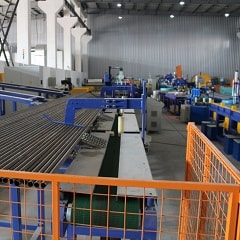
Automatic steel tube strapping machine
View Details →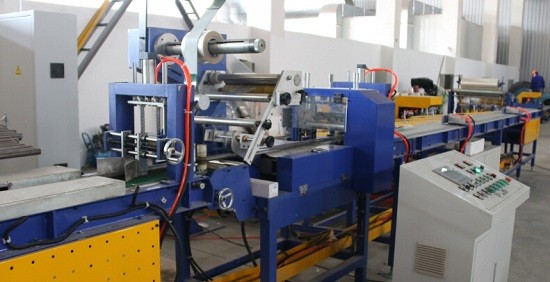
FHOPE Automatic steel tube packing machine
View Details →
Automatic plastic Pipe strapping packing line
View Details →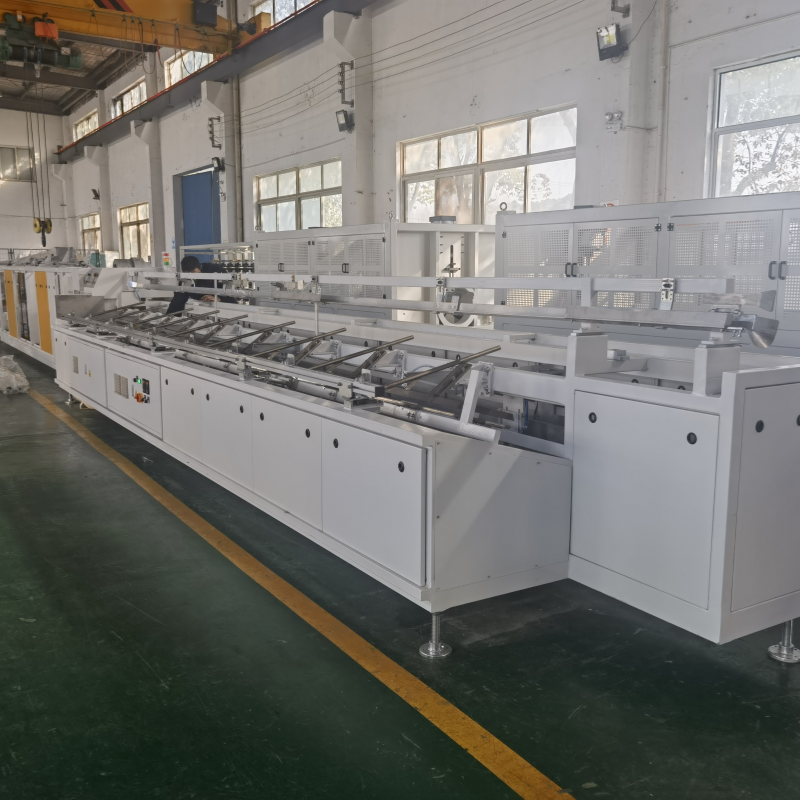
Automatic PPR/PVC Pipe bagging line
View Details →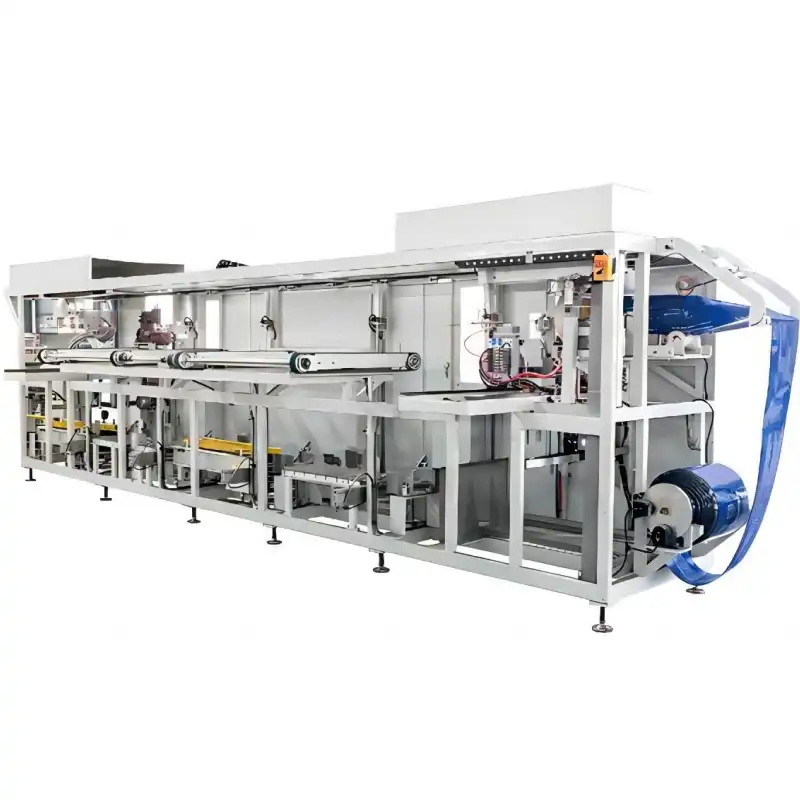
Platsic pipe bag packing machine
View Details →
Tyre Packing Machine FPT-200
View Details →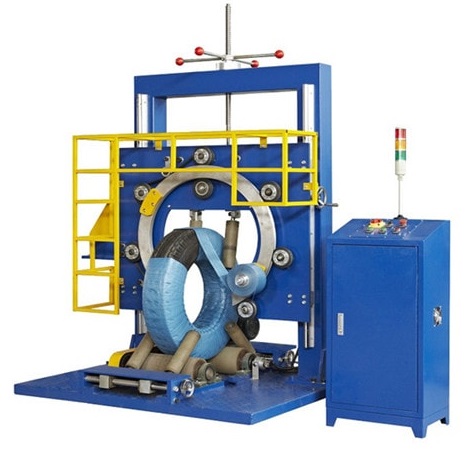
Tyre Packing Machine FPT-300
View Details →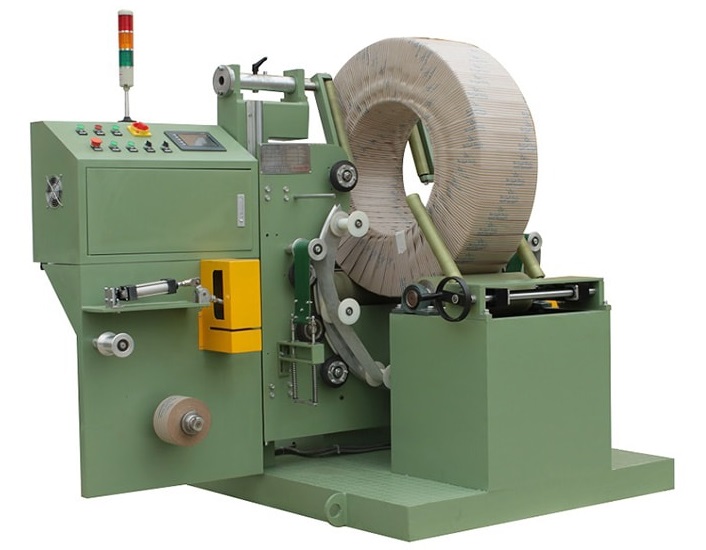
Tyre Packing Machine FPT-400
View Details →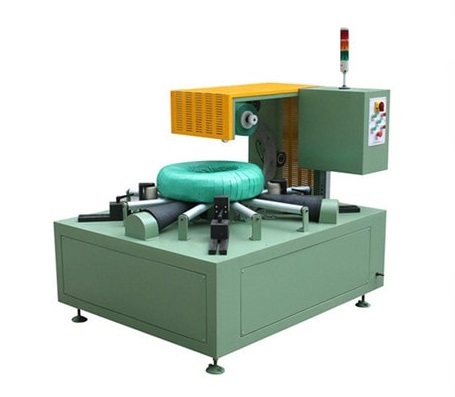
Cable Coil Packing Machine-FPCA100
View Details →