Writing an RFQ for a Coil Packing Line? Start Here
A clear RFQ makes supplier quotes comparable. Learn the seven sections every automatic coil packing line RFQ needs—product population, final package, flow, data interfaces, safety boundary, and acceptance evidence—so proposals answer the same project.

How to Write an RFQ for an Automatic Coil Packing Line
How to Write an RFQ for an Automatic Coil Packing Line
A clear RFQ does not list machine names. It describes the product population, final package, material and data flow, safety boundary, and acceptance evidence that every supplier must answer. That is what makes proposals comparable for an automatic coil packing line.
This guide helps procurement, engineering, and project teams write a request for quotation that produces a real scope instead of a broad price.
| RFQ section | What it must contain |
|---|---|
| Project objective | Problem, supply boundary, supervised actions, and exception handling |
| Product population | Product families, dimensions, weights, orientation, normal and exceptional cases |
| Final package | Protection, wrapping layers, strapping, label, stacking, and discharge |
| Flow and stations | Included and excluded functions, loading, replenishment, and unavailable states |
| Data and interfaces | Fields, source of truth, ERP/MES needs, and failure behavior |
| Safety and compliance | Guarding, manual access, LOTO, and required evidence |
| Acceptance | Documents, FAT/SAT, training, and a clear scope matrix |
State the Project Objective
Begin with the problem the line must solve: reduce repeated handling, improve packaging consistency, support a downstream process, or handle a measured constraint. Then state the boundary of supply, installation, commissioning, and training.
Avoid "fully automatic" as the objective. Define which actions are automatic, which are supervised, and what happens to a coil that cannot continue normally.
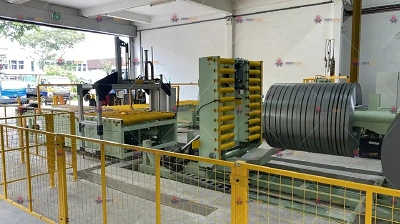
The image shows a high-speed automatic coil packing line. The RFQ objective should define the accepted output and the real constraint, not the word "automatic" or a nominal machine speed.
Describe the Product Population
Provide material and surface, inner and outer diameter, width, weight distribution, orientation, production source, and release pattern. Separate normal product, exceptional product, rework, and hold conditions.
Include representative combinations, not only the maximum values. A quote based on one rare maximum will not be comparable to a quote based on the real population.
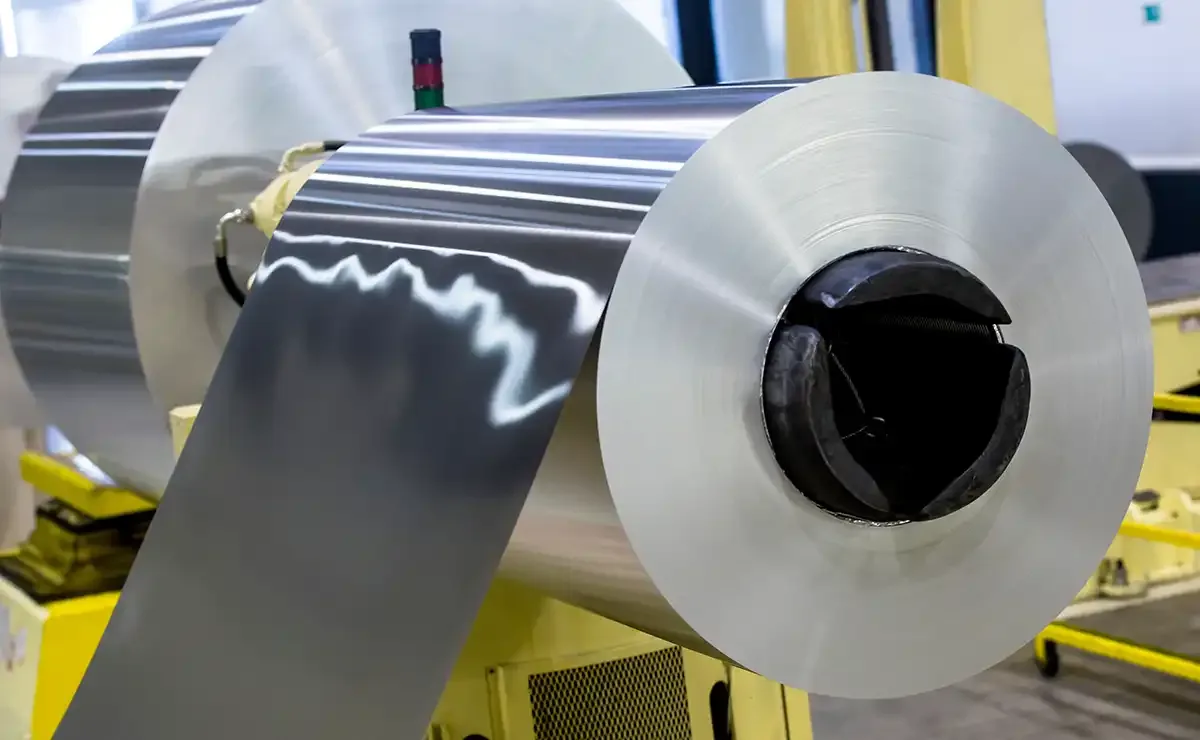
The image shows steel coil products. This is why the RFQ must describe material, surface, dimensions, weight distribution, and orientation, instead of asking suppliers to quote around one machine name.
Define the Final Package
Specify the protection level, wrapping materials and layers, strapping type and position, label content, stacking or palletizing requirement, and discharge destination. The package is the acceptance target; the equipment is selected from it.
If the package specification is not complete, say what is missing and require the supplier to propose a test method rather than assume.
Define the Flow and Stations
List the required functions: transfer, buffering, orientation change, identification, wrapping, strapping, weighing, labeling, inspection, stacking, and discharge. Mark which functions are included and which are excluded.
Also state who loads and unloads the coil, where material is replenished, and what happens when a station is unavailable.

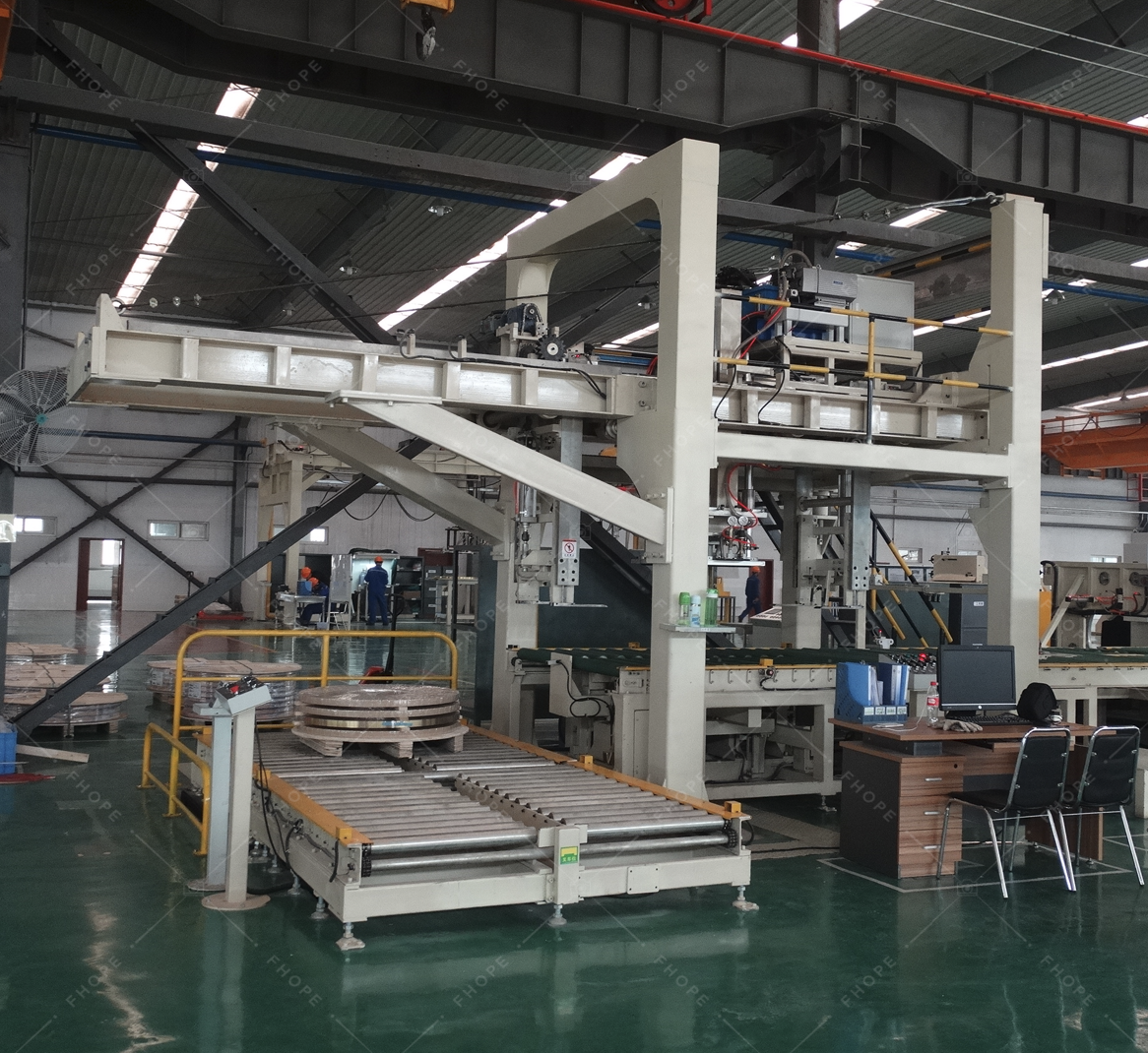
The image shows an automatic coil packing line as an integrated equipment sequence. The RFQ should describe the same connected flow, including the handoffs between stations, rather than a list of machine names.
Specify Data and Interfaces
Identify the coil identifier, order or heat/batch information, measured weight, packaging recipe, label data, quality state, and shipment record. For each field, state the source of truth and whether ERP, MES, or warehouse integration is required.
Ask the supplier to define the interface, data timing, failure behavior, and test responsibility.
Set Safety and Compliance Requirements
State the guarding approach, manual access tasks, lockout-tagout expectations, and any applicable regulation, standard, or certification. Require evidence rather than a generic compliance statement.
The buyer owns the operating risk. The supplier can design around it, but cannot decide the site's safety boundary.

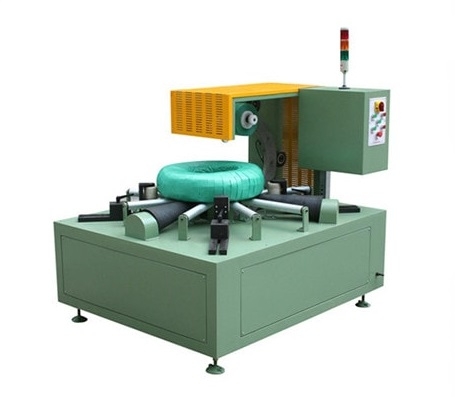
The image shows a customized steel coil wrapping line. The same idea applies to the RFQ: every supplier should answer the same flow, data, safety, and acceptance boundary, even when the final line is customized.
Require Acceptance Deliverables
List the documents and tests required before release: layout and drawings, control description, risk assessment, FAT and SAT plan, training, spare parts, manuals, and performance verification.
Ask for a clear scope matrix showing what is included, excluded, and to be confirmed. A comparable quote depends on that matrix.
A Practical Next Step
Turn the checklist into a short RFQ package: product table, package specification, flow diagram, interface table, safety boundary, and acceptance criteria. Send the same package to every supplier.
Keep the automatic coil packing line scope visible in every section so each quotation answers the same project.
Watch a silicon steel coil packaging line with upender and strapping system in operation:

Visual Details

Click to enlarge

Click to enlarge

Click to enlarge

Click to enlarge
Watch How It Works
Discover how our automated packaging solutions optimize your production line efficiency. This video demonstrates the seamless operation designed for maximum protection.
Trusted by Steel Mills & Industry Leaders
Global manufacturers rely on FHOPE heavy duty packaging equipment


Ready to optimize your packaging line?
Get a custom quote with ROI analysis. Our engineers respond within 24 hours.
- Free layout design
- Global installation support
- 2-year warranty included
Your information is secure and will never be shared.
Related Machines
Steel Coil Packaging line
View Details →
Vertical coil packaging line
View Details →
Hose Coil Packaging line
View Details →
Copper Coil Packaging line
View Details →
Wire Coil Packaging line
View Details →
Panel Packaging line
View Details →
Pipe Bagging Machine
View Details →
Aluminum profile packing line
View Details →
FHOPE Automatic pipe tube bundling&strapping line
View Details →
Automatic pipe tube bundling & strapping line
View Details →
Automatic steel tube strapping machine
View Details →
FHOPE Automatic steel tube packing machine
View Details →
Automatic plastic Pipe strapping packing line
View Details →
Automatic PPR/PVC Pipe bagging line
View Details →
Platsic pipe bag packing machine
View Details →
Tyre Packing Machine FPT-200
View Details →
Tyre Packing Machine FPT-300
View Details →
Tyre Packing Machine FPT-400
View Details →
Cable Coil Packing Machine-FPCA100
View Details →