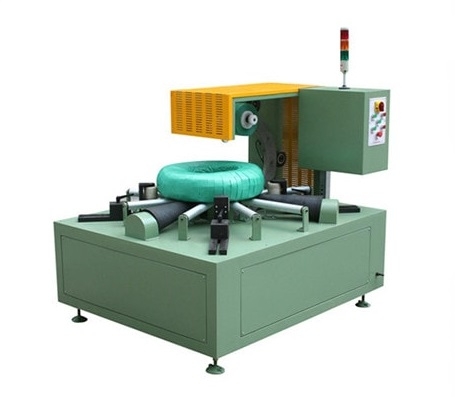
What to Ask Before Integrating ERP/MES with a Coil Line
ERP/MES integration fails on unclear data ownership, not connectors. Use these questions to define field sources, correction rights, failure behavior, and audit trails for your coil packing line—before the scope is frozen and FAT/SAT begins.
ERP/MES Integration for Coil Packing Lines: Questions to Ask
ERP/MES Integration for Coil Packing Lines: Questions to Ask
An automatic coil packing line can move a coil without ERP or MES integration. What it cannot do reliably is release the coil, apply the correct label, and record the correct packaging result when the data source is unclear.
This guide helps automation, IT/OT, quality, and project teams define the integration boundary before the line is specified.
| Data-flow table column | What it defines |
|---|---|
| Field | Coil ID, weight, packaging recipe, label data, quality state, shipment record |
| Source of truth | ERP, MES, scale, operator, or quality system |
| Owner | The system or person allowed to correct the field |
| Failure behavior | Buffer, manual route, reject, hold, or safe stop |
| Audit | How a correction is recorded and traced |
Start with the Release Decision
List the data a coil needs before it can leave the line: coil identifier, order or heat/batch information where relevant, measured weight, packaging rule, label data, quality state, and shipment record.
For each field, identify the source of truth and the system or person that may correct it. The line should not invent a value when the source is unavailable.

The image shows an ERP system visual. It represents the enterprise-level source of order, recipe, and shipment data that the packing line must consume without inventing its own values.
Map the Handoffs, Not Just the Machines
Draw the points where data is read, written, or confirmed: coil arrival, identification, weighing, recipe selection, wrapping, strapping, labeling, inspection, stacking, and discharge.
The integration boundary should match the physical boundary. A coil should not be physically released past a point that its record has not passed.
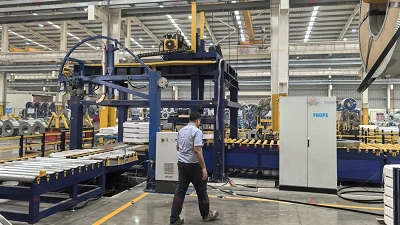
The image shows a smart steel coil packaging system with ERP integration. The value of the integration comes from the fields, timing, and failure behavior across this boundary, not from the connection itself.
Ask the Right Interface Questions
Before comparing vendors, ask these questions:
- Which system owns the coil identifier and order record?
- Which fields does the line consume, and which fields does it produce?
- What happens when the ERP/MES service is unavailable?
- What happens when a label cannot be verified?
- Who may correct a weight, recipe, or quality state?
- What acknowledgement proves the record was accepted?
- How are corrections audited?
The answers often reveal that the difficult part is not the connector but the business rule.
Avoid Protocol-First Language
It is common to ask for "MES integration" or "ERP integration" as if those words define a scope. A useful request describes the fields, timing, failure behavior, and audit trail. The protocol or middleware choice should follow the requirements, not the other way around.
ISA-95 can provide a technology-neutral reference for separating enterprise and manufacturing-control functions, but it does not select a protocol or prove compatibility between a customer's systems.
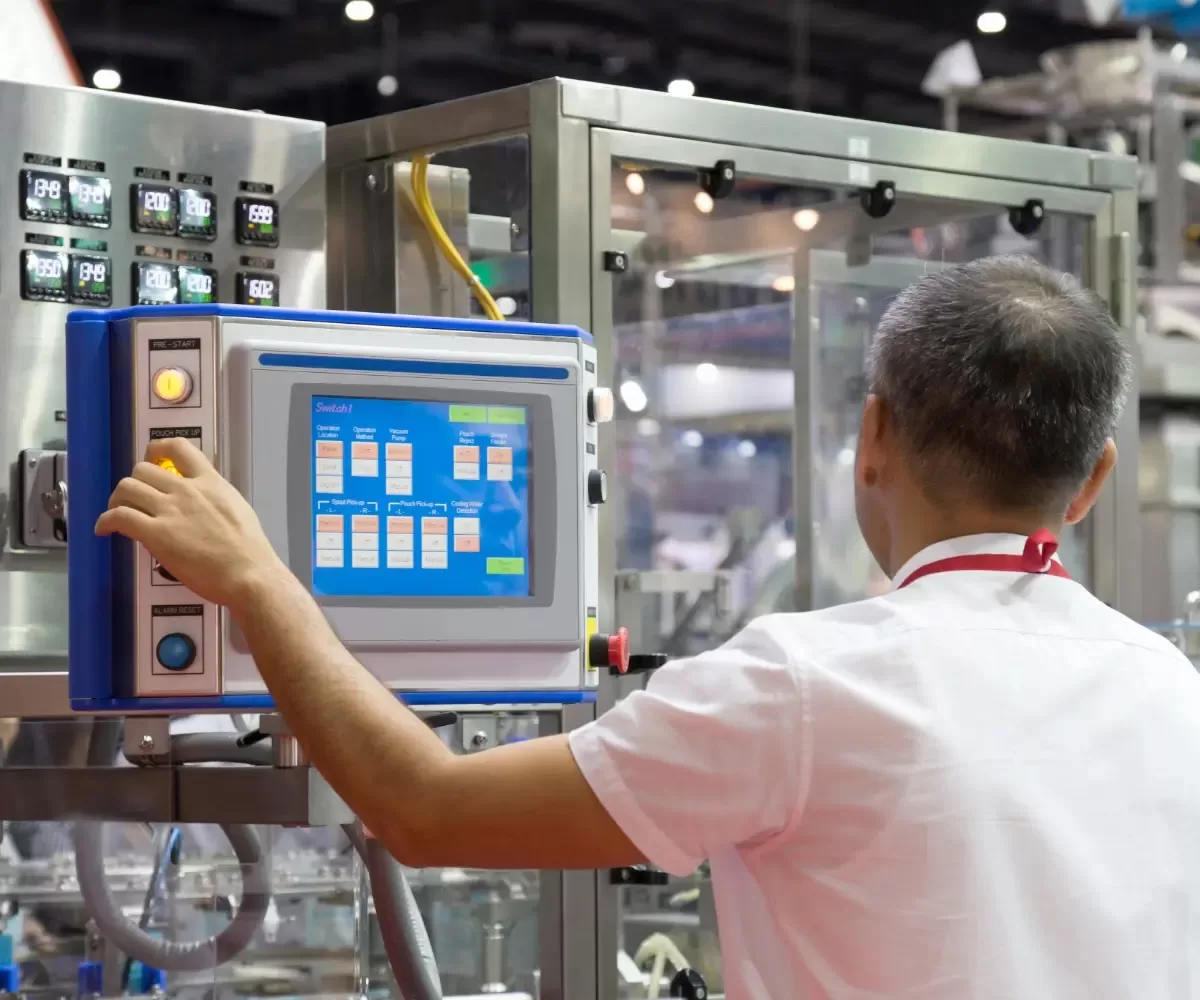
The image shows a person checking the control system for a packing line. This is where interface questions become practical: the line must show the operator what data is missing, who can correct it, and what happens next.
Design for Unavailable Systems
Every integration has a failure state. Define a project-approved buffer or manual route for when the source system is slow, unavailable, or returns an incomplete record. The fallback should be traceable and should not allow a coil to bypass its required quality or label check.
If the fallback is not defined before installation, operators will create one under pressure.
Include Data in Acceptance Tests
FAT and SAT should test not only normal coil flow but also missing fields, label mismatch, weight discrepancy, recipe change, and system outage. The acceptance criteria should state what evidence proves the record followed the coil correctly.
A Practical Next Step
Create a data-flow table with the field, source of truth, owner, correction route, failure behavior, and audit requirement. Bring IT/OT, quality, production, and the supplier together to review it before the line scope is fixed.

The image shows a working discussion in an office-like setting. That is the right format for the integration review: IT/OT, quality, production, and the supplier agree on the data-flow table before the automatic coil packing line scope is frozen.
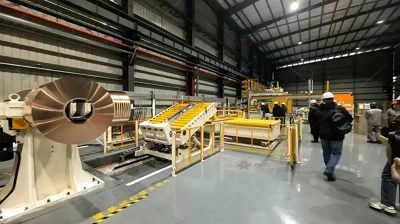
Watch an automatic horizontal steel coil strapping line in operation:

Visual Details
Click to enlarge

Click to enlarge

Click to enlarge

Click to enlarge
Watch How It Works
Discover how our automated packaging solutions optimize your production line efficiency. This video demonstrates the seamless operation designed for maximum protection.
Trusted by Steel Mills & Industry Leaders
Global manufacturers rely on FHOPE heavy duty packaging equipment


Ready to optimize your packaging line?
Get a custom quote with ROI analysis. Our engineers respond within 24 hours.
- Free layout design
- Global installation support
- 2-year warranty included
Your information is secure and will never be shared.
Related Machines
Steel Coil Packaging line
View Details →
Vertical coil packaging line
View Details →
Hose Coil Packaging line
View Details →
Copper Coil Packaging line
View Details →
Wire Coil Packaging line
View Details →
Panel Packaging line
View Details →
Pipe Bagging Machine
View Details →
Aluminum profile packing line
View Details →
FHOPE Automatic pipe tube bundling&strapping line
View Details →
Automatic pipe tube bundling & strapping line
View Details →
Automatic steel tube strapping machine
View Details →
FHOPE Automatic steel tube packing machine
View Details →
Automatic plastic Pipe strapping packing line
View Details →
Automatic PPR/PVC Pipe bagging line
View Details →
Platsic pipe bag packing machine
View Details →
Tyre Packing Machine FPT-200
View Details →
Tyre Packing Machine FPT-300
View Details →
Tyre Packing Machine FPT-400
View Details →
Cable Coil Packing Machine-FPCA100
View Details →