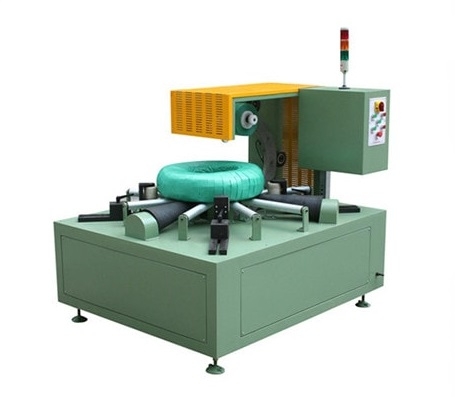
Coil Packing Line Quote: What to Confirm Before You Ask
A vague RFQ gets a vague quote. This checklist shows what to define before requesting a coil packing line price — product, package, flow, layout, integration, safety and acceptance — so every supplier quotes the same scope.
What to Confirm Before You Ask for a Coil Packing Line Quote
What to Confirm Before You Ask for a Coil Packing Line Quote
A quote is only useful when the supplier can see the same project boundary as the buyer. The fastest way to get a vague, wide-ranging quotation is to ask for "a coil packing line" without defining the product, final package, flow, interfaces, and acceptance conditions.
This checklist helps operations, engineering, and procurement teams prepare a quote request that produces comparable proposals.
| RFQ item | Why it matters |
|---|---|
| Product data | Defines what actually enters the line |
| Volume and release pattern | Defines the target output and real peaks |
| Final package requirement | Defines the acceptance result |
| Facility and layout | Defines the physical and installation boundary |
| Data and integration | Defines interfaces, ownership, and failure behavior |
| Safety and compliance | Defines the operating and guarding boundary |
| Acceptance and deliverables | Defines the evidence and sign-off required |

The image shows a steel coil packing line system layout. That is the first thing a supplier needs: not just a machine name, but a clear picture of how the line is arranged around the existing flow.
Product Data
Define the coils that will actually enter the line:
- Material and surface condition, such as cold rolled, galvanized, stainless, aluminum, or copper.
- Inner diameter, outer diameter, and width, including the combinations that occur together.
- Weight distribution and maximum weight.
- Coil orientation when it arrives and the orientation required for wrapping, storage, or shipment.
- Normal product, exceptional product, rework, and hold conditions.
Do not send only the maximum values. A machine sized around one rare maximum can be different from a machine sized for the repeatable population.
Volume and Release Pattern
State how many coils arrive per shift or day, and whether they arrive continuously, in batches from a slitting line, or with uneven peaks. Include changeover frequency, shift pattern, and whether the line must absorb short upstream interruptions.
If the target output is not measured, say so. A supplier cannot calculate a credible cycle time from "as fast as possible."
Final Package Requirement
Describe the packaging result, not just the equipment:
- Protection level and required materials, such as stretch film, VCI or rust-inhibiting material, paper, edge protection, and strapping.
- Wrapping coverage, overlap, tension, and whether eye-through wrapping is required.
- Strapping type, position, and sequence relative to wrapping.
- Label content and where the label must be placed.
- Stacking or palletizing requirement and final discharge destination.
The final package is the acceptance target. Equipment should be selected from that result backward.
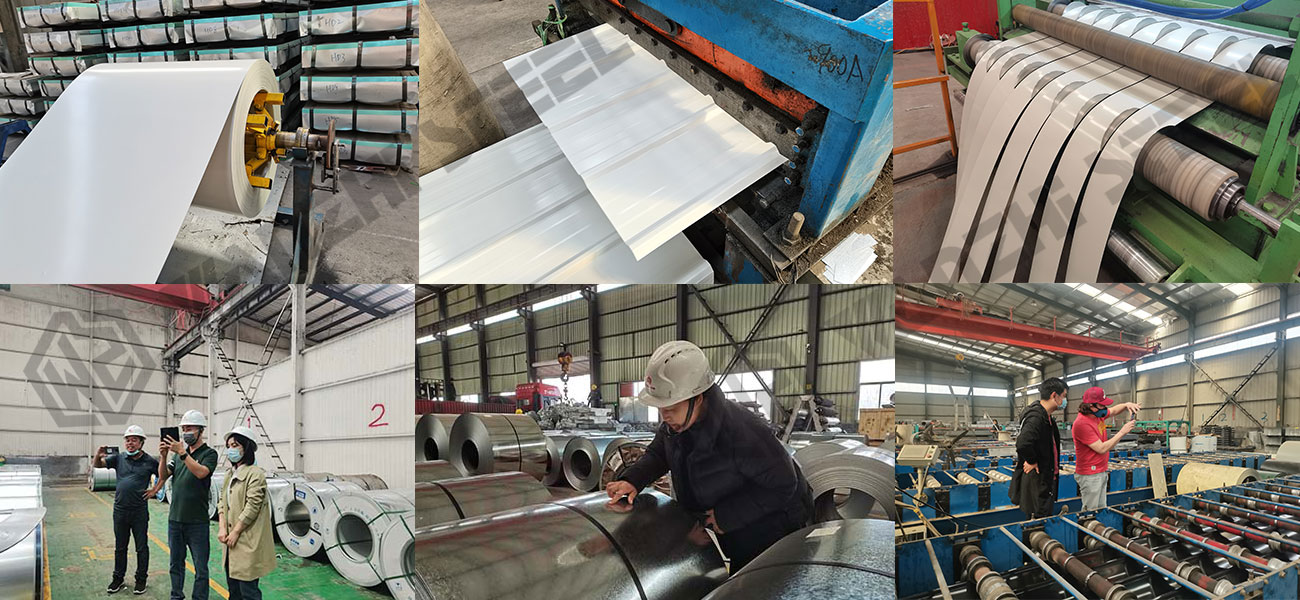
The image shows people preparing a coil so it can be protected before wrapping. The same preparation steps must be described in the RFQ: which coil states are acceptable, which surface conditions matter, and what the final protected package must look like.
Facility and Layout
Provide the available floor area, ceiling or crane height, column positions, access doors, floor loading, utilities, and the route from the current production source to the packing area. Include whether the line must be L-shaped, U-shaped, or fit an existing building constraint.
Also state who will handle foundations, utilities, installation, and commissioning. These items change the scope as much as the machine itself.
Data and Integration
Identify the coil identifier, order or heat/batch information, measured weight, packaging recipe, label data, quality state, and shipment record. For each field, state the source of truth and whether the line must exchange data with ERP, MES, or a warehouse system.
Do not assume compatibility. Ask the supplier to define the interface, required data, failure behavior, and responsibility for testing.
Safety and Compliance
State the required guarding approach, access points, manual material replenishment, and lockout-tagout expectations. If a specific regulation, standard, or certification applies, name it and ask for evidence rather than a generic "CE" statement.
The buyer owns the operating risk. The supplier can help design around it, but cannot decide the site's safety boundary.

The image shows a working discussion in an office-like setting. It represents the agreement process that should happen before the quote is issued: safety boundary, exception routes, and acceptance criteria are settled by the same team, not discovered after the line arrives.
Acceptance and Deliverables
List the documents and tests required before release: layout and drawings, control description, risk assessment, FAT and SAT plan, training, spare parts, manuals, and performance verification. Define what must be demonstrated with the buyer's representative coils.

The image shows people involved in FAT/SAT industrial automation project management. That is the moment the acceptance cases in your RFQ become visible: the supplier demonstrates the line with your representative coils, and both teams sign off on the evidence.
A Ready-to-Send Summary
Before you send the request, check that the RFQ package includes:
- Product data and product families
- Volume, release pattern, and changeover expectations
- Final package and protection requirements
- Facility layout and installation boundaries
- Data sources and ERP/MES interfaces
- Safety, guarding, and compliance requirements
- FAT/SAT, training, spare parts, and acceptance criteria
When the request includes product data, volume, final package, layout, interfaces, safety boundary, and acceptance criteria, the supplier can quote a real coil packing line scope instead of guessing. That is what makes one quotation comparable to another.
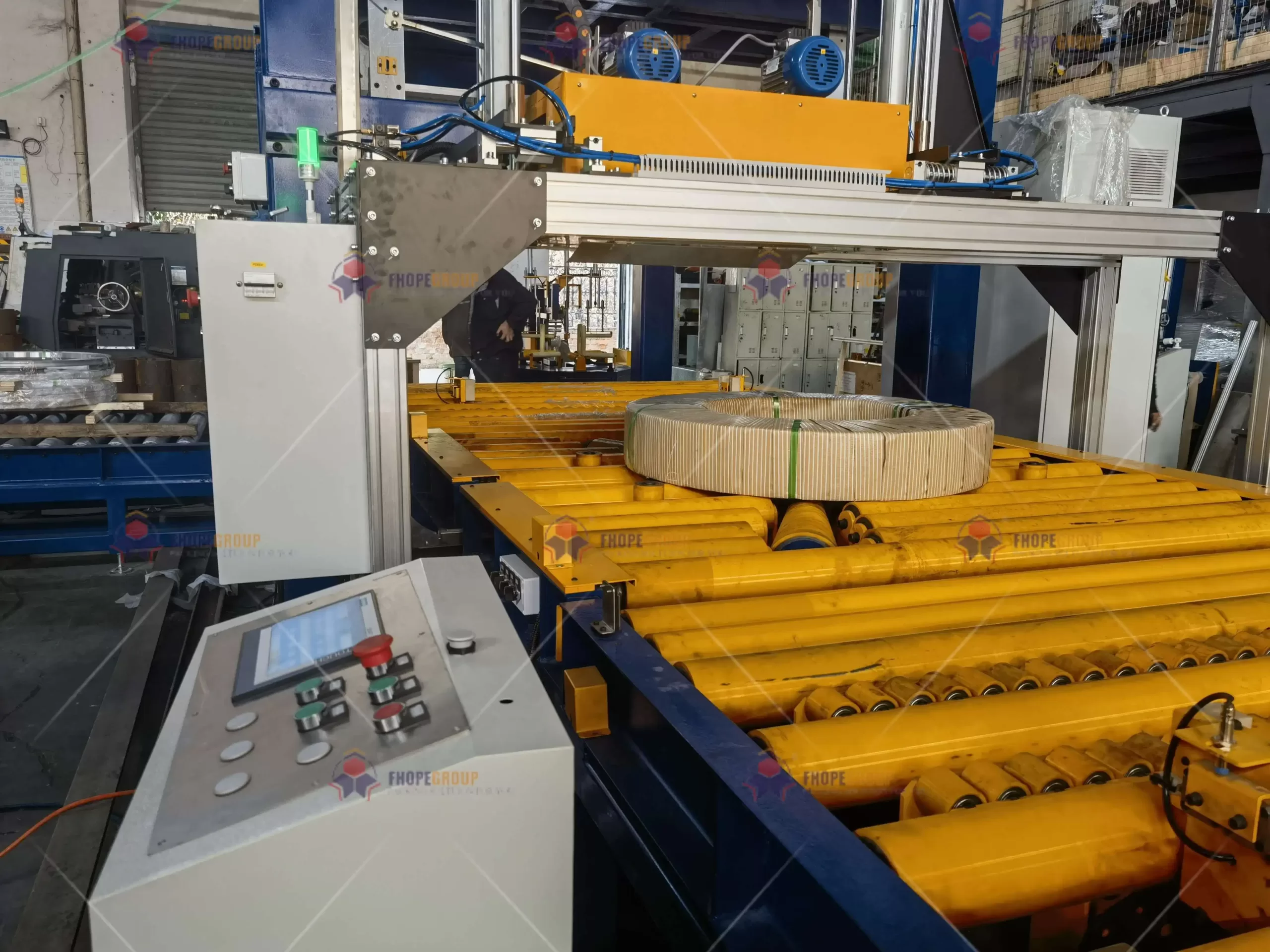
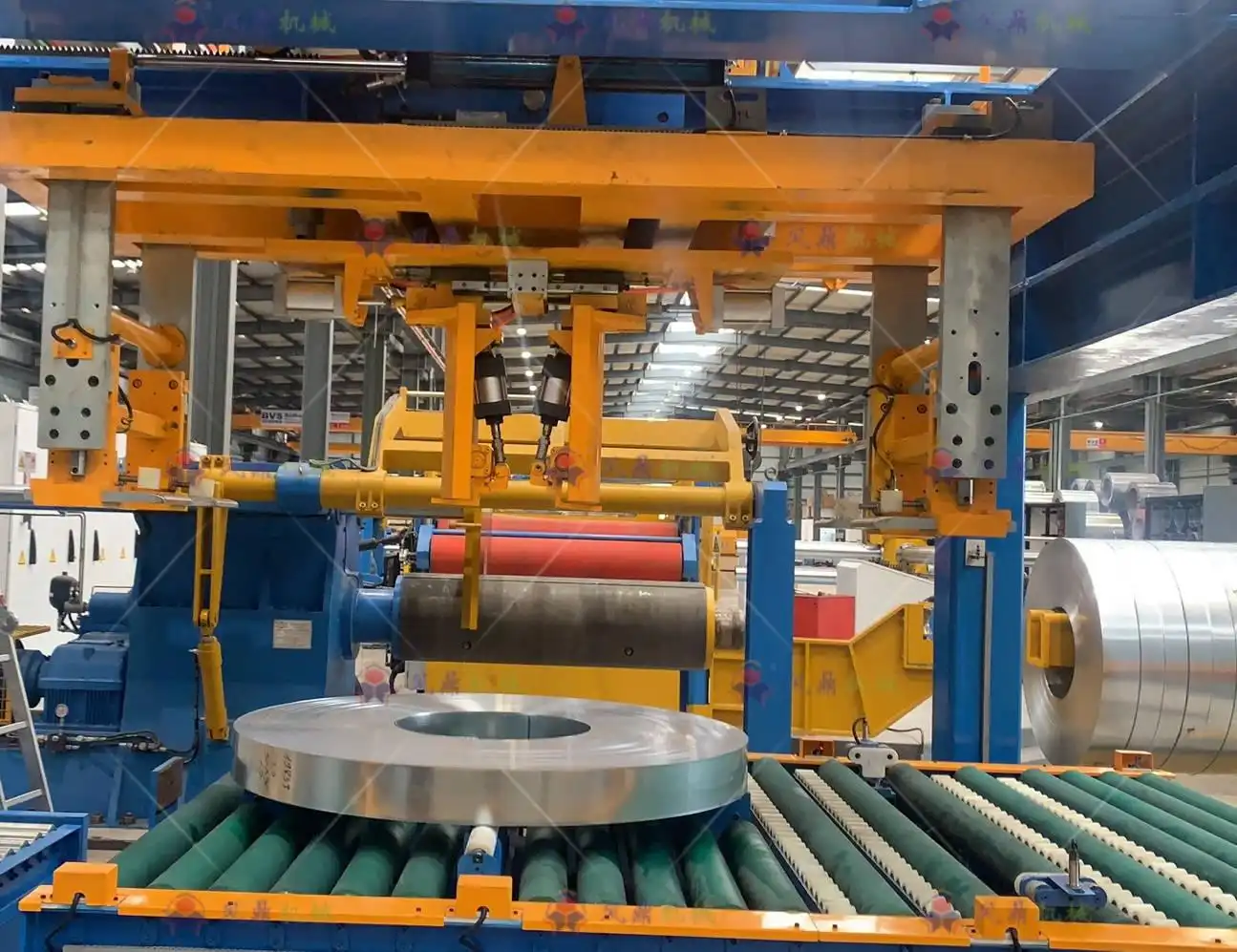
Watch the line in operation:

Visual Details
Click to enlarge
Click to enlarge
Click to enlarge

Click to enlarge
Watch How It Works
Discover how our automated packaging solutions optimize your production line efficiency. This video demonstrates the seamless operation designed for maximum protection.
Trusted by Steel Mills & Industry Leaders
Global manufacturers rely on FHOPE heavy duty packaging equipment


Ready to optimize your packaging line?
Get a custom quote with ROI analysis. Our engineers respond within 24 hours.
- Free layout design
- Global installation support
- 2-year warranty included
Your information is secure and will never be shared.
Related Machines
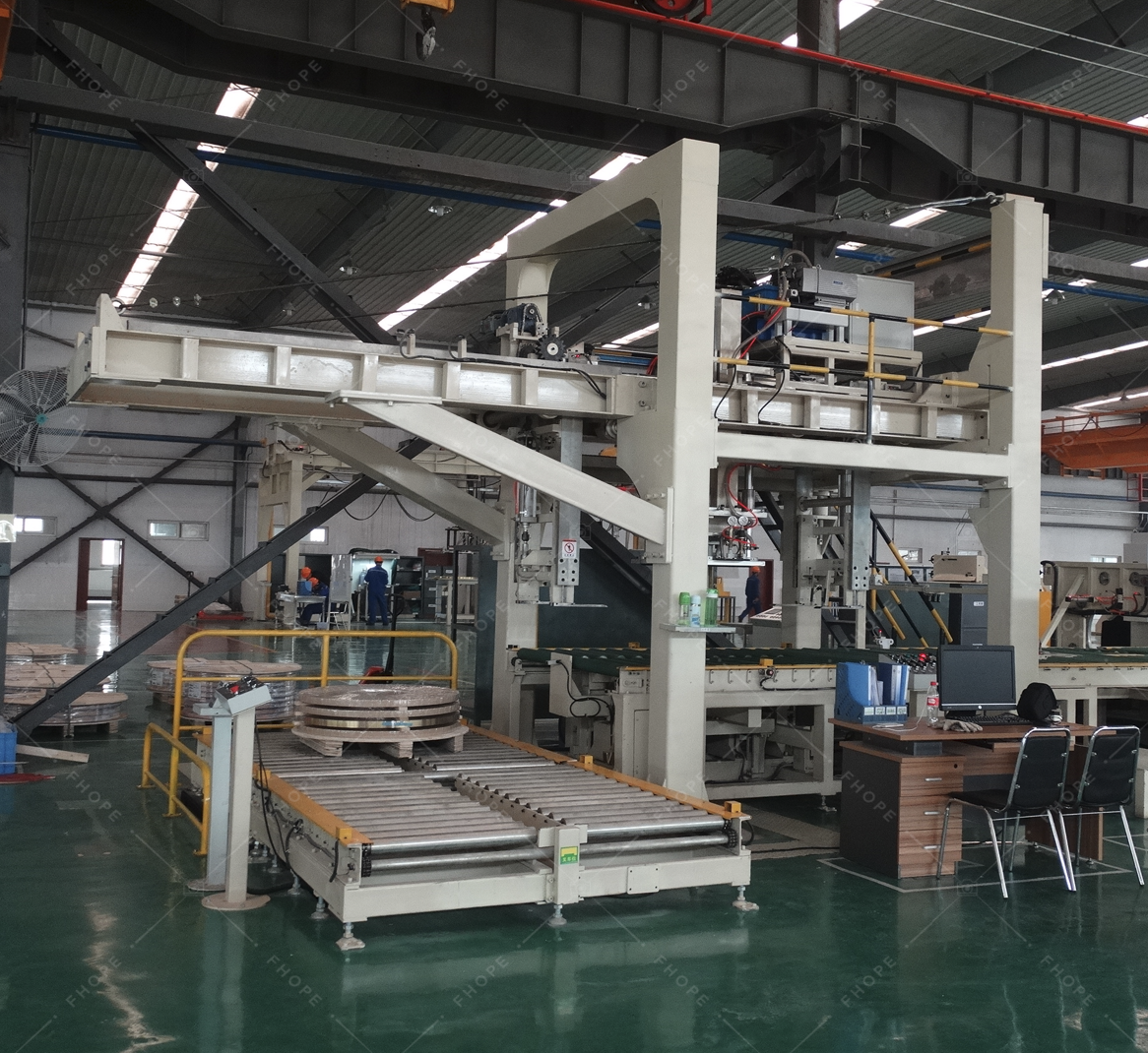
Steel Coil Packaging line
View Details →
Vertical coil packaging line
View Details →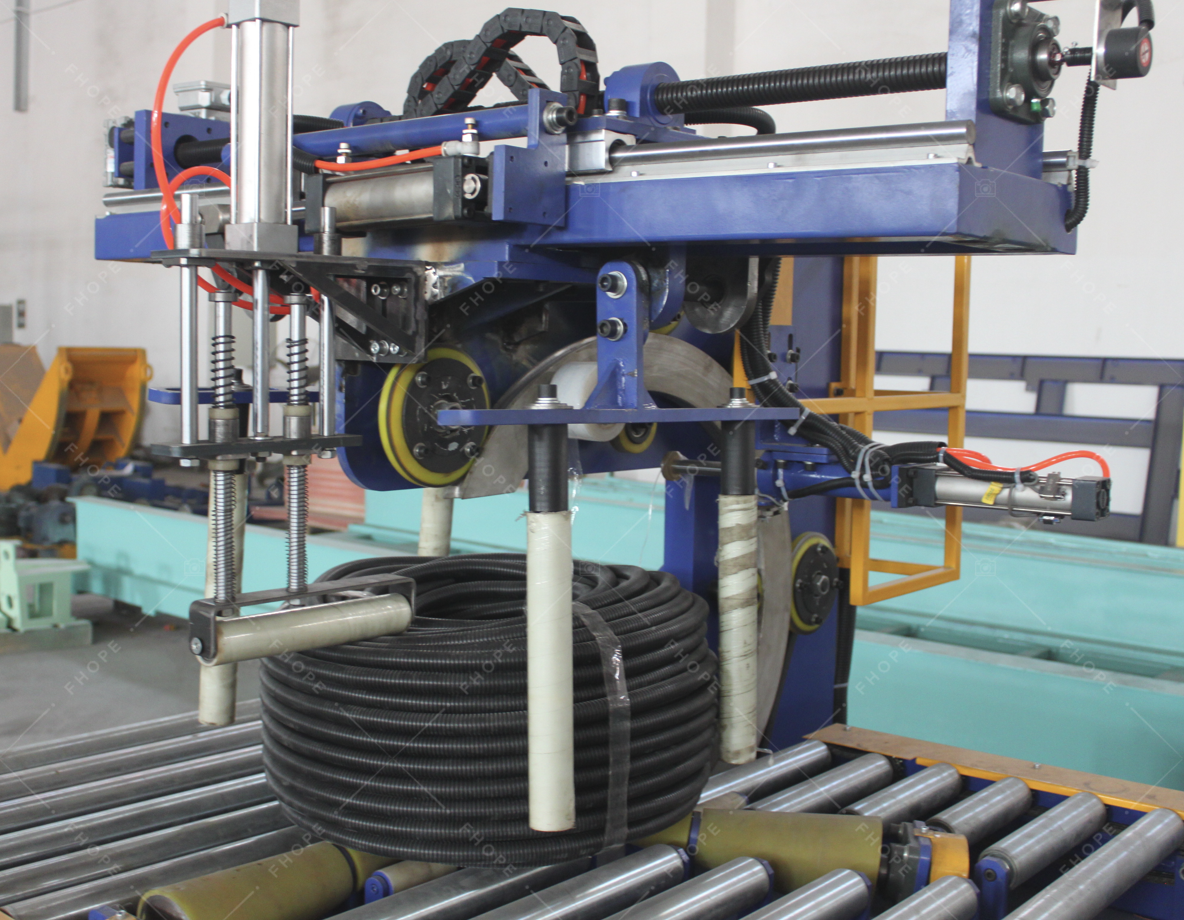
Hose Coil Packaging line
View Details →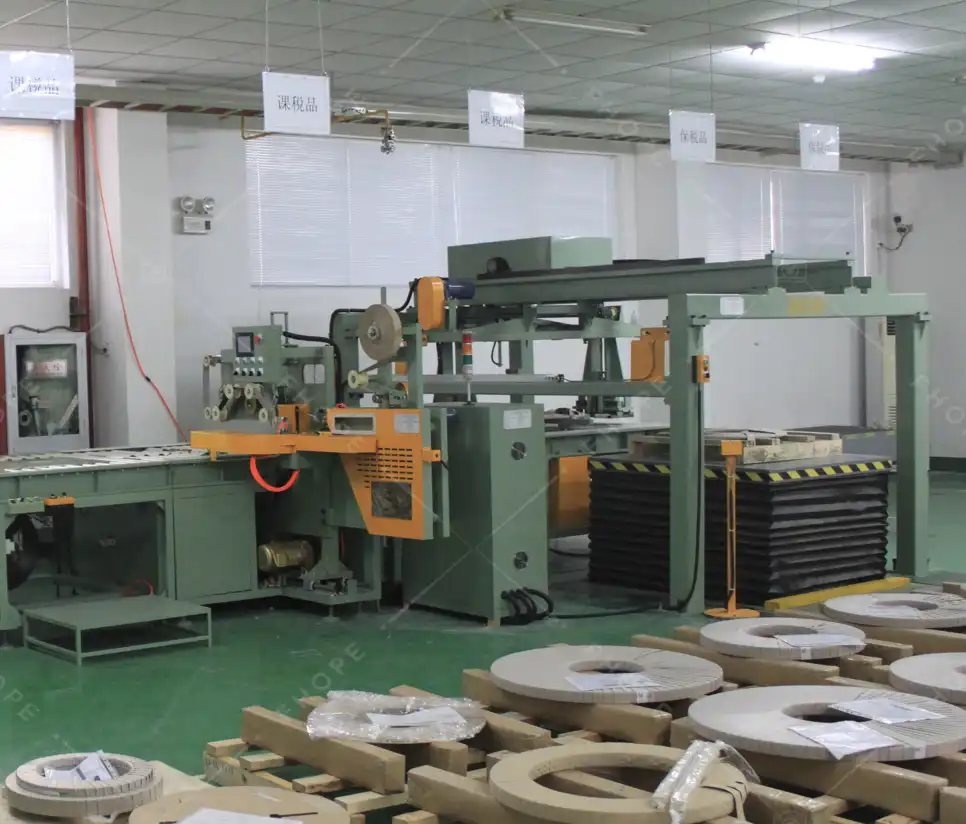
Copper Coil Packaging line
View Details →
Wire Coil Packaging line
View Details →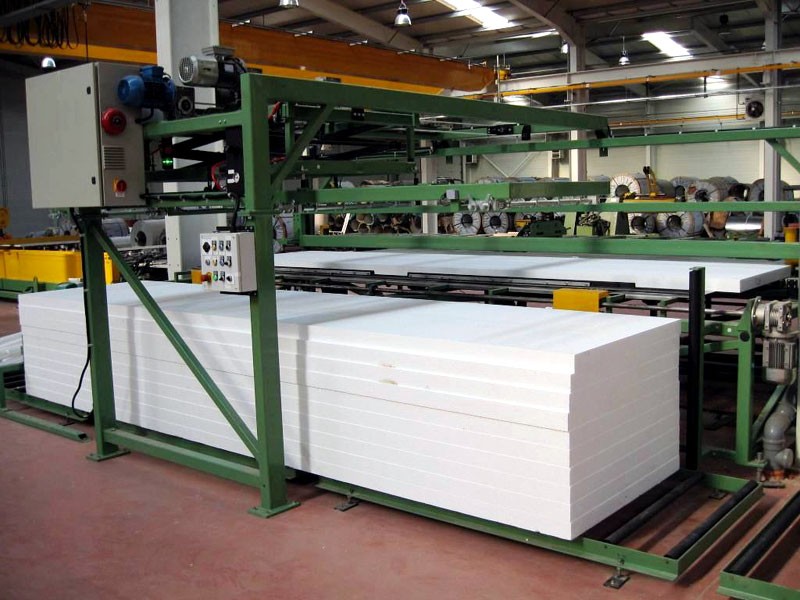
Panel Packaging line
View Details →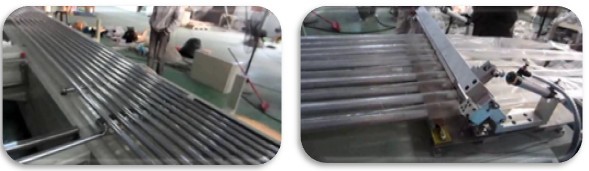
Pipe Bagging Machine
View Details →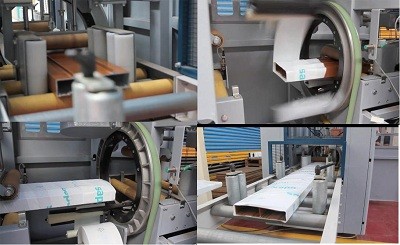
Aluminum profile packing line
View Details →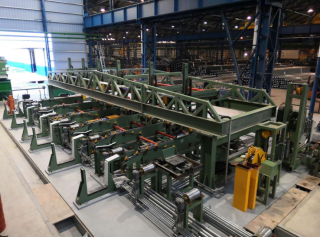
FHOPE Automatic pipe tube bundling&strapping line
View Details →
Automatic pipe tube bundling & strapping line
View Details →
Automatic steel tube strapping machine
View Details →
FHOPE Automatic steel tube packing machine
View Details →
Automatic plastic Pipe strapping packing line
View Details →
Automatic PPR/PVC Pipe bagging line
View Details →
Platsic pipe bag packing machine
View Details →
Tyre Packing Machine FPT-200
View Details →
Tyre Packing Machine FPT-300
View Details →
Tyre Packing Machine FPT-400
View Details →
Cable Coil Packing Machine-FPCA100
View Details →