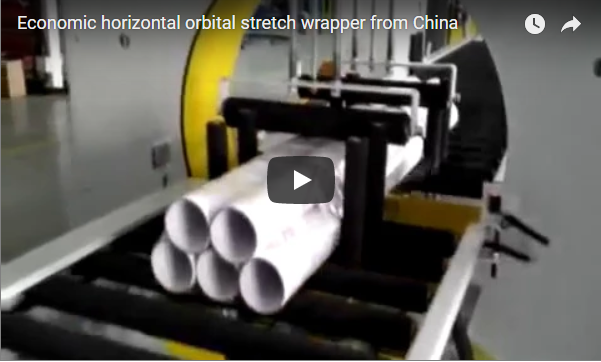
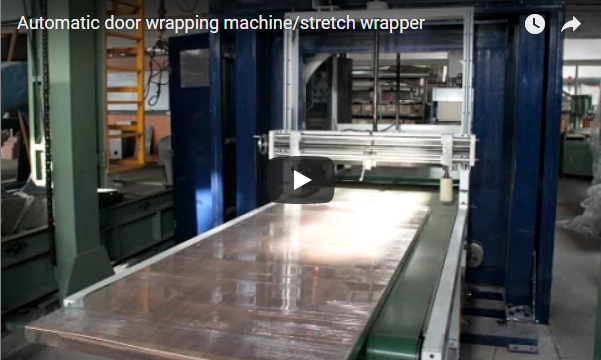
Executive summary: This page is for anyone wrapping long products such as board, panels and formed parts and deciding how much handling the wrapping step should add. It explains what an automatic horizontal orbital wrapping machine does, how a wrapping unit moves along the product and applies film for full coverage in one pass, and what to verify with a supplier before you commit. The video below shows one long product being wrapped, and the photos on this page are product-library reference images, not stills from the clip.
Table of Contents
- What this page helps you decide
- What full coverage one-pass wrapping does
- How a product is wrapped in one pass
- What to verify before you buy
- What the video shows
- Buyer’s verification checklist
- FAQ
- Related reading
- Next step
What this page helps you decide
Long, rectangular products such as panels, boards and furniture parts are awkward to wrap by hand because you must move around all four sides. A horizontal orbital wrapping machine drives a wrapping unit along the product so one pass covers the full circumference. The video below shows one long product being wrapped.
This page turns that machine into questions you can ask a supplier: what product sizes it accepts, how the wrap is set, and what controls come with it. The checklist at the bottom gives you a single request you can send as it stands.
What full coverage one-pass wrapping does
Full coverage one-pass wrapping means the machine applies the required film over the whole length of the product while the product stays still on a conveyor. A wrapping unit moves along the product and lays transparent film over the surface, covering the sides and the top in one continuous pass. The film is drawn from a roll carried by the machine and pressed onto the product as the unit travels.
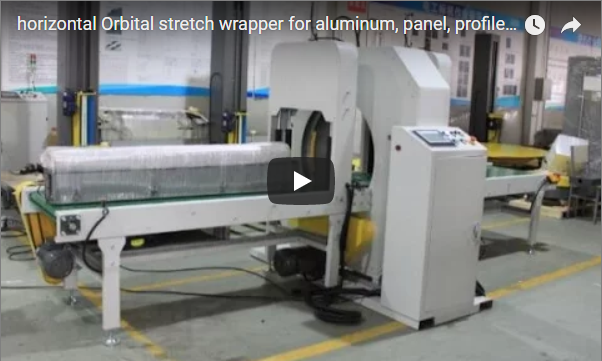
In the video the machine has a white painted frame over a roller conveyor with yellow rollers and orange supports. A wrap head moves along the product applying the film, a protective mesh door guards the wrapping area, and a control cabinet stands at the side.

How a product is wrapped in one pass
The moving wrap unit and the conveyor do the work together.
- Feed. A long product is placed on the roller conveyor and moves into the wrapping unit.
- Wrap. The unit moves along the product and lays transparent film over the surface in one continuous pass.
- Cover. The film is pulled tight against the product, covering the sides and top for full coverage.
- Advance. The wrapped product moves on, and the next product is fed.
The conveyor keeps the product stable while it passes through the wrapping station, so the product does not rotate or get turned.

What to verify before you buy
The video shows the wrapping action, not the specification. Nothing on screen states product size range, film data or throughput, so those figures come from the supplier in writing. Start with six facts:
- Product envelope — minimum and maximum length, width, height and weight.
- Throughput — products per hour and cycle time.
- Film setup — film type, width, thickness, number of layers and overlap.
- Wrap pattern — how the overlap is set for the required coverage.
- Controls — the panel functions and settings.
- Safety package — the guard doors, fencing and certifications.
Each item changes the purchase decision. The checklist below restates them as a single request you can send as it stands.
What the video shows
What the video shows is one long, rectangular product being wrapped in clear film. A product with a light brown or beige surface sits on a roller conveyor with yellow rollers and orange supports, already partly covered in film. The wrapping unit above the product moves along its length and lays transparent film over the surface, with the film drawn from a roll carried by the machine and pressed against the product.
The product stays fixed as the wrap unit does the moving. Near the end the conveyor advances and the fully covered product moves out, while a protective mesh door guards the wrapping area and a metal ladder leans against the wall background.
What the video does not show is just as important. It does not show product length, width, height or weight range, products per hour, film type, width or layer counts, model, power or voltage. It does not show the product being rotated or turned, and it does not show the film being cut and sealed at the end.
Direct observation notes from the sampled frames follow one rule: only what is visible is stated, and nothing is guessed from audio, because the clip has background music and no narration. The machine has a white painted frame over a roller conveyor with yellow rollers and orange supports. A wrapping unit moves along the product, and a protective mesh door stands in front of the wrapping area.
A control cabinet at the side has a dark display, but its content is not readable. A brand logo text printed on the machine is a third-party mark and is not used here. No model number, rating or specification is legible. The product is a long, light-coloured rectangular form, held steady while clear film is applied over it. The photos on this page are product-library reference images from the manufacturer, not stills from the clip.
Buyer’s verification checklist
| Ask the supplier for | Why it decides the purchase |
|---|---|
| Min/max product length, width, height, weight | Whether the unit holds your products |
| Products per hour and cycle time | Whether it keeps pace with your line |
| Film type, width, thickness, layers, overlap | The film is what protects the product |
| Wrap pattern and coverage | One pass covers the full length |
| Control panel functions | A dark display is visible |
| Safety: guard doors, fencing, certs | A mesh door is visible |
Send to the supplier: Please confirm for the automatic horizontal orbital wrapping machine shown in the demonstration video: (1) the minimum and maximum product length, width, height and weight; (2) products per hour and cycle time; (3) film type, width, thickness, number of layers and overlap; (4) the wrap pattern and how full coverage is set; (5) what the control panel functions and settings are; (6) fitted safety devices including the guard doors, fencing and certifications.
FAQ
Does the product rotate during wrapping? No. The product stays fixed on the conveyor while the wrapping unit moves along its length.
What does “full coverage in one pass” mean? The machine applies the film over the whole length in a single continuous pass, covering the sides and top.
What safety items are visible? A protective mesh door in front of the wrapping area. Confirm the full package with the supplier.
Related reading
- Automatic Horizontal Orbital Wrapping Machine: Full Coverage, One Pass
- Orbital Stretch Wrapper
- Horizontal Orbital Stretch Wrapper and Horizontal Wrapping Machine
- Horizontal Orbital Wrapping Machine for Steel Tubes
- Orbital Wrapper for Bundle Stretch Wrapping
- Automatic Horizontal Orbital Wrapping Machine
Next step
Send the supplier your product sizes, target output and film requirements, and ask for the six verification figures from the checklist above.
Then confirm the wrap pattern and overlap, since the video shows one pass covering the full length but no film data.
Then ask about the controls and safety package, because the video shows the unit, mesh door and cabinet but not the full setup. Use the contact page to start that exchange.