Executive summary
Unstable, oversized and exceptionally heavy pallet loads cannot be spun on a turntable, yet they still need an even wrap. The rotary arm pallet wrapping machine keeps the load stationary while the film arm circles it, with integrated conveyors and automatic film cutting and clamping. We build rotary arm pallet wrapping machines. Pallet range and load plan are confirmed per project.
Table of Contents
- Why some loads cannot turn
- What the machine does
- Keeping the load stationary
- Conveyor integration
- Automatic film cutting and clamping
- For demanding applications
- Typical configuration
- What the video shows
- Selection checklist
- Operation and safety
- Engineering FAQ
- Next step
- Related reading
- Sources and standards
Why some loads cannot turn
Turntable wrapping spins the load, and unstable, oversized or exceptionally heavy loads either cannot take the spin or will not fit on the table. When the load cannot safely rotate, the wrapping has to rotate instead. That is the case the rotary arm design answers. The load range and its limits are confirmed per project.
What the machine does
The rotary arm pallet wrapping machine wraps loads by moving the film arm around the stationary load, applying the wrap without spinning the pallet. Integrated conveyors carry the load through, and automatic film cutting and clamping complete each cycle without a hand. Because the load stays put, even heavy and unstable pallets wrap safely. The covered cycle is confirmed per project.
Keeping the load stationary
The load sits still while the arm on a ring travels around it, laying film passes around the pallet’s circumference. Keeping the load stationary is what lets oversized and heavy loads wrap without momentum or swing. The arm carries the motion, so the load never feels the turn. The arm and its travel follow the load footprint, confirmed per project.
Conveyor integration
The machine integrates with conveyors, moving the load into the wrap station and out again within the flow. Conveyor integration is what keeps the machine in the line instead of a side stop for the forklift. Loads flow in, wrap and flow out, with the machine handling the position. The conveyor interface is confirmed per project.
Automatic film cutting and clamping
At the end of each cycle, the machine cuts the film and clamps the end automatically, leaving a finished wrap without open film. Automatic cutting and clamping is what lets the cycle restart clean for the next load. Film handling on the machine removes the manual start and finish of each wrap. The cut and clamp settings follow the film, confirmed per project.
For demanding applications
The machine is designed for demanding applications: unstable loads, oversized footprints and exceptionally heavy pallets that push a turntable past its limits. These applications are where the stationary-load design earns its place. The machine’s scope is confirmed per project against the heaviest and most unstable load it will wrap.
Typical configuration
Figures below list functional design boundaries rather than numeric values, and are confirmed per project.
| Parameter | Typical range, confirmed per project |
|---|---|
| Load | heavy, unstable, oversized |
| Arm | rotary travel |
| Convey | integrated |
| Film | cut, clamp |
| Cycle | automatic |
| Electrical supply | 380 V three phase 50 Hz, or 220 V single phase for light machines, selected per project |
What the video shows
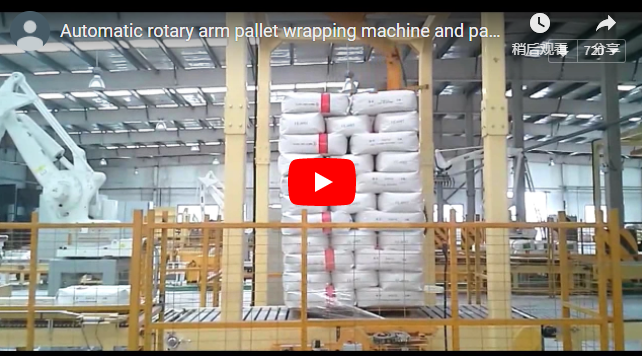
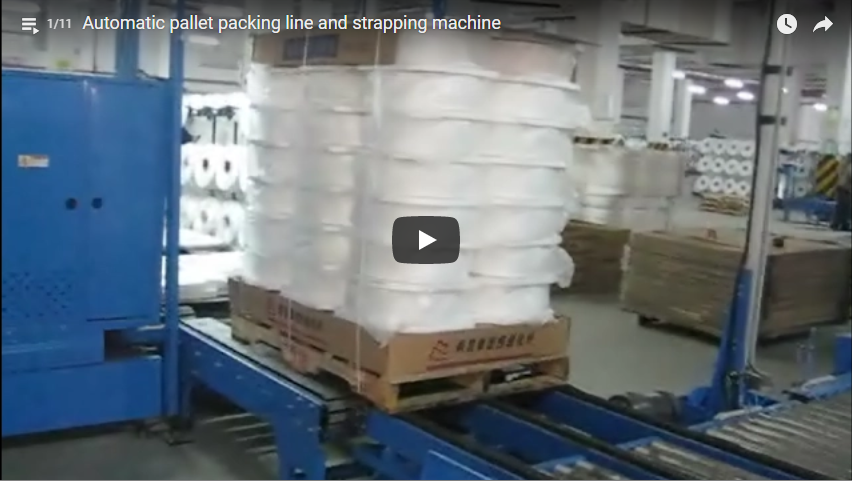
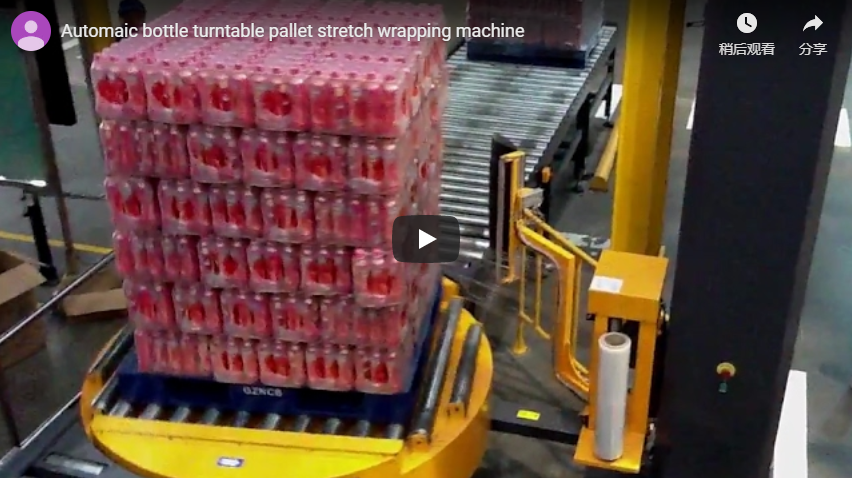
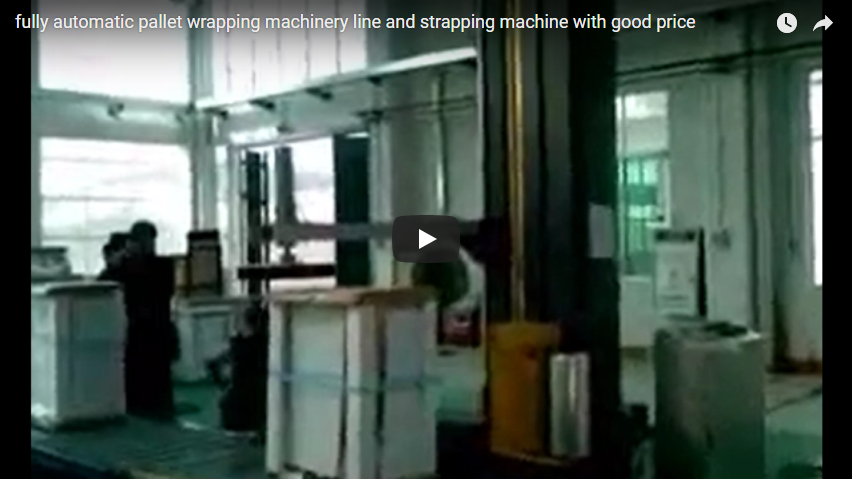
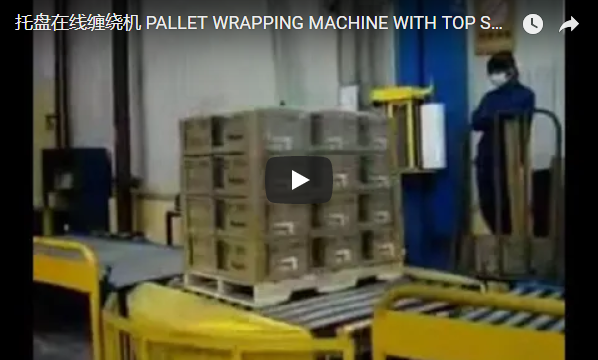
Our footage shows a rotary arm pallet wrapping machine wrapping loads with conveyor flow. It is a general demonstration, so your pallet range and load plan are confirmed with us per project.
Selection checklist
| Question | Confirm per project |
|---|---|
| Load | sizes, weights |
| Arm | travel |
| Convey | line fit |
| Film | cut, clamp |
| Cycle | automatic |
| Electrical supply | voltage, phase and frequency on site |
Operation and safety
Run the recipe from the panel and the machine wraps and finishes each load automatically as it passes. Keep clear of the film arm, film path, conveyor and outfeed while the machine runs, with guarding and emergency stops at the operator position. Routine checks cover the arm, film carriage, cutter, clamp, sensors and control, per the machine manual. Confirm the wrap settings against the load before each run so loads finish clean.
Engineering FAQ
Q: Why a rotary arm wrapper? A: Unstable, oversized or heavy loads cannot be spun on a turntable.
Q: How does it wrap? A: The film arm circles the stationary load, applying passes around it.
Q: What does conveyor integration do? A: It keeps the machine in the line, with loads flowing in and out.
Q: How does the cycle finish? A: Automatic film cutting and clamping end each wrap with no open film.
Q: What loads is it for? A: Demanding heavy, unstable or oversized loads, confirmed per project.
Next step
- Email us at info@fhopepack.com with your load range and volumes.
- We send a wrapping proposal and a layout drawing within 48 hours.
- We arrange a site survey to confirm load range and conveyor line.
Related reading
- Robot pallet wrapper
- Pallet Wrapping Machine: Operation and Applications
- Online pallet wrapper with top press
- FHOPE packing machinery product lines
Sources and standards
- ISO 12100:2010 Safety of machinery, general principles for design and risk assessment
- EN 415-10:2014 Safety of packaging machines, general requirements
- EN ISO 13849-1:2023 Safety of machinery, safety-related parts of control systems
FHOPE rotary arm pallet wrapping machine demonstration video. Reviewed as a general demonstration; pallet range confirmed per project.
Last reviewed: 2026-10-10