Executive summary
A pallet load of boxes must reach the next process holding together, and doing that by hand is slow and uneven. This online turntable pallet wrapping machine takes a fully loaded pallet and wraps it with stretch film: the load turns on a turntable while an arm rises and lowers to apply the film. The wrapped pallet then moves out to an outfeed station for transfer. Load size, film type and line layout are confirmed per project.
Table of Contents
- Why pallet loads need wrapping
- What the machine does
- The wrap cycle
- In-line load and unload
- What the footage shows
- Typical configuration
- Selection checklist
- Operation and safety
- Engineering FAQ
- Next step
- Related reading
- Sources and standards
Why pallet loads need wrapping
A pallet load built from individual boxes has nothing holding it together until it is strapped or wrapped. Loose loads shift in transport, spill at the edges, and let dust settle between the boxes. Hand wrapping takes time and applies film unevenly, so the result varies load to load.
An automatic machine that turns the load and applies film in a controlled spiral gives every pallet the same tight, even coverage. The film setup and load size are confirmed per project.
What the machine does
The machine is an online turntable pallet wrapper. A pallet load sits on a circular turntable, and an arm feeds stretch film from above. The arm moves up and down as the load turns, so the whole height of the stack is covered.
The machine is built into the material flow: loaded pallets come in on a feed conveyor, get wrapped, and move out to an outfeed station. The wrapped pallet is then taken off for the next process. Line layout and load range are confirmed per project.
The wrap cycle
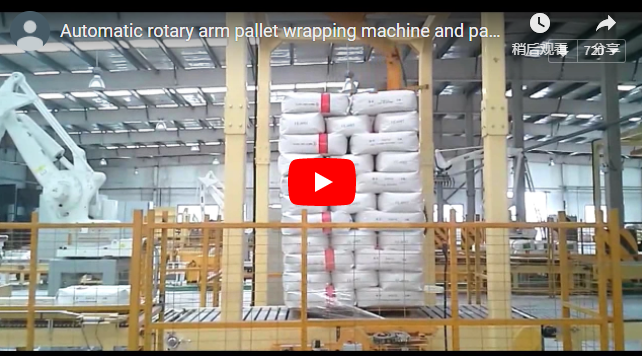
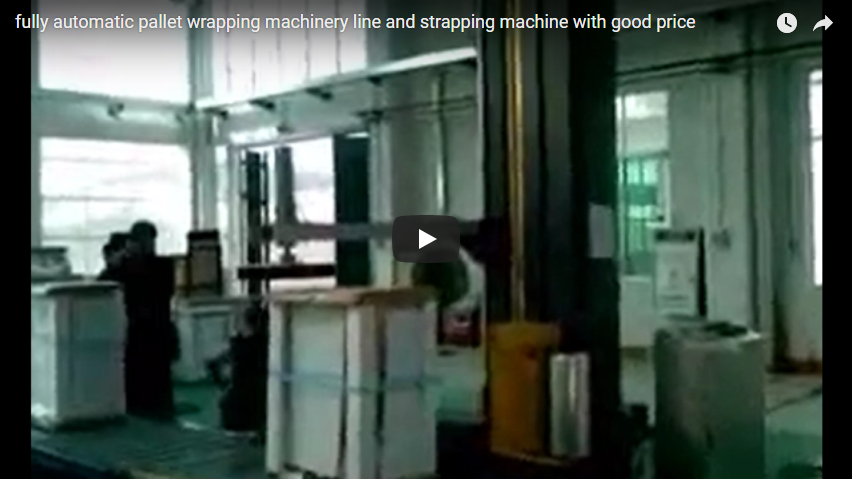
The footage follows one complete cycle from pallet arrival to wrapped load. A pallet stack is built next to the wrapper, moves into the turntable area, and the turntable starts to turn. The arm lowers from above, film applies around the stack in layers, and when the wrap is complete the arm lifts, the turntable stops, and the wrapped pallet moves out.
Because the turntable turns while the arm rises and lowers, every height band of the load receives an even number of film layers. The cycle steps are confirmed per project.
In-line load and unload
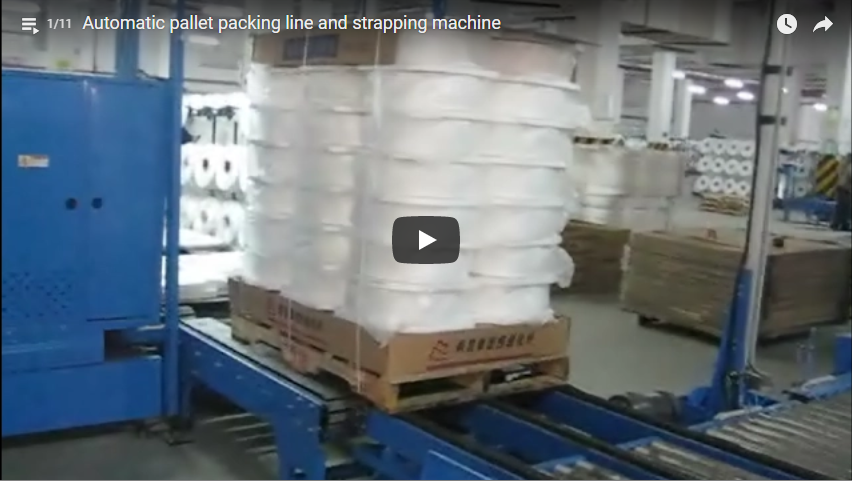
The clip shows the load arriving and leaving as part of a working line. The pallet is stacked next to the wrapper, enters the turntable area, is wrapped, and is then transferred out to a worker at the outfeed. That in-line flow is what distinguishes this machine from a standalone wrapper.
The wrapped pallet moves out under power, so the next pallet can be loaded without waiting. Conveyor and transfer layout are confirmed per project.
What the footage shows
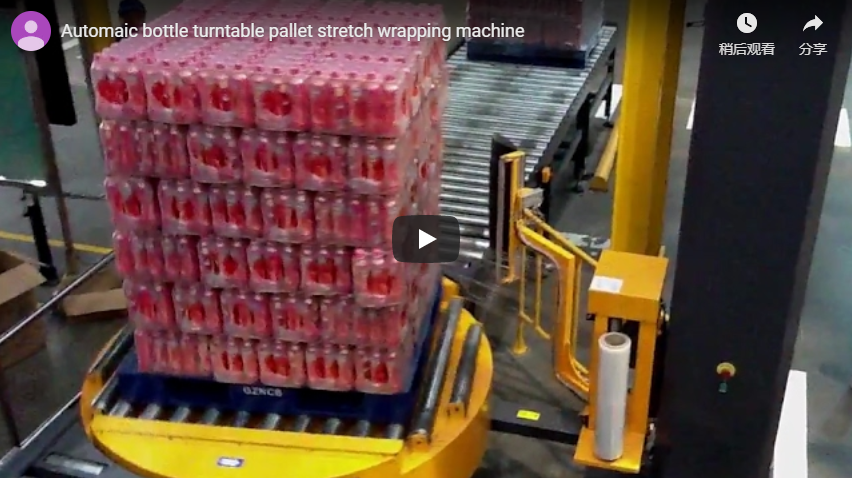
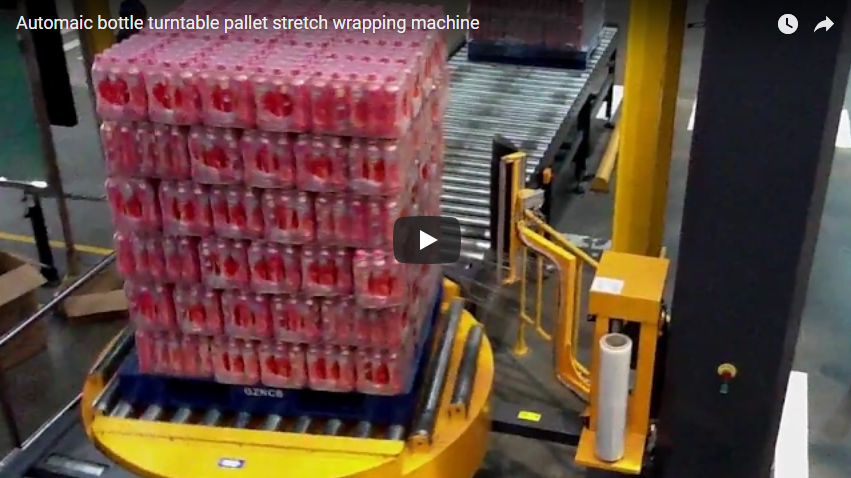
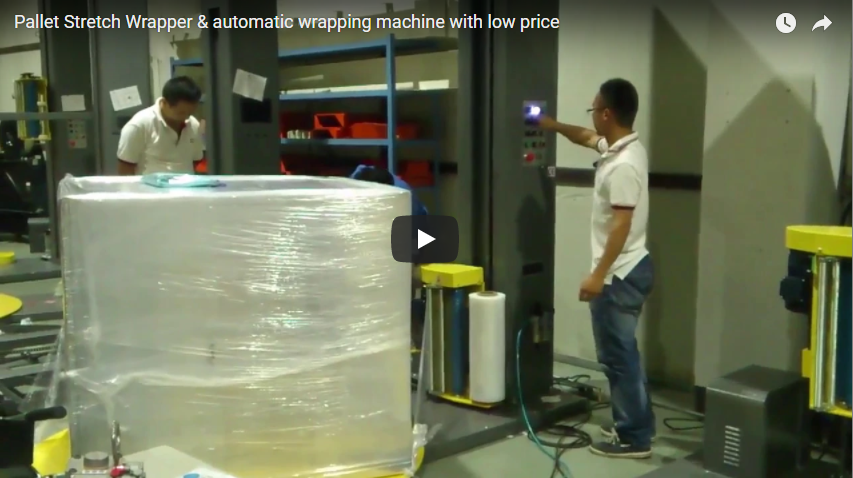
Our footage shows an online turntable pallet wrapping machine wrapping a palletized stack of boxes, from load to outfeed. It is a general demonstration, so your load size, film type and line layout are confirmed with us per project.
Typical configuration
Figures below list functional design boundaries rather than numeric values, and are confirmed per project.
| Parameter | Typical range, confirmed per project |
|---|---|
| Load | palletized boxes, cartons |
| Turntable | rotating platform |
| Film | stretch film, arm-applied |
| Wrapping arm | vertical up/down travel |
| Wrapping | full height, layer by layer |
| Material flow | feed in, outfeed transfer |
| Control | PLC |
Selection checklist
| Question | Confirm per project |
|---|---|
| Load range | pallet size, stack height, weight |
| Turntable | platform diameter, capacity |
| Film | width, tension, wrap cycles |
| Arm | height travel for the stack |
| Line layout | feed and outfeed positions |
| Electrical supply | 380 V three phase 50 Hz, or 220 V single phase for light machines, selected per project |
Operation and safety
Start the cycle from the panel and the turntable rotates the load while the arm applies the film. Keep clear of the turntable, the arm and the load path while the machine runs, with guarding and emergency stops at the operator position. The machine is surrounded by a yellow safety fence in the demonstration.
Routine checks cover the turntable drive, the arm, film feed and control, per the machine manual. Confirm the wrap settings against the load before each run.
Engineering FAQ
Q: What does this machine do? A: It wraps a palletized load with stretch film as the turntable rotates and an arm applies the film.
Q: Why does the arm move up and down? A: So the film covers the full height of the stack, not just the middle.
Q: What does “online” mean here? A: The wrapper sits in the material flow with feed in and outfeed transfer under power.
Q: What does it suit? A: Pallet loads of boxes, cartons and similar stacked goods.
Q: What does the footage prove? A: A full load, wrap and outfeed cycle on an online turntable wrapper in one continuous demonstration.
Next step
- Email us at info@fhopepack.com with your pallet size and stack height.
- We send a turntable wrapper proposal and a layout drawing within 48 hours.
- We arrange a site survey to confirm line layout and film requirements.
Related reading
- Automatic turntable pallet wrapping machine
- Online pallet wrapping machine
- Semi-automatic pallet wrapping machine
- FHOPE packing machinery product lines
Sources and standards
- ISO 12100:2010 Safety of machinery, general principles for design and risk assessment
- EN 415-10:2014 Safety of packaging machines, general requirements
- EN ISO 13849-1:2023 Safety of machinery, safety-related parts of control systems
FHOPE online turntable pallet wrapping machine demonstration video. Reviewed as a general demonstration; load size, film type and line layout confirmed per project.
Last reviewed: 2026-10-11