Overview
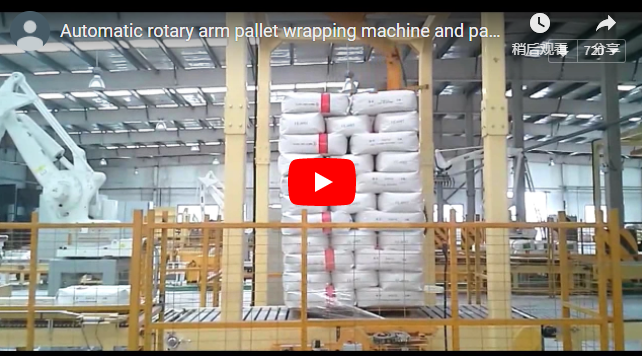
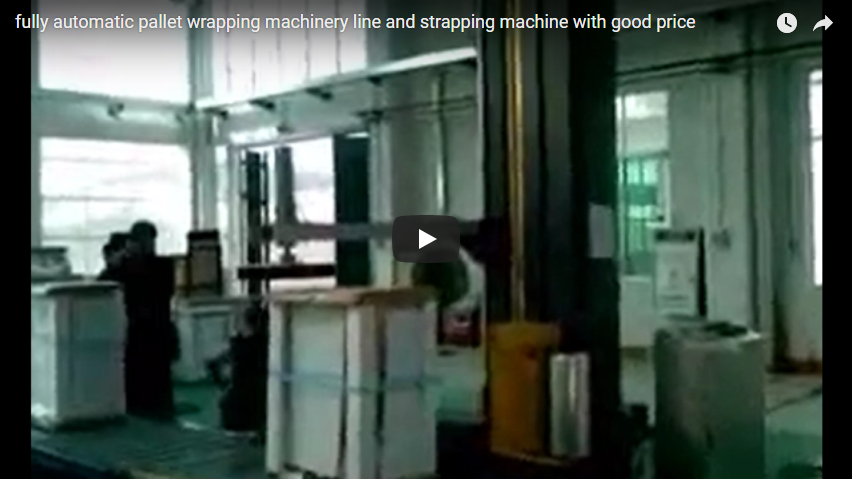
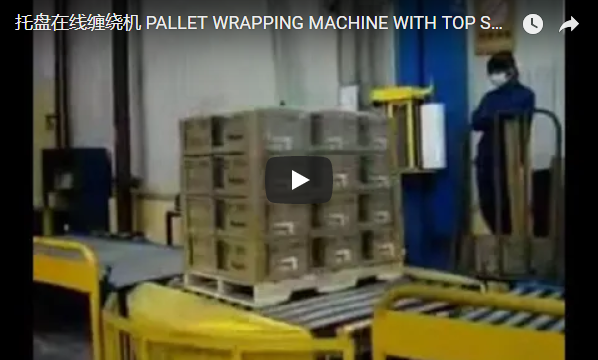
A rotary arm pallet wrapper winds stretch film around a load while the load itself stands still. Instead of rotating the pallet as a turntable does, the arm circulates around the load, so the method suits heavy, long or unstable loads that must not be turned or centred. In the footage a box-shaped load on a roller conveyor is wrapped this way inside a guarded cell and then continues down the line. This page is for warehouse, logistics and production teams that unitize palletized or conveyorized loads; it covers the arm cycle, what the demonstration shows, and what to confirm in an enquiry.
Arm Wraps, Load Stands Still
In an arm-type cycle the load never leaves its conveyor: it rides into the wrapping cell, the arm circulates film around the stationary load, and the wrapped load moves on out of the cell. No forklift or shuttle is needed at the wrapper, so the machine sits directly in a conveyorized packaging flow.
| Aspect | Rotary arm wrapper | Turntable wrapper |
|---|---|---|
| Load movement | Load stays still; arm rotates around it | Load rotates on the platform |
| Best suited to | Heavy, long or unstable loads; conveyor-fed cells | Centred, rotationally stable pallets |
| Infeed | Roller conveyor, load rides through | Forklift placement or conveyor-fed turntable |
The conveyor height and direction and the fence-and-access layout around the cell are confirmed per project, not read from the demonstration.
What the Footage Shows
The video demonstrates the arm-type cycle on a box-shaped load on a roller conveyor: the load rides into the cell, clear film is drawn off the roll and laid around the stationary load, and the covered load continues on the conveyor. It does not show a close-up of a top-sheet dispenser or film being laid over the top of the load; the sequence centres on the side wrap and the conveyorized in-and-out cycle.
Top-sheet covering is part of this arm-wrapper family’s capability as an optional configuration. On machines so equipped, the sheet is laid over the top face — the face that side wrapping leaves open — before or during the wrap, and its overhang is folded down and held by the side wrap. Whether a top sheet is required, and which width and overhang suit the product, are confirmed per project in the enquiry.
Top Sheet, Film and Sizing Inputs
Side wrapping leaves the top open; in a warehouse or under transport, a top cover keeps dust and rain water off the load. When a top sheet is configured, its size follows the load footprint plus the overhang per side, and the film per load follows the load perimeter times the number of turns. Pre-stretch changes what the roll pays out, so film laid is not film paid out. Gather these in the enquiry:
| Input to confirm | What it determines |
|---|---|
| Load footprint, height and heaviest load | Arm clearance, film plan and conveyor sizing |
| Top sheet required; width and overhang | Top-sheet dispenser and station layout |
| Turns, top and bottom wraps | Film per load and cycle time |
| Conveyor height; infeed and outfeed direction | Cell layout along the line |
| Loads per hour | Cycle sizing and line integration |
| Fence and access-door arrangement | Guarding and gate logic around the cell |
None of these values is taken from the footage; all are agreed for the actual load program before the build.
Controls and Safety
The arm moves above the conveyor while loads ride in and out on their own, so the cell is guarded and operators work outside the fence while the cycle runs; entry is only after the cycle has stopped and the cell is made safe. For CE markets, a risk assessment to ISO 12100 and the general packaging-machine requirements of EN 415-10 are typically referenced, with the guarding scope and gate logic confirmed per project. As a stated manufacturer practice for this machinery family, each unit goes through sustained functional and safety testing before delivery (about 24 hours where stated), including the control system and the emergency-stop function; confirm the specific test record for the delivered unit.
FAQ
Q: Why add a top sheet when the sides are already wrapped?
A: Side wrapping leaves the top face open. A top sheet covers it against dust and water and is held down by the side wrap.
Q: Does the load have to turn for the arm to wrap it?
A: No. The load stays stationary while the arm circulates around it, suiting heavy, long or awkward loads.
Q: How big should the top sheet be?
A: It follows the load footprint plus the overhang per side; state your footprint and overhang and the size is confirmed per project.
Q: Is the top-sheet unit part of every machine?
A: No. It is configurable within this arm-wrapper family; state in the enquiry whether it is required.
Next Step
- Email info@fhopepack.com a layout drawing with your load sizes, heights and weights.
- State whether a top cover is required and the conveyor height and direction at infeed and outfeed.
- Ask FHOPE for a proposal with the top-sheet and film plan for your load program; lead time depends on the scope you define.
- Arm Stretch Wrapper with Top Sheet Dispenser — the arm-wrapper family with a top-sheet station.
- Automatic Rotary Arm Wrapper with Top Sheet and Corner Protector Applicator — top-sheet and corner protection applied on a rotary arm wrapper.
- Pallet Wrapping Machinery for Online Packing with Top Sheet Covering — inline pallet wrapping with top-sheet covering.