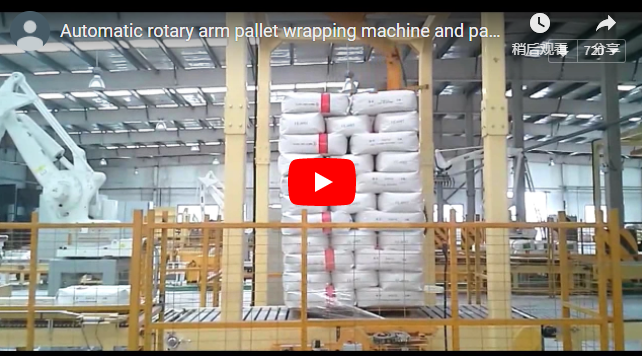
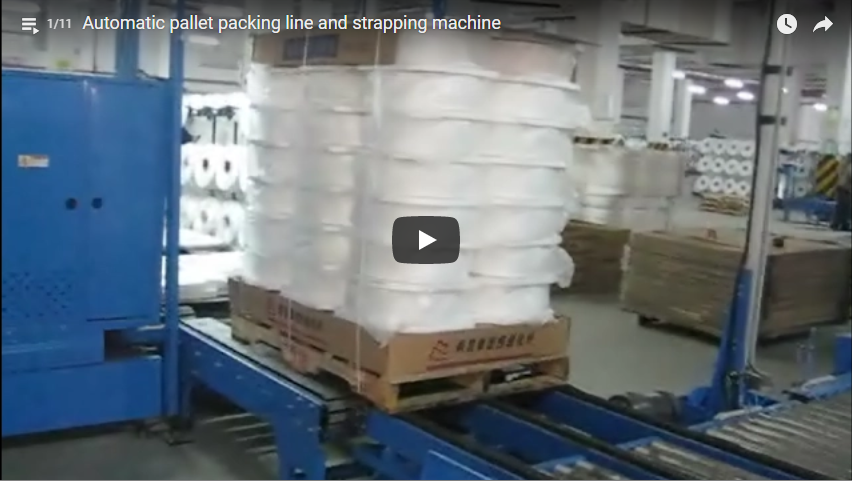
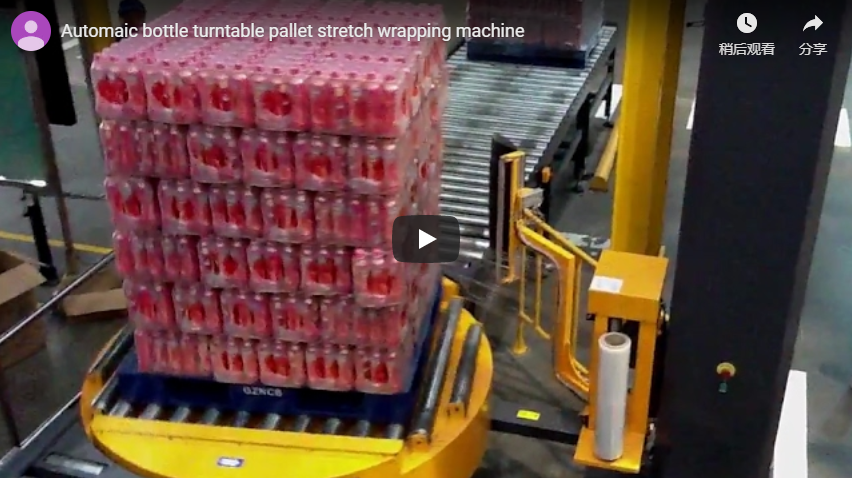
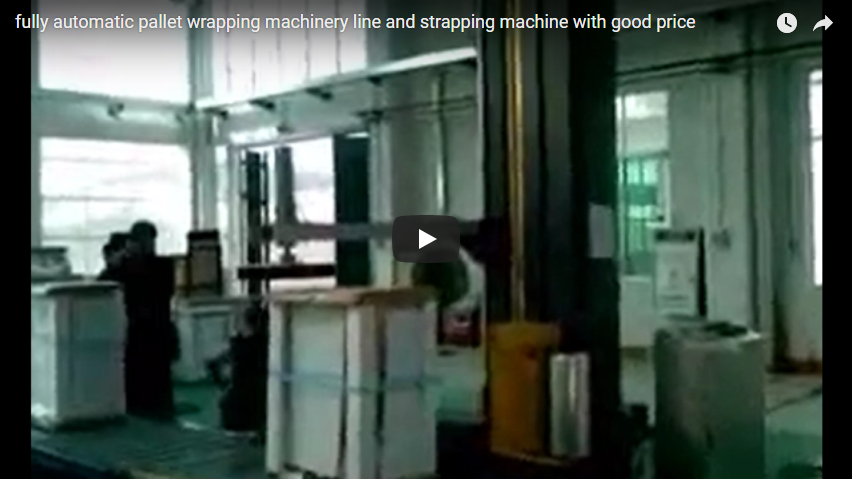
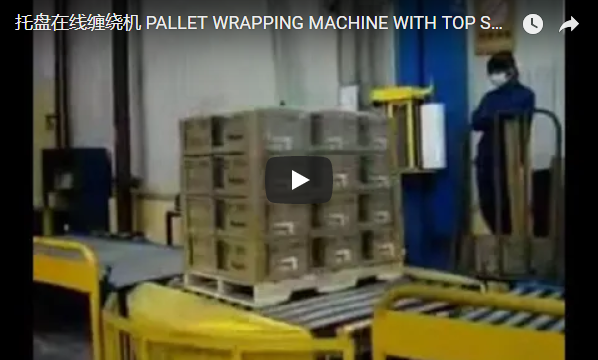
Summary: Advanced rotary arm pallet wrapping machine with auto top sheeting delivers 30–70+ pallets per hour while eliminating centrifugal force risks for unstable heavy loads up to 2,500 kg.
🛠️ 1. Why Rotary Arm Technology Solves Turntable Limitations
Rotary arm pallet wrappers keep loads stationary while the arm rotates, eliminating centrifugal force that topples unstable or tall pallet configurations.
Traditional turntable wrappers spin the entire load. This creates centrifugal force that shifts products, damages fragile items, and limits maximum weight capacity. The rotary arm design reverses this motion. The pallet stays fixed on the conveyor. The wrapping arm orbits around it.
This fundamental difference matters for three reasons:
-
Load integrity remains intact during high-speed wrapping cycles
-
Weight capacity exceeds 2,500 kg without bearing stress failures
-
Tall or top-heavy loads wrap safely without toppling risks
Industries handling steel coils, building materials, bagged products, or consumer goods see immediate benefits. The stationary load approach reduces damage claims by 40–60% compared to turntable systems.
Expert Pro Tip: For loads exceeding 2,000 kg, specify a dual-motor rotary drive with reinforced mast construction. This prevents arm deflection at high RPM and maintains consistent film tension at the load’s top edge where containment force matters most.
⚙️ 2. How Stationary Pallet Design Increases Throughput
Rotary mechanisms achieve 30–70+ pallets per hour by eliminating acceleration/deceleration cycles required for spinning heavy masses.
Turntable wrappers must accelerate the entire load mass, maintain rotation speed, then decelerate to stop. Each cycle wastes 3–5 seconds. Rotary arm systems skip this physics penalty. The arm mass remains constant regardless of load weight.
The throughput advantage scales with load weight:
| Load Weight | Turntable Cycle Time | Rotary Arm Cycle Time | Time Savings |
|---|---|---|---|
| 500 kg | 45 seconds | 38 seconds | 15% |
| 1,500 kg | 58 seconds | 40 seconds | 31% |
| 2,500 kg | 75+ seconds | 42 seconds | 44% |
Conveyor integration amplifies this advantage. Pallets flow continuously through the wrapping zone. No forklift repositioning required. No operator intervention between cycles.
ROI Insight: A production line running 16 hours/day at 50 PPH gains 8 additional wrapped pallets per hour versus turntable systems. Over 250 working days, this equals 32,000 extra pallets annually without adding labor shifts.
🛡️ 3. Top Sheet Automation Eliminates Weather Damage Claims
Automatic top sheet dispensers apply protective polyethylene barriers before stretch wrapping, blocking dust, moisture, and contamination during storage or transit.
Manual top sheeting creates inconsistency. Operators skip steps during rush periods. Sheets misalign. Gaps allow water ingress. The automated dispenser places sheets with ±5 mm precision every cycle.
The protection sequence works as follows:
-
Pallet enters wrapping zone via conveyor
-
Photo-eye sensors detect load height
-
Top sheet dispenser cuts and places PE film
-
Rotary arm begins stretch wrap cycle
-
Film layers tuck sheet edges for secure containment
Outdoor warehousing facilities see the highest ROI. Products stored without roof coverage remain dry through rain events. Long-distance shipping through varying climates maintains product quality.
Expert Pro Tip: Use 80–100 micron thickness top sheets for outdoor storage. Thinner films (40–60 micron) suffice for indoor dust protection only. Match film grade to your actual environmental exposure.
🏗️ 4. Conveyor Integration Reduces Forklift Dependency
Powered roller conveyors transform standalone wrappers into continuous-flow packaging line nodes that minimize manual material handling.
Forklift operations create bottlenecks. Each pallet requires: approach, positioning, wrapping, removal. One forklift handles 15–20 pallets per hour maximum. Conveyor-fed systems process 50–70 pallets with zero forklift intervention during wrapping.
Integration architecture supports multiple configurations:
-
Upstream connection: Direct link to palletizers or depalletizing stations
-
Downstream connection: Strapping machines, label applicators, or stretch hood systems
-
Accumulation zones: Buffer sections prevent line stoppages during maintenance
Chain conveyor options handle bottom-board gaps or irregular pallet structures. Roller conveyors work best with standard Euro/ISO pallets in good condition.
ROI Insight: Eliminating one forklift operator per shift saves $45,000–$55,000 annually (wages + benefits + equipment maintenance). Most automated lines recover conveyor integration costs within 14–18 months through labor reallocation alone.
🧠 5. Smart Sensors Cut Film Consumption by 60%
Load detection sensors and powered pre-stretch systems optimize film usage while maintaining ISO-standard containment force requirements.
Manual wrapping wastes film through inconsistent tension and overlapping patterns. Automated systems measure each pallet’s dimensions before wrapping begins. The PLC calculates optimal wrap count and tension settings.
Key sensor technologies include:
| Sensor Type | Function | Film Savings Impact |
|---|---|---|
| Photo-eye height detection | Measures load top position | 8–12% reduction |
| Load profile scanning | Detects length/width variations | 5–8% reduction |
| Film tension monitoring | Maintains consistent stretch ratio | 10–15% reduction |
| Auto clamp/cut/wipe | Eliminates manual film tail handling | 3–5% reduction |
Powered pre-stretch achieves 200%–300% elongation. One meter of film becomes 3–4 meters of applied wrap. The containment force remains high because molecular orientation increases during controlled stretching.
Expert Pro Tip: Set pre-stretch ratio to 250% for standard loads. Increase to 300% only for stable, uniform products. Fragile or irregular loads need 200% to prevent film breakage during application.
📊 6. Component Specifications That Determine Equipment Lifespan
Heavy-duty rotary arm construction with VFD motors and C45 steel components ensures 10+ years of continuous operation in harsh industrial environments.
Budget wrappers use generic components that fail under continuous production loads. Industrial-grade systems specify materials and ratings for 24/7 operation. The cost difference pays back through reduced downtime and maintenance expenses.
Critical component specifications:
| Component | Budget Grade | Industrial Grade | Lifespan Difference |
|---|---|---|---|
| Rotary drive motor | Standard AC | VFD with vector control | 3 years vs 10+ years |
| Arm structure | Painted mild steel | Powder-coated C45 steel | Corrosion resistance 5× higher |
| Film carriage bearings | Sealed ball bearings | Tapered roller bearings | Load capacity 2.5× higher |
| PLC control system | Basic relay logic | Industrial PLC with HMI | Programming flexibility unlimited |
| Safety system | Mechanical interlocks | Light curtains + safety PLC | OSHA/CE compliance guaranteed |
VFD (Variable Frequency Drive) motors provide smooth acceleration profiles. Mechanical stress on the arm structure drops 40% compared to direct-drive systems. Film tension remains consistent from bottom to top of load.
Expert Pro Tip: Request C45 steel specification for all load-bearing components. This medium carbon steel offers superior hardness (HRC 28–32) after heat treatment compared to Q235 mild steel commonly used in budget equipment.
💰 7. Total Cost of Ownership Analysis
Automated rotary arm systems deliver 12–18 month payback periods through combined film savings, labor reduction, and damage claim elimination.
Purchase price represents only 40% of total cost over 5 years. Operating expenses dominate long-term economics. Automated systems reduce all three major cost categories simultaneously.
Cost comparison over 5-year period (2 shifts/day, 250 days/year):
| Cost Category | Manual Wrapping | Semi-Auto Turntable | Full-Auto Rotary Arm |
|---|---|---|---|
| Labor (2 operators) | $520,000 | $260,000 | $65,000 |
| Film consumption | $180,000 | $135,000 | $72,000 |
| Damage claims | $95,000 | $48,000 | $12,000 |
| Equipment cost | $0 | $85,000 | $180,000 |
| 5-Year Total | $795,000 | $528,000 | $329,000 |
The math shows clear economics. Full automation costs $180,000 more upfront than semi-auto equipment. But operating savings total $199,000 over 5 years. Net benefit: $19,000 positive in year 5, plus ongoing annual savings of $95,000 thereafter.
ROI Insight: Calculate your specific payback using this formula:
Payback Months = Equipment Cost ÷ (Monthly Labor Savings + Monthly Film Savings + Monthly Damage Reduction). Most facilities see 14–16 month actual payback versus manufacturer claims of 12 months.
🎯 8. Configuration Selection Checklist
Match wrapper specifications to your actual load characteristics, throughput requirements, and facility constraints to avoid over-engineering or under-capacity problems.
Buying decisions fail when specifications don’t match operational reality. Oversized equipment wastes capital. Undersized equipment creates bottlenecks. Use this checklist before requesting quotes:
Load Profile Assessment
-
[ ] Maximum load weight: _____ kg (include 20% safety margin)
-
[ ] Maximum dimensions (L×W×H): _____ mm
-
[ ] Load stability rating: Stable / Moderate / Unstable
-
[ ] Product fragility: Rigid / Semi-fragile / Fragile
-
[ ] Pallet type: Euro / ISO / Custom / Damaged boards common
Throughput Requirements
-
[ ] Current pallets per shift: _____
-
[ ] Target pallets per shift: _____
-
[ ] Peak season multiplier: _____ ×
-
[ ] Acceptable queue time: _____ minutes
Facility Constraints
-
[ ] Available floor space (L×W): _____ m²
-
[ ] Ceiling height clearance: _____ m
-
[ ] Power supply: V / Ph / _____ Hz
-
[ ] Compressed air available: Yes / No (_____ bar)
-
[ ] Integration with existing conveyor: Yes / No
Protection Requirements
-
[ ] Indoor storage only: Yes / No
-
[ ] Outdoor exposure expected: Yes / No
-
[ ] Top sheet required: Yes / No
-
[ ] Tamper evidence needed: Yes / No
-
[ ] Dust-sensitive products: Yes / No
Expert Pro Tip: Document your three most problematic load types with photos. Share these with equipment suppliers during quotation. Generic specifications lead to mismatched equipment. Real load samples enable proper engineering.
🏭 9. Compliance Standards and Safety Certifications
CE, OSHA, and ISO 12100 compliance ensures legal operation and reduces liability exposure in regulated industrial environments.
Equipment without proper certifications creates legal and insurance risks. European facilities require CE marking with full technical documentation. North American operations need OSHA-compliant safety systems. International facilities should demand ISO 12100 risk assessment documentation.
Key compliance requirements:
| Standard | Requirement | Verification Method |
|---|---|---|
| CE (EU) | Machinery Directive 2006/42/EC | Declaration of Conformity + Technical File |
| OSHA (US) | 29 CFR 1910.212 Machine Guarding | Safety interlocks + light curtains + emergency stops |
| ISO 12100 | Risk Assessment Documentation | Hazard analysis + protective measure validation |
| ISO 13849 | Safety Control System Performance | PL (Performance Level) rating documentation |
Safety system architecture matters as much as mechanical design. Category 3 or PL d safety circuits ensure single faults don’t compromise protection. Light curtains at conveyor entry/exit points stop arm rotation within 200 milliseconds of breach detection.
Expert Pro Tip: Request the complete Declaration of Conformity before equipment shipment. Verify serial numbers on safety components match documentation. Post-market modifications void certifications and create liability exposure.
❓ FAQ: Rotary Arm Pallet Wrapping Systems
Q: What distinguishes rotary arm from turntable wrapper operation?
A: Turntable wrappers rotate the pallet load, creating centrifugal force that shifts unstable products. Rotary arm wrappers keep the pallet stationary while the film carriage orbits around it. This eliminates toppling risks for tall, light, or irregularly stacked loads.
Q: Can rotary arm systems handle loads exceeding 2,000 kg?
A: Yes. Heavy-duty rotary arm models engineer load capacity from 1,500 kg to 3,000+ kg. Turntable bearings typically max out at 1,800 kg. The stationary load design transfers weight directly to the floor through the conveyor frame, bypassing rotating bearing limitations.
Q: Does the top sheet applicator work with all film thicknesses?
A: Standard dispensers handle polyethylene sheets from 40 to 120 micron thickness. Adjustment screws accommodate varying thicknesses. Automatic cutting blades sharpen or replace after 500,000+ cycles. Specialty materials (woven PP, laminated barriers) require custom dispenser configurations.
Q: What film savings occur with powered pre-stretch systems?
A: Powered pre-stretch at 200%–300% elongation reduces film consumption by 50–60% versus non-stretch wrapping. Containment force increases because molecular orientation strengthens the film during controlled stretching. Annual film cost savings typically reach $15,000–$25,000 per shift.
Q: Can conveyor length and width be customized for existing layouts?
A: Yes. Roller conveyor sections manufacture in 1-meter increments. Width adjusts from 1,200 mm to 2,000 mm to accommodate non-standard pallets. Chain conveyor options handle bottom-board gaps or damaged pallets that roller systems cannot support. Integration with AGV systems requires specific communication protocols.
Q: What maintenance schedule ensures 10+ year equipment lifespan?
A: Daily: Clean film debris from carriage rails. Weekly: Check safety interlock function. Monthly: Lubricate chain drives and inspect belt tension. Quarterly: Calibrate load sensors and verify pre-stretch ratio. Annual: Replace wear components (cutting blades, tension rollers) before failure occurs.
Ready to eliminate unstable load wrapping problems? Contact FHOPEPACK engineering team with your load specifications and throughput requirements. We provide customized rotary arm pallet wrapping solutions with integrated top sheeting and conveyor systems designed for your specific operational constraints.