Executive summary
High-volume distribution centers and third-party logistics operators wrap mixed pallets all day, and the final wrap is where manual work varies the most. This complete guide examines how rotary-arm stretch wrappers integrate with conveyor networks to standardize film tension, stabilize difficult loads and keep the facility moving. We build rotary-arm pallet wrapping machines. Pallet range and wrap plan are confirmed per project.
Table of Contents
- Why the last wrap decides
- Who this guide serves
- The rotary-arm wrapper
- Conveyor integration
- Stabilizing difficult loads
- Standard film tension
- Typical configuration
- What the video shows
- Selection checklist
- Operation and safety
- Engineering FAQ
- Next step
- Related reading
- Sources and standards
Why the last wrap decides
The final stabilization step at the end of a distribution line decides whether everything before it counts: a pallet that is perfectly built but loosely wrapped arrives damaged. Manual wrapping is where the inconsistency enters, because tension and film coverage change with the operator and the shift. Automating that last step removes the variability and the labor it costs. The wrap requirements are confirmed per project against the loads that ship.
Who this guide serves
Mid-sized third-party logistics operators and high-volume distribution centers processing mixed-SKU pallets are the facility this guide addresses. Mixed pallets bring unstable load geometries, stacked soft packaging and irregular cartons, and the wrapper has to hold all of them. When the wrapping becomes the bottleneck, everything behind it waits, and labor costs climb with volume. The guide applies where mixed loads and consistent flow are the norm, confirmed per project.
The rotary-arm wrapper
A rotary-arm stretch wrapper carries the film on a rotating arm around a stationary pallet, wrapping the load in place. Because the arm rotates rather than the pallet, the wrapper suits loads that are heavy, tall or hard to turn, and it wraps in line with a conveyor network. The film is laid in passes from the arm, covering the load evenly without spinning it. Rotary arm settings follow the load height and geometry, confirmed per project.
Conveyor integration
The wrapper integrates with inbound and outbound conveyor networks, wrapping each pallet as it passes through the flow. Integration lets the wrapper accept pallets as they arrive and hand them on in the same rhythm, so wrapping does not become a separate handling point. In many facilities the conveyor network is already modern, and adding the automated wrap completes it. The conveyor interface is confirmed per project on the actual network.
Stabilizing difficult loads
Mixed pallets carry unstable geometries, soft stacked packaging and irregular cartons, and the wrapper has to stabilize them, not just cover them. Film is applied with the coverage and force those loads need, holding soft and irregular loads without crushing them. Stabilizing what manual wrapping lets shift is the wrapper’s real job on a mixed line. The stabilization plan follows the load mix, confirmed per project.
Standard film tension
The wrapper holds film tension at a set standard, so every pallet gets the same force instead of an operator’s pull. Standard tension is what makes wraps predictable and loads stable, and it removes the over-tight and under-tight wraps that manual work produces. Setting the tension on the machine lets the facility hold the standard across shifts. The tension standard is confirmed per project against the films and loads.
Typical configuration
Figures below list functional design boundaries rather than numeric values, and are confirmed per project.
| Parameter | Typical range, confirmed per project |
|---|---|
| Load | mixed-SKU pallets |
| Wrapper | rotary arm |
| Film | tension standard |
| Convey | network interface |
| Flow | line rhythm |
| Electrical supply | 380 V three phase 50 Hz, or 220 V single phase for light machines, selected per project |
What the video shows
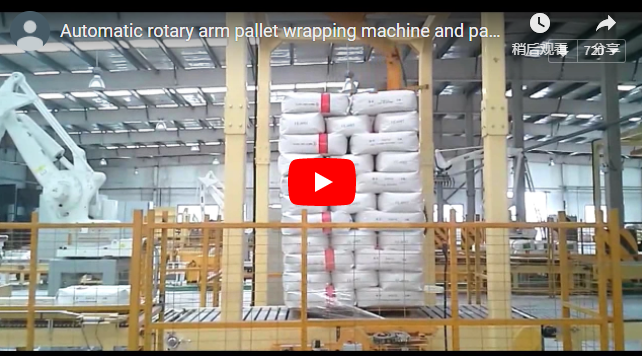
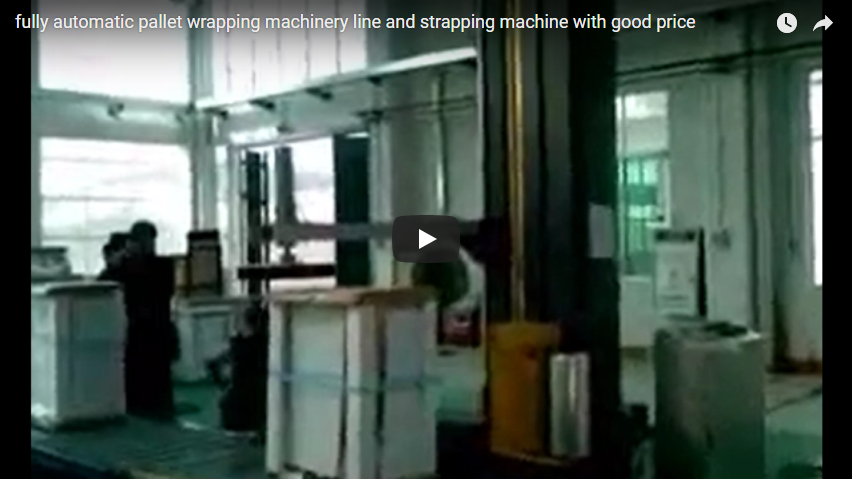
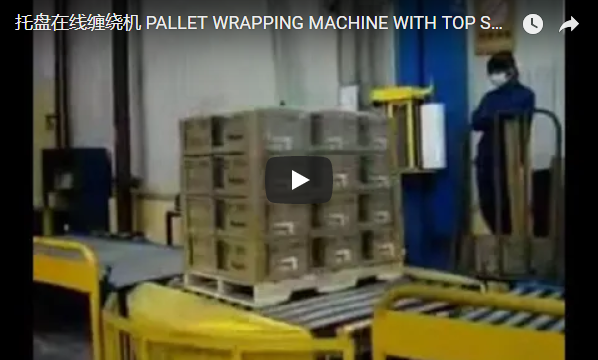
Our footage shows a rotary-arm pallet wrapping machine in operation. It is a general demonstration, so your pallet range and wrap plan are confirmed with us per project.
Selection checklist
| Question | Confirm per project |
|---|---|
| Load range | pallet mix |
| Geometry | soft, irregular |
| Film | tension plan |
| Convey | network fit |
| Flow | line rhythm |
| Electrical supply | voltage, phase and frequency on site |
Operation and safety
Run the recipe from the panel and the machine wraps each pallet automatically as it passes on the conveyor. Keep clear of the rotating arm, film path and conveyor while the machine runs, with guarding and emergency stops at the operator position. Routine checks cover the film carriage, tension system, arm, sensors and control, per the machine manual. Confirm the tension standard against the film before each run so loads ship stable.
Engineering FAQ
Q: What does this guide cover? A: Rotary-arm stretch wrapping integrated with conveyor networks for mixed pallets.
Q: Why rotary arm? A: The arm rotates around a stationary pallet, suiting heavy, tall or hard-to-turn loads.
Q: How does it handle mixed pallets? A: Film covers soft and irregular loads with the hold they need, not a one-size wrap.
Q: What is standard tension? A: Film tension is held at a set standard instead of changing with the operator.
Q: Who is it for? A: High-volume distribution centers and 3PL facilities processing mixed-SKU pallets.
Next step
- Email us at info@fhopepack.com with your pallet mix, films and flow.
- We send a wrapping proposal and a layout drawing within 48 hours.
- We arrange a site survey to confirm pallet range and conveyor network.
Related reading
- Automatic pallet packing line and strapping machine
- Automatic palletizer and turntable stretch wrapper
- Turntable stretch wrapping machine
- FHOPE packing machinery product lines
Sources and standards
- ISO 12100:2010 Safety of machinery, general principles for design and risk assessment
- EN 415-10:2014 Safety of packaging machines, general requirements
- EN ISO 13849-1:2023 Safety of machinery, safety-related parts of control systems
FHOPE rotary-arm pallet wrapping machine demonstration video. Reviewed as a general demonstration; pallet range confirmed per project.
Last reviewed: 2026-10-10