Executive summary
A pallet leaves one machine with its sides wrapped and its top sealed. A rotary arm pallet wrapper with top film dispenser orbits film around a stationary pallet while a separate dispenser lays a film sheet across the top, giving five-sided protection. This guide covers the arm cycle, the top sheet sequence and the wrap settings. Load, film and sheet are confirmed per project.
Table of Contents
- What the machine does
- Why a rotary arm
- How the top sheet goes on
- The wrap cycle
- Setting the wrap pattern
- Ending the cycle cleanly
- Typical configuration
- What the video shows
- Selection checklist
- Controls and safety
- Engineering FAQ
- Next step
- Related reading
- Sources and standards
What the machine does
A rotary arm pallet wrapper with a top film dispenser combines side wrapping and a top sheet in one station. The film carriage orbits the pallet and applies stretch film around its sides, while the dispenser, also called a top sheet dispenser, lays a separate film sheet across the top of the load. Together the two cover the pallet for weather, dust and handling protection that a side-only wrap leaves open.
Why a rotary arm
The pallet stays still while the film system moves around it. Because the load is not spun, this arm design is the practical choice for pallets that are exceptionally heavy, unstable or irregular in shape, where a turntable could shift the product during the wrap. The load is conveyed into the zone, wrapped and conveyed out, all without rotation.
How the top sheet goes on
The dispenser extends over the pallet and lays a sheet of film across the top surface. The sheet can be applied before the main wrap or part-way through the cycle. The sequence is a configuration decision confirmed per project, and either way the sheet is held in place until the wrap draws tight over it and seals it to the load. That is what makes the five-sided wrap one piece instead of a loose cover.
The wrap cycle
With the sheet in place, the arm rotates and the film carriage moves up the mast at the same time, so the film covers the load from base to top with even overlap. A motorized pre-stretch mechanism elongates the film before it touches the load, which improves film yield and keeps containment force on the load rather than using film thickness alone to hold it.
Setting the wrap pattern
Wrap behavior is set at the control interface rather than by hand. The number of wraps at top and bottom, the overlap, and the film tension are stored per product and recalled for each run. Settings change when the load changes, and the operator selects the recipe instead of adjusting the carriage.
Ending the cycle cleanly
When the set pattern is complete, the machine clamps the film tail, cuts it and seals the end against the load so the wrap does not unravel on its way out. The finished pallet then leaves the wrapping zone ready for storage or shipment, with the top sheet held by the same film that wraps the sides.
Typical configuration
Figures below list functional design boundaries rather than numeric values, and are confirmed per project.
| Parameter | Typical range, confirmed per project |
|---|---|
| Load | pallet footprint, height and weight |
| Film | stretch film gauge and pre-stretch |
| Top sheet | sheet size and film type |
| Pattern | wraps, overlap and tension per product |
| Handling | conveyor in and out, load stationary |
| Electrical supply | 380 V three phase 50 Hz, or 220 V single phase for light machines, selected per project |
What the video shows
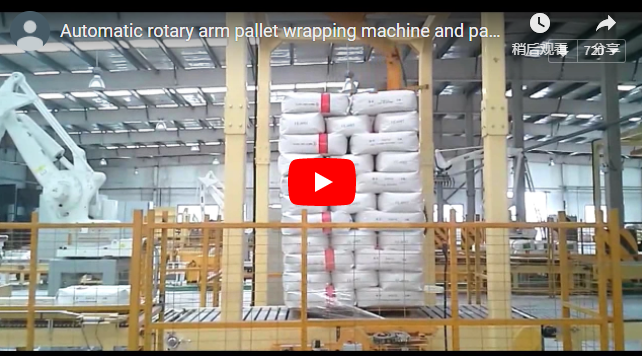
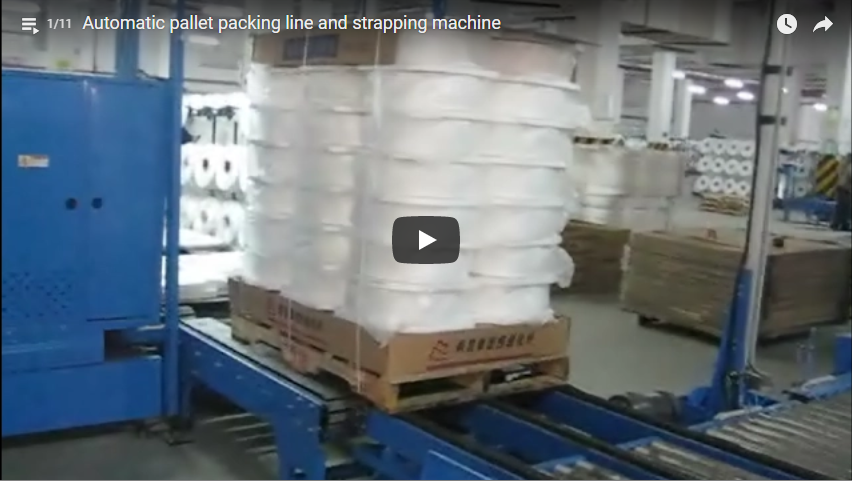
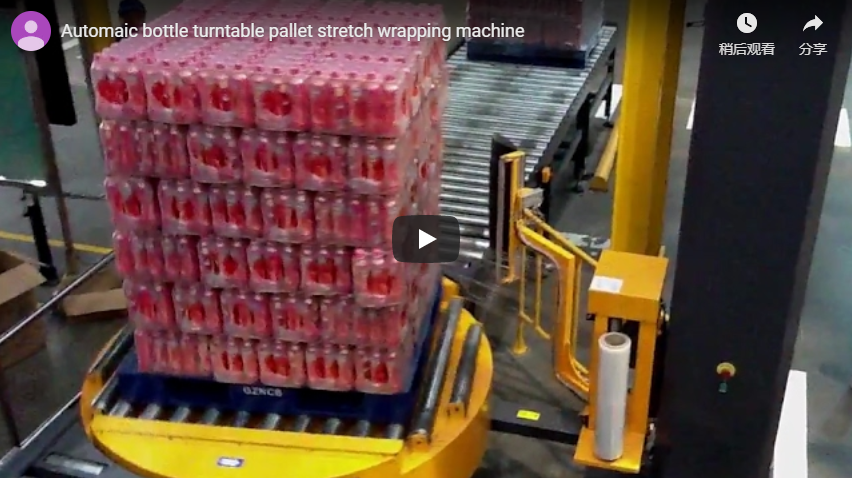
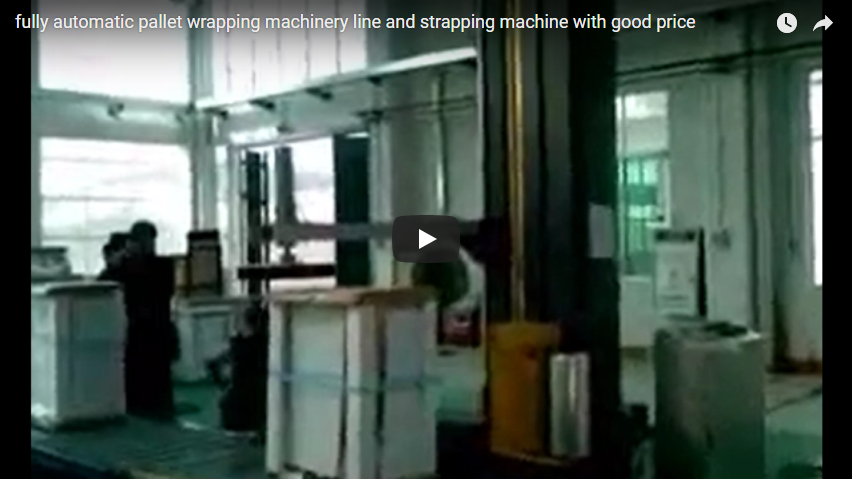
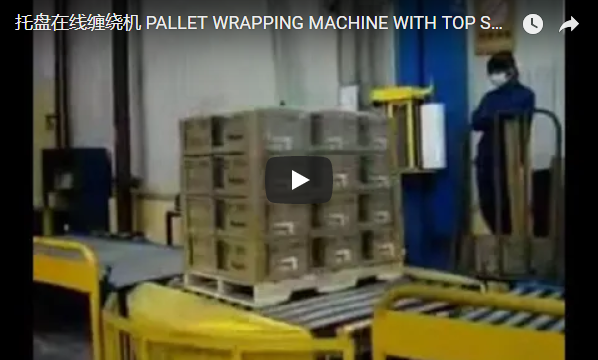
Our footage shows a pallet being sheeted on top and wrapped by the arm in one cycle. It is a general demonstration, so load, film, sheet and pattern for your plant are confirmed with us per project.
Selection checklist
| Question | Confirm per project |
|---|---|
| Load sizes | footprint, height, weight |
| Protection | top sheet and side wrap needs |
| Film plan | gauge, pre-stretch, containment |
| Products per line | how many recipes to store |
| Handling | conveyor and load path |
| Electrical supply | voltage, phase and frequency on site |
Controls and safety
The wrapper runs from a control panel with an emergency stop at the operator position and guarding around the arm’s travel zone and the dispenser. Keep clear while a cycle runs. Routine checks cover the arm balance, carriage, pre-stretch rollers, top sheet dispenser, clamp and film seal, per the machine manual.
Engineering FAQ
Q: Why keep the pallet still? A: The arm orbits the load, so heavy, unstable or irregular pallets wrap without being spun.
Q: How does the top sheet stay on? A: The dispenser lays the sheet, and the main wrap draws over it and seals it to the load, holding it in place.
Q: Is the sheet applied before or during wrapping? A: Either, by configuration. The sheet is held until the wrap secures it, so the cover ends up one piece.
Q: What controls film use? A: A motorized pre-stretch elongates the film before application, improving yield and containment without relying on film thickness alone.
Q: Which products suit this machine? A: Stationary wrapping is required for heavy, tall, unstable or irregular loads that would shift or tip if rotated on a turntable.
Next step
- Email us at info@fhopepack.com with your load sizes, film and sheet needs.
- We send a wrapper proposal and a layout drawing within 48 hours.
- We arrange a site survey to confirm floor and services.
Related reading
- B series pallet wrapping machine with top film dispenser
- Rotate arm stretch wrapper
- Automatic rotary arm pallet wrapping machine with top sheet covering
- FHOPE packing machinery product lines
Sources and standards
- ISO 12100:2010 Safety of machinery, general principles for design and risk assessment
- EN 415-10:2014 Safety of packaging machines, general requirements
- EN ISO 13849-1:2023 Safety of machinery, safety-related parts of control systems
FHOPE rotary arm pallet wrapper with top film dispenser demonstration video. Reviewed as a general demonstration; load, film, sheet and pattern confirmed per project.
Last reviewed: 2026-10-10