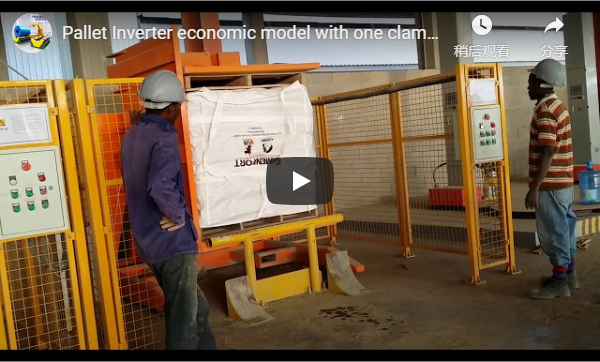
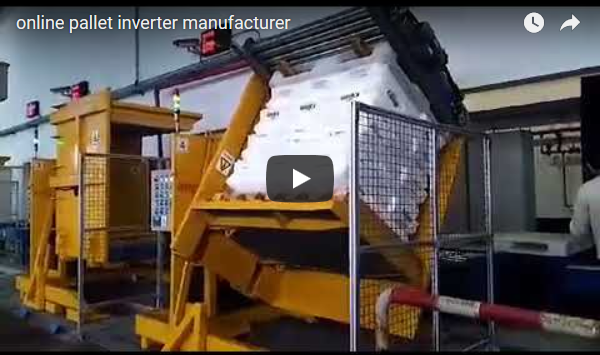
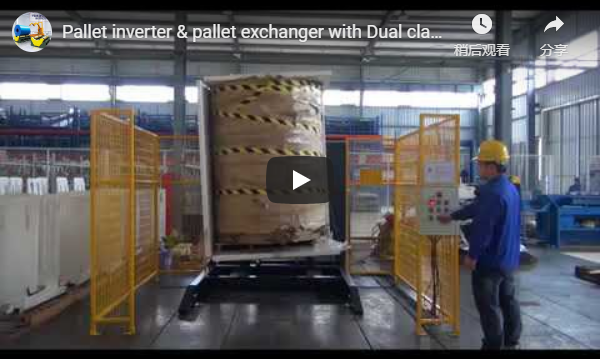
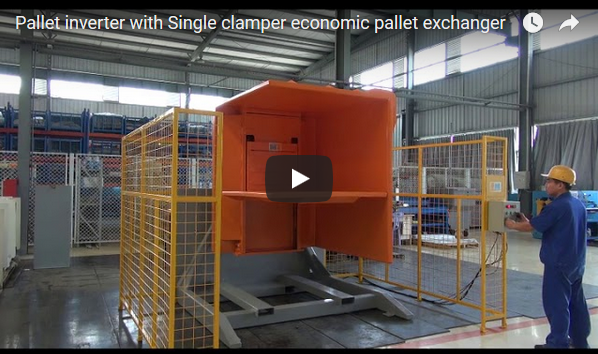
Executive summary This 20 s clip shows one of our PE sheet dispensers covering a pallet load on a roller conveyor. A pallet of three white bulk bags stops under the orange dispenser head, a PE sheet is laid over the top and drapes down the sides, and the covered load moves on. A top sheet keeps rain and dust off the top face, which stretch film alone leaves open. Below we cover the cycle, how to size the sheet, and how the dispenser links to an inline pallet wrapper.
Table of Contents
- What the clip shows
- Why a top sheet before stretch film
- Sizing the top sheet
- Line integration with an inline pallet wrapper
- Selection checklist for a top sheet dispenser
- Controls and safety
- Engineering FAQ
- Next step
- Related reading
- Sources
What the clip shows
| Clip time | What is on screen |
|---|---|
| 0–8 s | A wooden pallet with three white bulk bags runs in on powered rollers and stops under the dispenser frame |
| 8–14 s | The orange dispenser head comes down over the load and lays a PE sheet across the top |
| 14–20 s | The sheet drapes over the bag tops and down the sides; the covered pallet stays on the conveyor, ready to move on |
The dispenser frame is grey steel with an orange head and roller conveyors on both sides of the station. The load is not turned during covering, so the sheet goes on while the pallet sits square to the line.
Why a top sheet before stretch film
Stretch film wraps the sides of a pallet load. The top face stays open unless film is pulled over it by hand. A top sheet closes that face:
- Rain and dust. Bulk bags, cartons and sacks stored outdoors or shipped open-top stay dry on top.
- Film anchoring. When the pallet is then wrapped, the side wraps trap the edge of the sheet, so the cover stays in place in transit.
- No ladder work. Nobody climbs to lay a sheet on a load about 2 m high.
On our B300 inline pallet wrapper the film covering function lays PE film or plastic foam on top before wrapping, while the conveyor moves the load forward.
Sizing the top sheet
The sheet must cover the top face and hang far enough down the sides for the stretch film to catch it. An illustrative example for one pallet:
| Item | Value |
|---|---|
| Load footprint (illustrative) | 1,200 × 1,000 mm |
| Overhang per side (illustrative) | 300 mm |
| Sheet length, 1,200 + 2 × 300 mm | 1,800 mm |
| Sheet width, 1,000 + 2 × 300 mm | 1,600 mm |
The film roll width sets the sheet dimension across the line, and the drawn and cut length sets the dimension along the line. We fix both from your largest load, then store shorter cut lengths for smaller loads.
Line integration with an inline pallet wrapper
Most plants place the dispenser directly ahead of the wrapper, on the same conveyor; our covering, wrapping and strapping system does all three at one station. Published B300 data gives the scale of a line like this:
| B300 item | Published value |
|---|---|
| Output | Min. 24 loads per hour |
| Max. load weight | 1,800 kg |
| Turntable diameter | 2,200 mm |
| Turntable speed | Max. 12 rpm |
| Stretch film | LLDPE, 500 mm wide, 0.025 mm |
| Pre-stretch | 100–300% |
| Carriage speed | 2.9 m/min |
| Supply | 380 V, 3 phase |
The dispenser has to keep pace with the wrapper, so its cycle is matched to the line rate when we lay out the conveyor.
Selection checklist for a top sheet dispenser
- Largest and smallest load footprint, and load height.
- Sheet material: PE film or foam, and its thickness.
- Overhang needed for your stretch-wrap pattern.
- Loads per hour from the filling or palletizing station.
- Conveyor height, roller pitch and pallet type.
- Whether the wrapper is already installed or supplied with the dispenser.
- Destination market for the risk assessment.
Controls and safety
The dispenser head moves down over the load and the rollers move the pallet in and out. Keep people out of the station while it runs, and load a new film roll only with the machine stopped. On a full line the dispenser and wrapper run from one control system, so a stop at one station holds the conveyor.
The standards that apply depend on the destination market. For CE markets, ISO 12100 sets the risk-assessment method and EN 415-10 sets general requirements for packaging machines; EN 415-6 applies to the pallet stretch wrapper that the dispenser feeds.
Engineering FAQ
Q: What does the dispenser in the clip cover? A: A wooden pallet with three white bulk bags; the cover is laid in about 12 s of the 20 s clip.
Q: How big should the top sheet be? A: Load length and width plus twice the overhang; 1,200 × 1,000 mm with 300 mm overhang gives 1,800 × 1,600 mm in our example.
Q: Is the top sheet held only by its weight? A: Yes, until wrapping. The sheet rests under its own weight until the stretch wrapper pins the overhang against the sides of the load.
Q: Can the cover be foam instead of PE film? A: Yes. The B300 covering function lays PE film or plastic foam on top before wrapping.
Q: Can the dispenser feed an existing wrapper? A: Yes, if the conveyor height and line rate match; we check both from your layout drawing.
Q: What output does a covering and wrapping line reach? A: Our B300 lists a minimum of 24 loads per hour.
Q: Which standards apply? A: For CE markets, ISO 12100 and EN 415-10, plus EN 415-6 for the pallet wrapper.
Next step
We plan a covering station in three steps:
- Submit your layout drawing with load sizes, loads per hour and conveyor height, to info@fhopepack.com.
- Receive a proposal within 48 hours, with sheet size range, dispenser position and link to the wrapper.
- Book a site survey so we confirm floor space, conveyor interfaces and guarding.
Related reading
- Pallet Wrapping Machinery for Online Packing with Top Sheet Covering
- Arm Stretch Wrapper with Top Sheet Dispenser
- Rotary Arm Pallet Wrapper with Top Sheet Covering
- B300 inline pallet wrapping machine
Sources
- Machine in action (our footage): the video on YouTube
- B300 output, load weight, turntable, film, pre-stretch, carriage speed, supply, film covering function: B300 pallet wrapping machine
- Sheet example: our worked example, illustrative values
- Standards scope: ISO 12100:2010; EN 415-10:2014; EN 415-6
- Proposal timing: approved house CTA (proposal within 48 hours)
Last reviewed: 2026-10-09