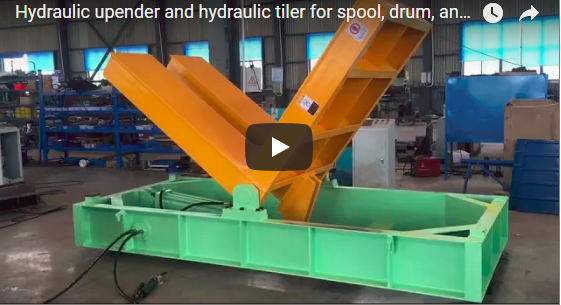
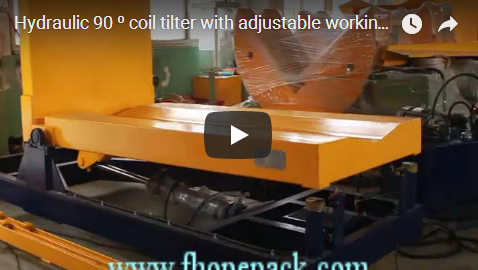
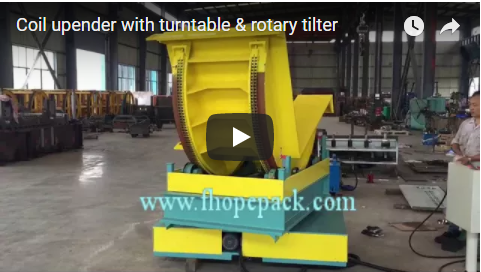
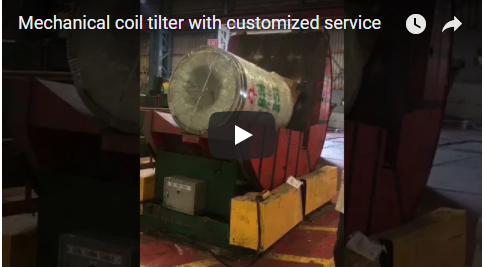
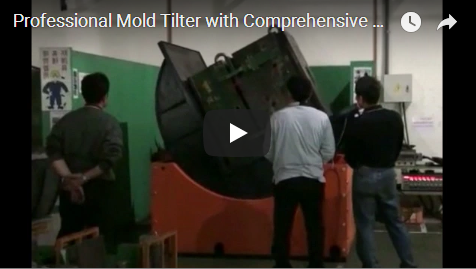
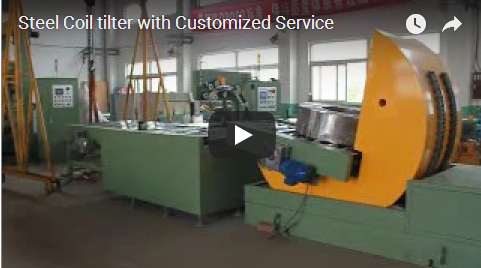
mold flipping table FHOPE

Executive summary This video shows a hydraulic mold flipping table from FHOPE lifting a large metal die from a floor-flush position to vertical, rotating it through its flip cycle, and returning the platform for the next job. The table sits flush in a pit, saving floor space in a crowded workshop. Specs such as load rating, cycle time, and certifications are not shown in the footage — confirm them with the manufacturer before buying.

Why mold flipping matters on the shop floor

Large injection molds and die-casting dies routinely weigh far more than a crew can safely handle by hand. Yet between machining, cleaning, repair, and changeover, these dies need to be turned from one orientation to another — sometimes several times. Doing that with cranes and slings works, but it is slow, it occupies overhead lifting capacity, and it puts both the mold and nearby people at risk.

A dedicated mold flipping table solves this with a simple idea: put the die on a powered platform, tilt it under hydraulic control, and let it rotate through the flip in a guided, repeatable way. That is exactly what the video from FHOPE demonstrates, in real workshop conditions rather than a staged studio shot.

What the video shows

The footage follows one full working sequence of the machine, with only background music — there is no narration or dialogue to interpret.

Time (approx.) What happens
0–6 s The yellow flipping table sits flush with the floor; a large dark metal mold rests on it, facing a large press-style machine to the left. An operator stands to the right, observing.
9–21 s The platform’s front edge rises on dual hydraulic cylinders, lifting the mold toward vertical. The mold rides with the platform without shifting.
21–33 s The platform reaches roughly 70–80°, with silver piston rods fully extended and red base components visible.
36–42 s The mold rotates about its lower edge into a rearward-leaning posture, exposing internal features that look like ejector or spherical components.
45–60 s The cycle continues — the mold transitions back through a near-horizontal and then upright standing position on the platform’s center.
69–78 s The platform begins its return stroke: the left inclined plate lowers, the right deck settles back down, preparing the machine for the next load.

The table itself is painted bright yellow with black grab handles along the edges, and it sits in a pit-style foundation so the deck can sit level with the shop floor. The foundation is a concrete-embedded base with steel cover plates. The molds shown are dark grey metal — one with three large round through-holes on its face and reinforcing ribs along the sides; another, in the later part of the video, carries a red-brown painted frame with a circular boss on top, consistent with a plate or ejector assembly.

One detail worth noticing: the machine sits beside the processing machine in an L-shaped work zone. Molds can move a short distance from the press to the flipping table without long crane transfers across the shop.

Direct observation notes

The following points stay close to what is actually visible frame by frame:

  • The machine is a yellow steel flipping platform, pit-mounted, with black U-shaped handles at the deck edges.
  • Two hydraulic cylinders are arranged symmetrically at the rear of the platform; cylinder bodies are yellow with silver chrome piston rods.
  • The platform surface shows signs of positioning blocks or locating pins for holding the mold.
  • The workpiece is a large rectangular metal mold, roughly half the platform length in height; the deck measures roughly 2.5–3 m long by 1.5–2 m wide based on proportion against the surroundings.
  • The mold changes orientation from face-up horizontal → vertical on edge → rearward tilt → upright standing over the course of the video.
  • Operators stand clear to the side throughout; no one touches the mold or platform during motion.
  • Watermarks reading “FHOPEPACK” and “www.fhopepack.com” appear on the footage and on the platform surface.
  • No control panel, emergency stop, guard fence, light curtain, or warning signage is clearly visible in the frame.

What the video does not show

Being clear about the limits of the footage matters as much as describing it. The video does not show:

  • Rated load capacity (kg or tonnes)
  • Hydraulic pressure, flow rate, motor power, or total machine weight
  • Exact cycle time per flip in seconds
  • Control panel design, HMI language, or PLC/interface options
  • Safety certifications (CE, ISO 13849) or IP ratings
  • Anti-drop valves, accumulators, or other hydraulic safety hardware
  • Mold clamping or automatic locating fixtures in detail

If any of these items are decisive for your purchase, check with the manufacturer rather than relying on this video.

How the machine fits a typical workflow

Think of the flipping table as a transfer and orientation station between processes:

  1. A mold arrives by crane or forklift and is set on the flush-mounted deck.
  2. The operator raises the platform hydraulically to bring the mold to the needed angle.
  3. The mold rotates through the flip, guided by the platform and its locating surface.
  4. The mold ends in the required orientation — face up, on edge, or upright — for cleaning, repair, inspection, or loading back into the press.
  5. The platform returns to the floor-flush position, keeping the walkway and work zone clear when the machine is idle.

Because the deck sinks into a pit, it does not become a permanent floor obstruction. In workshops where aisle space is tight, that embedded design is a genuine advantage over a free-standing flipper that always occupies its footprint.

Benefits you can infer from the footage

These are reasoned observations, not measured claims:

  • Less manual handling risk. The die is moved by hydraulics, not by hands or slings swinging overhead.
  • Repeatable orientation. The platform and locating surface hold the mold consistently through each cycle.
  • Space efficiency. The flush-mounted deck leaves the floor usable when the machine is idle.
  • Shorter mold turnaround. Flipping at the press, rather than shuttling dies to a distant turning station, cuts non-productive movement between steps.

The VLM analysis estimated a flip completes in roughly 10–15 seconds, but treat that as an observation of this particular die and setup — verify cycle time for your mold weight with the manufacturer.

Safety considerations to discuss before purchase

The video shows a clean, orderly operation, but also some points any buyer should raise:

  • No visible guarding or light curtain around the machine in this footage. Ask what protective options are available and whether site-specific guarding is recommended.
  • No clearly visible emergency stop in frame — confirm where e-stops and any interlocks are located.
  • Establish and enforce a keep-out zone in front of and below the platform during motion; the operators in the video model this behavior correctly.
  • Ask whether travel limit switches, anti-drop valves, and audible alarms can be included.

None of these are criticisms of the specific machine shown — they are the questions a safety-conscious buyer should ask of any hydraulic flipping equipment.

Questions to ask the manufacturer

  • What is the maximum rated load, and what mold dimensions can the deck accept?
  • What flip angle range does the machine cover, and is it adjustable?
  • Is control by push-button, pendant, or PLC/touchscreen? What interfaces are offered?
  • What pit depth and foundation drawings are required for installation?
  • What hydraulic safety features (anti-fall valves, accumulators) are standard?
  • What are the lead time, warranty, and spare parts arrangements?

Quick suitability checklist

Use this to decide whether a mold flipping table fits your operation:

  • Your molds are too heavy or awkward for safe manual turning.
  • Crane availability is a bottleneck during mold changes or cleaning.
  • You have, or can build, a pit for a flush-mounted installation — or the manufacturer offers a surface-mounted variant.
  • You have a defined safe standing zone away from the platform’s swing path.
  • Your mold weight is within the machine’s rated capacity (confirm the figure).

Frequently asked questions

What does the machine actually do in the video? It hydraulically lifts a large metal mold from a floor-flush horizontal position, rotates it through a flip, sets it upright on the deck, and then returns the platform to its original position.

How large are the molds it handles? The video shows molds roughly the height of an adult (about 1.7 m) and around 1 m wide, sitting comfortably on a deck of roughly 2.5 m × 1.5 m. Capacity limits for heavier or larger molds should be confirmed with the manufacturer.

Does it need a pit in the floor? The machine shown is embedded in a concrete pit so the deck sits flush with the floor. Whether a surface-mounted version is available — check with the manufacturer.

How is it controlled? No control panel is clearly visible in the footage. Control options and panel design should be confirmed directly with FHOPE.

Is one operator enough? The video shows one person observing while the machine cycles, with a second person passing in the background. Actual staffing requirements depend on your workflow — confirm with the manufacturer.

Source and method

This article is based on the FHOPE product video referenced above. Analysis was performed by a vision model on sampled frames of the footage. The video contains background music only — there is no narration or speech, and no ASR was used. All factual descriptions come from what is visible in the frames; anything not observable is marked as such, and quantitative specifications should be verified with the manufacturer.

Related reading

Next step

If heavy molds are slowing down your changeovers or putting your team at risk, a purpose-built flipping table may be the fix. Watch the video again with the checklist above, then contact the FHOPE team to discuss your mold dimensions, weight, and site layout — and get the rated specifications this video cannot show.