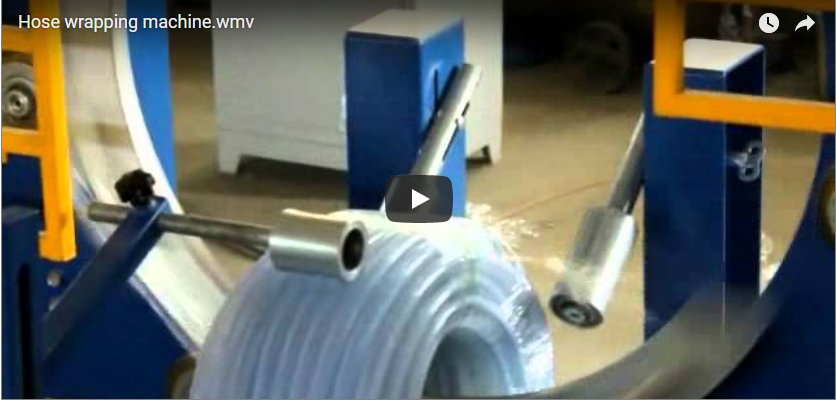
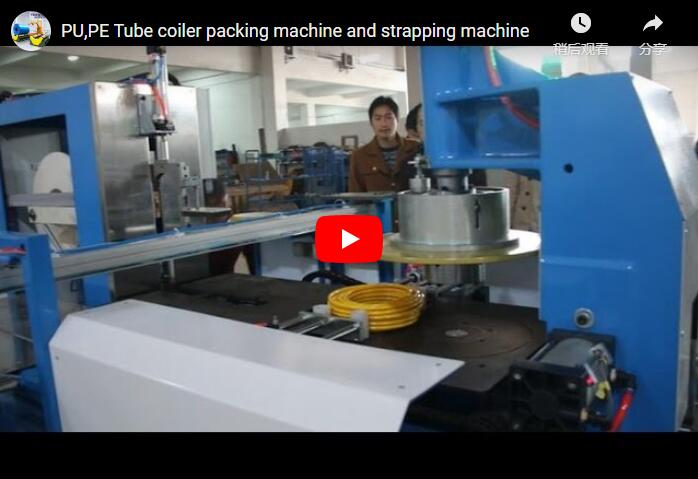
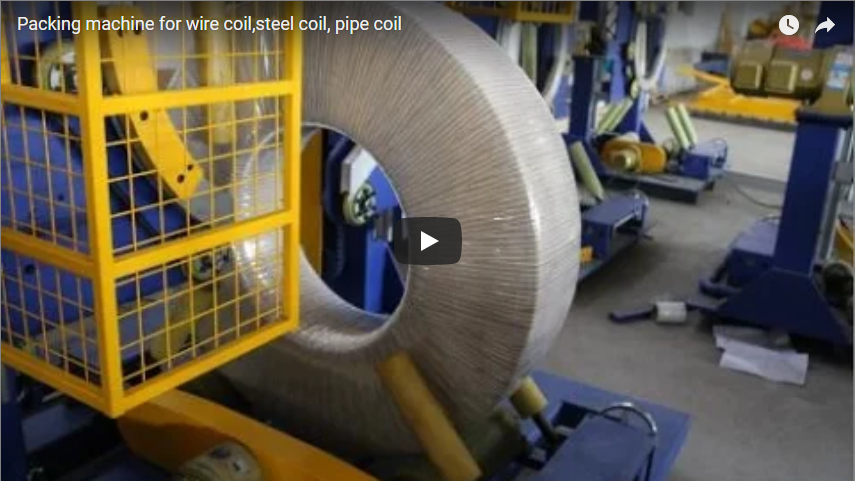
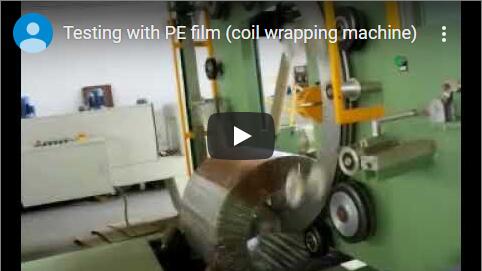
Executive summary This video shows a coil wrapping machine wrapping cylindrical products automatically. A rotating base turns the workpiece while a wrapping arm spirals stretch material around it inside a yellow safety fence. The footage covers loading, the full wrapping cycle, and a finished, fully wrapped package — but no specs, speeds, or model numbers are shown.
Why this video matters
If you buy cylindrical products — coils, rolls, pipes, or cable drums — you know that manual wrapping is slow, inconsistent, and hard on workers. This video answers a simple question: what does an automated coil wrapping machine actually look like in operation?
The footage is short and straightforward. There is no narration, no music-driven editing, and no marketing overlay. You see the machine, the product, and the process. That makes it useful for anyone evaluating whether spiral wrapping is the right packaging method for their products.
What the video shows
The video runs in three clear stages:
| Time | What happens |
|---|---|
| 0–5s | A cylindrical workpiece sits on the machine’s rotating base. The wrapping arm is at rest. An operator enters the frame and walks toward the product. |
| 5–15s | The operator positions or checks the workpiece by hand. The wrapping arm begins to rotate slowly, and the machine starts its cycle. |
| 15–30s | The operator steps out of frame. The machine runs automatically: the arm and the base rotate together, and white banding material (likely stretch film or tape) is pulled from a roll spool on the right side of the machine. |
| 30–70s | Wrapping continues. The material forms a spiral pattern around the rotating workpiece. By the end, the product is fully covered. |
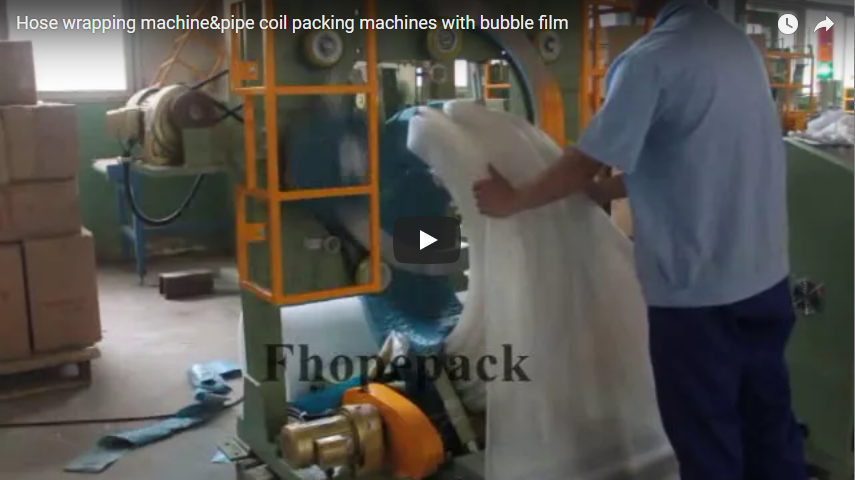
The video also shows a second, larger white cylindrical roll being wrapped the same way — a wide white product turning on its side on the base while the arm spirals semi-transparent film around it. An operator briefly approaches to adjust or steady the product mid-cycle, then steps away and lets the machine finish.
The machine in action: step by step
- Loading. The workpiece is placed on the rotating base at the center of the machine.
- Positioning. The operator makes a final check or adjustment by hand while the machine is not yet running at speed.
- Cycle start. The wrapping arm begins rotating. Film is drawn from the spool through guide rollers and tension rollers toward the arm.
- Spiral wrapping. The base rotates the product while the arm moves, laying film in an overlapping spiral pattern across the full height of the load.
- Finish. Once the product is fully covered, the wrapping stops and the wrapped package is ready to be removed.
Throughout the cycle, the product stays on the base and its orientation stays stable — the machine handles the movement, not the operator.
Direct observation notes
The following points are stated close to the source analysis of the video frames, with only grammar-level edits:
- The machine frame is a blue-and-yellow painted steel structure with a smooth, typical industrial finish.
- Key components observed: a rotating base at the bottom that carries and turns the workpiece; a wrapping arm mounted on vertical columns that carries material around the product; a material spool on the right side holding the white banding roll; a yellow metal mesh safety fence enclosing the wrapping zone; a white control box on the left side; and a motor at the base providing power to the rotating table.
- The layout is roughly L-shaped: rotating base in front, wrapping arm and spool behind, with the operator working from the right side.
- The arm carries multiple guide rollers and tension rollers and moves vertically along the columns.
- The workpiece in one sequence is a medium-sized dark cylindrical item with a metallic sheen, pre-covered with clear plastic film; in another sequence it is a large pure-white cylindrical roll. Both rotate on the base during wrapping.
- A semi-transparent “FHOPE” watermark is visible in the top-left corner of all frames.
- Not observed: a clear control panel display, buttons, or indicator lights; an emergency stop button; light curtains; warning signs; or interlock devices.
What the video does not show
The footage is useful, but it leaves important questions open. Do not treat this video as a specification source:
- Rated capacity — maximum load weight, wrapping speed, or maximum product size.
- Machine dimensions — length, width, and height are not given.
- Cycle time — the exact time to complete one wrap cannot be measured reliably from the footage.
- Model number and power rating — not visible.
- Certifications — no CE, ISO, or other certification claims appear.
- Film material — the exact type of the white banding material (for example PE or PP) is not stated.
- Control system details — PLC, touchscreen, or brand of controls are not shown.
For any of these, check with the manufacturer before making a purchase decision.
Fit criteria: is this type of machine right for you?
Based on what the video demonstrates, this class of rotary-arm/turntable spiral wrapping machine fits these situations well:
| Good fit | Poor fit |
|---|---|
| Cylindrical products: coils, rolls, pipes, cable drums | Irregular or highly variable product shapes |
| Products needing surface protection and load stability for transport or storage | Very small batches where manual wrapping is adequate |
| Lines that need consistent, repeatable wrap quality | Products that cannot rotate on a base |
| Operations reducing manual lifting and repetitive wrapping labor | Requirements depending on unverified specs (verify first) |
The one caveat visible in the footage: an operator makes a hands-on adjustment during a cycle. That suggests some level of manual involvement around the automated wrapping itself. How much intervention a given model requires — and whether the machine can run fully hands-off — is a question to confirm with the manufacturer.
Safety notes from the footage
- A yellow metal mesh fence encloses the wrapping zone, separating it from the operator area. This is the primary safety measure visible in the video.
- The operator works outside the fence and approaches the product only at specific moments.
- No emergency stop, light curtain, warning labels, or interlocks were visible in the sampled frames — their presence and location should be verified with the manufacturer, not assumed.
- As a general practice: never reach into the fenced area while the base or arm is moving, and only adjust a product when the machine is fully stopped.
Buyer checklist before you order
Use this list when you contact a supplier about a machine like the one shown:
- Confirm minimum and maximum product diameter, width, and weight.
- Confirm wrap speed and typical cycle time for your product.
- Confirm film type and width, and whether pre-stretch is used.
- Ask how the vertical arm travel is controlled — can overlap and coverage be adjusted?
- Ask which safety devices are included: e-stop, interlocks, light curtains, fencing.
- Confirm power supply requirements for your facility.
- Ask whether the machine can run fully automatically after loading, or whether operator intervention mid-cycle is expected.
- Ask about installation, training, spare parts, and after-sales support.
Frequently asked questions
What kind of products does this machine wrap? The video shows cylindrical items — a dark coil-like workpiece and a large white roll. Spiral wrapping machines of this type are generally used for coils, rolls, pipes, and similar round products. Confirm your specific product dimensions with the manufacturer.
Does the machine run by itself? Mostly, yes. The video shows the machine completing the wrapping automatically while the operator stands outside the fence. However, the operator does step in briefly to adjust a product in one sequence, so the exact level of automation is worth confirming before purchase.
How long does one wrap cycle take? The footage spans roughly 70 seconds from idle to a fully wrapped product, but the precise cycle time for your product depends on size, wrap layers, and machine settings. Ask the manufacturer for a cycle time on a product like yours.
What wrapping material is used? The video shows a white, semi-transparent banding material pulled from a side spool — likely plastic film or tape. The exact material type is not stated in the footage; check with the manufacturer.
Is the machine safe to operate? The visible safety measure is the yellow mesh fence around the wrapping zone. Other devices such as emergency stops or interlocks were not observable in the video, so verify the full safety package with the manufacturer.
What are the machine’s specifications? Not shown in the video — no capacity, dimensions, model, power, or certification data appear. Request a full specification sheet from the manufacturer.
Source and method
This article is based on analysis of the embedded video only. Frames were sampled and analyzed with a local vision model; the video contains background music only, with no narration or speech, so no spoken content was transcribed. All factual statements above trace back to what is visible in the footage; anything not visible is explicitly marked as needing manufacturer confirmation.
Related reading
- Coil packing machine overview
- Steel coil wrapping machine
- Wire coil wrapping machine
- Copper coil packing machine
- Pipe packing machine
Next step
If your products look like the ones in this video — coils, rolls, or pipes that need consistent spiral wrapping — the fastest way forward is to send your product dimensions and daily volume to the FHOPE team. Use the contact page to request a specification sheet, a cycle-time estimate for your product, and a quotation.
Published: 2026-09-03