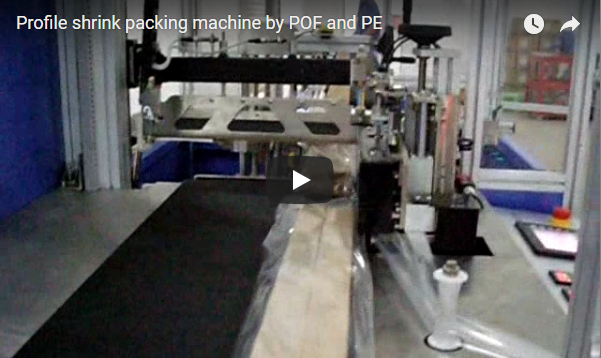
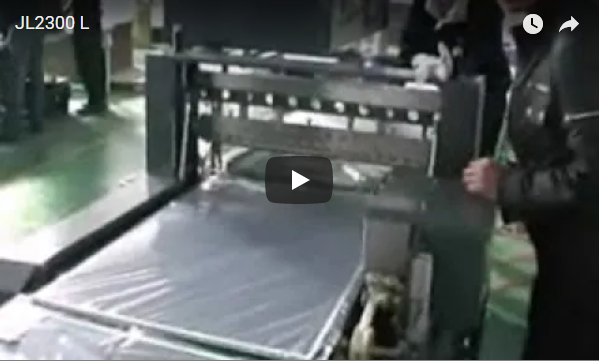
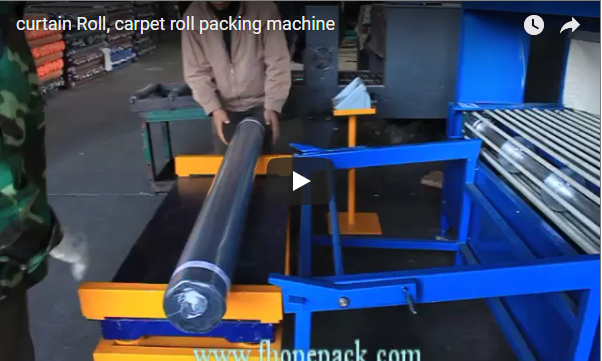
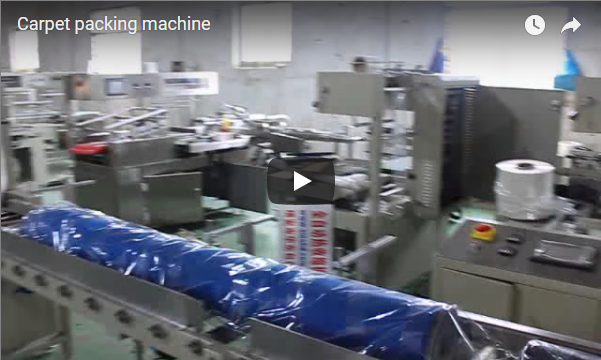
Videos of the panel packaging

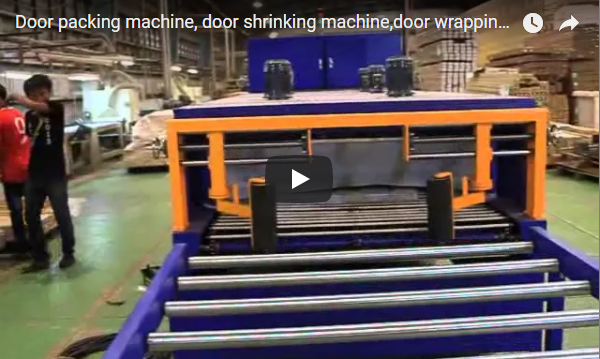
Executive summary This footage shows a wooden door being wrapped in clear plastic film on a panel packing line in a factory setting. You can watch the full wrap cycle in under a minute: feed, film apply, tensioning, and exit. The machine uses a blue-and-yellow upper frame, a metal roller conveyor, and a side-mounted control panel. Read on for a step-by-step breakdown, what the video does not reveal, and the questions to ask before buying.

Why door and panel packaging matters

Wooden doors and large flat panels are awkward products to protect. They are big, relatively heavy, and easily scratched or dented during storage and transit. A door with a decorative center panel has edges and recessed surfaces that need even, reliable coverage — something loose stretch wrap applied by hand rarely achieves consistently.

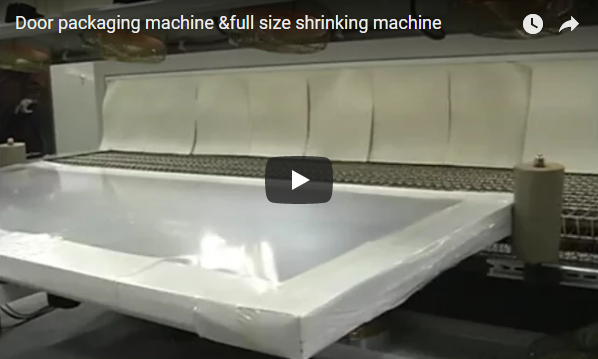
The video on this page shows one practical answer: an inline packing machine that wraps each door in clear plastic film as it travels along a conveyor. Instead of a worker circling a door with a film roll, the machine’s upper frame comes down over the product, applies and tensions the film, then lifts so the wrapped door can move on. The whole sequence happens smoothly and repeatedly, which is exactly what a production environment needs.

If you are evaluating panel packing equipment, this page gives you a factual, observation-based walkthrough of what such a machine does on camera — and, just as importantly, what it does not show, so you know what to verify with the manufacturer.

The machine in action, step by step

The video runs about 45 seconds and captures at least one complete wrap cycle. Here is the sequence as it unfolds:

  1. Feed (0:00–0:08). A wooden door is placed horizontally on the green conveyor belt. The machine’s upper frame — painted blue and yellow — sits above the door. The camera pans right to show the full length of the machine.
  2. Film apply (0:09–0:18). The upper frame lowers, and a roll of clear plastic film is fed over the door. Wrapping begins.
  3. Advance (0:19–0:23). The upper frame lifts, and the partially wrapped door moves forward along the conveyor. A worker is visible on the left side of the frame.
  4. Tensioning (0:24–0:30). The upper frame lowers again and the film is pulled taut over the door. The camera angle shifts to a side view of the machine.
  5. Final wrap (0:31–0:40). The frame lifts once more, and the door — now fully wrapped in plastic film — continues down the conveyor. A worker stands on the right.
  6. Exit (0:41–0:45). The fully wrapped door moves off the conveyor, with a worker visible on the left.

The visible presence of workers at several points suggests a line that combines automated wrapping with manual handling, at least in this configuration. Whether operators are loading, unloading, or simply monitoring is not stated on camera.

Machine structure at a glance

The main components visible in the footage line up clearly in a table:

Component What the video shows Practical function
Upper frame Blue and yellow painted metal; lowers and lifts over the product Carries and positions the film over the door
Film carriage Roll of clear plastic film at the top of the machine Supplies and feeds the wrapping film
Conveyor Green belt over metal rollers, running the machine’s full length Transports doors through the wrap zone
Heating element Located at the bottom of the machine per the layout Consistent with film shrinking/tightening
Control panel Mounted on the side Start/stop and cycle control

The overall layout is a long rectangular structure with the conveyor running through the center. This in-line arrangement suits factories that already move doors or panels on a production flow and want packaging to happen without lifting products off the line.

Control panel observations

The side-mounted control panel shown in the video includes three identifiable elements:

  • Power switch
  • Start/stop button
  • Timer

A simple three-control interface suggests straightforward operation with a short learning curve. However, the video does not show how cycle parameters are set or adjusted, and no display screen detail is legible. If programmable wrap settings, film tension control, or recipe storage matter to your operation, check with the manufacturer what the control system supports.

Direct observation notes

The following block stays close to the factual observations from the frame-by-frame analysis, with only light grammatical smoothing:

  • A wooden door is fed onto a conveyor belt; the machine’s upper frame, painted blue and yellow, is positioned above the door; the camera pans right showing the full length of the machine (0:00–0:08).
  • The upper frame lowers, and a roll of clear plastic film is fed over the door; wrapping begins (0:09–0:18).
  • The upper frame lifts; the partially wrapped door moves forward on the conveyor; a worker is visible on the left (0:19–0:23).
  • The upper frame lowers again; the film is pulled taut over the door; the camera angle changes to a side view (0:24–0:30).
  • The upper frame lifts; the fully wrapped door moves forward; a worker is visible on the right (0:31–0:40).
  • The fully wrapped door moves off the conveyor; a worker is visible on the left (0:41–0:45).
  • Machine finish: primarily blue and yellow paint, metal frame, green conveyor belt.
  • Product: a brown wooden door, approximately 2 meters long and 1 meter wide, smooth surface with a decorative panel in the center, placed horizontally on the belt.
  • Control panel on the machine side with a power switch, a start/stop button, and a timer.
  • A protective guard surrounds the conveyor belt.
  • Readable on-screen text: the watermark “www.fhopepack.com” appears in all frames; “80-57” appears on a yellow machine part (0:36).
  • Not visible in the footage: emergency stop, warning labels, interlocks, rated capacity, dimensions, cycle time, model designation, power rating, and certifications.

What the video does not show

The footage demonstrates the wrapping action well, but several things a buyer needs are simply not on camera:

  • Rated capacity and throughput. No production rate is visible or stated. You can see one door processed in roughly 45 seconds of footage, but whether that reflects continuous production speed is not shown — verify with the manufacturer.
  • Cycle time as a specification. The on-camera sequence is not a certified cycle time.
  • Machine dimensions and weight. Nothing on camera establishes footprint or installation requirements.
  • Power requirements. The heating element implies a power supply beyond a simple motor, but ratings are not visible.
  • Film specifications. Film type, width, gauge, and consumption per door are not shown.
  • Size adjustment range. Only one door size is demonstrated. Compatibility with other door and panel dimensions and materials must be confirmed with the manufacturer.
  • Safety equipment beyond the conveyor guard. No emergency stop, warning labels, or interlocks are visible in the sampled frames. Their presence or absence is a mandatory question before purchase.
  • Model designation and certifications. The markings visible (such as “80-57”) do not identify a model; certifications are not shown.

Fit criteria: is this type of machine right for your product?

Based on what is demonstrated, this machine style fits certain products and workflows better than others:

Good fit Likely not a fit
Flat, rectangular products such as doors and panels Irregularly shaped or non-flat items
Smooth-surface doors with decorative panels Products that cannot tolerate film contact or heat
Lines where doors already travel on a conveyor Workflows requiring individual offline wrapping stations
Factories wanting repeatable, uniform wrap quality Very low-volume operations where manual wrapping suffices

The derived limitation noted in the analysis is worth restating: the wrap method shown suits flat, rectangular objects. Curved, framed, or highly three-dimensional products would need a different approach.

Applications this footage supports

  • Door manufacturers wrapping finished wooden doors before storage or shipping.
  • Panel and board producers needing protective film on large flat surfaces.
  • Furniture component lines where flat panels must arrive scratch-free.
  • Export packing operations where a tight, uniform film layer is the first layer of transit protection.

Because the demonstrated product is a door roughly 2 meters long and 1 meter wide, manufacturers of similar-size flat products are the natural audience. Anything significantly larger, smaller, or heavier should be discussed directly with the equipment supplier.

Buyer verification checklist

Before requesting a quotation, use this checklist — every item below is either unproven in the video or requires configuration detail:

  • Confirm compatibility with your exact door/panel sizes, weights, and materials.
  • Ask for rated throughput and a documented cycle time.
  • Request machine dimensions, weight, and installation footprint.
  • Confirm power supply requirements, especially for the heating element.
  • Specify film type, width, and gauge, and ask about film consumption per unit.
  • Ask about the full safety package: emergency stop, guards, interlocks, and warning signage.
  • Ask which wrap parameters (time, tension, film layers) are adjustable on the control panel.
  • Request the model designation, warranty terms, and any certifications.
  • Ask about spare parts availability and commissioning support.

FAQ

Does the machine shrink the film, or only wrap it? The layout includes a heating element, and the video’s own title references a panel shrinking machine. The exact shrink process is not fully shown on camera, so confirm the heat-shrink stage details with the manufacturer.

How long does one wrap cycle take? The on-camera sequence covers about 45 seconds, but that includes camera cuts and is not a stated cycle time. Ask the manufacturer for the specified cycle time at your product size.

What sizes of doors or panels can it handle? Only one door — roughly 2 m × 1 m — is demonstrated. The adjustable size range must be confirmed with the manufacturer.

Is the machine fully automatic? The footage shows automated wrapping with workers present nearby. The degree of automation (loading, unloading, and line integration) is not fully determinable from the video; clarify the automation scope before ordering.

What safety features are included? A protective guard around the conveyor belt is visible. Emergency stops, interlocks, and warning labels are not visible in the footage — treat the complete safety package as a mandatory pre-purchase question.

Source and method

This article is based on the embedded video, which is the sole factual source for machine behavior and appearance. Analysis was performed by a vision model on sampled frames from the footage. The video contains background music only — there is no narration or speech, and no transcript was used. Where a specification cannot be read from the video, it is either omitted or explicitly marked for confirmation with the manufacturer. No customer quotes, third-party data, or invented specifications appear on this page.

Related reading

Explore more equipment and packaging solutions on our site:

Next step

If this wrapping approach matches your doors or panels, the fastest way forward is a direct conversation. Share your product dimensions, target throughput, and factory layout, and ask for the specifications the video cannot provide — cycle time, size range, power, and safety package. Visit our contact page to request a quotation, ask technical questions, or arrange to see the machine running.

Published: 2026-09-03